







There’s something special about sharing your home with a cat. One moment, your feline companion may be peacefully curled up in a sunny window, and the next, they’re racing through the hallway as if they’ve just discovered a secret mission.
Cats have a fascinating combination of independence, curiosity, playfulness, and affection. They can entertain us with their strange habits, comfort us with their quiet presence, and turn an ordinary home into a place full of personality.
Whether you’re a lifelong cat lover or thinking about welcoming your first feline companion, understanding what makes cats so appealing can make the relationship even more rewarding.
What Makes Cat Companionship So Special?
Cats don’t always show affection in the same obvious ways that dogs do. Instead, they often communicate through subtle behaviors such as sitting nearby, rubbing against you, following you around the house, or settling beside you when they want company.
Their independent nature is another part of their appeal. Many cats are comfortable entertaining themselves for periods of time, while still enjoying interaction with their favorite people.
Here are a few reasons cats make such memorable companions:
- Every cat has a unique personality: Some are outgoing and playful, while others are quiet and reserved.
- They can be wonderfully entertaining: Chasing toys, investigating boxes, climbing furniture, and zooming around the house can provide plenty of amusement.
- Many cats enjoy affection: Some love laps and cuddles, while others prefer sitting beside their humans.
- They appreciate comfortable routines: Familiar feeding, play, and rest schedules can help cats feel secure.
- They can be relatively independent: Cats still require daily care, attention, enrichment, and veterinary care, but many enjoy having some personal space.
The best part is that living with a cat gives you the opportunity to learn their individual communication style.
Understanding Your Cat’s Quirky Behaviors
Cats have many behaviors that seem strange to humans but make more sense when you consider their instincts and development.
Learning what these behaviors mean can help you understand your feline companion instead of simply wondering, “Why does my cat do that?”
Kneading Blankets and Laps
Does your cat push their paws against a blanket, pillow, or your lap?
This behavior is commonly called kneading. It begins during kittenhood, when kittens knead around their mother’s mammary area while nursing.
Adult cats may continue kneading when they are relaxed or comfortable. Some cats knead soft surfaces before settling down for a nap.
The Famous Midnight Zoomies
Sudden bursts of running are another familiar part of cat ownership.
Your cat may race across the room, jump onto furniture, and sprint down the hallway for seemingly no reason. These energetic episodes can be associated with play, excitement, or normal periods of increased activity.
Providing appropriate interactive play and opportunities to explore can give your cat healthy outlets for their energy.
Why Do Cats Purr?
Purring is often associated with relaxation and contentment, but it isn’t limited to happy situations.
Cats may also purr when they are stressed, frightened, uncomfortable, or seeking reassurance. That’s why purring should be interpreted alongside your cat’s overall body language and circumstances.
If your cat suddenly starts purring differently while showing signs of illness or discomfort, a veterinary examination may be appropriate.
What Do Some Common Cat Behaviors Mean?
Cats communicate through body language, vocalizations, scent, and behavior. A single action can have different meanings depending on the situation.
| Cat Behavior | Possible Meaning |
|---|---|
| Kneading | Comfort, relaxation, or a behavior retained from kittenhood |
| Slow blinking | A relaxed social signal that may occur during friendly interactions |
| Bringing objects | Play, hunting-related behavior, attention seeking, or learned behavior |
| Chattering at birds | Excitement or arousal triggered by prey-like movement |
| Rubbing against you | Social interaction and scent marking |
| Hiding | Rest, preference for privacy, fear, stress, or illness depending on context |
| Sudden zoomies | Playfulness, excitement, or a burst of activity |
Rather than assuming every behavior has one fixed explanation, pay attention to what happens before and after it.
Create a Cat-Friendly Home
A cat-friendly home doesn’t have to look like a giant playground. A few thoughtful additions can make your home more interesting and comfortable for your feline companion.
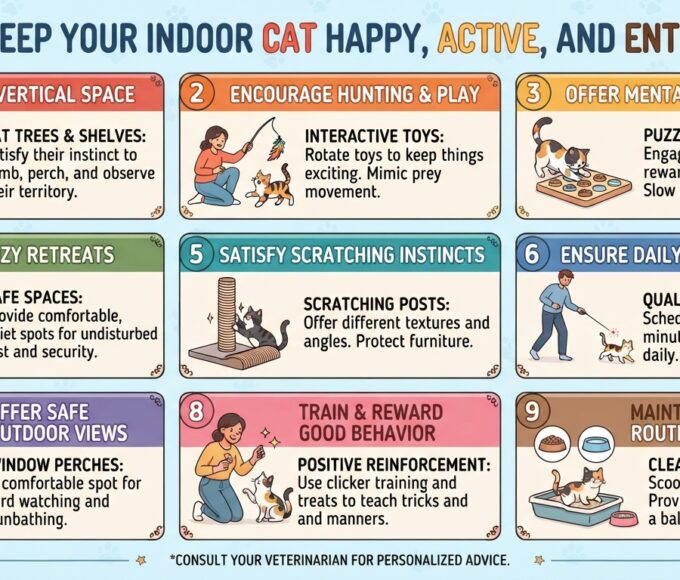
Add Vertical Spaces
Many cats enjoy climbing and observing their surroundings from elevated positions.
A sturdy cat tree, shelf, or approved elevated perch can give your cat another place to rest and observe what’s happening around them.
Make sure any elevated furniture is stable and secure.
Provide Scratching Areas
Scratching is a normal feline behavior. It allows cats to stretch, interact with their environment, and maintain their claws.
Instead of trying to eliminate scratching altogether, provide suitable scratching posts or pads.
Try different orientations and textures to discover what your cat prefers.
Give Them Comfortable Resting Spots
Cats often choose several favorite sleeping locations throughout the home.
You can provide:
- Soft beds
- Washable blankets
- Window perches
- Quiet corners
- Covered hideaways
- Cat-tree resting platforms
Don’t be surprised if your cat eventually ignores the expensive bed and chooses a cardboard box instead!
Create Safe Hiding Places
A hiding place gives your cat somewhere to retreat when they want privacy.
A simple box, covered bed, or quiet corner can become a valuable part of their environment.
Avoid forcing a hiding cat out unless there is a genuine safety concern. Giving them space can help them feel more secure.
Keep Your Cat Mentally and Physically Engaged
Indoor cats can benefit from regular opportunities to play, explore, climb, scratch, and use their natural hunting behaviors.
Interactive play can be especially useful.
Consider toys such as:
- Wand toys
- Lightweight balls
- Toy mice
- Food puzzles
- Treat-dispensing toys
- Tunnels
- Interactive toys
- Catnip toys when your cat responds to catnip
Short play sessions throughout the day can be easier to fit into a household routine than trying to create one long play session.
Always supervise toys that contain strings, feathers, small detachable parts, or other components that could be swallowed.
Let Your Cat Follow Their Own Personality
One of the most enjoyable parts of having a cat is discovering their individual personality.
You might have a feline who:
- Follows you from room to room
- Sleeps beside your feet
- Demands breakfast at exactly the same time every morning
- Plays with anything that moves
- Loves sitting on your lap
- Prefers to observe from a distance
- Greets visitors immediately
- Hides whenever someone new enters the house
There is no single personality type that makes a “perfect” cat.
Some cats are highly social, while others prefer limited interaction. Respecting those differences can help build trust.
Why Routine Can Help Cats Feel Comfortable
Cats often become accustomed to predictable patterns.
Regular meal times, play sessions, cleaning routines, and quiet periods can make daily life easier for them to understand.
A routine doesn’t need to be rigid. Instead, aim for consistency while remaining flexible when necessary.
For example, your cat may learn that breakfast comes after you wake up, playtime happens in the evening, and the house becomes quieter at bedtime.
These familiar patterns can become important parts of their daily environment.
How to Help Your Cat Have a Happier Home Life
A few simple habits can improve your cat’s daily environment.
1. Provide Daily Play
Use interactive toys that encourage your cat to stalk, chase, pounce, and investigate.
2. Offer Multiple Resting Areas
Give your cat choices instead of expecting them to use one particular bed.
3. Maintain Clean Litter Areas
Cats can be sensitive to dirty or poorly maintained litter boxes. Keep their litter area clean and accessible.
4. Provide Scratching Options
Place scratching posts in areas where your cat already spends time.
5. Respect Their Boundaries
If your cat walks away from petting or interaction, allow them to have some space.
6. Encourage Exploration
Boxes, tunnels, climbing structures, safe window views, and rotating toys can add variety to their environment.
7. Keep Veterinary Care Up to Date
Routine veterinary examinations help monitor your cat’s health and allow potential problems to be identified early.
Choosing the Right Scratching Post
Not every cat likes the same scratching surface.
| Scratching Style | Possible Option | Suitable For |
|---|---|---|
| Vertical | Tall scratching post | Cats that like to stretch upward |
| Horizontal | Cardboard scratching pad | Cats that prefer scratching on the floor |
| Angled | Sloped scratcher | Cats that enjoy different positions |
| Multi-level | Cat tree with scratching areas | Cats that enjoy climbing and scratching |
Experiment with different options rather than assuming your cat will automatically love the first scratching post you purchase.
Frequently Asked Questions
Why do people love cats so much?
Cats combine companionship with a degree of independence. Their personalities, playful behaviors, affectionate moments, and fascinating communication styles make them enjoyable household companions for many people.
Why is my cat’s purring so relaxing?
The repetitive sound can feel soothing to many people, and purring often occurs when cats are relaxed. However, purring isn’t always a sign of happiness, so other body-language and health signals should also be considered.
Do cats really have different personalities?
Absolutely. Cats can differ greatly in sociability, confidence, playfulness, activity level, and affection. Breed, genetics, early experiences, environment, and individual temperament can all contribute to behavioral differences.
Why does my cat sometimes seem aloof?
Cats often have different preferences for physical contact and social interaction. A cat that doesn’t enjoy sitting on your lap may still show affection by staying nearby, greeting you, following you, or rubbing against you.
Can having a cat improve your well-being?
Companion animals can provide companionship and enjoyable daily interactions, and many people find their pets comforting. However, claims that cat ownership automatically prevents disease or produces specific medical benefits should not be treated as guaranteed outcomes.
How can I make a new cat feel comfortable?
Give them a quiet, secure space where they can retreat while they adjust. Provide food, water, a litter box, hiding places, scratching options, and appropriate toys. Let the cat approach new people and surroundings at their own pace.
What is one of the best things about being a cat parent?
For many people, it’s the relationship that develops over time. A cat may gradually learn your routines, seek you out for attention, greet you after you’ve been away, or quietly settle beside you. Those small moments can become some of the most rewarding parts of sharing your home with a feline companion.
Final Thoughts
Cats have a remarkable ability to make ordinary moments entertaining.
One day, your feline companion might spend hours sleeping in a sunny spot. The next, they could sprint through the hallway, attack a toy mouse, climb onto a shelf, and then calmly ask for dinner as though nothing happened.
Their quirks are part of what makes them so lovable.
By providing a safe environment, appropriate enrichment, scratching opportunities, comfortable resting places, nutritious food, routine veterinary care, and plenty of respectful interaction, you can create a home where your cat can thrive.
Most importantly, take the time to learn your cat’s language. Their personality may not look like another cat’s—and that’s exactly what makes your relationship special.
This Article Was Generated By AI.








Leave a comment