







Living with a cat can be wonderfully rewarding. One moment your feline companion is curled up beside you, and the next they’re racing through the house, investigating a mysterious noise, or demanding dinner as if you’ve forgotten to feed them for a week.
Cats may be independent, but they still rely on their humans for proper nutrition, veterinary care, enrichment, a safe environment, and plenty of opportunities to behave like cats.
The good news is that keeping your cat happy doesn’t have to be complicated. By understanding their natural behaviors and creating a comfortable daily routine, you can give your feline friend a healthier and more enjoyable life.
Create a Cat-Friendly Home
Your home should give your cat places to rest, explore, scratch, hide, and observe what’s happening around them.
Cats often appreciate vertical spaces because elevated locations allow them to watch their surroundings from a secure position. A stable cat tree, shelf, or window perch can provide useful enrichment.
You can also create comfortable resting areas throughout the home using beds, blankets, cushions, or other safe surfaces your cat enjoys.
Useful Cat-Friendly Features
| Home Feature | Why Cats May Enjoy It |
|---|---|
| Cat tree | Provides climbing, perching, and resting opportunities |
| Scratching post | Gives cats an appropriate place to scratch |
| Comfortable bed | Creates a dedicated resting area |
| Window perch | Offers visual stimulation |
| Hideaway | Gives cats a quiet place to retreat |
| Interactive toys | Encourages physical and mental activity |
| Puzzle feeder | Adds enrichment to mealtime |
Don’t forget about safety. Keep cleaning products, medications, toxic substances, and potentially dangerous plants away from curious cats.
Give Your Cat a Comfortable Resting Area
Cats spend a significant portion of their day resting, so comfortable sleeping spaces are important.
Some cats love soft beds, while others prefer cardboard boxes, blankets, shelves, or the back of a sofa. Providing several options allows your cat to choose where they feel most comfortable.
A good resting area should be:
- Comfortable
- Dry
- Relatively quiet
- Safe from household hazards
- Easy to clean
- Appropriate for your cat’s size
Don’t be surprised if your cat ignores the expensive bed and chooses the box it came in.
That’s just part of being a cat.
Choose a Complete and Balanced Diet
Nutrition is one of the most important parts of cat care.
Cats are obligate carnivores, meaning their nutritional requirements are closely tied to nutrients found in animal-based foods. Rather than judging food solely by whether meat appears first on the ingredient list, look for a complete and balanced diet appropriate for your cat’s life stage and individual needs.
Kittens, adult cats, senior cats, and cats with certain health conditions can have different nutritional requirements.
Your veterinarian can help you choose an appropriate diet if you’re unsure what your cat needs.
Wet Food vs. Dry Food
Both wet and dry foods can be part of a cat’s diet, depending on the individual animal and the food’s nutritional adequacy.
| Food Type | Considerations |
|---|---|
| Wet food | Provides substantial moisture and may be appealing to many cats |
| Dry food | Convenient to store and easy to portion |
| Combination feeding | Can provide variety when appropriately portioned |
| Therapeutic diets | May be recommended by a veterinarian for specific conditions |
There isn’t one feeding format that is perfect for every cat.
Pay Attention to Portions
Overfeeding can contribute to excess body weight, so measuring meals is usually better than repeatedly filling the bowl without considering how much your cat is eating.
Follow the feeding guidance for your cat’s food while taking age, body condition, activity level, and health into account.
Treats should remain a small part of the overall diet rather than replacing balanced meals.
If your cat’s weight is changing unexpectedly, ask your veterinarian for advice.
Keep Fresh Water Available
Clean drinking water should always be accessible.
Some cats prefer drinking from fountains, while others are perfectly happy with a traditional bowl. If your cat enjoys running water, a properly maintained fountain can be a useful option.
Whatever setup you choose, keep the water container clean and refill it regularly.
Turn Playtime Into Enrichment
Play isn’t just entertainment for cats.
Interactive play allows them to engage in behaviors related to stalking, chasing, pouncing, and batting. It can also provide mental stimulation and help strengthen the relationship between you and your cat.
Try different activities to discover what your cat enjoys.
Fun Cat Activities
- Feather or wand toys
- Chase games
- Puzzle feeders
- Treat-searching games
- Cardboard box exploration
- Cat tunnels
- Ball toys
- Food-dispensing toys
- Safe climbing activities
Wand toys are particularly useful because they allow you to control the movement while keeping your hands away from your cat’s claws.
String-like toys should not be left with a cat unsupervised because swallowing string or similar material can cause serious problems.
Rotate Toys to Prevent Boredom
You don’t need to leave every toy on the floor all day.
Try keeping some toys stored away and bringing them back periodically. Rotating enrichment can make familiar objects interesting again.
You can also change the way you play.
One day might involve a chase game with a wand toy, while another could involve a puzzle feeder or a cardboard-box adventure.
Pay attention to your cat’s reactions and adjust the activity accordingly.
Provide Appropriate Scratching Options
Scratching is normal feline behavior.
Cats scratch for several reasons, including stretching, interacting with their environment, and maintaining their claws.
Instead of trying to eliminate scratching, give your cat appropriate places to do it.
Useful options include:
- Tall scratching posts
- Horizontal scratching pads
- Cardboard scratchers
- Scratching furniture
- Posts covered with suitable scratching material
If your cat repeatedly scratches one piece of furniture, place an appropriate scratching surface nearby. Rewarding your cat for using it can also help establish the new habit.
Make the Litter Area Comfortable
A clean and accessible litter area is essential for many cats.
Place litter boxes somewhere your cat can reach easily without feeling trapped or disturbed. Keep them away from feeding areas when possible.
Scoop regularly and clean the boxes according to the type of litter being used.
For multi-cat households, a commonly recommended starting point is one litter box per cat plus one additional box, although individual circumstances can affect the ideal setup.
If your cat suddenly stops using the litter box or develops a major change in elimination habits, don’t assume it’s simply a behavioral problem. Veterinary issues can sometimes cause litter-box changes.
Schedule Preventive Veterinary Care
Cats are remarkably good at hiding signs of illness, which makes preventive veterinary care important.
Routine examinations give your veterinarian an opportunity to assess your cat’s overall condition and discuss topics such as:
- Vaccinations
- Parasite prevention
- Nutrition
- Weight
- Dental health
- Behavior
- Reproductive health
- Age-related concerns
The appropriate visit schedule depends on your cat’s age, health, lifestyle, and veterinary recommendations.
Kittens and senior cats may need different monitoring than healthy adult cats.
Watch for Changes in Behavior
You know your cat’s normal habits better than anyone.
Pay attention to changes such as:
- Eating less or more than usual
- Drinking noticeably more or less
- Hiding frequently
- Reduced activity
- Sudden aggression
- Excessive grooming
- Changes in litter-box habits
- Vomiting or diarrhea
- Difficulty jumping
- Unusual vocalization
- Changes in sleep patterns
A sudden or persistent change can sometimes indicate pain or illness.
When something seems significantly different from your cat’s normal behavior, contacting a veterinarian is safer than simply waiting to see whether it disappears.
Give Your Cat Safe Places to Hide
Even confident cats need opportunities to retreat.
A quiet hiding spot can help a cat feel secure when visitors arrive, household activity becomes overwhelming, or they simply want some uninterrupted rest.
You can provide:
- Covered cat beds
- Cat tunnels
- Boxes
- Elevated resting spots
- Quiet corners
Never force a frightened cat out of its hiding place unless there is an immediate safety concern.
Respect Your Cat’s Personality
Not every cat wants the same amount of affection.
Some cats love sitting on laps. Others prefer to stay nearby without being touched. Some enjoy being carried, while others become uncomfortable when picked up.
Learning your cat’s body language can help you understand when they want interaction and when they need space.
Respecting those boundaries can strengthen trust.
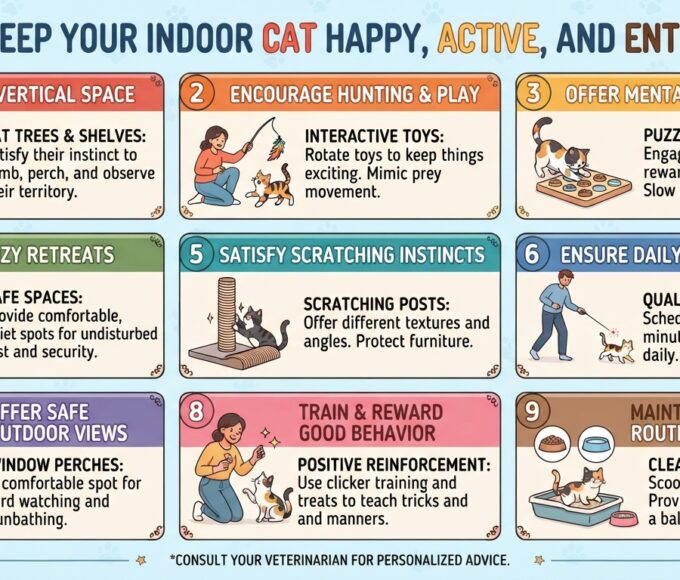
Indoor Enrichment Matters
Indoor cats can live fulfilling lives when their environment provides enough stimulation.
A good indoor setup might include:
- Vertical climbing areas
- Scratching surfaces
- Interactive toys
- Puzzle feeders
- Comfortable hiding spaces
- Window views
- Regular play sessions
- Multiple resting areas
If your cat enjoys outdoor experiences, safer options can include secure outdoor enclosures or supervised harness training for cats that tolerate it.
Keep Your Cat’s Environment Safe
Cat-proofing your home is an ongoing process.
Check for hazards such as:
- Toxic plants
- Accessible medications
- Cleaning chemicals
- Loose electrical cords
- Small objects that could be swallowed
- Unsafe windows
- Unsecured furniture
- Open appliances
- Dangerous strings or ribbons
Cats are natural explorers, so don’t assume that something is safe simply because it is out of reach of a dog or child.
Build a Daily Routine
Cats often appreciate predictable routines.
You don’t need to schedule every minute of your cat’s day, but having relatively consistent times for meals, play, cleaning, and interaction can make life easier for both of you.
A simple routine might look like:
Morning: Fresh water, breakfast, litter-box check, short play session.
Afternoon: Rest, independent enrichment, window watching, or puzzle activity.
Evening: Interactive play, dinner, grooming if appropriate, and quiet family time.
The exact routine should fit your household and your cat’s individual needs.
Frequently Asked Questions
What is the most important part of cat care?
There isn’t one single task. Cats need appropriate nutrition, fresh water, veterinary care, safe housing, litter facilities, enrichment, appropriate exercise, and positive human interaction.
How often should my cat visit the veterinarian?
The appropriate frequency depends on age, health, lifestyle, and individual needs. Your veterinarian can recommend a preventive-care schedule for your cat.
How can I tell if my cat is bored?
Possible signs include reduced interest in activities, destructive behavior, excessive attention-seeking, or a lack of engagement with their environment. However, behavioral changes can also have medical causes, so persistent changes deserve attention.
What should I do if my cat scratches my furniture?
Don’t punish the scratching. Provide appropriate scratching posts or pads and place them near the areas your cat already prefers. Rewarding the desired behavior can help encourage the new habit.
Should cats stay indoors?
Indoor living can reduce exposure to hazards such as traffic, predators, fights, and some infectious diseases. Cats that enjoy outdoor stimulation can sometimes benefit from secure enclosures or supervised outdoor activities.
Why does my cat hide so much?
Hiding can be completely normal, particularly when a cat is resting or wants privacy. However, a sudden increase in hiding can be a sign of stress, pain, or illness and should be monitored.
Do cats need daily play?
Regular interactive play and enrichment are beneficial for many cats. The amount and type of activity should be adjusted according to your cat’s age, health, personality, and preferences.
Is purring always a sign that a cat is happy?
Not necessarily. Cats commonly purr when content, but purring can also occur in other situations. Look at your cat’s entire body language and behavior rather than interpreting one signal by itself.
Simple Happy-Cat Checklist
Use this quick checklist to review your cat’s everyday environment:
- Fresh drinking water
- Appropriate complete and balanced food
- Clean litter facilities
- Comfortable sleeping areas
- Appropriate scratching surfaces
- Safe hiding places
- Interactive play
- Mental enrichment
- Safe vertical spaces
- Regular grooming when appropriate
- Preventive veterinary care
- A safe, cat-proofed home
- Respect for your cat’s personal boundaries
Final Thoughts
Happy cat care isn’t about buying the most expensive accessories or creating a perfect-looking home.
It’s about understanding what your feline companion needs.
Give your cat nutritious food, fresh water, safe places to rest and hide, appropriate opportunities to scratch and play, clean litter facilities, preventive veterinary care, and plenty of patient companionship.
Most importantly, pay attention to the individual cat living beside you.
Your cat’s personality, age, health, preferences, and habits will tell you a lot about what makes them comfortable. Once you learn to notice those little signals, caring for your feline friend becomes much easier—and the bond you build can make life better for both of you.








Leave a comment