







Cats may be independent, but they still depend on us for proper nutrition, veterinary care, enrichment, grooming, safety, and plenty of affection. Whether you’ve recently adopted your first kitten or you’ve shared your home with cats for years, small improvements to their daily routine can make a meaningful difference.
From choosing a complete and balanced diet to creating interesting places to climb and rest, good cat care is about supporting both physical health and natural feline behaviors.
Here are 10 practical cat care tips to help your furry companion live a comfortable, stimulating, and healthy life.
1. Choose a Complete and Balanced Cat Food
Nutrition is one of the foundations of good cat care. Cats are obligate carnivores, meaning they require nutrients found in animal-based foods as part of their normal diet.
When selecting cat food, consider:
- Life stage: Kittens, adults, and senior cats can have different nutritional requirements.
- Complete and balanced nutrition: Look for food formulated to provide the nutrients your cat needs.
- Your cat’s health: Cats with medical conditions may need a veterinarian-recommended diet.
- Portion size: Feeding too much can contribute to unhealthy weight gain.
- Food preference: Some cats prefer wet food, while others enjoy dry food or a combination.
Wet food contains substantially more water than dry food, which can be useful for increasing dietary moisture. Dry food can also be appropriate when it is nutritionally complete and fed in suitable portions. Neither should automatically be considered superior for every cat.
Avoid assuming that raw diets are automatically healthier. Raw foods can carry infectious risks, and homemade diets may lack essential nutrients if they are not properly formulated.
A Simple Cat Food Comparison
| Food Type | Main Feature | Important Consideration |
|---|---|---|
| Wet food | High moisture content | Helpful for increasing dietary water |
| Dry food | Convenient and easy to store | Portions should be monitored |
| Combination feeding | Variety of textures and moisture levels | Total daily calories still matter |
| Homemade diet | Can be customized | Should be formulated with veterinary nutrition guidance |
Always provide access to clean, fresh water.
2. Create a Safe and Comfortable Cat Space
Your cat should have places where they can sleep, hide, observe their surroundings, and retreat when they want some peace.
A comfortable cat-friendly area might include:
- A soft bed or blanket
- A scratching post
- A cat tree or climbing structure
- A quiet hiding place
- A window perch
- A selection of safe toys
- Food and water stations away from the litter box
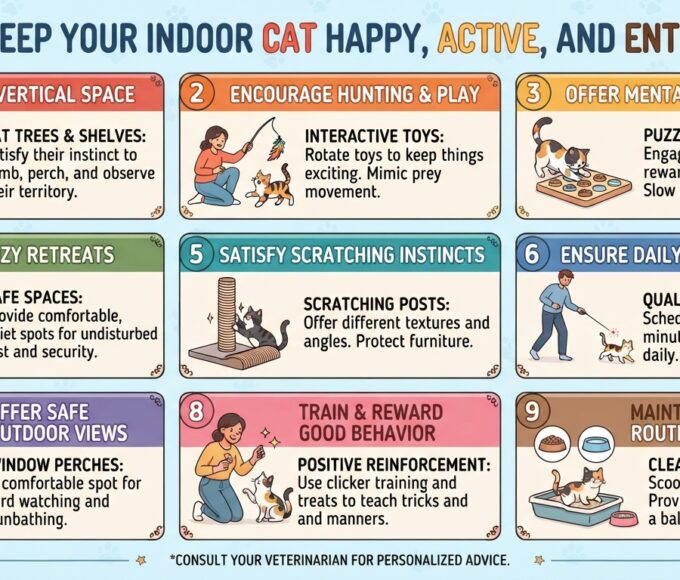
Cats often appreciate vertical territory because it allows them to observe their environment from above.
Scratching is also a normal feline behavior. Instead of trying to eliminate it, provide appropriate scratching surfaces and reward your cat for using them.
3. Keep Your Cat Mentally and Physically Active
Indoor cats still need opportunities to stalk, chase, pounce, explore, and solve simple problems.
Interactive toys can encourage these natural behaviors while giving your cat exercise and mental stimulation.
Try activities such as:
- Feather-wand games
- Toy mice
- Puzzle feeders
- Treat hunts
- Cardboard boxes and tunnels
- Cat trees and climbing areas
- Short chase games
Rotate toys instead of leaving every toy available all the time. Bringing out different toys periodically can make familiar objects feel interesting again.
What About Laser Pointers?
Laser toys can encourage chasing and movement, but never shine a laser directly into your cat’s eyes. It can also be helpful to finish a laser session with a toy or another activity your cat can physically catch.
4. Give Your Cat Regular Playtime
You don’t need to spend hours entertaining your cat.
Several short play sessions can fit easily into a normal day. Follow your cat’s energy level and allow them breaks between activities.
You can create a simple routine like:
| Activity | Benefit |
|---|---|
| Wand toy | Encourages chasing and pouncing |
| Treat hunt | Provides mental stimulation |
| Puzzle feeder | Makes meals more engaging |
| Climbing | Encourages movement and exploration |
| Box or tunnel play | Provides hiding and exploration |
Play is more than entertainment. It gives cats appropriate outlets for behaviors they would naturally perform while hunting and exploring.
5. Make Grooming Part of Your Routine
Many cats do a good job grooming themselves, but regular brushing can still be beneficial.
Brushing helps remove loose hair, keeps the coat in better condition, and gives you an opportunity to notice changes in your cat’s skin or coat. Long-haired cats may require more frequent grooming to reduce the risk of mats.
Basic Grooming Checklist
| Grooming Task | General Approach |
|---|---|
| Brushing | Adjust frequency according to coat type |
| Nail trimming | Trim when claws become too long |
| Bathing | Usually only when necessary |
| Coat inspection | Check regularly for mats, parasites, or skin changes |
| Paw inspection | Look for irritation or injury |
Cats generally don’t need frequent baths unless they become unusually dirty or get something potentially harmful on their coat.
When trimming nails, remove only the sharp tip and avoid cutting into the quick. If you’re uncomfortable doing it yourself, ask your veterinarian or a professional groomer to demonstrate the technique.
6. Keep the Litter Box Clean
A clean litter box is an important part of creating a comfortable home for your cat.
Place litter boxes somewhere quiet and accessible, and clean them regularly. Cats can become reluctant to use dirty or inconvenient litter areas. Cornell recommends providing one litter box per cat plus one additional box.
Also keep food and water dishes separated from the litter area.
If your cat suddenly stops using the litter box, don’t simply assume it’s a behavioral problem. Changes in elimination habits can sometimes be associated with medical problems and should be discussed with a veterinarian.
7. Schedule Regular Veterinary Care
Cats are experts at hiding signs of illness, which makes preventive veterinary care especially important.
A veterinary visit can help monitor:
- Weight and body condition
- Dental health
- Vaccination needs
- Parasite prevention
- Nutrition
- Skin and coat condition
- Age-related health changes
Kittens, senior cats, and cats with chronic health conditions may require more frequent monitoring.
You should also contact your veterinarian if you notice concerning changes such as appetite loss, repeated vomiting, diarrhea, unexplained weight loss, breathing problems, unusual lethargy, or difficulty urinating.
8. Learn Your Cat’s Body Language
Cats communicate constantly through their posture, ears, eyes, tail, and behavior.
A relaxed cat may:
- Slowly blink at you
- Rest comfortably
- Knead with their paws
- Approach you voluntarily
- Hold their body in a relaxed position
- Seek interaction or play
However, body language must be interpreted in context. A cat that suddenly hides, becomes unusually withdrawn, stops grooming, or behaves differently from normal may be experiencing stress, discomfort, or illness.
Learning your cat’s normal behavior makes unusual changes easier to notice.
9. Give Your Cat Safe Places to Hide and Rest
Every cat needs somewhere they can retreat when they want privacy.
A hiding place might be:
- A covered cat bed
- A cardboard box
- A cat tunnel
- A quiet shelf
- A secure area beneath furniture
Don’t force your cat out of a hiding place simply because you want to interact with them.
For nervous cats especially, having control over when and how they interact with people can help them feel more secure.
10. Give Your Cat Consistency, Patience, and Attention
Cats often do well with predictable routines.
Try to keep important parts of their day reasonably consistent, including:
- Feeding
- Playtime
- Litter maintenance
- Grooming
- Quiet time
- Bedtime routines
You don’t have to entertain your cat constantly. Sometimes sitting nearby, talking softly, offering gentle affection, or simply allowing them to relax beside you is enough.
Every cat has a different personality. Some are social and affectionate, while others prefer more independence. Respecting those differences is an important part of building trust.
Frequently Asked Questions About Cat Care
What is the most important thing to feed my cat?
The priority is a nutritionally complete and balanced diet appropriate for your cat’s life stage and individual needs. Cats also need continuous access to fresh water.
Is wet food better than dry food for cats?
Not necessarily. Both wet and dry foods can be appropriate when they are nutritionally complete and fed in suitable amounts. Wet food has much higher moisture content, while dry food offers convenience and is easy to store.
How can I keep my indoor cat entertained?
Use interactive toys, puzzle feeders, scratching posts, climbing structures, boxes, tunnels, and short play sessions. Rotating toys can also help maintain interest.
Does my cat need a scratching post?
A scratching surface is highly useful because scratching is a normal feline behavior. Offering an appropriate scratching post can help redirect the behavior away from furniture.
How often should I groom my cat?
The ideal frequency depends on the cat’s coat type, length, and individual needs. Long-haired cats generally need more regular brushing than short-haired cats.
How often should my cat see a veterinarian?
Healthy adult cats commonly need routine wellness examinations, while kittens, senior cats, and cats with medical conditions may need more frequent care. Your veterinarian can recommend an appropriate schedule based on your cat’s age and health.
Is catnip safe for cats?
Many cats respond to catnip by becoming playful, relaxed, or excited, while others show little or no response. If your cat enjoys it, offer it in moderation and supervise toys to make sure they remain intact.
Should I get another cat for my cat?
Not necessarily. Some cats enjoy feline companionship, while others prefer being the only cat. Consider your existing cat’s temperament, age, health, living space, and history before adding another animal. Introductions should be gradual rather than immediate.
A Simple Daily Cat Care Checklist
A healthy cat-care routine doesn’t have to be complicated.
Every day:
- Provide fresh water
- Feed appropriate portions
- Clean or check the litter box
- Offer play and enrichment
- Check your cat’s general behavior
- Provide affection on your cat’s terms
Regularly:
- Brush your cat as needed
- Trim nails when necessary
- Inspect the coat and skin
- Rotate toys
- Clean food and water bowls
- Schedule veterinary care
- Monitor body weight and appetite
Final Thoughts
Being a great cat parent isn’t about buying the most expensive toys or creating a picture-perfect home. It’s about understanding what your cat needs and providing a safe environment where those needs can be met.
Good nutrition, fresh water, enrichment, scratching opportunities, grooming, clean litter facilities, preventive veterinary care, and respectful interaction all contribute to your cat’s well-being.
Most importantly, get to know your individual cat. Their personality, preferences, activity level, and habits will tell you a lot about how to care for them.
Give them a comfortable place to sleep, time to play, opportunities to explore, and plenty of patience—and you’ll be well on your way to building a wonderful feline friendship.







Leave a comment