





Traveling with your dog can turn an ordinary vacation into a memorable adventure. From exploring a new hiking trail to relaxing together at a pet-friendly cabin, having your four-legged companion along can make the journey even more special.
However, successful dog travel requires more than simply grabbing a leash and heading out. Your dog needs appropriate food, water, identification, safe transportation, bathroom breaks, rest, and a familiar sense of routine.
Whether you’re planning a short weekend getaway or a longer road trip, this guide will help you prepare for a safer and more comfortable adventure with your dog.
1. Choose a Dog-Friendly Destination
Before booking anything, make sure your destination genuinely accommodates dogs.
A destination may advertise itself as pet-friendly while still having restrictions on where dogs can go. Check the rules for your hotel, vacation rental, parks, beaches, restaurants, trails, and other attractions before you arrive.
Consider looking for destinations with:
- Dog-friendly walking trails
- Parks and open spaces
- Pet-friendly accommodations
- Outdoor dining options where dogs are permitted
- Nearby veterinary clinics
- Convenient places to purchase pet supplies
- Reasonable weather conditions for your dog’s breed and age
It’s also important to research local leash requirements and animal regulations.
What to Check Before Booking
| Consideration | What to Look For |
|---|---|
| Accommodation | Pet rules, fees, size restrictions, and allowed areas |
| Activities | Trails, parks, beaches, and outdoor attractions |
| Weather | Temperatures and conditions suitable for your dog |
| Veterinary care | Nearby emergency and regular veterinary services |
| Local rules | Leash laws and restrictions on dogs |
| Transportation | Pet policies for trains, planes, buses, or other services |
Don’t rely solely on an accommodation’s “pet-friendly” label. Read the actual pet policy or contact the property directly.
2. Build a Dog Travel Packing List
Packing for your dog is much easier when you create a checklist before leaving.
Bring enough of your dog’s normal food for the entire trip, plus some extra in case your plans change. Sudden changes in diet can cause digestive problems, so traveling with familiar food is generally preferable.
Dog Travel Essentials
- Regular dog food
- Treats
- Fresh drinking water
- Food and water bowls
- Leash and harness
- Collar with identification information
- Waste bags
- Dog bed or familiar blanket
- Favorite toys
- Any prescribed medications
- Basic grooming supplies
- Health and vaccination records when needed
- Cleaning supplies
- Travel crate or appropriate vehicle restraint
- Pet first-aid supplies
A familiar blanket, bed, or toy can be especially useful because it gives your dog something recognizable in an unfamiliar environment.
3. Make Car Travel Safer
If you’re taking a road trip, your dog’s safety inside the vehicle should be a priority.
Avoid allowing your dog to freely move around the passenger compartment while the vehicle is moving. A properly secured travel crate or an appropriate canine vehicle restraint can help prevent your dog from becoming a distraction or being thrown around during sudden braking.
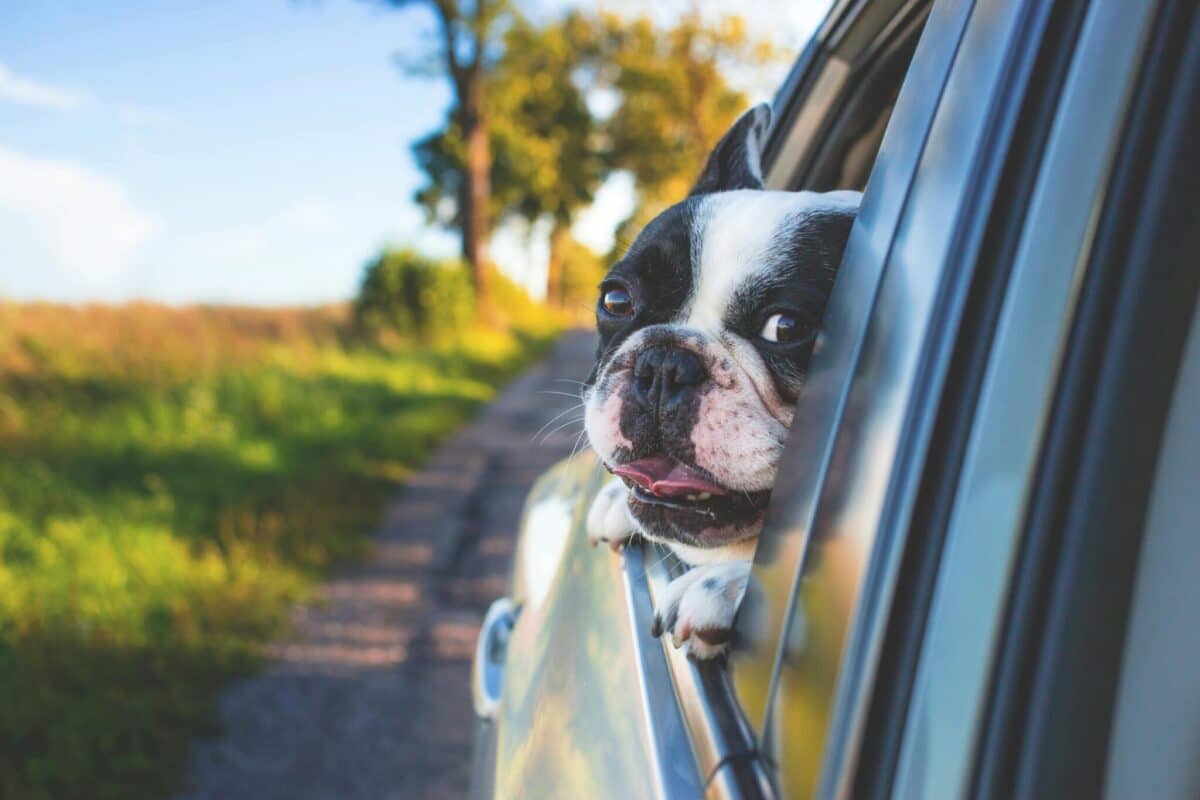
Keep your dog away from the driver’s lap and don’t allow them to hang their head out of an open window.
Before Starting the Trip
If your dog isn’t accustomed to car rides, don’t make their first experience a six-hour journey.
Instead, gradually introduce them to the vehicle:
- Let your dog investigate the parked car.
- Spend a few minutes inside without driving.
- Take a short drive around the neighborhood.
- Gradually increase the length of the trips.
- Reward calm behavior.
This can help your dog become more comfortable with traveling.
4. Take Regular Breaks
Long journeys can be tiring for dogs, just as they are for humans.
Plan regular stops where your dog can safely:
- Stretch
- Walk
- Drink water
- Use the bathroom
- Sniff and explore
- Relax before continuing
Always use a leash unless you’re in a secure, designated off-leash area.
Keep your dog’s individual needs in mind. Puppies, older dogs, dogs with mobility problems, and dogs that become anxious during travel may need different schedules.
5. Never Leave Your Dog Alone in a Hot Car
This deserves special attention.
Never leave your dog unattended in a parked vehicle, especially in warm weather.
Even when the outside temperature doesn’t seem extreme, the temperature inside a vehicle can rise rapidly. Cracking the windows does not make an unattended parked car a safe environment for a dog.
If a destination doesn’t allow dogs inside, consider leaving your dog with another responsible adult rather than leaving them in the vehicle.
This is one of the most important dog travel safety rules.
6. Keep Your Dog Comfortable During the Journey
Travel can be exciting, but unfamiliar sights, sounds, smells, and movement can also overwhelm some dogs.
Bring familiar items from home to create a more recognizable environment.
A comfortable travel setup might include:
- A familiar blanket
- Their normal food
- A favorite toy
- A comfortable resting area
- Access to water during appropriate stops
- A calm environment
Try to maintain your dog’s normal feeding and sleeping routine as much as possible.
If your dog experiences severe anxiety, motion sickness, or other travel problems, talk to your veterinarian before the trip. Don’t give your dog medication or supplements simply because someone recommended them online.
7. Keep Your Dog Entertained on the Road
Dogs don’t need constant entertainment during a car ride, but appropriate enrichment can be useful during stops and downtime.
Consider bringing:
- Durable chew toys
- Food puzzles
- Treat-dispensing toys
- Snuffle-style enrichment
- Favorite toys from home
- A portable mat or bed
For safety, avoid giving your dog toys or treats that could create a choking hazard while you’re driving.
Instead, use enrichment activities when the vehicle is safely parked.
8. Plan Dog-Friendly Activities
A vacation doesn’t have to revolve around sightseeing alone. Plan activities your dog can actually enjoy.
Depending on your dog’s abilities and the local rules, you might try:
Nature Walks
A dog-friendly trail can provide exercise and plenty of interesting smells.
Beach Visits
If dogs are allowed, a beach can be exciting—but check local rules and environmental conditions first.
Outdoor Dining
Some restaurants allow dogs in outdoor seating areas. Always check the establishment’s current policy before visiting.
Exploring New Neighborhoods
Sometimes a simple walk through a new area can be enriching because your dog gets to experience unfamiliar sights and smells.
Fetch or Interactive Play
A safe open area can provide an opportunity for a short game of fetch or another favorite activity.
Remember that not every dog enjoys crowded attractions. Choose activities based on your individual dog’s temperament, age, health, and energy level.
9. Bring Identification and Important Records
Dogs can become lost more easily in unfamiliar surroundings.
Before traveling, check that your dog’s identification information is current.
Your dog should ideally have:
- A secure collar
- Current identification information
- Permanent identification such as a microchip where appropriate
- Your current contact details
- Relevant veterinary records
- Medication information if applicable
Keep a recent photo of your dog on your phone. If your dog ever becomes lost, having a clear photograph can make it easier to create an accurate lost-pet notice.
10. Research Veterinary Care Before You Leave
You hope your dog won’t need medical attention during vacation, but it’s better to prepare for the possibility.
Before leaving, identify:
- A nearby veterinary clinic
- An emergency veterinary hospital
- The location of a pet pharmacy or supply store if needed
Save the addresses and phone numbers on your phone.
If you’re traveling internationally or crossing borders, research the required veterinary certificates, vaccinations, identification, and other animal-entry requirements well before departure. Requirements can vary considerably by destination.
11. Help Your Dog Handle New People and Animals
Not every dog wants to greet every person or dog they encounter.
If your dog is nervous, reactive, or uncomfortable around unfamiliar animals, don’t force social interactions simply because you’re on vacation.
Give your dog enough distance from triggers and look for quieter locations when necessary.
A calm vacation can be much more enjoyable than one packed with crowded attractions.
If your dog normally uses a muzzle for safety or veterinary/behavioral reasons, practice with it beforehand using appropriate positive conditioning. Don’t introduce a muzzle for the first time in the middle of a stressful trip.
12. Prepare for Motion Sickness
Some dogs become nauseated during car rides.
Possible signs include:
- Excessive drooling
- Lip licking
- Restlessness
- Whining
- Vomiting
- Refusing food
If your dog regularly gets carsick, speak with your veterinarian before traveling. Your vet can help determine whether motion sickness, anxiety, or another issue may be contributing and can advise you about appropriate treatment.
Don’t give human medication to your dog unless your veterinarian specifically tells you to do so.
13. Keep Your Dog’s Routine as Normal as Possible
Dogs often find comfort in familiar routines.
While traveling, try to maintain similar times for:
- Meals
- Walks
- Bathroom breaks
- Rest
- Play
- Bedtime
The schedule doesn’t have to be perfect. Even small pieces of your dog’s normal routine can make an unfamiliar environment feel more predictable.
14. Choose Pet-Friendly Accommodation Carefully
Before booking a hotel, cabin, rental, or other accommodation, confirm its current pet policy.
Ask about:
- Pet fees
- Breed or size restrictions
- Number of pets permitted
- Areas where dogs are allowed
- Whether dogs can be left alone in the room
- Nearby walking areas
- Rules regarding barking or noise
Bring your dog’s bed or blanket if possible. A familiar sleeping area can make the new surroundings less intimidating.
Don’t assume that a property allows pets simply because an old listing or travel post says it does. Policies can change.
15. Know When Your Dog Needs a Break
Sometimes the best travel activity is doing nothing.
Watch your dog’s behavior throughout the journey.
Signs that your dog may need some quiet time can include:
- Excessive panting when they aren’t hot
- Pacing
- Repeated yawning
- Lip licking
- Hiding
- Trembling
- Whining
- Trying to escape
- Unusual withdrawal
- Loss of interest in normal activities
Give your dog a chance to rest and decompress instead of constantly moving from one attraction to another.
A vacation should be enjoyable for your dog too.
Dog Travel Checklist
Before leaving home, run through this quick checklist:
| Item | Packed? |
|---|---|
| Food | ☐ |
| Treats | ☐ |
| Water | ☐ |
| Food and water bowls | ☐ |
| Collar and ID | ☐ |
| Leash and harness | ☐ |
| Waste bags | ☐ |
| Bed or blanket | ☐ |
| Favorite toys | ☐ |
| Medications | ☐ |
| Health records | ☐ |
| Travel crate/restraint | ☐ |
| First-aid supplies | ☐ |
| Cleaning supplies | ☐ |
| Recent photo of your dog | ☐ |
| Emergency veterinary information | ☐ |
Frequently Asked Questions About Dog Travel
Is it a good idea to travel with my dog?
It can be, provided your dog is comfortable with the type of travel you’re planning and the destination meets their needs. Some dogs love exploring new places, while others become stressed by long journeys or unfamiliar environments.
How often should I stop during a road trip with my dog?
There isn’t one perfect schedule for every dog. Plan regular breaks for bathroom needs, water, movement, and rest, and adjust the frequency based on your dog’s age, health, size, and comfort.
Can my dog travel on an airplane?
Some airlines allow dogs to travel under specific conditions, but policies vary by airline, route, dog size, carrier requirements, and destination. Check the airline’s current pet policy well before booking.
For international trips, you may also need to meet destination-specific animal-entry requirements.
What should I do if my dog gets anxious while traveling?
Keep their environment as calm and familiar as possible. Bring familiar bedding, allow regular breaks, and avoid forcing your dog into overwhelming situations. If anxiety is severe or predictable, discuss travel plans with your veterinarian before leaving.
Can I leave my dog alone in a hotel room?
Never assume that you can. Hotel and rental policies vary, and some properties prohibit leaving pets unattended. Always check the rules and consider your dog’s behavior before doing so.
What should I do if my dog isn’t friendly with other dogs?
Don’t force interactions. Choose quieter areas, maintain a safe distance from unfamiliar dogs, and keep your dog under control according to local rules. If your dog has significant reactivity or aggression, consider working with a qualified behavior professional before taking a challenging trip.
How can I make a long car ride easier for my dog?
Use an appropriate restraint or secured travel crate, maintain a comfortable temperature, bring familiar items, provide regular breaks, and gradually practice longer drives before the trip.
What is the most important thing to remember when traveling with a dog?
Prioritize safety, comfort, and your dog’s individual needs rather than trying to fit as many activities as possible into the trip.
Final Thoughts
Traveling with your dog can create some of your favorite memories together, but the best adventures start with thoughtful preparation.
Choose suitable destinations, pack your dog’s essentials, use safe transportation, plan regular breaks, protect them from heat, and give them plenty of opportunities to rest. Most importantly, pay attention to your dog’s behavior and recognize when they need some quiet time.
A successful dog-friendly vacation isn’t necessarily the one with the most activities. It’s the one where you and your dog can explore, relax, and enjoy being together safely.
So pack the leash, grab your dog’s favorite blanket, and start planning your next adventure—one comfortable paw at a time.







Leave a comment