


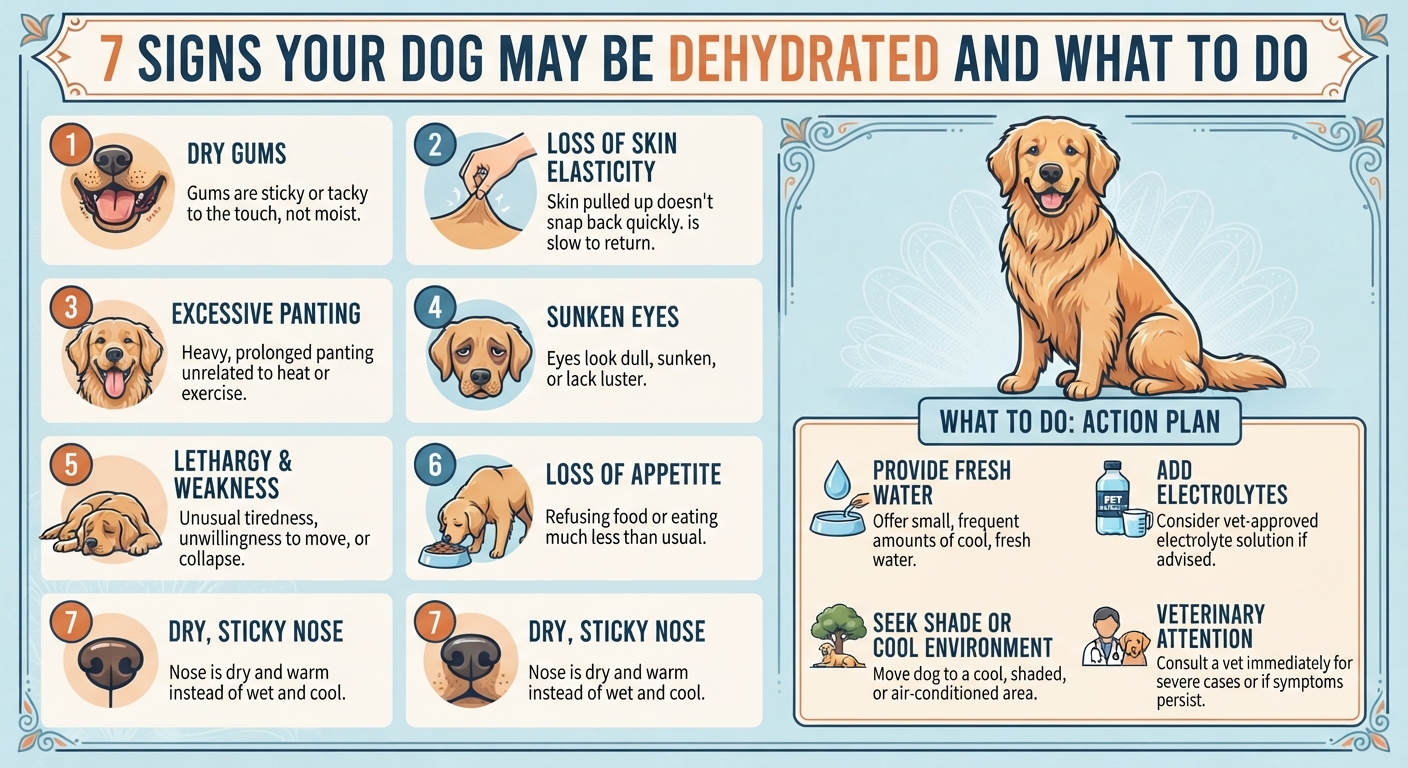
Water is essential for every dog. It supports normal body functions and becomes particularly important when temperatures rise or your dog is active.
Dogs can lose fluids through normal activity, panting, vomiting, diarrhea, and other situations. If they don’t replace those fluids, dehydration can develop.
Understanding the signs of dehydration in dogs can help owners recognize when their pet may need attention.
Here are seven signs to watch for and some practical steps you can take.
What Is Dehydration in Dogs?
Dehydration happens when a dog loses more fluids than they replace.
A healthy dog normally gets water from drinking and, to a smaller extent, from food.
Fluid requirements can increase during hot weather, exercise, illness, or other circumstances that cause additional water loss.
Mild dehydration may not always be immediately obvious, which is why paying attention to changes in drinking, behavior, and physical condition is important.
1. Excessive Panting
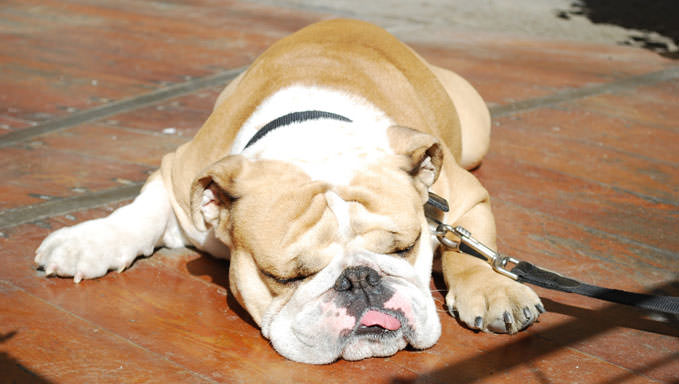
Panting is a normal way for dogs to cool themselves.
However, unusually heavy or persistent panting can be a warning sign, especially if your dog hasn’t recently exercised.
A dog that is resting in a cool environment but continues panting heavily may need closer attention.
Panting can have many causes, though, so don’t assume dehydration is automatically responsible.
2. Dry or Sticky Gums
A dog’s gums are normally moist.
If the gums appear unusually dry or sticky, it may indicate that your dog isn’t adequately hydrated.
You can regularly look at your dog’s gums during normal, healthy periods so you know what they usually look and feel like.
This makes it easier to notice changes later.
If your dog’s gums appear abnormal along with other concerning symptoms, contact a veterinarian.
3. Reduced Energy
Dehydration can affect how a dog feels and behaves.
A dog that is normally energetic may become unusually tired, weak, or reluctant to play.
If your dog suddenly doesn’t want to walk, interact, or perform normal activities, consider whether they have been drinking enough.
However, reduced energy can also be associated with many illnesses, so persistent lethargy should not be ignored.
4. Loss of Skin Elasticity
Some owners use a skin-tent test as a basic indication of hydration.
This involves gently lifting a small amount of skin and observing how quickly it returns to its normal position.
However, this isn’t a perfect test. Age, body condition, and skin characteristics can affect the result.
For that reason, it shouldn’t be used by itself to diagnose dehydration.
If you notice several signs at once, particularly after vomiting, diarrhea, or heat exposure, veterinary advice is more appropriate.
5. Changes in Urination
Changes in how often your dog urinates or the amount of urine they produce can sometimes accompany dehydration.
A dog that is drinking very little and urinating less than normal deserves attention.
Changes in urine can also happen because of kidney problems, urinary conditions, medications, or other health issues.
If you notice a persistent change in your dog’s normal bathroom habits, speak with your veterinarian.
6. Loss of Appetite
Some dehydrated or unwell dogs may show less interest in food.
If your dog skips a meal once but otherwise seems completely normal, monitor them closely.
However, refusing food together with vomiting, diarrhea, weakness, excessive panting, or reduced drinking is more concerning.
These combinations can indicate that your dog needs professional evaluation.
7. Sunken-Looking Eyes or Significant Weakness
More serious dehydration can cause noticeable physical changes, including eyes that appear sunken.
A severely dehydrated dog may also become extremely weak or unresponsive.
This is not something to manage at home without professional guidance.
Seek urgent veterinary care if your dog appears seriously ill, collapses, struggles to breathe, cannot keep fluids down, or has other severe symptoms.
What Can Cause Dehydration in Dogs?
Several situations can increase the risk of dehydration.
Common causes include:
- Hot weather
- Excessive exercise
- Vomiting
- Diarrhea
- Fever
- Not having access to water
- Reduced drinking due to illness
- Certain medical conditions
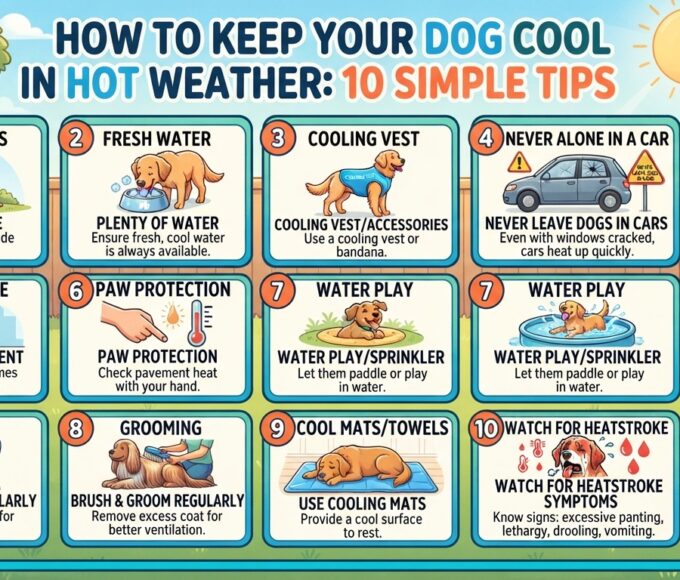
Dogs that spend long periods outdoors need particular attention during hot weather.
Make sure water is available throughout the day and check that the bowl hasn’t been knocked over or become empty.
How Much Water Does a Dog Need?
There isn’t one exact amount that is perfect for every dog.
Water requirements can vary according to body size, diet, activity level, weather, and health.
Dogs eating wet food may obtain more moisture from their meals, while dogs eating dry food typically rely more heavily on drinking water.
Rather than focusing only on a fixed number, monitor your dog’s normal drinking habits.
A sudden increase or decrease in water consumption can be worth discussing with a veterinarian.
How Can I Encourage My Dog to Drink Water?
If your dog isn’t drinking as much as usual, make sure their water bowl is clean and filled with fresh water.
Some dogs prefer certain bowl materials or locations. You can try placing an additional bowl somewhere your dog spends time.
For dogs that eat dry food, adding moisture to their diet may sometimes be appropriate, but discuss significant dietary changes with your veterinarian.
Don’t force water into a dog’s mouth, particularly if they’re weak, vomiting, or having trouble swallowing.
When Should You Contact a Veterinarian?
Contact your veterinarian if your dog isn’t drinking normally or shows signs of dehydration that don’t quickly resolve.
Seek urgent veterinary help if dehydration is accompanied by:
- Repeated vomiting
- Severe diarrhea
- Collapse
- Extreme weakness
- Difficulty breathing
- Confusion
- Unresponsiveness
- Suspected heatstroke
Puppies, older dogs, and dogs with existing health problems may require particularly careful monitoring.
Final Thoughts
Knowing the signs of dehydration in dogs can help you notice potential problems early.
Fresh water should always be available, especially during warm weather and after physical activity. Pay attention to changes in your dog’s drinking, energy, appetite, urination, and overall behavior.
Dehydration can sometimes be caused by something more serious than simply not drinking enough water. If your dog appears unwell or symptoms are significant, professional veterinary advice is the safest approach.



Leave a comment