




Your dog’s teeth deserve regular attention just like the rest of their health.
Dental care is sometimes overlooked because dogs can’t tell us when their mouth feels uncomfortable. By the time obvious symptoms appear, dental problems may already need professional attention.
Fortunately, there are simple habits you can incorporate into your dog’s routine.
If you’re wondering how to clean dog teeth at home, regular brushing is one of the most useful habits to introduce, alongside appropriate dental products and professional veterinary care.
Why Is Dog Dental Care Important?
Dogs can develop plaque and tartar on their teeth.
Without appropriate dental care, buildup can contribute to gum problems and unpleasant breath.
Dental disease can also cause discomfort and affect a dog’s ability to eat comfortably.
Regular home care can help reduce plaque accumulation, but it doesn’t replace professional veterinary examinations or dental treatment when needed.
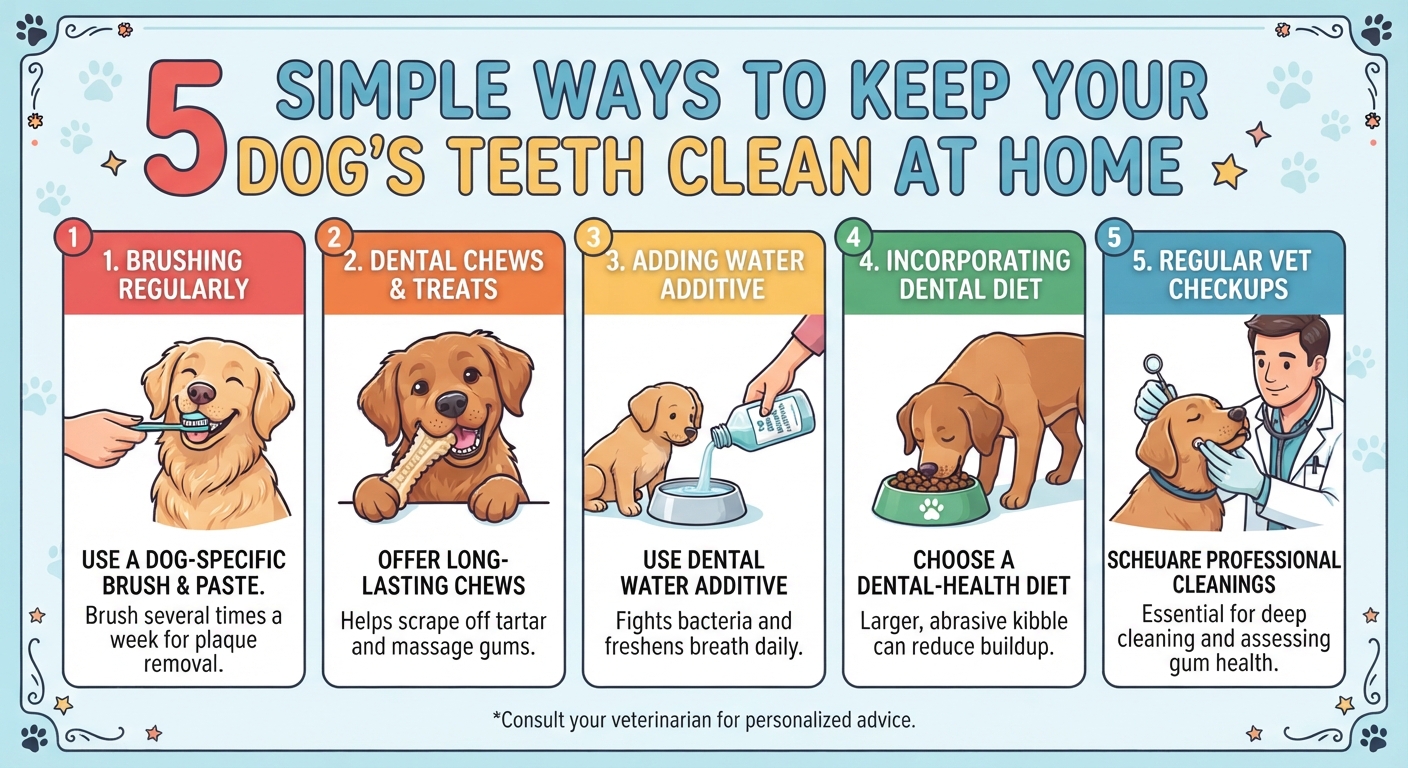
1. Brush Your Dog’s Teeth Regularly
Brushing is one of the most effective home dental-care habits.
However, don’t immediately put a toothbrush into your dog’s mouth if they’ve never experienced one before.
Introduce the process gradually.
Start by allowing your dog to become comfortable with you touching their face and lips.
You can then introduce a small amount of dog-specific toothpaste.
Once your dog is comfortable, gradually introduce a pet toothbrush or appropriate finger brush.
Keep early sessions very short.
Never Use Human Toothpaste
Human toothpaste isn’t designed for dogs to swallow.
Some human toothpaste products can contain ingredients that are unsafe for pets.
Use toothpaste specifically formulated for dogs and follow the product instructions.
If you’re unsure which product is appropriate, ask your veterinarian.
2. Make Tooth Brushing a Positive Experience
Dogs can easily develop negative associations with mouth handling if the process is rushed.
Instead, reward cooperation.
You might progress through stages:
Touch the muzzle → lift the lip → touch the teeth → introduce toothpaste → touch with a toothbrush → brush briefly
Don’t move to the next stage until your dog is comfortable.
Give praise or an appropriate reward after successful sessions.
3. Use Appropriate Dental Chews
Some dental chews are designed to help reduce plaque through mechanical chewing.
However, not every chew is suitable for every dog.
Choose a product appropriate for your dog’s size and chewing behavior.
Always supervise your dog with chews and discard products that become small enough to swallow whole or show signs of dangerous damage.
Dental chews should complement—not replace—regular brushing and veterinary care.
4. Consider Veterinary-Approved Dental Products
There are many dental products available for dogs, including dental diets, wipes, gels, and other oral-care products.
Their usefulness can vary.
If you want to add a specific dental product to your dog’s routine, look for products with appropriate veterinary or professional dental guidance and follow the instructions carefully.
Your veterinarian can help you choose products based on your dog’s individual needs.
5. Schedule Regular Dental Checks
Home care is important, but professional veterinary examinations remain essential.
Your veterinarian can examine your dog’s mouth and identify signs that may not be obvious at home.
Some dogs may eventually require professional dental cleaning.
Never attempt to scrape tartar from your dog’s teeth with sharp household tools.
You could injure the gums or damage the tooth surface.
Signs Your Dog May Have a Dental Problem
Contact your veterinarian if you notice:
- Persistent bad breath
- Red or swollen gums
- Bleeding from the mouth
- Difficulty chewing
- Dropping food
- Excessive drooling
- Loose teeth
- Swelling around the mouth
- Reduced interest in food
- Pain when the mouth is touched
Dogs don’t always show obvious signs of dental pain, so regular checks are useful.
How Often Should You Brush Your Dog’s Teeth?
Daily brushing is often recommended for maintaining good oral hygiene, but the most important thing is establishing a routine your dog can tolerate consistently.
If daily brushing isn’t immediately possible, start gradually.
Even short, regular sessions can help you build the habit.
Your veterinarian can provide guidance based on your dog’s dental health.
How to Introduce a Toothbrush to a Puppy
Puppies can be introduced to mouth handling gradually.
Begin by gently touching around the mouth.
Reward calm behavior.
As the puppy becomes comfortable, introduce dog-specific toothpaste and then a suitable toothbrush.
Early positive experiences can make future dental care easier.
What About Dental Treats?
Dental treats can be useful as part of an overall dental-care routine.
However, they shouldn’t be treated as a complete replacement for brushing.
Consider the treat’s calorie content as part of your dog’s overall diet.
Choose the correct size for your dog and follow the manufacturer’s feeding instructions.
Can Dry Food Clean a Dog’s Teeth?
Regular dry food should not be considered a complete substitute for dental care.
Although some kibble may provide a degree of mechanical contact with teeth, ordinary food doesn’t remove all plaque.
Specially formulated dental diets may have different properties, but discuss dietary changes with your veterinarian.
A Simple Home Dental Routine
You can build a basic routine like this:
Daily:
Briefly inspect your dog’s mouth and brush if tolerated.
Several times per week:
Use appropriate dental enrichment or veterinarian-approved dental products as needed.
Regularly:
Check for changes in breath, gums, teeth, and eating behavior.
During veterinary visits:
Ask your veterinarian to examine your dog’s teeth and gums.
Final Thoughts
Learning how to clean dog teeth at home doesn’t require a complicated routine.
Start slowly, use dog-specific dental products, introduce brushing positively, and make oral care part of your dog’s normal routine.
Most importantly, don’t rely exclusively on home care.
Regular veterinary examinations can identify dental problems that aren’t obvious to owners.
A few minutes of consistent dental care can become an important part of your dog’s overall health routine.
Frequently Asked Questions
Can I use human toothpaste on my dog?
No. Use toothpaste specifically formulated for dogs. Some ingredients in human toothpaste can be unsafe for pets.
How often should I brush my dog’s teeth?
Daily brushing is commonly recommended, but introduce it gradually if your dog isn’t used to having their mouth handled.
Do dental chews replace brushing?
No. Dental chews can complement an oral-care routine but shouldn’t automatically be considered a replacement for brushing or veterinary dental care.
What should I do if my dog’s gums bleed?
Contact your veterinarian, particularly if bleeding is persistent or accompanied by swollen gums, pain, bad breath, loose teeth, or difficulty eating.








Leave a comment