





Dogs spend a significant amount of time sleeping and resting, so choosing a comfortable bed is an important part of creating a dog-friendly home.
With so many shapes, materials, sizes, and designs available, it can be difficult to know which option is appropriate.
The right bed isn’t necessarily the most expensive one.
When learning how to choose a dog bed, focus on your dog’s size, sleeping habits, age, health, coat, environment, and cleaning requirements.
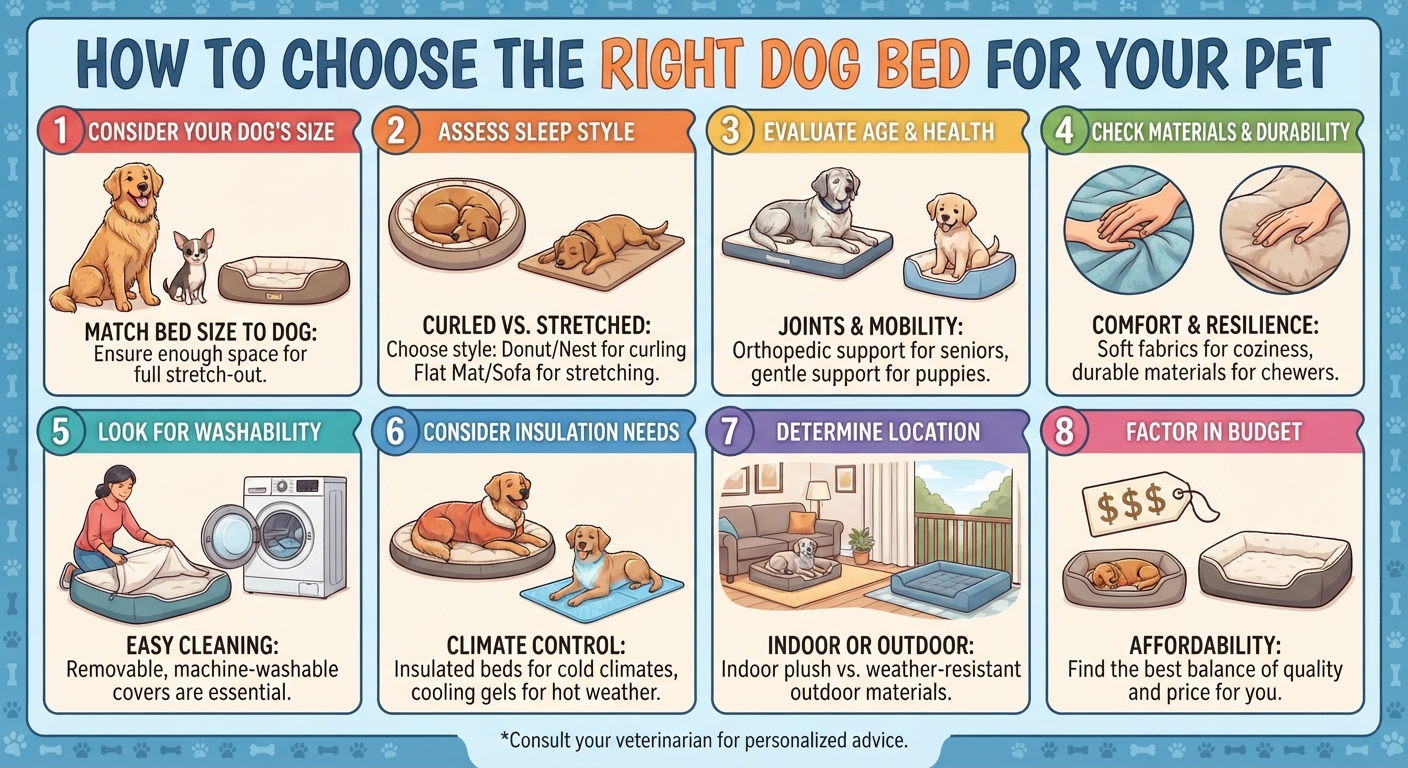
1. Measure Your Dog
Start by measuring your dog.
Measure from their nose to the base of their tail, then consider how much additional space they need to stretch comfortably.
A dog bed shouldn’t force your dog to curl up if they prefer sleeping stretched out.
If your dog is still growing, consider their expected adult size when purchasing a long-term bed.
2. Watch How Your Dog Sleeps
Your dog’s sleeping position can tell you a lot about the style of bed they may prefer.
Does your dog:
- Curl into a ball?
- Stretch out?
- Sleep on their side?
- Rest their head on something?
- Prefer enclosed spaces?
- Move around frequently?
A dog that likes to stretch may prefer a flat mattress-style bed.
A dog that likes to curl up may enjoy a bed with raised edges.
3. Consider Your Dog’s Age
Puppies often need beds that are durable and easy to clean.
Accidents can happen during the early stages of house training, so washable materials are particularly practical.
Older dogs may benefit from additional cushioning and easier access.
However, age alone doesn’t determine the right bed. Your dog’s mobility and individual comfort should also be considered.
4. Think About Joint Support
Some dogs need additional support because of age, body structure, or existing health issues.
An appropriately supportive mattress may be more comfortable than a thin cushion.
If your dog has arthritis, orthopedic problems, or chronic pain, ask your veterinarian whether a particular type of bedding would be appropriate.
5. Choose Easy-to-Clean Materials
A dog bed can collect:
- Fur
- Dirt
- Dust
- Drool
- Outdoor debris
- Occasional accidents
A removable, washable cover can make cleaning significantly easier.
Check the manufacturer’s cleaning instructions before buying.
If the entire bed can’t be washed, make sure the cover can be removed and cleaned.
6. Consider Your Home’s Temperature
Dogs have different comfort levels.
A thick, enclosed bed may be comfortable during colder weather but too warm during summer.
Similarly, a thin bed may not provide enough insulation from a cold floor.
Consider having different sleeping options depending on the season.
Your dog may naturally move to cooler or warmer areas throughout the day.
7. Think About Where the Bed Will Go
Location matters.
Place the bed somewhere your dog can relax without constant interruptions.
Avoid areas with excessive drafts or direct heat sources.
If your dog likes to stay close to the family, a bed in a shared living space may be more useful than one hidden away in another room.
8. Choose a Durable Bed
Some dogs chew or dig at their bedding.
If your dog is a heavy chewer, look for durable materials and avoid beds with components that could easily become detached.
No dog bed is completely chew-proof.
Inspect the bed regularly and remove it if pieces become damaged or could be swallowed.
9. Don’t Forget About Size
A bed that looks large enough in a store may feel different once your dog lies down.
Make sure there’s enough room for your dog to change positions comfortably.
For households with multiple dogs, each dog should have an appropriate resting space.
Some dogs may enjoy sharing, but they should still have the option to rest separately.
10. Consider Your Budget
Dog beds are available at many price points.
A higher price doesn’t automatically mean a bed is better for your particular dog.
Instead, look for:
- Appropriate size
- Comfortable support
- Durable construction
- Washable materials
- Suitable design
Replacing a poorly chosen bed several times can ultimately cost more than selecting an appropriate one from the beginning.
Different Types of Dog Beds
Mattress Beds
These provide a flat sleeping surface and may suit dogs that like to stretch out.
Bolster Beds
These have raised edges that can give dogs a place to rest their heads.
Orthopedic-Style Beds
These are designed to provide additional support and may be considered for older or mobility-limited dogs.
Crate Mats
These are designed to fit inside crates and provide a comfortable resting surface.
Elevated Beds
These raise the dog off the floor and can provide airflow underneath.
The appropriate choice depends on your dog’s needs and the environment.
How Many Dog Beds Do You Need?
You don’t necessarily need multiple beds.
However, having more than one can be convenient if your dog spends time in different areas of the home.
For example, you might have one in the bedroom and another in the living room.
This allows your dog to rest comfortably without moving their bed constantly.
When Should You Replace a Dog Bed?
Replace the bed if:
- The filling has become permanently compressed
- The frame is damaged
- Fabric is severely torn
- It can no longer be cleaned properly
- Your dog has outgrown it
- Damaged components create a safety risk
Regular inspection is especially important if your dog chews their bedding.
Final Thoughts
Learning how to choose a dog bed becomes much easier when you focus on your individual dog instead of simply choosing the most attractive design.
Consider their size, sleeping position, age, comfort, health, and cleaning needs.
A good dog bed should give your pet enough room to rest comfortably while being practical for you to maintain.
Take your time, observe your dog’s sleeping habits, and choose a bed that fits both your pet and your home.
Frequently Asked Questions
How big should a dog bed be?
Your dog should have enough room to lie down comfortably and change positions. Measure your dog and consider their preferred sleeping position.
Are orthopedic dog beds good for older dogs?
Supportive beds may be useful for some older dogs, particularly those with mobility or joint concerns. Ask your veterinarian if your dog has a specific health condition.
Should a dog bed be washable?
A washable cover is highly practical because dog beds naturally collect fur and dirt.
Where should I put my dog’s bed?
Choose a quiet, comfortable location where your dog can rest without excessive disturbance, drafts, or dangerous heat sources.









Leave a comment