



Finding a forever home can take time for a shelter dog, especially when stress, fear, or frustration makes it difficult for potential adopters to see their true personality.
Jax, a large shelter dog with a gentle heart, spent months waiting for someone to look beyond his difficult first impression. Although his time at the shelter was much longer than anyone hoped, the staff never gave up on him.
When Jax finally found the person who understood him, his departure became an emotional moment for everyone who had cared for him. And before walking out the door to begin his new life, Jax appeared to have one important thing left to do: say goodbye to his shelter friends.
Jax Arrived at the Shelter in Poor Condition
When Jax arrived at the Regina Humane Society, very little was known about his life before entering the shelter.
Staff members could tell that he had likely experienced a difficult period before being rescued. He was extremely thin and very hungry, suggesting that he may have spent considerable time without reliable access to food or shelter.
The shelter made sure Jax received the nutrition and veterinary attention he needed before preparing him for adoption.
Once his initial medical care was completed, Jax appeared ready for his next chapter. Unfortunately, his journey wasn’t going to be quite that simple.
An Unexpected Illness Delayed His Adoption
Shortly after becoming available for adoption, Jax became seriously ill with pneumonia.
Instead of moving into a new home, he needed to remain under medical care while he recovered. His adoption plans were therefore put on hold while the veterinary team focused on getting him healthy again.
After weeks of treatment and recovery, Jax eventually returned to the shelter.
He was healthy enough to continue his search for a family, but another challenge soon became apparent.
His Kennel Behavior Gave Visitors the Wrong Impression
Jax was affectionate and friendly when staff members spent time with him, but potential adopters didn’t always get to see that side of him.
When people approached his kennel, Jax sometimes barked and growled.
The shelter described this behavior as barrier frustration. A dog experiencing barrier frustration may become frustrated or overly excited because a physical barrier, such as a kennel door or fence, prevents it from reaching or interacting with something it wants.
For Jax, that behavior could easily have been misunderstood by visitors.
Someone walking through a shelter might see a large dog barking and growling from behind a kennel door and assume the dog is aggressive. But the behavior inside a kennel doesn’t necessarily tell the whole story.
The shelter staff knew there was a much gentler personality waiting to be discovered.
Staff Wanted People to Meet the Real Jax
The shelter encouraged potential adopters to meet Jax outside his kennel.
Once he had the opportunity to interact without the barrier between him and another person, visitors could see more of his affectionate personality.
Unfortunately, shelter dogs often have only a limited amount of time to make an impression on potential adopters. A dog barking behind kennel bars may be overlooked before anyone takes the opportunity to learn more about them.
Jax remained at the shelter much longer than the average stay.
As the months passed, he became especially popular with the people who worked there every day.
Jax Became a Shelter Favorite
The staff knew Jax wasn’t simply the intimidating dog some visitors saw behind his kennel door.
They knew the affectionate dog underneath it.
To give him more opportunities to interact with people and demonstrate his personality, staff eventually moved Jax into the front reception area.
This gave him a chance to spend more time around people in a less restrictive environment.
And it didn’t take long for everyone to appreciate what the staff had already discovered.
Jax was a loving dog who simply needed someone willing to understand him.
Then the Right Person Finally Walked In
After months of waiting, Jax finally met someone who seemed to understand exactly what he needed.
A man with experience caring for large dogs came to the shelter, and he and Jax quickly formed a connection.
Rather than judging Jax by his behavior behind the kennel door, his new owner took the time to interact with him and get to know him.
The connection was strong enough that Jax finally had the opportunity he’d been waiting for: a home of his own.
Jax Had One Last Thing to Do
Leaving the shelter wasn’t simply a routine adoption for Jax.
After spending so much time with the staff, he had developed relationships with the people who had fed him, cared for him, treated him when he was sick, and continued believing in him.
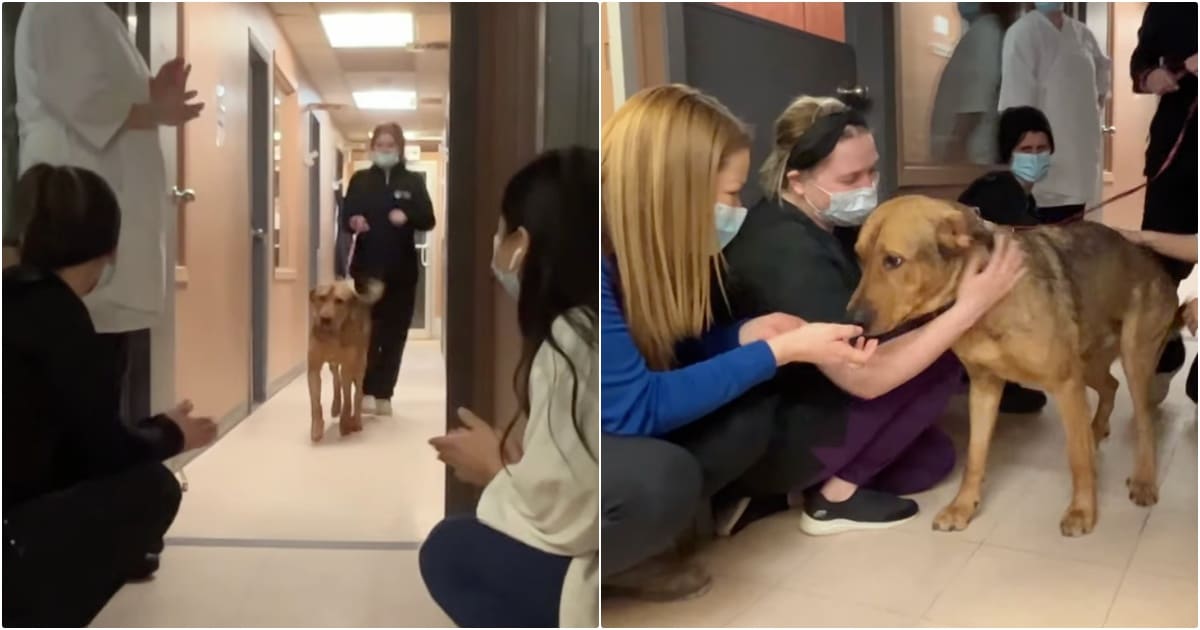
When it was finally time to leave, the shelter staff gathered together to say goodbye.
But Jax wasn’t quite ready to walk away.
Instead, he went around the room and greeted the people who had been part of his journey.
It was as though he wanted to give every one of his friends a final goodbye before beginning his new life.
For the staff, it was an emotional moment—not because Jax was leaving, but because he was finally leaving for the right reasons.
From Long-Term Shelter Resident to Beloved Family Dog
The goodbye was filled with happy tears.
After months of uncertainty, Jax had finally found someone who saw the loving dog the shelter workers had known all along.
His story is a reminder that adoption doesn’t always happen immediately. Some dogs need more time, medical care, behavioral support, or simply the right person to recognize their personality.
For Jax, patience eventually paid off.
His new owner understood him, and Jax could finally settle into a permanent home.
Jax Still Remembers His Shelter Friends
Even after leaving the shelter, Jax didn’t completely disappear from the lives of the people who had cared for him.
He continued visiting the shelter with his new dad to say hello.
According to the shelter, Jax was doing very well in his new home and had developed a strong bond with his owner.
For the staff who had spent months waiting for this moment, seeing Jax happy and settled was the best possible ending.
Their long-term resident had finally become someone’s beloved companion.
What Jax’s Story Teaches Us About Shelter Dogs
Jax’s experience highlights several important lessons for people considering dog adoption.
1. Kennel Behavior Doesn’t Always Tell the Whole Story
Dogs can behave differently when confined behind a barrier. Stress, excitement, frustration, fear, and overstimulation can all affect their behavior.
That’s why prospective adopters should, when appropriate and safe, participate in a proper meet-and-greet before making assumptions based solely on kennel behavior.
2. Give Rescue Dogs Time to Adjust
Shelter environments can be overwhelming. A dog may behave differently in a shelter than it does once it has settled into a quiet home.
Patience during the transition can help a newly adopted dog become comfortable with its surroundings.
3. Ask Shelter Staff About Personality
Shelter workers spend considerable time observing the animals in their care.
If you’re interested in a particular dog, ask staff about:
- The dog’s personality
- Energy level
- Behavior around people
- Interaction with other animals
- Training history
- Medical needs
- Known triggers
- Preferred activities
- Experience with children
These details can help you determine whether the dog fits your household.
4. Look Beyond Appearance and First Impressions
A dog that looks intimidating may be incredibly affectionate, while a quiet dog may have needs that aren’t immediately obvious.
Instead of choosing based solely on appearance or a brief kennel interaction, take time to learn about the individual animal.
5. The Right Match Matters
Jax didn’t need just any adopter. He needed someone who understood his behavior and was willing to see beyond his difficult kennel presentation.
Finding the right match can make a major difference for both the dog and the family.
Frequently Asked Questions About Shelter Dog Adoption
Why do some shelter dogs bark or growl at their kennel?
Dogs may bark or growl in a kennel because of stress, excitement, fear, frustration, territorial behavior, or overstimulation. Kennel behavior should be interpreted in context rather than automatically treated as proof of aggression.
What is barrier frustration in dogs?
Barrier frustration occurs when a dog becomes frustrated because something is preventing it from reaching or interacting with a person, animal, or object. Fences, windows, gates, and kennel doors can all create situations where this behavior appears.
Should I adopt a dog that barks in its kennel?
A barking dog shouldn’t automatically be ruled out. Speak with shelter staff, ask about the dog’s behavior outside the kennel, and arrange a supervised meet-and-greet when possible. The dog’s overall temperament and compatibility with your household are more informative than one brief interaction.
How long does it take a rescue dog to adjust?
Every dog is different. Some settle in quickly, while others need days or weeks—or longer—to become comfortable. A predictable routine, patience, appropriate training, and a quiet space can help make the transition easier.
What should I ask a shelter before adopting a dog?
Ask about the dog’s medical history, temperament, energy level, behavior with people and animals, training, known triggers, and any special care requirements. Also ask what type of home environment the shelter believes would suit the dog.
Final Thoughts
Jax’s journey wasn’t easy. He arrived at the shelter in poor condition, became seriously ill, struggled to make a good impression from behind his kennel door, and waited months for someone to see the affectionate dog underneath it all.
But the staff kept believing in him.
Eventually, the right person came along, and Jax finally got the forever home he had been waiting for. His emotional goodbye to every staff member made his departure even more memorable.
For shelter dogs, the journey to adoption isn’t always quick. Sometimes it takes medical care, patience, behavioral understanding, and the right match. Jax’s story shows why giving overlooked dogs another chance can lead to incredibly rewarding relationships.









Leave a comment