





Traveling with your dog can turn an ordinary trip into a memorable adventure. Whether you’re heading out on a weekend road trip, visiting family, going camping, or traveling to another city, bringing your canine companion along can be incredibly rewarding.
However, dogs do not automatically know how to handle long car rides, unfamiliar places, busy airports, hotel rooms, or changes in routine. Good preparation can make the experience safer and more comfortable for everyone.
Before you pack the car or book a flight, take some time to prepare your dog physically, mentally, and practically.
This step-by-step guide will help you get ready for your next trip with your dog.
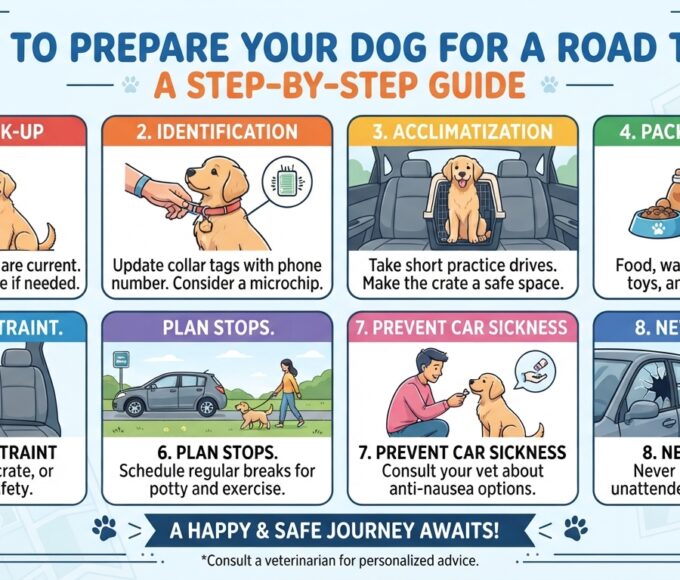
Step 1: Schedule a Veterinary Checkup
A veterinary visit is a sensible first step before traveling, particularly if you’re planning a long journey or international trip.
Your veterinarian can assess your dog’s general health and help you determine whether they are fit for the planned journey.
Depending on your destination and method of transportation, you may need:
- Current vaccinations
- Identification information
- Health documentation
- Medication
- Parasite prevention
- A health certificate or other travel documents
- Destination-specific requirements
Requirements can vary significantly between countries, airlines, states, and transportation providers, so check the relevant rules well before departure.
Discuss Travel Anxiety or Motion Sickness
If your dog becomes nauseous, excessively drools, pants, shakes, or vomits during car rides, tell your veterinarian.
Likewise, if your dog becomes extremely anxious when traveling, your veterinarian can help you determine appropriate strategies.
Do not give your dog human medication or sedatives unless specifically directed by a veterinarian.
Step 2: Research Your Destination
Before leaving home, find out what your destination will be like for your dog.
Check whether your accommodation is genuinely pet-friendly and find out if there are additional restrictions, fees, or rules.
It can also be useful to locate:
- Nearby veterinary clinics
- Emergency veterinary hospitals
- Dog-friendly walking areas
- Pet supply stores
- Suitable rest stops
- Local leash requirements
- Nearby parks
- Restaurants or attractions that allow dogs
If you’re traveling internationally, research entry requirements well in advance. Some destinations have strict vaccination, microchip, documentation, or quarantine requirements.
Step 3: Choose Safe Travel Equipment
Your dog’s travel setup should be appropriate for the transportation method.
Traveling by Car
Dogs should not be allowed to move freely around a moving vehicle.
Depending on your dog and vehicle, appropriate options may include a properly secured travel crate or a suitable crash-tested harness designed for vehicle use.
A crate should provide enough room for your dog to stand, turn around, and lie down comfortably while remaining appropriately secured.
Never put a loose dog in the front seat where airbags could cause serious injury.
Traveling by Air
Airline pet policies vary. Some airlines allow certain pets in the cabin, while other arrangements may have different restrictions.
Before purchasing a ticket, contact the airline or check its current pet-travel rules.
Pay attention to:
- Carrier dimensions
- Weight restrictions
- Breed restrictions
- Documentation
- Fees
- Temperature restrictions
- Check-in procedures
- Destination requirements
Do not assume that an airline’s rules are the same as another airline’s.
Step 4: Get Your Dog Comfortable With the Carrier
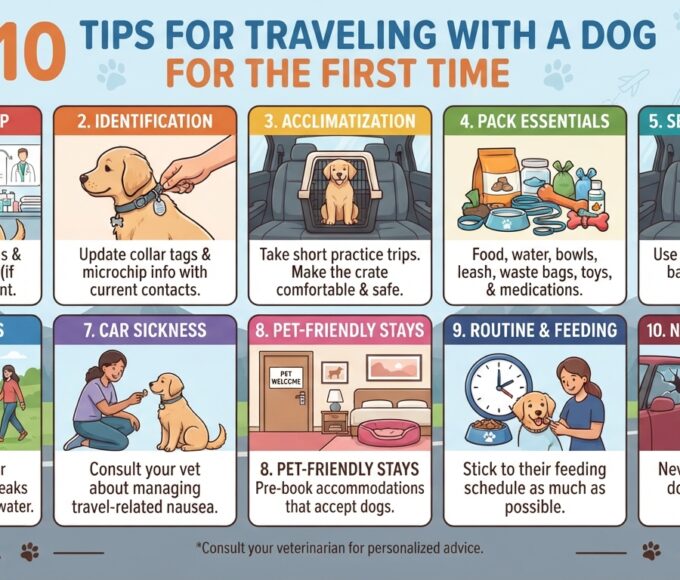
If your dog will travel in a carrier or crate, don’t introduce it for the first time on the day of departure.
Place the carrier somewhere familiar at home and allow your dog to investigate it voluntarily.
You can make it more inviting by placing appropriate bedding or familiar items inside.
Reward your dog for calmly entering the carrier.
Gradually increase the amount of time your dog spends inside with the door closed, always keeping the experience positive.
The goal is for the carrier to become a familiar, predictable space rather than something your dog associates only with stressful journeys.
Step 5: Practice Short Car Trips
If your dog is inexperienced with car travel, start small.
Begin with short trips around the neighborhood.
Once your dog is comfortable, gradually increase the duration.
For example:
Short drive → slightly longer drive → trip to a quiet destination → longer journey
Pay attention to your dog’s behavior throughout the process.
If your dog becomes extremely anxious or sick, reduce the difficulty and speak with your veterinarian if the problem continues.
Step 6: Pack a Dedicated Dog Travel Bag
Creating a separate travel bag for your dog can make the trip much easier.
Consider packing:
- Regular food
- Fresh water
- Food and water bowls
- Leash
- Harness or collar
- Identification tags
- Waste bags
- Medications
- Treats
- Familiar toys
- Blanket or bedding
- Grooming supplies
- Towels
- Cleaning supplies
- First-aid essentials
- Veterinary records
- Travel documents
Bring enough food for the entire trip, plus some extra in case your plans change.
Changing your dog’s food suddenly while traveling can also cause digestive problems, so keeping their normal diet is generally preferable.
Step 7: Update Your Dog’s Identification
Before traveling, make sure your dog’s identification information is current.
Check:
- Collar tags
- Phone numbers
- Microchip registration
- Emergency contact information
A current photo of your dog stored on your phone can also be useful if your pet becomes lost.
Make sure your dog wears secure identification during the journey, provided the equipment is safe and appropriate for them.
Step 8: Take Familiar Items From Home
Travel exposes your dog to unfamiliar surroundings, sounds, smells, and routines.
Familiar objects can provide a sense of continuity.
Consider bringing:
- Their usual blanket
- A favorite toy
- Their normal food
- A familiar bed
- A familiar-smelling item from home
You don’t need to pack your entire house. A few familiar objects can be enough to make a new environment feel less strange.
Step 9: Plan Regular Breaks on Road Trips
Long car journeys require careful planning.
Stop periodically so your dog can:
- Use the bathroom
- Drink water
- Stretch and move around safely
- Take a short sniffing break
- Relax away from the vehicle
Always use a leash when taking your dog out at unfamiliar rest stops.
A dog that normally has excellent recall may run away when frightened in a completely unfamiliar environment.
Never Leave Your Dog Alone in a Hot Car
A parked vehicle can become dangerously hot very quickly, even when the outside temperature does not seem extreme.
Cracking the windows is not a reliable solution.
If you cannot safely take your dog with you, leave them in a temperature-controlled environment instead.
Step 10: Keep Your Dog’s Routine as Normal as Possible
Travel naturally disrupts routines, but maintaining familiar habits can help your dog adjust.
Try to keep meal, bathroom, sleep, and exercise schedules reasonably consistent.
If your dog normally eats breakfast at a particular time, suddenly changing the schedule, food, and environment at once may make the trip more difficult.
A little consistency can go a long way.
Step 11: Be Careful With Food and Water
Travel is not the best time to experiment with new foods.
Bring your dog’s regular food and familiar treats whenever possible.
Make sure your dog has access to clean drinking water.
When traveling by car, avoid allowing your dog to drink from questionable outdoor water sources, stagnant pools, or unknown bodies of water.
If your dog tends to experience motion sickness, ask your veterinarian about feeding and hydration strategies before the journey.
Step 12: Prepare for an Unfamiliar Hotel or Accommodation
Arriving at a new place can be exciting for your dog, but it can also be overwhelming.
When you arrive:
- Take your dog for a bathroom break.
- Allow them to explore the room calmly.
- Set up their familiar bed or blanket.
- Keep food and water in a consistent location.
- Check the room for hazards.
- Keep doors and windows secure.
- Follow the property’s pet rules.
Don’t assume that a dog who is well behaved at home will automatically behave the same way in an unfamiliar room.
Keep potentially dangerous items out of reach and supervise your dog while they adjust.
Step 13: Give Your Dog Time to Decompress
Travel can be mentally exhausting.
Your dog may encounter new smells, people, animals, noises, surfaces, and environments all within a short period.
Don’t schedule every minute of your trip with activities.
Give your dog opportunities to relax, sleep, sniff, and simply observe their surroundings.
Sometimes the best part of a vacation for your dog is a quiet walk followed by a long nap.
Step 14: Watch for Signs of Stress
Every dog reacts differently to travel.
Signs of stress may include:
- Excessive panting
- Trembling
- Whining
- Pacing
- Drooling
- Hiding
- Lip licking
- Yawning
- Refusing food
- Repeated barking
- Attempts to escape
- Unusual clinginess
One behavior by itself does not necessarily mean your dog is distressed, so consider the overall context and your dog’s normal behavior.
If your dog appears severely distressed or develops concerning physical symptoms, contact a veterinarian.
Step 15: Prepare for Emergencies
Even carefully planned trips can involve unexpected problems.
Keep important information accessible, including:
- Your veterinarian’s contact information
- An emergency veterinary clinic near your destination
- Your dog’s medication list
- Vaccination records
- Microchip information
- Travel documents
- Your emergency contact information
It is also useful to carry basic cleaning supplies and a pet first-aid kit appropriate for your dog’s needs.
Road Trip Checklist for Dogs
Before leaving home, use this quick checklist:
Documents
- Veterinary records
- Vaccination information
- Health certificates if required
- Travel documents
Food and Water
- Regular dog food
- Treats
- Water
- Food bowl
- Water bowl
Safety
- Collar
- ID tag
- Harness
- Leash
- Secure crate or appropriate vehicle restraint
Comfort
- Bed
- Blanket
- Familiar toy
- Grooming supplies
- Towels
Health
- Medications
- Veterinary contact information
- Pet first-aid supplies
Cleanup
- Waste bags
- Paper towels
- Cleaning supplies
What About Flying With a Dog?
Flying can be more complicated than driving because airlines have specific rules and limitations.
Before booking:
- Check the airline’s current pet policy.
- Confirm whether your dog can travel in the cabin.
- Check carrier dimensions.
- Confirm required documentation.
- Check destination entry rules.
- Ask about breed and temperature restrictions.
- Confirm fees and check-in requirements.
Do not purchase a ticket based solely on information from a third-party website. Verify requirements directly with the airline and relevant authorities because policies can change.
Should You Use Calming Products?
Some dogs may benefit from calming strategies, but no single product works for every dog.
Options can include:
- Familiar bedding
- Quiet environments
- Gradual travel training
- Pheromone products
- Veterinarian-approved supplements
- Behavior modification
If your dog experiences significant travel anxiety, speak with your veterinarian before the trip rather than experimenting with medication or supplements on departure day.
Frequently Asked Questions
Can I take my dog on a plane?
Many airlines allow certain pets to travel, but the rules vary by airline, destination, dog size, carrier, and other factors. Always check the current requirements directly with the airline before booking.
How can I make a long car ride easier for my dog?
Practice shorter journeys beforehand, use an appropriate restraint or secured carrier, bring familiar items, provide regular bathroom and movement breaks, and maintain access to water.
Should my dog eat before a long car journey?
This depends on your individual dog, especially if they experience motion sickness. Ask your veterinarian about the best feeding schedule for your pet before a long trip.
How often should I stop during a road trip?
There is no universal schedule that works for every dog. Plan regular breaks based on your dog’s age, health, bathroom needs, and comfort. Puppies, senior dogs, and dogs with medical conditions may require more frequent stops.
What should I do if my dog gets anxious while traveling?
Reduce unnecessary stimulation, provide familiar items, and use calm, reassuring interactions. If your dog experiences significant or persistent anxiety, speak with your veterinarian about appropriate travel strategies.
Can I leave my dog alone in a parked car?
No. A parked vehicle can become dangerously hot or cold, and leaving your dog unattended creates unnecessary risks. Take your dog with you when appropriate or leave them somewhere safe and temperature-controlled.
Final Thoughts
Successful travel with a dog starts long before you reach your destination.
A veterinary checkup, proper identification, safe travel equipment, familiar belongings, regular breaks, and a little practice can make the journey considerably easier. Just as importantly, pay attention to your dog’s behavior and give them time to rest when the trip becomes overwhelming.
Every dog is different. Some happily jump into the car and treat every journey like an adventure, while others need weeks of gradual preparation before they feel comfortable traveling.
The goal isn’t simply to get your dog from one place to another. It’s to make the journey as safe, predictable, and comfortable as possible so that you and your canine companion can enjoy the adventure together.
This Article Was Generated By AI.






Leave a comment