





Dogs love to explore. A new scent in the grass, movement behind a bush, or an unfamiliar animal can be enough to send a curious dog running toward something they should probably avoid.
For dogs that spend time hiking, camping, walking through rural areas, or exploring large yards, encounters with wildlife are a possibility. Some wild animals can injure a dog with teeth, claws, quills, or venom, while others may carry diseases or react defensively when they feel threatened.
The risk varies considerably depending on where you live. Not every wild animal listed below is found in every region, and most wildlife would rather avoid a dog than confront one. Still, understanding potential hazards can help you make safer choices when exploring outdoors with your canine companion.
Here are nine wild animals that dog owners should know about.
1. Coyotes
Coyotes are highly adaptable wild canids that can live in forests, grasslands, agricultural areas, and even places close to human communities.
They can pose a particular risk to small dogs, especially when a dog is allowed to roam without supervision.
A coyote may be attracted to areas where it can find accessible food, including unsecured garbage, pet food, or other attractants. Dogs that chase coyotes can also put themselves in a dangerous situation.
How to Protect Your Dog From Coyotes
When walking in an area where coyotes are present:
- Keep your dog under control and preferably on a leash.
- Avoid allowing your dog to chase wildlife.
- Keep pets indoors or supervised after dark where appropriate.
- Do not leave pet food outside overnight.
- Secure garbage and other potential food sources.
- Stay alert around dawn, dusk, and nighttime.
- Avoid letting small dogs wander unattended.
If you encounter a coyote, calmly increase your distance rather than allowing your dog to approach it.
2. Venomous and Other Snakes
Snakes can be a serious hazard for dogs that investigate tall grass, rocky areas, brush, or other places where snakes may hide.
A curious dog may try to sniff, paw at, or bite a snake. If the snake feels threatened, it may defend itself.
Venomous snake bites can cause severe pain, swelling, tissue damage, weakness, bleeding problems, or other potentially life-threatening complications depending on the species and amount of venom involved.
Even a bite from a non-venomous snake can cause wounds and may require veterinary attention.
Reducing the Risk of Snake Encounters
When hiking with your dog:
- Keep your dog close to you.
- Avoid letting them investigate holes or dense vegetation.
- Stay on established paths when practical.
- Be especially cautious around areas known to support venomous snakes.
- Do not allow your dog to chase or attack a snake.
If you suspect your dog has been bitten by a venomous snake, seek emergency veterinary care immediately. Do not attempt to handle the snake, and do not waste time trying to capture it.
3. Bears
Bears are extremely powerful wild animals, and even a dog that is normally confident around other animals is not equipped to safely confront one.
Encounters can occur while hiking, camping, or living near areas where bears regularly travel. A bear may become defensive if it is surprised, cornered, protecting food, or accompanied by cubs.
One of the problems with dogs and bears is that a dog may chase or bark at the bear and then run back toward its owner, potentially bringing the bear closer.
Staying Safe in Bear Country
If you are hiking in an area with bears:
- Keep your dog leashed and under control.
- Make noise so wildlife has an opportunity to detect you.
- Never allow your dog to approach a bear.
- Keep food and garbage securely stored.
- Follow local wildlife guidance.
- Avoid allowing your dog to investigate bear cubs or food sources.
If you see a bear, give it plenty of space and follow local wildlife-safety recommendations.
4. Mountain Lions
Mountain lions, also called cougars or pumas, are large predators found in parts of the Americas.
They are generally elusive and encounters are uncommon, but their hunting behavior means that an unattended dog can potentially become a target.
Mountain lions can be particularly difficult to notice because they may move quietly through vegetation and rely on stealth when hunting.
Protecting Your Dog During Mountain Adventures
If mountain lions are known to live in an area:
- Keep your dog close.
- Avoid letting your dog run ahead on trails.
- Be particularly alert in areas with dense vegetation.
- Keep small dogs close rather than allowing them to wander.
- Avoid letting your dog chase wildlife.
- Follow local wildlife warnings and recommendations.
If you encounter a mountain lion, do not allow your dog to approach or chase it. Keep control of your dog and follow local guidance for responding to a sighting.
5. Raccoons
Raccoons may look relatively harmless compared with large predators, but they can still cause significant problems for dogs.
A raccoon that feels cornered may bite or scratch. These injuries can be serious, and wildlife can also carry diseases that may affect pets and people.
Dogs are particularly likely to get into trouble when they chase raccoons around garbage cans, sheds, gardens, or other areas where raccoons search for food.
How to Reduce Raccoon Encounters
You can make your property less attractive to raccoons by:
- Keeping garbage containers securely closed.
- Bringing pet food indoors.
- Cleaning up spilled food.
- Removing accessible food waste.
- Supervising dogs outside at night.
- Preventing your dog from chasing wildlife.
Make sure your dog’s vaccinations are current according to your veterinarian’s recommendations.
If your dog is bitten or scratched by a raccoon, contact your veterinarian promptly and follow local public-health guidance regarding possible rabies exposure.
6. Skunks
Skunks usually prefer to avoid confrontation, but dogs are notorious for approaching them anyway.
The most obvious defense mechanism is their powerful spray. A curious dog that gets too close can quickly end up covered in an extremely unpleasant odor.
Skunk spray can also irritate the eyes and skin. Dogs that chase or corner a skunk may additionally be exposed to bites or scratches.
What to Do About Skunk Encounters
The best strategy is prevention.
Keep your dog supervised outdoors, especially around dusk and nighttime when skunks may be active. Secure garbage and remove potential food sources around your property.
If your dog is sprayed, prevent them from rubbing their face and eyes and contact your veterinarian if they develop significant eye irritation or other concerning symptoms.
If there was a bite or scratch, veterinary advice is particularly important because of the potential for disease exposure.
7. Porcupines
Porcupines are generally not aggressive animals, but their defensive quills can cause major problems for curious dogs.
A dog may approach a porcupine out of curiosity and attempt to sniff or bite it. The porcupine can respond by raising and releasing quills that become embedded in the dog’s skin.
Quills are particularly common around the face, mouth, and paws.
Why Porcupine Quills Need Veterinary Attention
Porcupine quills are barbed and can become increasingly difficult to remove safely. Pulling them out at home can also cause additional injury, particularly if quills are located around the eyes, mouth, or other sensitive areas.
If your dog encounters a porcupine and gets quilled, seek veterinary care as soon as possible.
Do not allow your dog to continue rubbing or pawing at the affected area.
8. Hawks and Eagles
Large birds of prey are generally more of a concern for very small dogs and puppies than for medium or large dogs.
Hawks and eagles hunt various types of prey, and a very small unattended pet could potentially attract attention in certain environments.
Actual attacks on dogs are uncommon, but the risk may be higher in areas where large raptors are abundant and where small pets are left outside unsupervised.
Protecting Small Dogs
If you have a toy-sized dog or young puppy:
- Supervise them while outside.
- Avoid leaving them unattended in open areas.
- Stay alert in areas with abundant birds of prey.
- Consider covered outdoor areas where appropriate.
- Keep your puppy close when hiking or exploring unfamiliar terrain.
Never assume that being in a backyard automatically means your puppy is protected from wildlife.
9. Wolves
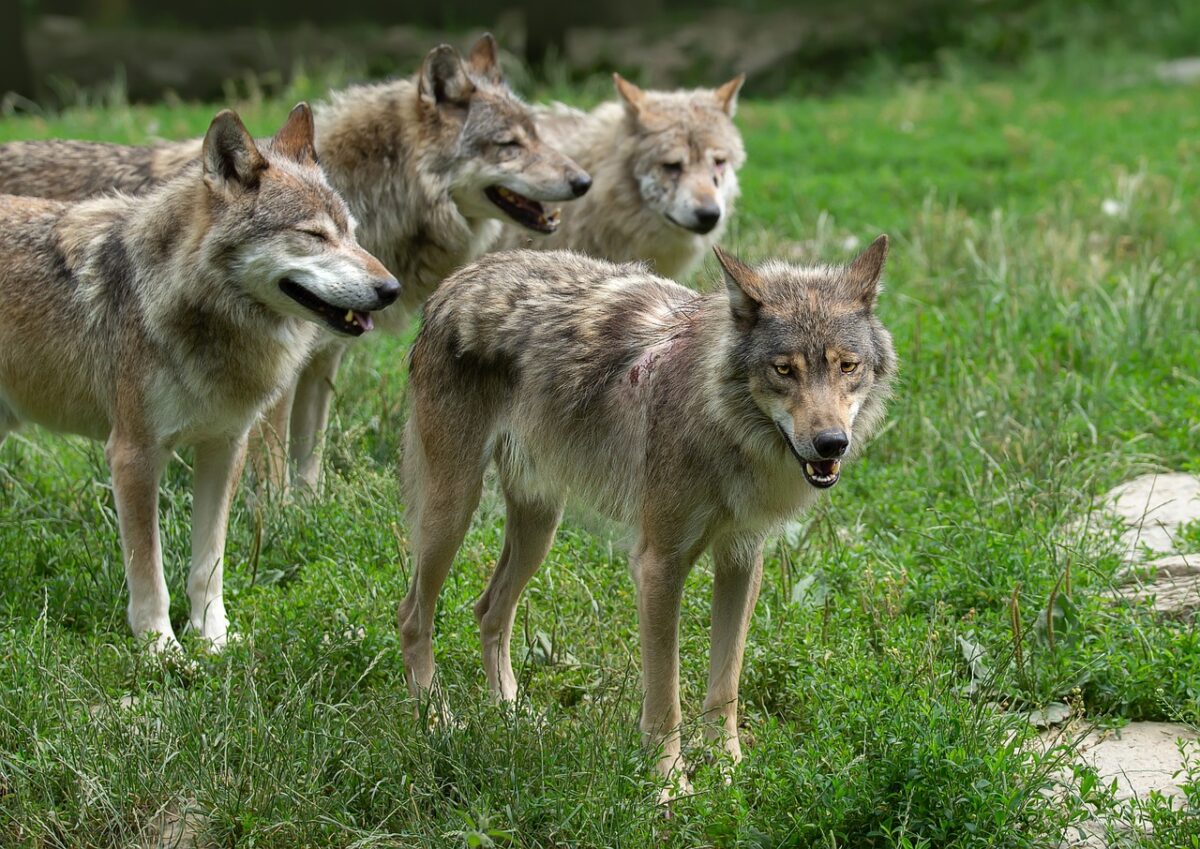
Wolves are large, powerful predators that generally avoid people but can pose a serious risk to dogs in areas where wolf populations are established.
A domestic dog may be perceived as a competitor, an intruder, or potentially prey depending on the circumstances.
The risk can increase when dogs are allowed to wander into remote areas or approach wolf habitat.
Keeping Dogs Safe in Wolf Country
When visiting areas with wolves:
- Keep your dog on a leash.
- Stay on established trails where appropriate.
- Do not allow your dog to chase wildlife.
- Avoid letting dogs roam freely.
- Follow local wildlife-management recommendations.
- Keep food and waste secured while camping.
If you see a wolf, maintain distance and do not allow your dog to approach it.
What Should You Do If Your Dog Encounters Wildlife?
Your first priority should be preventing the situation from escalating.
If you notice wildlife nearby:
Stay Calm
Dogs can respond to your body language and emotional state. Avoid panicking or making sudden movements that could encourage your dog to chase.
Create Distance
Move away from the animal whenever possible.
Keep Your Dog Under Control
A leash is one of your most useful tools during outdoor adventures. However, if a wild animal is already extremely close, follow local wildlife-safety guidance rather than putting yourself at greater risk trying to physically intervene.
Don’t Let Your Dog Chase
Chasing can turn a brief sighting into a dangerous confrontation.
Never Approach Injured Wildlife
An injured wild animal may behave unpredictably. Contact the appropriate wildlife authority or animal-control service instead.
What If Your Dog Is Bitten, Scratched, or Stung?
Wildlife injuries should be taken seriously.
Depending on the animal involved, your dog may face risks including:
- Puncture wounds
- Deep lacerations
- Venom exposure
- Infection
- Eye injuries
- Internal injuries
- Disease transmission
- Severe allergic reactions
Contact your veterinarian promptly after a significant wildlife encounter, particularly if your dog has been bitten or scratched.
Seek emergency veterinary care immediately if your dog has difficulty breathing, collapses, develops severe swelling, shows signs of neurological problems, experiences significant bleeding, or may have been exposed to venom.
Do not give your dog human medication unless your veterinarian specifically tells you to do so.
Prevention Is the Best Protection
You don’t have to stop taking your dog outdoors because wildlife exists.
Instead, learn about the animals found in the places you visit and adjust your habits accordingly.
Before a hike or camping trip, consider:
- What wildlife lives in the area?
- Are there recent wildlife warnings?
- Should dogs remain leashed?
- Are there areas you should avoid?
- Is your dog’s identification information current?
- Are vaccinations up to date?
- Do you have your veterinarian’s contact information?
- Do you know where the nearest emergency veterinary clinic is?
A little preparation can make outdoor adventures much safer.
Frequently Asked Questions
What wild animal is most dangerous to dogs?
There is no single animal that is the most dangerous everywhere. The risks depend heavily on location, the species present, the size of the dog, and the circumstances of an encounter.
Large predators, venomous snakes, and wildlife capable of transmitting serious diseases can all present significant risks.
Can a small dog be attacked by a coyote?
Yes. Coyotes can potentially prey on or attack small dogs, particularly when dogs are unattended or allowed to roam. Keeping small dogs supervised and under control can reduce the risk.
What should I do if my dog sees a wild animal?
Try to keep your dog calm and create distance. Do not allow your dog to chase the animal. Keep your dog under control and follow local wildlife-safety recommendations.
Should I let my dog off-leash while hiking?
That depends on local rules and the environment, but areas with wildlife generally require extra caution. A leash can help prevent your dog from chasing or approaching animals.
What should I do if my dog is bitten by wildlife?
Contact a veterinarian promptly. If the animal could carry rabies or another serious disease, follow your veterinarian’s advice and local public-health guidance. If safe to do so, note what type of animal was involved, but never put yourself at risk trying to capture it.
Final Thoughts
Wildlife encounters are not something dog owners need to fear, but they are something worth preparing for.
Coyotes, snakes, bears, mountain lions, raccoons, skunks, porcupines, large birds of prey, and wolves can all present different types of risks depending on where you live and how your dog behaves around wildlife.
The simplest precautions are often the most useful: keep your dog under control, avoid allowing them to chase wild animals, supervise them outdoors, learn about local wildlife, and seek veterinary care after potentially serious encounters.
With a little awareness and preparation, you can continue enjoying walks, hikes, camping trips, and outdoor adventures while giving your dog a much safer experience.
This Article Was Generated By AI.








Leave a comment