


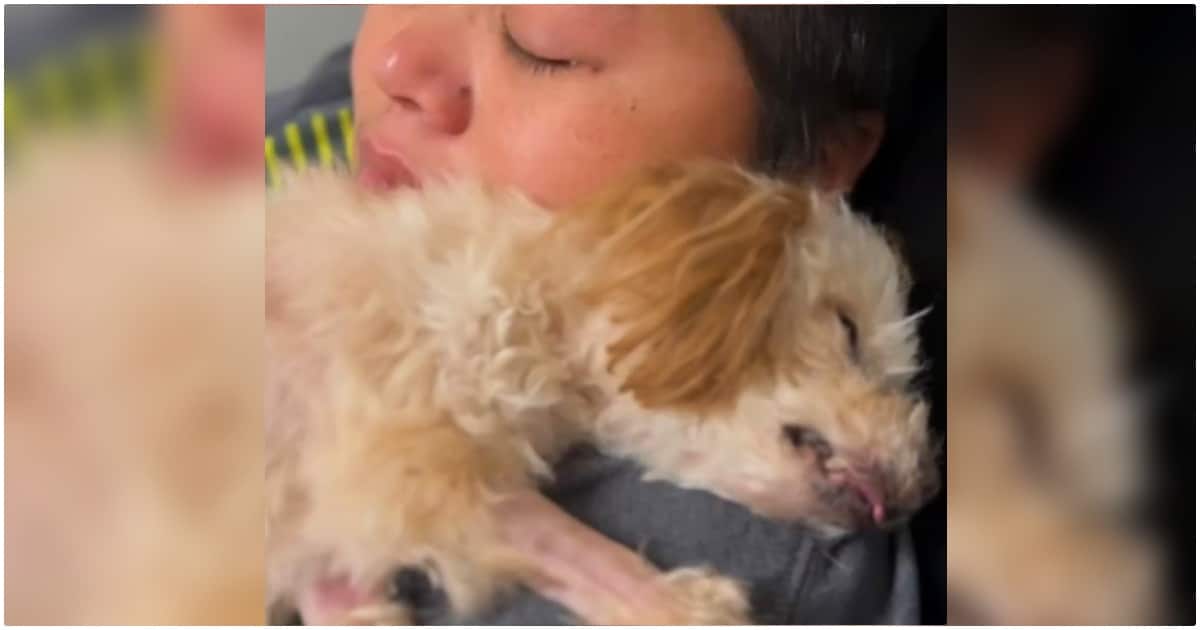
Saying goodbye to a beloved dog is one of the hardest experiences a pet owner can face. After years of sharing a home, routines, and countless memories, the thought of life without that companion can feel impossible.
For Melo-Jean Yap and Taina Brown of Baltimore, Maryland, that painful moment seemed to arrive when their 17-year-old dog, Luna, suddenly became extremely ill.
The elderly Toy Poodle mix was weak, wasn’t eating, and could no longer stand normally. Her family feared they were about to lose a dog who had been part of their lives for years.
They took Luna to the veterinarian hoping there might be another option.
Instead, they were told that euthanasia might be the kindest choice if Luna was suffering and her condition could not be improved.
Then something completely unexpected happened.
Luna Was Suddenly Extremely Weak
Luna had already reached an advanced age when her health took a worrying turn.
Her family noticed that she was refusing food and struggling to stand. Instead of waiting to see whether things would improve, they brought her to a veterinarian for evaluation.
For her owners, the situation was heartbreaking.
Luna wasn’t simply an elderly dog. She had been a member of their family for seven years.
They had adopted her from Best Friends Animal Society in Kanab, Utah, and had spent years watching her become part of their everyday lives.
Now they were faced with the possibility that those years were coming to an end.
Her Family Prepared for a Final Goodbye
When a senior dog becomes severely ill, owners sometimes have to make incredibly difficult decisions about quality of life.
Luna’s condition was serious enough that her veterinarian recommended considering euthanasia to prevent continued suffering.
Her family began preparing themselves emotionally for goodbye.
At that moment, they believed their time with Luna might be coming to an end.
They held her close, knowing they might be experiencing their final moments together.
Then Luna Began Acting Differently
While at the veterinary office, something changed.
Luna, who had appeared limp and extremely weak, suddenly became more responsive.
Her family noticed a remarkable difference in her behavior.
The elderly dog still wasn’t back to normal. She wasn’t suddenly a healthy young dog again, and she still had limitations.
But she showed enough energy to surprise everyone.
At one point, Luna jumped from her family’s arms and began walking.
For the people who had been preparing to say goodbye, the change was astonishing.
The Elderly Dog Even Ate Again
Luna’s improvement didn’t stop with her renewed movement.
After reportedly refusing food for days, she suddenly showed interest in eating and eagerly enjoyed one of her favorite meals.
For her family, seeing Luna eat again was an especially emotional moment.
Food may seem like a small thing, but when a sick senior dog has stopped eating, a return of appetite can feel incredibly encouraging.
Still, an improvement in appetite or energy doesn’t necessarily mean an underlying medical problem has disappeared.
Luna’s age and health remained important considerations, and her family continued monitoring her condition.
Her Family Wasn’t Ready to Give Up Their Time Together
The unexpected improvement gave Luna and her family something they weren’t sure they would have: more time.
Instead of immediately facing the loss they had anticipated, they could continue caring for their beloved dog and enjoying her company.
Friends and followers also followed updates about Luna’s condition, hoping to hear that the elderly pup continued to improve.
Subsequent updates reportedly brought encouraging news about her health.
For her family, every additional day became something to appreciate.
Luna’s Story Shows Why Veterinary Evaluation Matters
Luna’s experience is touching, but it also highlights an important point about seriously ill senior dogs.
A dog that suddenly becomes weak, stops eating, cannot stand, collapses, or becomes unusually unresponsive needs veterinary attention.
There can be many possible causes, ranging from pain and illness to dehydration, organ problems, neurological conditions, or other medical emergencies.
Only a veterinarian who examines the dog can determine what may be happening and discuss realistic treatment and quality-of-life options.
A temporary improvement shouldn’t be interpreted as proof that a serious medical condition has been cured.
How Can Owners Monitor an Elderly Dog’s Quality of Life?
Senior dogs can experience gradual changes that are easy to overlook.
Owners can keep track of important areas such as:
- Appetite and drinking
- Ability to stand and walk
- Breathing
- Pain or discomfort
- Bathroom habits
- Interest in family interaction
- Ability to rest comfortably
- Grooming and hygiene
- Enjoyment of favorite activities
- Good days compared with difficult days
Writing down changes can make it easier to notice patterns and provide useful information to a veterinarian.
For dogs with chronic or serious conditions, a veterinarian can also help families assess quality of life and understand when additional support may be needed.
Every Extra Day With Luna Became Precious
Luna’s family had gone to the veterinarian expecting that they might have to say goodbye.
Instead, they witnessed an unexpected burst of energy from their elderly companion.
She walked.
She ate.
And she continued spending time with the people who loved her.
That didn’t erase the realities of being a 17-year-old dog, but it gave her family an opportunity to appreciate the time they still had together.
Rather than focusing only on what might happen next, they could enjoy Luna’s presence one day at a time.
A Reminder About the Special Bond With Senior Dogs
Senior dogs have often spent years becoming part of their families’ routines.
They know where their favorite sleeping spots are. They recognize familiar voices. They may have their own favorite meals, toys, walking routes, and little habits.
As dogs age, their needs can change, but the emotional bond they share with their families doesn’t disappear.
In fact, caring for an elderly dog can become a meaningful part of the relationship.
It may involve more veterinary visits, additional comfort measures, modified exercise, or simply spending more quiet time together.
Final Thoughts
Luna’s story took an unexpected turn when her family believed they were preparing to say their final goodbye.
After appearing extremely weak and unresponsive, the 17-year-old dog suddenly showed renewed energy, walked again, and even ate one of her favorite meals.
Her recovery wasn’t something her family could take for granted, especially given her age and health. But it gave them precious additional time together.
For Melo-Jean and Taina, those extra moments with Luna were worth cherishing.
And perhaps that’s the most meaningful part of her story: sometimes, when a beloved senior dog gives you another day, another meal, another walk, or simply another moment beside you, that time can feel incredibly precious.






Leave a comment