







Bringing a cat into your home is an exciting experience. Whether you’ve adopted a playful kitten, welcomed an adult rescue, or brought home a senior companion, becoming a cat parent comes with plenty to learn.
Cats may be independent, but they still rely on their humans for nutritious food, clean water, veterinary care, enrichment, a safe environment, and companionship. Understanding their natural behaviors and preferences can make the transition easier for everyone.
If you’re a new cat parent, these essential cat care tips will help you create a comfortable home and build a trusting relationship with your feline companion.
1. Understand Your Cat’s Individual Needs
Every cat has its own personality.
Some cats are outgoing and immediately investigate every corner of the house. Others may hide for several days before feeling comfortable. Your cat’s age, health, temperament, previous experiences, and environment can all influence how they behave.
Start by paying attention to what your cat enjoys and what makes them uncomfortable.
A healthy routine can include:
- Regular meal times
- Fresh drinking water
- Daily play
- Clean litter boxes
- Quiet resting areas
- Scratching opportunities
- Mental enrichment
- Gentle interaction
- Routine veterinary care
Giving your cat predictable daily routines can also help them feel more secure.
2. Create a Safe and Comfortable Home
Before your cat starts exploring the entire house, make sure the environment is safe.
Cats are naturally curious and may investigate places that humans overlook. Secure electrical cords, remove small objects that could be swallowed, and keep potentially dangerous household products out of reach.
Pay particular attention to plants and foods that may be toxic to cats.
Helpful Cat-Friendly Features
- Comfortable beds
- Scratching posts or pads
- Hiding places
- Cat trees or other stable climbing areas
- Window perches
- Interactive toys
- Food and water stations
- Clean litter boxes
Cats often appreciate having both open areas for exploration and private places where they can retreat.
3. Choose the Right Cat Food
Nutrition is one of the most important parts of responsible cat care.
Cats are obligate carnivores, meaning their nutritional needs are different from those of dogs and humans. Choose a complete and balanced cat food appropriate for your cat’s life stage and individual needs.
Kittens, adults, and senior cats may have different nutritional requirements. Cats with certain medical conditions may also need veterinarian-recommended diets.
You can feed wet food, dry food, or an appropriate combination depending on your cat’s nutritional needs, preferences, and veterinary guidance.
Remember These Feeding Basics
- Follow the feeding instructions for the specific food.
- Measure portions rather than constantly topping up the bowl.
- Monitor your cat’s body condition and weight.
- Provide clean drinking water.
- Introduce dietary changes gradually.
- Keep treats moderate.
- Ask your veterinarian about special dietary requirements.
There isn’t one calorie amount that works for every cat. Size, age, activity level, reproductive status, health, and the food itself can all affect appropriate portions.
4. Make Fresh Water Available
Cats need access to clean drinking water every day.
Some cats prefer bowls, while others are attracted to moving water. If your cat doesn’t seem interested in drinking from a traditional bowl, you can experiment with the location, bowl type, or a properly maintained water fountain.
Wet food can also contribute to overall water intake.
Keep water containers clean and place them somewhere your cat can comfortably access.
5. Keep the Litter Box Clean
A clean, accessible litter box can make a major difference in your cat’s comfort.
Place the box somewhere relatively quiet and easy for your cat to reach. Avoid locations where the cat may feel trapped or constantly disturbed.
Many cats prefer clean boxes, so remove waste regularly and clean the box according to the type of litter you’re using.
If you have multiple cats, providing enough litter boxes is particularly important. A commonly used guideline is one box per cat, plus one extra, although individual households may need to adjust based on space and cat preferences.
If Your Cat Suddenly Stops Using the Box
Don’t assume your cat is simply being difficult.
Changes in litter box behavior can sometimes be associated with stress, environmental changes, or medical problems. Persistent or sudden changes deserve attention, especially if accompanied by straining, frequent attempts to urinate, blood, vocalization, or other unusual behavior.
Contact a veterinarian if you’re concerned.
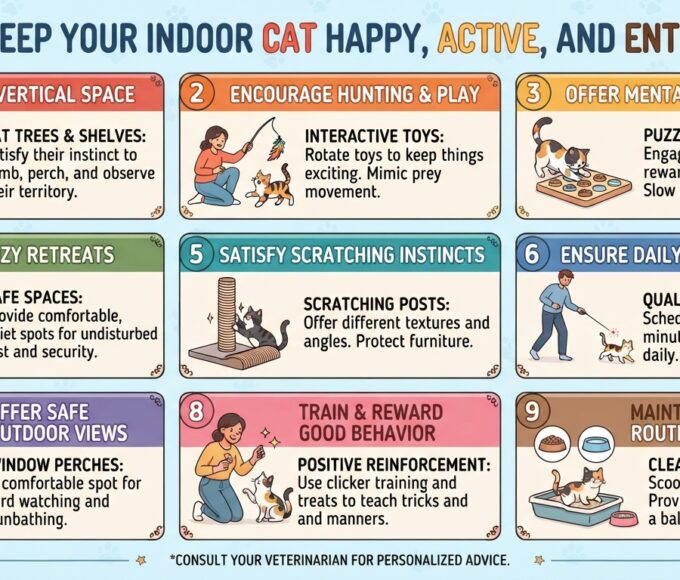
6. Give Your Cat Plenty of Enrichment
Indoor cats need opportunities to explore, play, scratch, climb, and use their natural instincts.
A few toys scattered around the house aren’t always enough.
Try creating an environment that includes:
- Scratching posts
- Cat trees
- Tunnels
- Puzzle feeders
- Interactive toys
- Safe hiding spots
- Window perches
- Rotating toys
You don’t need to buy everything at once. Even simple cardboard boxes can become interesting enrichment when used safely.
Rotate toys periodically so familiar items feel new again.
7. Make Playtime Interactive
Interactive play is a great way to exercise your cat while strengthening your relationship.
Wand-style toys can encourage cats to stalk, chase, pounce, and capture a moving object.
You can also try:
- Toy mice
- Balls
- Treat puzzles
- Food-search games
- Tunnels
- Supervised chase games
Allow your cat to catch the toy occasionally rather than making every chase impossible to win.
For toys involving strings, feathers, or small detachable pieces, supervise play and store them safely afterward to reduce the risk of swallowing or entanglement.
8. Provide Appropriate Scratching Areas
Scratching is normal feline behavior. It helps cats stretch, condition their claws, and communicate through scent and visual marks.
Instead of trying to eliminate scratching, give your cat appropriate places to do it.
Offer different types of scratching surfaces and place them near areas your cat already likes to scratch.
If your cat repeatedly scratches the sofa, for example, placing an attractive scratching post nearby may make the desired alternative easier to choose.
Reward your cat when they use the appropriate scratching surface.
9. Groom Your Cat According to Their Coat
Cats are naturally good at grooming themselves, but many still benefit from some human assistance.
The amount of grooming required depends heavily on the cat’s coat.
Long-haired cats may need frequent brushing to reduce tangles and mats, while many short-haired cats require less frequent brushing.
Regular grooming can also give you an opportunity to notice changes in the skin or coat.
Look for:
- Mats
- Bald patches
- Skin irritation
- Unusual lumps
- Parasites
- Excessive shedding
- Changes in coat condition
What About Baths?
Most healthy cats don’t need frequent baths.
If your cat becomes unusually dirty or has a substance on their coat that they cannot safely groom away, ask your veterinarian how to handle it.
Never use human shampoo on a cat unless specifically instructed by a veterinary professional.
10. Don’t Forget Dental Care
Dental health is an important part of overall cat care.
If your cat will tolerate it, gradually introduce tooth brushing using products specifically designed for cats.
Don’t force the process. Start slowly by allowing your cat to become comfortable with having their mouth and face handled.
Regular veterinary examinations can also help identify dental problems that aren’t obvious at home.
11. Consider Your Cat’s Outdoor Safety
Outdoor access isn’t automatically safer or healthier simply because cats enjoy exploring.
Free-roaming cats can encounter traffic, other animals, parasites, toxic substances, infectious diseases, and other hazards.
If you’d like your cat to experience the outdoors, consider safer alternatives such as:
- A secure catio
- Enclosed outdoor areas
- Supervised outdoor time
- Appropriate harness training for cats that tolerate it
Never force a cat to wear a harness or go outdoors if they become frightened or distressed.
12. Schedule Regular Veterinary Care
Cats are experts at hiding signs of illness, which makes routine veterinary care especially valuable.
Your veterinarian can help with:
- Vaccinations
- Parasite prevention
- Dental health
- Weight monitoring
- Nutrition
- Reproductive health
- Preventive examinations
- Age-related health concerns
You should also pay attention to changes at home.
Possible warning signs include:
- Reduced appetite
- Sudden weight changes
- Excessive hiding
- Changes in drinking
- Changes in urination
- Changes in litter box habits
- Vomiting or diarrhea
- Difficulty breathing
- Reduced activity
- Unusual vocalization
- Changes in grooming
If your cat suddenly behaves differently or seems unwell, contact your veterinarian rather than assuming they’re simply being lazy.
13. Build Trust at Your Cat’s Pace
Building a relationship with a new cat doesn’t have to happen overnight.
Give your cat the opportunity to approach you rather than constantly picking them up or following them around.
You can build positive associations through:
- Quiet time together
- Interactive play
- Treats
- Gentle petting when welcomed
- Calm talking
- Consistent routines
Some cats love sitting on laps. Others prefer to sit nearby without being touched.
Respecting those differences is part of being a good cat parent.
Cat Care Quick Reference
| Need | What You Can Provide |
|---|---|
| Nutrition | Complete and balanced cat food |
| Hydration | Fresh, clean drinking water |
| Toileting | Clean, accessible litter boxes |
| Exercise | Daily play and movement |
| Enrichment | Toys, puzzles, climbing and scratching areas |
| Grooming | Coat care appropriate for your cat |
| Dental care | Cat-safe dental care and veterinary checks |
| Safety | Cat-proofed home and secure outdoor options |
| Healthcare | Routine veterinary examinations |
| Bonding | Patient, respectful interaction |
Frequently Asked Questions
I’m a new cat parent. What should I do first?
Prepare a quiet, safe area with food, water, a litter box, a comfortable resting spot, and appropriate toys. Give your cat time to explore and adjust.
What should I feed my cat?
Choose a complete and balanced cat food appropriate for your cat’s life stage and health. Your veterinarian can help if your cat has special nutritional needs.
How often should I clean the litter box?
Remove waste regularly and keep the box clean enough that your cat is comfortable using it. If your cat suddenly avoids the box, consider possible environmental or medical causes.
Can cats live entirely indoors?
Yes. Indoor cats can have fulfilling lives when provided with appropriate enrichment, exercise, safe climbing and scratching opportunities, social interaction, and veterinary care.
How can I stop my cat from scratching furniture?
Provide attractive scratching posts or pads and place them near the areas your cat already scratches. Reward appropriate scratching rather than punishing normal behavior.
Does my cat need regular baths?
Most cats don’t need routine bathing. Coat type, health, lifestyle, and specific circumstances determine whether bathing is necessary.
How can I entertain a bored cat?
Try interactive play, puzzle feeders, climbing areas, scratching posts, tunnels, window perches, and rotating toys. Short play sessions throughout the day can help keep things interesting.
How do I know if my cat is sick?
Watch for changes in appetite, drinking, litter box habits, grooming, activity, weight, breathing, or behavior. Cats can hide illness, so unexplained changes should be taken seriously.
How can I make my new cat trust me?
Give them time and avoid forcing interaction. Sit quietly nearby, offer appropriate rewards, play with them, and allow them to approach you when they’re comfortable.
Final Thoughts
Being a good cat parent isn’t about having the most expensive toys or creating a perfect home. It’s about understanding your cat’s needs and providing a safe, predictable, enriching environment.
Give your feline companion nutritious food, fresh water, clean litter boxes, appropriate play, scratching opportunities, veterinary care, and plenty of patience.
Most importantly, get to know the individual cat living beside you. Their favorite toy, preferred sleeping spot, communication style, and boundaries may be completely different from another cat’s.
With time, consistency, and plenty of respect, you’ll build a relationship that can make cat parenthood one of the most rewarding experiences imaginable.
This Article Was Generated By AI.








Leave a comment