



Bringing a puppy home is an exciting experience filled with cuddles, playful moments, tiny paws, and plenty of unexpected challenges. While puppies are naturally curious and energetic, they also depend on their families for guidance, nutrition, safety, and plenty of rest.
Good puppy care isn’t about making every day perfect. It’s about creating a predictable environment where your puppy can learn, explore, sleep, play, and gradually become comfortable with the world around them.
From setting up a cozy space to introducing training and choosing appropriate food, these happy puppy care tips can help you give your new companion a strong start.
1. Learn What Your Puppy Needs
Every puppy is different. Breed, adult size, age, health, personality, and previous experiences can all affect their needs.
A young puppy generally needs a combination of:
- Nutritious, age-appropriate food
- Fresh drinking water
- Plenty of sleep
- Safe opportunities for movement and play
- Positive training
- Gradual socialization
- Mental enrichment
- Regular veterinary care
- A predictable daily routine
- Affection and companionship
Avoid comparing your puppy too closely with another dog. One puppy may be confident and adventurous, while another may need more time to become comfortable with unfamiliar people or places.
The goal is to understand your individual puppy and adjust their routine accordingly.
2. Create a Safe Puppy Zone
Your puppy should have a comfortable place where they can rest without being constantly disturbed.
This could include a puppy bed, crate, playpen, or gated section of the home. Introduce the space gradually and make it positive rather than using it as punishment.
Useful Items for a Puppy Space
| Item | Purpose |
|---|---|
| Comfortable bed | Provides a place to rest |
| Puppy-safe toys | Encourages appropriate play |
| Chew toys | Gives puppies suitable chewing outlets |
| Water bowl | Provides access to fresh water |
| Crate or playpen | Helps create a controlled resting area |
| Washable blanket | Adds comfort and warmth |
Puppy-proof the surrounding area by securing electrical cords, removing toxic substances, blocking unsafe gaps, and keeping small objects that could be swallowed out of reach.
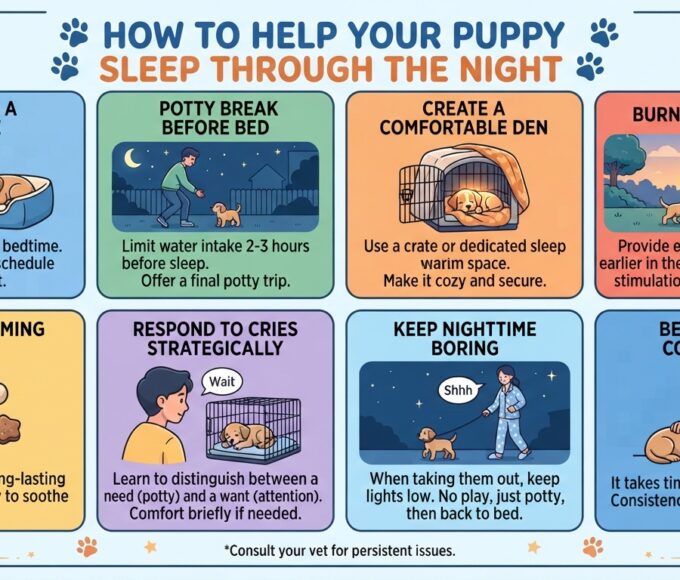
3. Give Your Puppy Plenty of Sleep
Puppies spend a surprising amount of time sleeping because their bodies and brains are developing rapidly.
A puppy that seems energetic one moment may suddenly fall asleep after playing or exploring.
Don’t feel that you need to keep your puppy entertained all day. Quiet rest is an important part of their routine.
Provide a calm sleeping area and allow your puppy to nap without unnecessary interruptions.
A predictable pattern of play, training, meals, bathroom breaks, and rest can also help puppies settle into household life.
4. Choose Puppy Food Carefully
Nutrition plays an important role in healthy growth.
Choose a complete and balanced puppy diet appropriate for your puppy’s life stage and expected adult size. Large- and giant-breed puppies have particular nutritional considerations, so their food should be appropriate for controlled growth.
Rather than relying on a generic calorie table, follow the feeding guidance for the specific food and adjust portions according to your puppy’s growth, body condition, activity, and veterinary advice.
Puppy Feeding Basics
- Measure meals instead of guessing portions.
- Provide fresh water throughout the day.
- Avoid frequent table scraps.
- Keep treats appropriate for a puppy.
- Introduce dietary changes gradually.
- Monitor your puppy’s body condition as they grow.
- Ask your veterinarian about the appropriate food and feeding amount.
Treats can be useful during training, but they should remain a small part of your puppy’s overall diet.
5. Be Careful With Puppy Treats
Treats can make training more rewarding, but not every human food is suitable for dogs.
If you want to offer your puppy an occasional food treat, use small portions of dog-safe foods and introduce unfamiliar foods carefully.
Some foods can be dangerous for dogs, including grapes and raisins, onions, garlic, and products containing xylitol.
Peanut butter, for example, should only be considered if the product contains no xylitol or other unsafe ingredients.
When in doubt, ask your veterinarian before adding a new food to your puppy’s diet.
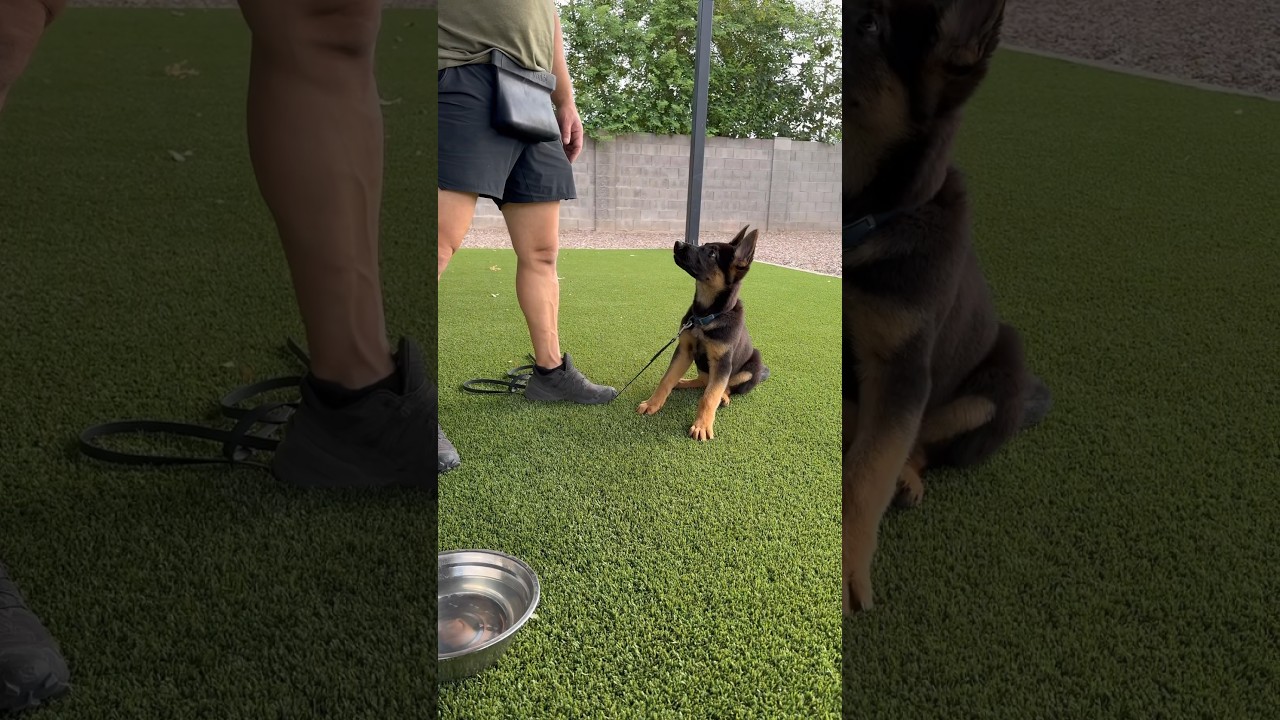
6. Start Training With Positive Reinforcement
Training can begin as soon as your puppy comes home.
You don’t need complicated lessons. Start with simple behaviors such as:
- Responding to their name
- Sitting
- Coming when called
- Walking calmly on a leash
- Leaving an object alone
- Settling on a mat
- Gentle handling
- Appropriate chewing
Reward behaviors you want your puppy to repeat with treats, praise, toys, or play.
Keep sessions short and upbeat. If your puppy becomes distracted or tired, take a break and try again later.
Remember: Puppies Make Mistakes
Accidents, chewing, jumping, mouthing, and other puppy behaviors are normal parts of development.
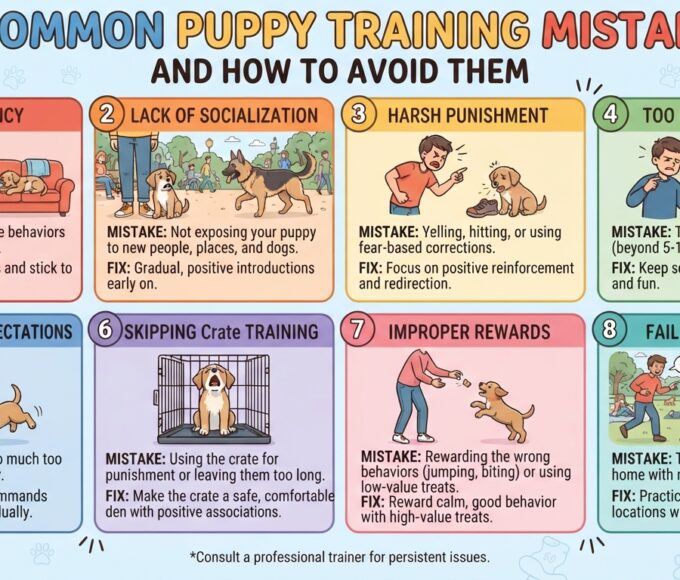
Instead of relying on punishment, calmly redirect your puppy toward an appropriate behavior and reward them when they make the right choice.
Consistency from everyone in the household makes learning much easier.
7. Socialize Your Puppy Gradually
Socialization means helping your puppy become comfortable with a variety of appropriate experiences.
This can include exposure to:
- Different people
- Household sounds
- Car rides
- Different surfaces
- Grooming and handling
- Veterinary environments
- New locations
- Appropriate, healthy dogs
- Everyday sights and sounds
The key is gradual and positive exposure.
Don’t force your puppy toward something that clearly frightens them. Give them enough distance to remain comfortable and reward calm behavior.
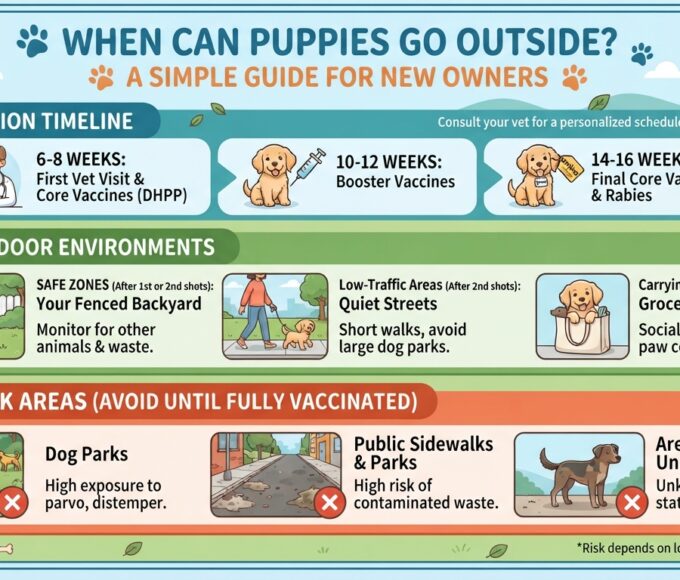
Because young puppies may not yet have completed their vaccinations, discuss safe socialization opportunities with your veterinarian. Socialization doesn’t necessarily require taking a puppy into high-risk environments.
8. Give Your Puppy Safe Ways to Play
Puppies need opportunities to explore and play, but activities should be appropriate for their age, size, and physical development.
Try:
Hide-and-Seek
Have your puppy stay nearby while you hide somewhere easy to find. Call them and celebrate when they locate you.
Food Puzzles
Use an appropriate puzzle feeder or scatter part of their regular meal in a safe area for supervised sniffing and searching.
Toy Games
Short sessions of fetch, gentle tug, or toy retrieval can provide both physical activity and interaction.
Simple Training Games
Ask for a sit before giving a toy, reward your puppy for looking at you when called, or practice touching your hand with their nose.
These activities can make learning feel like play.
9. Don’t Follow a Rigid Exercise Formula
You may have heard the popular rule that puppies need a certain number of minutes of exercise for every month of age.
However, there isn’t one universal formula that works for every puppy.
Exercise requirements vary according to:
- Breed
- Age
- Size
- Individual development
- Health
- Temperament
- Type of activity
Young puppies generally benefit from short periods of play, exploration, training, and normal movement rather than forced, strenuous exercise.
Avoid pushing a puppy to continue when they are tired. Your veterinarian can help you determine what types and amounts of exercise are appropriate for your particular puppy.
10. Make Your Home Comfortable and Puppy-Friendly
A happy puppy needs more than toys and food. Their environment matters too.
Create a predictable routine around meals, bathroom breaks, naps, training, and play.
Keep potentially dangerous household items away from your puppy, including:
- Cleaning chemicals
- Medicines
- Toxic plants
- Electrical cables
- Small objects
- Certain human foods
- Accessible trash
- Unsecured household items
Provide safe chew options because puppies naturally explore their environment with their mouths.
If your puppy starts chewing something inappropriate, calmly redirect them toward an appropriate toy.
11. Make Grooming and Handling Positive
Puppies should gradually learn that routine handling doesn’t have to be frightening.
Gently introduce them to having their:
- Paws touched
- Ears examined
- Mouth briefly checked
- Coat brushed
- Nails handled
- Collar or harness adjusted
Keep these experiences short and reward cooperation.
Early positive experiences can make future grooming and veterinary visits easier.
12. Schedule Regular Veterinary Care
Your veterinarian is an important part of your puppy’s care team.
Early visits can cover topics such as:
- Vaccinations
- Parasite prevention
- Deworming
- Nutrition
- Growth
- Dental development
- Exercise
- Behavior
- Spay/neuter planning
- Breed-specific health considerations
Ask questions about anything that concerns you, even if it seems minor.
A puppy’s needs change quickly during the first year, so regular veterinary guidance can help you keep up with those changes.
13. Watch for Signs Your Puppy Is Overwhelmed
Puppies can’t tell you when an activity is too much, so learn to recognize their body language.
A puppy may need a break if they:
- Repeatedly try to escape an interaction
- Hide
- Become unusually still
- Stop accepting treats
- Show persistent signs of fear
- Become excessively vocal
- Struggle to settle after stimulation
If something is causing stress, make the experience easier or give your puppy more distance and time.
Learning should be enjoyable rather than overwhelming.
Quick Happy Puppy Care Checklist
Use this simple checklist to keep the basics on track:
| Puppy Need | What to Provide |
|---|---|
| Nutrition | Complete, balanced puppy food |
| Hydration | Fresh drinking water |
| Sleep | Quiet, comfortable resting area |
| Training | Short, positive sessions |
| Socialization | Gradual, positive experiences |
| Exercise | Age- and puppy-appropriate activity |
| Enrichment | Safe toys, sniffing, puzzles, games |
| Safety | Puppy-proofed home |
| Grooming | Gentle handling and appropriate care |
| Healthcare | Regular veterinary visits |
Frequently Asked Questions
What is the most important thing when bringing a puppy home?
Patience is one of the most important things you can give a new puppy. They are learning how to live in an entirely new environment, and mistakes are expected.
How can I help my puppy settle into a new home?
Give your puppy a quiet, comfortable area and establish a predictable routine. Let them explore gradually rather than overwhelming them with too many people, places, and activities at once.
What are some fun activities for puppies?
Short training games, sniffing activities, food puzzles, gentle fetch, appropriate tug, hide-and-seek, and supervised exploration can all provide enrichment.
How should I socialize my puppy?
Introduce your puppy gradually to different people, sounds, surfaces, environments, and appropriate dogs while keeping experiences positive. Ask your veterinarian about safe options based on your puppy’s vaccination status.
How much exercise does a puppy need?
There is no single exercise amount that applies to every puppy. Age, breed, size, health, and development all matter. Favor age-appropriate play and exploration and avoid pushing a growing puppy into strenuous activity.
What should I feed my puppy?
Choose a complete and balanced food formulated for puppies and appropriate for their expected adult size. Follow feeding guidance and discuss portions with your veterinarian.
How can I handle puppy teething?
Provide safe, puppy-appropriate chew toys and redirect your puppy whenever they choose inappropriate objects. Supervise chewing and remove toys that become damaged or small enough to swallow.
What’s the best way to train a puppy?
Reward-based training is a practical way to teach puppies new behaviors. Keep sessions short, use rewards your puppy values, remain consistent, and avoid turning mistakes into frightening experiences.
How often should my puppy see a veterinarian?
Your puppy will need veterinary visits during their early development for vaccinations, preventive care, growth monitoring, and other health needs. Your veterinarian can recommend an appropriate schedule.
Final Thoughts
Puppyhood can be messy, noisy, exhausting, and incredibly rewarding all at the same time. Your puppy doesn’t need a perfect home or a flawless owner. They need patience, appropriate nutrition, safe experiences, rest, guidance, veterinary care, and plenty of positive interaction.
Focus on the basics first. Build a predictable routine, reward good choices, introduce new experiences gradually, and give your puppy plenty of opportunities to sleep and play.
Those tiny paws won’t stay tiny forever, so enjoy the silly moments, celebrate the small victories, and use puppyhood as the beginning of a lifelong relationship built on trust and companionship.




Leave a comment