



Bringing home your first puppy is exciting, adorable, and—let’s be honest—a little overwhelming. Between the tiny paws, endless curiosity, puppy naps, chewing, and occasional accidents, those first few weeks can feel like a completely new adventure.
The good news is that you don’t need to know everything on day one.
Your puppy mainly needs a safe home, nutritious food, regular veterinary care, gentle training, plenty of sleep, appropriate socialization, and lots of patience. As you build a routine, both you and your puppy will become more comfortable.
This beginner-friendly puppy care guide covers the essentials you should know before and after bringing your new companion home.
Get Your Home Ready Before Your Puppy Arrives
A little preparation can make the first few days much easier.
Before your puppy comes home, create a comfortable area where they can rest, eat, play, and feel secure. Puppies are naturally curious, so look around your home from their perspective and remove anything they could chew, swallow, knock over, or damage.
Essential Puppy Supplies
Consider having these items ready:
- A comfortable puppy bed
- Food and water bowls
- Complete puppy food appropriate for their size and life stage
- A properly fitted collar and leash
- Identification tag
- Age-appropriate chew toys
- Interactive or food-puzzle toys
- Crate or puppy-safe resting area
- Grooming brush and basic grooming supplies
- Poop bags and cleaning supplies
- Puppy-safe treats for training
- Basic first-aid supplies
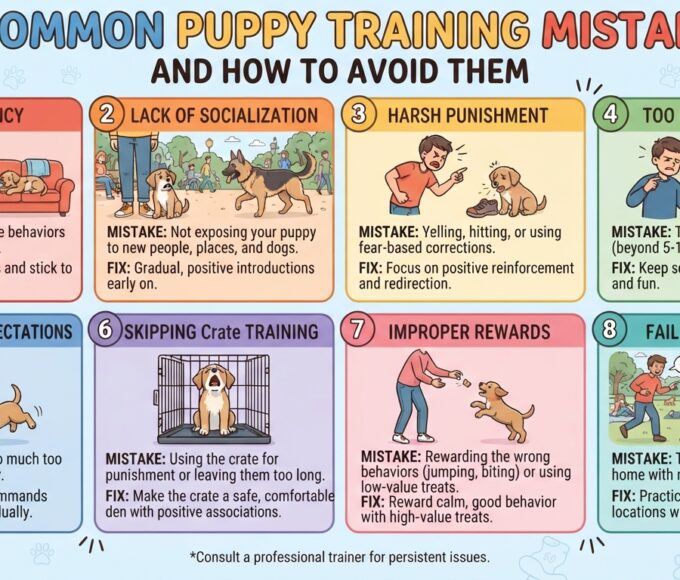
A crate can be useful when introduced positively, but it should be a safe resting space rather than a punishment area.
Don’t forget identification. Even puppies that spend most of their time indoors can slip through an open door or gate.
Puppy Nutrition: Feed for Healthy Growth
Nutrition is one of the most important parts of puppy care because puppies are growing rapidly and have different nutritional needs from adult dogs.
Choose a complete and balanced puppy food appropriate for your puppy’s life stage and expected adult size. Large- and giant-breed puppies may have different nutritional requirements, so ask your veterinarian which food is appropriate.
Look for a nutritional adequacy statement showing that the food is formulated to meet recognized nutritional standards, such as AAFCO standards where applicable.
How Often Should a Puppy Eat?
Young puppies generally need several meals throughout the day. As they mature, the number of meals can gradually decrease.
A simple routine might look like:
| Time | Example |
|---|---|
| 7:00 AM | Breakfast |
| 12:00 PM | Lunch |
| 5:00 PM | Dinner |
| Evening | Additional meal if appropriate for age and feeding plan |
The exact amount and frequency should depend on your puppy’s age, size, breed, food, growth rate, and veterinarian’s advice rather than following one schedule for every puppy.
Keep fresh water available throughout the day.
Treats can be useful during training, but they should remain a small part of your puppy’s overall diet.
Start Potty Training From Day One
House training becomes much easier when your puppy has a predictable routine.
Take your puppy to their designated potty area:
- First thing in the morning
- After waking from a nap
- After eating
- After drinking a significant amount of water
- After energetic play
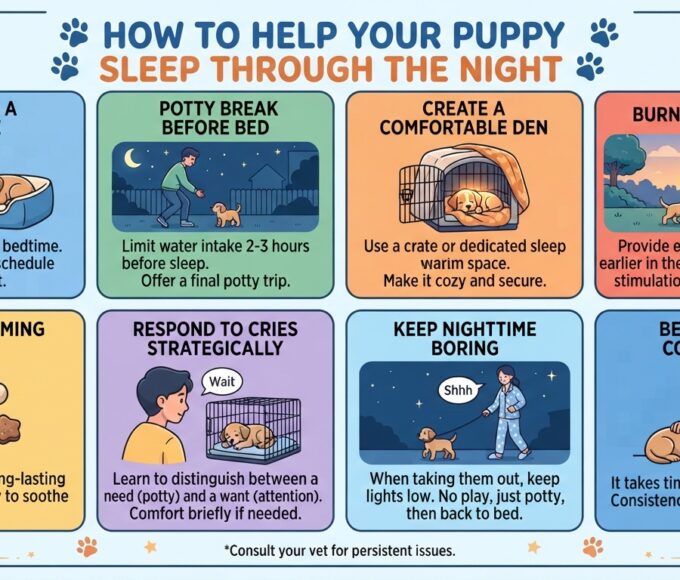
- Before bedtime
- Whenever you notice signs that they need to go
Very young puppies may need frequent bathroom breaks because they have limited bladder control.
When your puppy eliminates in the correct place, calmly praise them and reward them immediately. Accidents are normal during the learning process, so avoid punishment.
Consistency matters more than perfection.
Begin Basic Training Early
Puppy training isn’t just about teaching commands. It helps your dog understand how to live successfully with people.
Start with simple behaviors such as:
- Responding to their name
- Sit
- Come
- Stay
- Leave it
- Drop it
- Walking politely on a leash
- Settling on a mat or bed
- Gentle handling
Keep training sessions short and positive. Puppies can lose focus quickly, so several small sessions can be more productive than one long lesson.
Reward the behaviors you want to see with treats, praise, toys, or another reward your puppy enjoys.
Socialization Is About More Than Meeting Dogs
Socialization is one of the most important parts of puppy development.
A well-socialized puppy gradually learns that different people, sounds, surfaces, environments, handling experiences, and animals don’t necessarily need to be frightening.
However, socialization doesn’t mean taking your puppy everywhere and allowing every dog to approach them.
Instead, introduce new experiences gradually and positively.
For example, your puppy can learn about:
- Different household sounds
- Car rides
- Visitors
- Different floor surfaces
- Gentle grooming
- Veterinary handling
- Wearing a collar or harness
- Calm, healthy dogs
- Different people and voices
- Outdoor sights and sounds
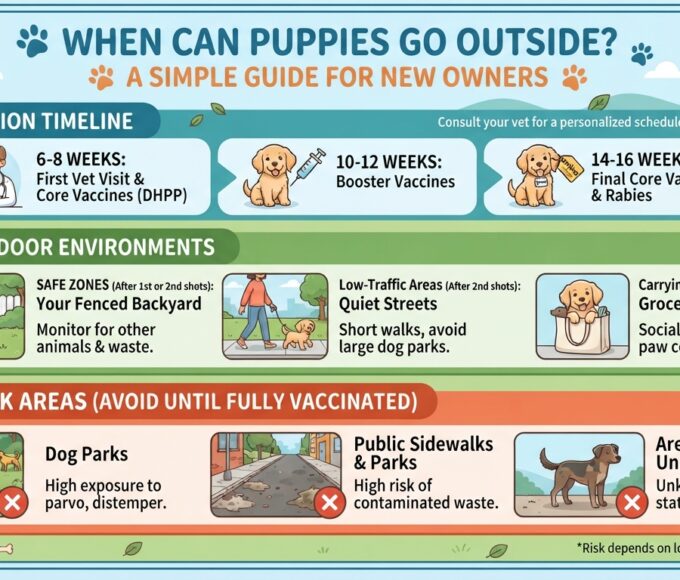
Because puppies are vulnerable to infectious diseases before completing their vaccination series, discuss safe socialization with your veterinarian. Well-managed puppy classes and controlled exposure can provide valuable experiences without requiring unnecessary exposure to high-risk environments.
Make Playtime Part of Your Routine
Puppies need opportunities to explore, play, chew, and use their brains.
Try activities such as:
Fetch
Use an appropriate toy and keep the game short and enjoyable.
Tug
Gentle tug games can be a fun way to interact with your puppy when played appropriately.
Food Puzzles
Puzzle feeders and treat-dispensing toys can encourage your puppy to work for part of their food while providing mental stimulation.
Find-the-Treat
Hide a small amount of food in an easy-to-find location and encourage your puppy to sniff it out.
Toy Rotation
Instead of leaving every toy available all the time, rotate a few options. Bringing out a different toy can make an old favorite feel new again.
Create a Safe Exercise Routine
Puppies need activity, but more exercise isn’t automatically better.
Their exercise needs vary with age, breed, size, health, and individual development. Avoid forcing a young puppy into strenuous or repetitive exercise simply because they have lots of energy.
Short play sessions, gentle exploration, training games, and age-appropriate walks can all provide activity.
If you aren’t sure how much exercise your puppy should receive, ask your veterinarian.
Schedule Your Puppy’s First Veterinary Visit
A veterinary appointment should be one of your priorities after bringing home a puppy.
Your veterinarian can evaluate your puppy’s overall health and create a preventive-care plan covering:
- Vaccinations
- Parasite prevention
- Deworming
- Nutrition
- Growth
- Dental development
- Behavior
- Exercise
- Spaying or neutering
- Future wellness examinations
Puppies commonly need veterinary examinations more frequently during their early months than adult dogs.
What About Puppy Vaccines?
Vaccination schedules are individualized, but puppies generally receive a series of vaccinations during early life because maternal antibodies can interfere with vaccine response.
Core vaccines commonly include protection against diseases such as distemper, adenovirus, parvovirus, and rabies, while other vaccines may be recommended according to lifestyle, geography, and exposure risk.
Don’t create your puppy’s vaccination schedule from an internet chart alone. Your veterinarian can determine the appropriate timing based on your puppy’s age, previous vaccination history, local disease risks, and applicable laws.
Don’t Forget Parasite Prevention
Puppies can be susceptible to intestinal parasites and external parasites such as fleas and ticks.
Your veterinarian can recommend an appropriate parasite-prevention program and determine whether stool testing or deworming is needed.
Keeping preventive care consistent can help protect both your puppy and the people living with them.
Make Grooming a Normal Experience
Grooming isn’t only about appearance. It also gives you opportunities to inspect your puppy’s skin, coat, paws, ears, nails, and mouth.
Start slowly and make handling rewarding.
Depending on the puppy’s breed and coat, grooming may include:
- Brushing
- Bathing when needed
- Nail trimming
- Ear care when appropriate
- Coat trimming or professional grooming
- Dental care
There isn’t one universal grooming schedule for every puppy. A short-coated puppy may need very different care from a long-haired or curly-coated breed.
Instead of automatically bathing or cleaning ears on a fixed monthly schedule, follow your veterinarian or groomer’s recommendations for your puppy’s specific needs.
Teach Your Puppy That Handling Is Safe
Puppies will eventually need their paws, ears, mouth, coat, and body handled during routine care.
Practice gently touching these areas for a few seconds at a time while offering praise or treats.
For example:
- Touch one paw.
- Reward your puppy.
- Briefly look at an ear.
- Reward again.
- Gently lift the lip.
- Reward.
- Slowly introduce a brush or nail-care tool.
Keep these sessions relaxed and stop before your puppy becomes overwhelmed.
This can make future grooming and veterinary visits much easier.
What Should a First-Time Puppy Owner Expect?
The first few weeks won’t always look like the cute puppy videos online.
Your puppy may:
- Wake you during the night
- Have accidents
- Chew things they shouldn’t
- Cry when left alone
- Bite or mouth during play
- Become tired and cranky
- Need frequent potty breaks
- Struggle to settle
- Take time to adjust to your home
These behaviors don’t mean you’ve failed as a puppy parent.
Your puppy is learning an entirely new world.
Your job is to provide structure, supervision, patience, and appropriate outlets for their needs.
7 Simple Rules for New Puppy Parents
If everything feels overwhelming, remember these basics:
1. Establish a Routine
Regular meal, potty, sleep, play, and training times help your puppy understand what to expect.
2. Supervise Closely
Puppies explore with their mouths, so supervision can prevent many accidents.
3. Reward Good Behavior
Show your puppy what you want them to do rather than focusing only on correcting mistakes.
4. Protect Their Health
Keep veterinary visits, vaccinations, parasite prevention, and nutrition on track.
5. Give Them Enough Sleep
Puppies need substantial rest. A tired puppy isn’t always a puppy who needs more exercise.
6. Socialize Thoughtfully
Introduce new experiences gradually and safely rather than overwhelming your puppy.
7. Be Patient
Your puppy isn’t supposed to know the household rules immediately. Teaching takes repetition.
Frequently Asked Questions
How soon should I take my new puppy to the vet?
Schedule a veterinary examination soon after bringing your puppy home. The veterinarian can review their health history, vaccination records, parasite control, nutrition, and overall development.
How many times a day should a puppy eat?
Young puppies generally need several meals per day, with feeding frequency decreasing as they grow. The appropriate amount depends on the puppy and the food being fed, so follow the food’s feeding guidance and your veterinarian’s recommendations.
When should puppy training begin?
Training can begin as soon as your puppy comes home. Start with simple behaviors, name recognition, potty training, handling, and positive experiences.
Can an unvaccinated puppy socialize with other dogs?
Socialization shouldn’t necessarily wait until every vaccine is complete, but the type of exposure matters. Avoid high-risk environments and unknown or unvaccinated dogs, and ask your veterinarian which socialization activities are appropriate in your area.
How do I stop my puppy from chewing everything?
Provide appropriate chew toys, supervise your puppy, redirect them when they choose an inappropriate object, and reward them for chewing approved items.
How long does potty training take?
There isn’t a universal timeline. Puppies develop bladder control at different rates, and consistency from the owner makes a major difference. Frequent opportunities to use the correct potty area and immediate positive reinforcement can help the process.
Final Thoughts
Your first puppy doesn’t need a perfect owner. They need a patient one.
Focus on the fundamentals: nutritious food, veterinary care, safe socialization, gentle training, appropriate exercise, plenty of rest, and a predictable routine.
There will probably be accidents. There will be chewed-up objects. There may even be a few nights when you wonder whether you’re ever going to sleep normally again.
But with consistency and patience, those tiny paws gradually become confident steps toward adulthood.
Enjoy the messy moments, celebrate the small victories, take far too many photos, and give your puppy plenty of time to learn.
You’re not just raising a puppy—you’re building the foundation for a lifelong relationship.





Leave a comment