



Dog training doesn’t have to feel like a strict classroom exercise. With the right approach, it can become an enjoyable activity that gives your dog mental stimulation while helping the two of you communicate better.
That’s one reason dog training videos have become such a useful resource for pet parents. Instead of trying to understand written instructions alone, you can watch a trainer demonstrate a command, observe the timing of rewards, and then practice the same concept with your own dog.
Whether you’re teaching a puppy their name, helping an adult dog improve their manners, or simply looking for a fun new trick to learn together, training videos can provide plenty of inspiration.
Why Dog Training Videos Can Be Helpful
One of the biggest advantages of video-based learning is that you can actually see the process.
A written description might tell you to reward your dog when they perform a particular behavior. A video can show you exactly what that timing looks like.
Other advantages include:
- Visual demonstrations: See how a trainer introduces a behavior.
- Flexible learning: Watch and practice whenever it suits your schedule.
- Replayable lessons: Pause, rewind, and repeat difficult sections.
- Different training ideas: Explore approaches for obedience, tricks, enrichment, and manners.
- Easy access: Many useful training demonstrations are available online.
Videos can also give you ideas for everyday challenges such as jumping on people, pulling on the leash, barking, or struggling to settle.
However, online content varies considerably in quality, so choosing your sources carefully is important.
Choose Training Methods Carefully
Not every technique you see online will be appropriate for every dog.
Look for trainers who clearly explain what they’re teaching and emphasize humane, reward-based methods. Your dog should not be frightened, injured, or deliberately overwhelmed during training.
It’s also important to remember that a successful video demonstration doesn’t mean the exact same technique will work immediately with your dog.
Dogs have different personalities, histories, motivations, and learning speeds.
Keep Training Sessions Short and Enjoyable
A common mistake is trying to train for too long.
Instead, practice for a short period and finish while your dog is still interested. Some dogs may enjoy only a few minutes at a time, while others can comfortably handle somewhat longer sessions.
Watch your dog’s body language and adjust accordingly.
If your dog becomes distracted, frustrated, tired, or stressed, make the exercise easier or take a break.
Start With Basic Commands
Dog training videos can be particularly useful for learning foundational behaviors.
Sit
Hold a small reward near your dog’s nose and gradually guide their movement upward and back. When their bottom reaches the floor, reward the behavior.
Once your dog begins offering the behavior consistently, you can introduce the verbal cue.
Stay
Begin with very short periods and minimal distance.
Reward your dog for remaining in place, then gradually increase the duration and distance.
Don’t rush this exercise. A dog that can stay for two seconds successfully is ready to build from two seconds—not necessarily thirty.
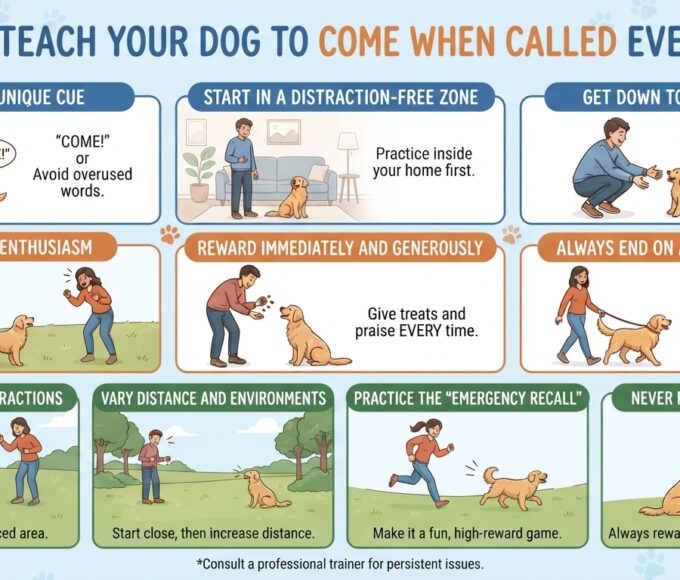
Come
Recall training is an important skill to practice.
Start somewhere quiet and safe. Use an enthusiastic voice, encourage your dog toward you, and reward them generously when they come.
Gradually introduce distractions as your dog becomes more reliable.
Leave It
This cue can help teach your dog not to immediately interact with something you don’t want them to pick up.
Start with an easy setup and reward your dog for disengaging from the object.
Turn Training Into a Game
Learning doesn’t have to be repetitive.
Games can make training more interesting while giving your dog opportunities to use their brain.
Hide-and-Seek
Ask your dog to wait while you hide somewhere easy to find. Call them and celebrate when they locate you.
As they become better at the game, you can make the hiding places more challenging.
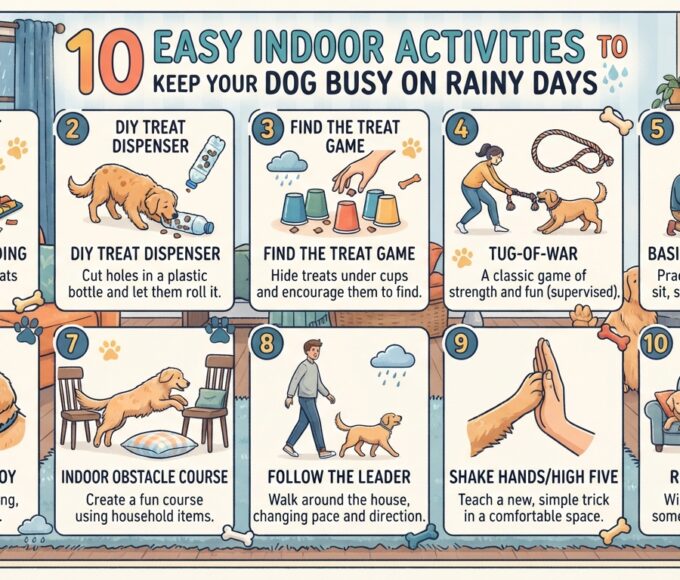
Find the Treat
Hide a small amount of food in an easy location and encourage your dog to search.
This can become a simple scent-based enrichment activity.
Toy Retrieval
If your dog enjoys fetching, use the game to practice returning a toy to you.
Reward the behavior you want and keep the game moving before your dog loses interest.
Trick of the Week
Choose one new trick each week.
You might try:
- Shake
- Spin
- Touch
- Wave
- Roll over
- Go to bed
- Pick up a toy
- Put a toy away
Some tricks are easier than others, so break complicated behaviors into smaller steps.
Try a Simple Obstacle Course
An obstacle course can combine movement and learning.
You don’t need expensive agility equipment. Depending on your dog’s abilities and the available space, you might use safe objects to create simple activities such as:
- Walking around cones
- Going through a tunnel
- Stepping over a low obstacle
- Following a target
- Moving between markers
Avoid unstable furniture, slippery surfaces, dangerous heights, and repetitive jumping that could cause injury.
The goal is enrichment—not an extreme physical challenge.
Training Can Strengthen Your Bond
Dog training is about more than commands.
Every successful session gives you and your dog another opportunity to communicate.
Your dog learns that paying attention to you can lead to rewards, games, praise, or other things they enjoy. Meanwhile, you become better at recognizing their body language, motivation, and individual learning style.
That shared experience can help make training a positive part of your daily routine.
Respect Your Dog’s Individual Personality
Two dogs can receive the same training and respond completely differently.
One dog might eagerly chase a toy, while another prefers food rewards. One may enjoy learning tricks, while another finds simple obedience exercises more rewarding.
Pay attention to what motivates your dog.
Useful rewards can include:
- Small treats
- Favorite toys
- Praise
- Play
- Access to something enjoyable
There is no need to force your dog to work for a reward they don’t actually value.
How to Get the Most From Training Videos
Watching videos is only the first step. To turn online lessons into real progress, try this approach.
1. Watch Before Practicing
Watch the entire exercise once so you understand what you’re supposed to do.
2. Start Somewhere Quiet
Begin in a low-distraction environment.
Once your dog understands the behavior, gradually practice in more challenging locations.
3. Practice One Skill
Don’t introduce five new commands in one session.
Focus on one behavior and build a strong foundation before moving forward.
4. Pause and Replay
If you’re unsure about your timing or the trainer’s technique, replay the relevant section.
5. Record Your Own Progress
You can occasionally record your training sessions to see how your timing and your dog’s responses change over time.
6. Celebrate Small Improvements
Your dog doesn’t need to perform a behavior perfectly immediately.
Reward progress and gradually raise your expectations.
Keep a Simple Training Journal
A basic training tracker can help you stay consistent.
| Skill | Starting Point | Current Progress | Next Goal |
|---|---|---|---|
| Sit | Learning cue | Reliable indoors | Practice outside |
| Stay | 2 seconds | 10 seconds | Add distance |
| Come | Short distance | Reliable indoors | Add distractions |
| Leave it | Beginning | Responds with food | Practice with toys |
This also helps you recognize which behaviors need more practice.
When You Should Get Professional Help
Training videos can be excellent for everyday skills, but they aren’t a substitute for individualized help in every situation.
Consider working with a qualified professional if your dog has serious aggression, intense fear, severe anxiety, repeated dangerous behavior, or another problem that puts people or animals at risk.
Avoid attempting techniques from an online video if you aren’t confident that they are safe for your particular situation.
Frequently Asked Questions
Can I train my dog using videos?
Yes. Videos can be a useful way to learn how basic commands, tricks, and training exercises are performed. Your dog’s individual needs and your consistency will still determine how well the training works.
Can older dogs learn new tricks?
Yes. Dogs can continue learning throughout their lives. Training should simply be adapted to their physical abilities, experience, and motivation.
Do I need professional training experience?
No. Many basic behaviors can be taught by everyday dog owners. Start with simple exercises and follow clear instructions.
For complex behavior problems, professional guidance may be more appropriate.
What training method should I look for?
Look for educational content that explains reward-based training clearly and treats the dog with patience and respect.
Be cautious of methods that rely on fear, pain, intimidation, or excessive punishment.
How long should training sessions last?
There is no universal duration that works for every dog. Short sessions are often easier for dogs to handle, particularly when they’re learning something new.
If your dog loses focus or becomes frustrated, end the session or simplify the exercise.
What if my dog doesn’t understand a trick?
Make the behavior easier and divide it into smaller steps.
You may also need to change the reward, practice somewhere quieter, or improve your timing.
Can training videos help with barking or jumping?
Some videos can provide general strategies for common behaviors, but the reason behind the behavior matters. If the issue is persistent, severe, or connected to fear or aggression, individualized professional advice can be valuable.
Is it okay to train my dog every day?
Yes, regular practice can help dogs learn and maintain behaviors. Daily training doesn’t need to mean long sessions. A few short opportunities incorporated into normal routines can be enough to provide useful practice.
Final Thoughts
Dog training videos can turn learning into an accessible and entertaining activity for both you and your canine companion.
You can use them to learn basic commands, discover creative tricks, create enrichment games, and find new ways to practice together. The key is to focus on consistency rather than perfection.
Keep sessions positive, respect your dog’s individual pace, reward useful behaviors, and stop when your dog becomes overwhelmed.
At the end of the day, the greatest reward isn’t simply having a dog that can perform a trick. It’s building better communication and creating more enjoyable moments together.







Leave a comment