



Teaching your dog to come when called is one of the most useful skills you can develop together.
A reliable recall can make everyday life easier, whether you’re calling your dog away from an interesting smell, bringing them inside from the garden, or preparing them to leave an off-leash area.
However, good recall doesn’t usually happen automatically. Dogs need to learn that coming when called is rewarding and worthwhile.
If you’re wondering how to teach a dog to come when called, the key is to start in a controlled environment and gradually make the training more challenging.
Why Is Recall Training Important?
A reliable recall gives you better control in situations where your dog is not directly beside you.
It can also help you call your dog away from potentially dangerous situations.
For example, you may need to call your dog away from:
- A busy road
- Another animal
- Dangerous food
- Broken glass
- An unfamiliar person
- An unsafe area
Recall training is therefore more than a convenient trick. It can become an important part of your dog’s everyday training.
Choose a Recall Word
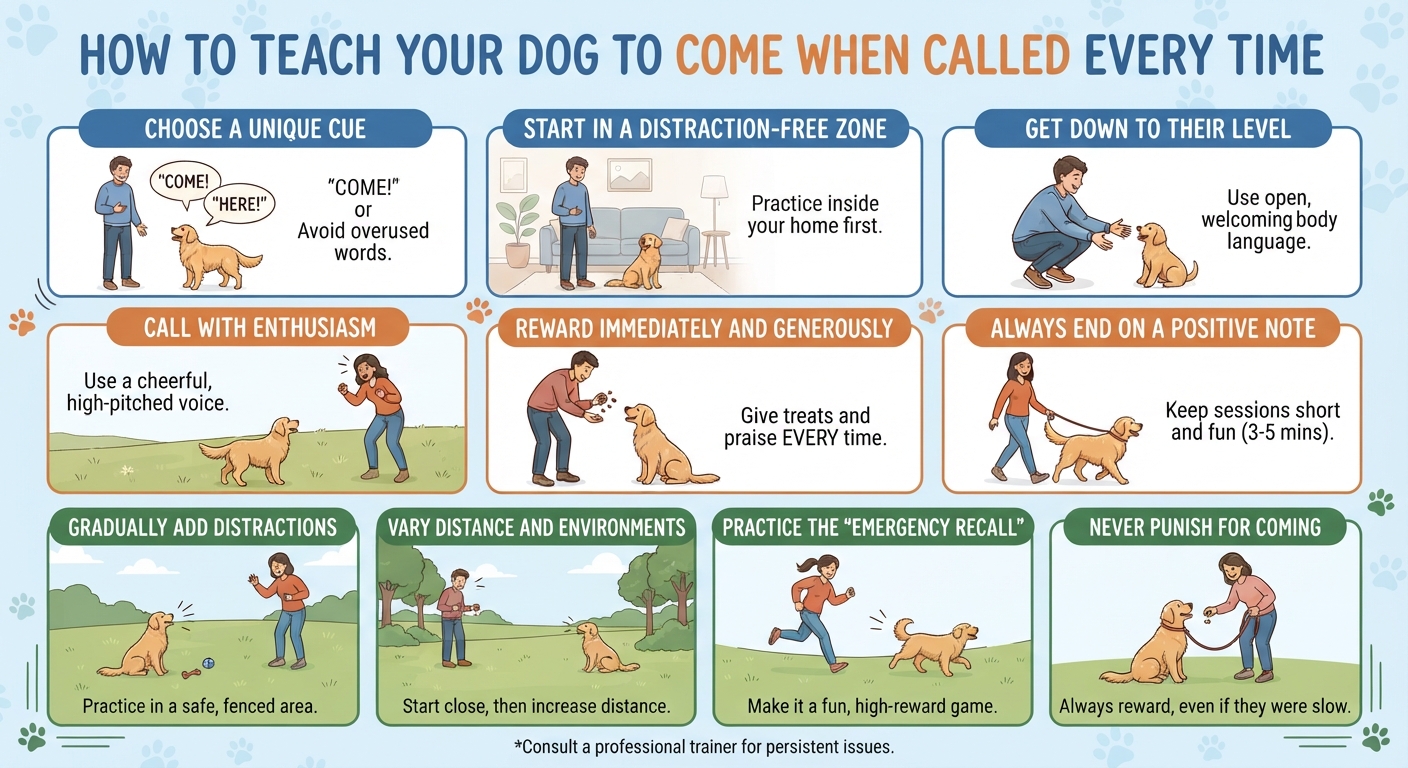
Start by choosing a specific recall cue.
You might use:
- “Come”
- “Here”
- Your dog’s name followed by “come”
Choose one word or phrase and use it consistently.
Avoid repeatedly changing the command because your dog needs to understand exactly what behavior you’re asking for.
Start in a Quiet Indoor Area
Don’t begin recall training in a busy park.
Your dog has many distractions outdoors, and expecting a beginner to ignore them can make training unnecessarily difficult.
Start somewhere quiet inside your home.
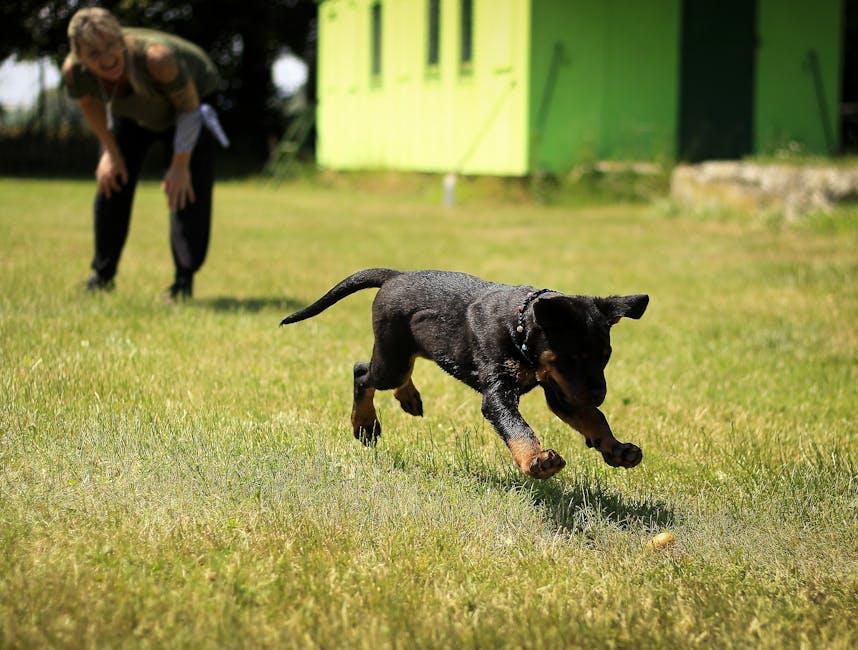
Call your dog from a short distance using a cheerful voice.
When they come toward you, reward them immediately.
The reward can be a small treat, praise, a favorite toy, or another form of positive reinforcement your dog enjoys.
Make Coming to You Rewarding
Your dog should learn that coming when called leads to something good.
For example:
You call → your dog comes → you reward.
Repeat this pattern regularly.
Don’t call your dog only when something unpleasant is about to happen.
If “come” always means bath time, nail trimming, or the end of fun, your dog may eventually become less enthusiastic about responding.
Sometimes call your dog, reward them, and then let them return to what they were doing.
This teaches them that coming to you doesn’t always mean the fun is over.
Use a Happy Voice
Your tone matters.
Dogs can respond differently depending on your voice and body language.
Use an enthusiastic but clear tone when practicing recall.
If your dog doesn’t come immediately, avoid turning the exercise into a stressful confrontation.
Instead, make yourself interesting by moving away, crouching down, or using an appropriate toy or reward.
Practice Short Distances
Once your dog understands the cue indoors, gradually increase the distance.
Try calling from:
- One room to another
- Across a hallway
- From the garden
- From a safe enclosed area
Keep sessions short.
Several successful repetitions are generally more useful than repeatedly calling your dog when they’re unlikely to respond.
Avoid Repeating the Command
One common mistake is saying:
“Come, come, come, COME!”
If your dog learns that the cue can be ignored several times before they need to respond, the command can lose its meaning.
Instead, give the cue once and make the situation easier if your dog doesn’t respond.
You can then try again when you’re closer or there are fewer distractions.
Gradually Introduce Distractions
Once your dog responds reliably indoors, start practicing in increasingly distracting environments.
You might move from:
Living room → garden → quiet outdoor area → more distracting environment
Don’t jump directly from a quiet bedroom to a busy dog park.
Each new environment is a new challenge.
Reward successful recalls generously.
Use a Long Line for Outdoor Training
A long training line can provide additional control when practicing recall outdoors.
Attach it to appropriate equipment and use it in a safe open area.
The line allows your dog to explore while giving you a way to prevent them from running too far away.
Never wrap a long line around your hand, and avoid using it in areas where it could become tangled.
Practice the Emergency Recall
You can eventually teach a special recall cue for emergencies.
This cue should be different from your normal “come” command.
Choose a unique word or sound and associate it with an especially valuable reward.
Practice it rarely but consistently.
The goal is for your dog to learn that this particular signal means something extremely rewarding is available.
Don’t Punish Your Dog for Coming Back
This is extremely important.
If your dog eventually comes back after ignoring you, don’t punish them for the delay.
Punishing them after they return can teach them that coming to you is unpleasant.
Instead, reward the return and work on improving the training setup.
You can prevent future problems by using shorter distances and fewer distractions.
What If Your Dog Ignores You?
Dogs may ignore recall for many reasons.
They may be distracted, excited, frightened, or simply not understand the command well enough yet.
Ask yourself:
- Was the environment too distracting?
- Was the distance too great?
- Was the reward interesting enough?
- Has my dog practiced this behavior enough?
- Am I asking for too much too soon?
Make the next attempt easier rather than becoming frustrated.
Common Recall Training Mistakes
Calling Only When Fun Ends
If you always call your dog when you’re leaving the park, they may learn to avoid you.
Practice calling them, rewarding them, and then allowing them to continue playing.
Practicing Only at Home
Indoor recall is useful, but dogs need to learn that the cue applies in other environments too.
Gradually introduce new locations.
Expecting Instant Results
Recall can take time.
Some dogs learn quickly, while others need many weeks or months of consistent practice.
Using Recall When You Know Your Dog Won’t Respond
If your dog is chasing something exciting from a long distance away, repeatedly shouting “come” may simply teach them that the cue can be ignored.
Set up training situations where success is likely.
Frequently Asked Questions
What is the easiest way to teach a dog to come?
Start indoors with short distances, use a consistent recall cue, and reward your dog immediately whenever they come to you.
How long does recall training take?
It varies between dogs. Some dogs respond quickly, while others require weeks or longer of consistent practice.
Should I use treats for recall training?
Treats can be an effective reward, especially during the early stages. You can gradually incorporate toys, praise, play, and other rewards.
Can an older dog learn recall?
Yes. Older dogs can learn new behaviors, although the pace may vary depending on their previous training and individual circumstances.
Final Thoughts
A reliable recall is built through repetition, patience, and positive experiences.
When learning how to teach a dog to come when called, focus on making the behavior rewarding rather than relying on punishment or frustration.
Start somewhere quiet, gradually increase distance and distractions, and give your dog plenty of opportunities to succeed.
With consistent practice, coming when called can become one of your dog’s most dependable everyday behaviors.








Leave a comment