



Training your dog doesn’t have to feel like a boring chore. With a few treats, some patience, and the right guidance, training can become one of the best ways to communicate and bond with your canine companion.
YouTube has made it easier than ever to watch trainers demonstrate techniques step by step. Whether you’re teaching a puppy to sit or working on more challenging behaviors, video demonstrations can help you see exactly how an exercise is performed.
However, not every dog-training video uses the same philosophy. It’s important to choose trainers whose methods are clear, humane, and appropriate for your dog’s individual needs.
Here are some YouTube channels for dog training that can provide ideas and demonstrations for owners who want to practice at home.
YouTube Channels Worth Exploring
Different channels have different teaching styles and areas of focus. Instead of looking for one channel that covers everything, consider exploring several and choosing techniques that suit your dog’s needs.
1. Kikopup
Kikopup is well known for detailed dog-training tutorials, particularly those centered around positive reinforcement.
The channel covers a wide range of subjects, including basic skills, puppy training, manners, tricks, and behavior-related challenges.
Its instructional format can be particularly useful when you want to watch a specific exercise being demonstrated rather than simply read about it.
2. Zak George’s Dog Training Revolution
Zak George’s channel presents dog training in an approachable and practical format.
Videos cover everyday obedience, puppy development, common challenges, tricks, and life with dogs.
The channel can be useful for owners who enjoy following a training journey and seeing how exercises are applied in everyday situations.
3. DoItYourselfDogTraining
As its name suggests, this type of resource focuses on practical training that owners can work on at home.
DIY-style training videos can give you ideas for teaching basic behaviors and creating simple enrichment activities without needing elaborate equipment.
Always adapt an exercise to your dog’s size, age, confidence, and physical abilities.
4. Petco
Petco’s educational content includes dog-training and pet-care material covering common skills and everyday challenges.
For beginners, structured demonstrations can make basic concepts easier to understand.
Look for videos that explain how to reward desired behavior and gradually increase the difficulty of an exercise.
5. Dog Training by K9-1
K9-1 content explores different aspects of dog training and behavior.
As with any online resource, watch carefully to understand what method is being demonstrated rather than choosing a technique simply because it looks effective in a video.
Different dogs respond differently to training approaches, and complicated behavior issues may require individualized guidance.
Why Video Can Make Dog Training Easier
Reading about dog training is useful, but seeing a trainer demonstrate an exercise can make certain concepts much clearer.
A video can show:
- How to deliver a reward
- Where to position your hands
- When to give a cue
- How to recognize the desired behavior
- How quickly to progress
- What common mistakes look like
You can also pause, rewind, and replay a demonstration while practicing.
This makes YouTube particularly useful for owners who learn better by watching someone perform a technique.
Use Positive Reinforcement to Make Learning Enjoyable
One of the simplest ways to make training enjoyable is to reward behaviors you want your dog to repeat.
Depending on the individual dog, rewards can include:
- Small treats
- Toys
- Play
- Praise
- Access to something the dog wants
For example, when teaching “sit,” you can reward your dog shortly after they perform the desired behavior. With repetition, the dog can begin connecting the cue and behavior with a positive outcome.
The exact reward that works best varies from dog to dog.
Keep Training Sessions Short
Long sessions can become frustrating for both the owner and the dog.
Instead of trying to teach everything in one sitting, break training into short sessions throughout the day.
You might spend a few minutes practicing one skill before moving on to play or another activity.
Short sessions also make it easier to finish while your dog is still interested.
Turn Training Into a Game
Training doesn’t always have to look like formal obedience practice.
You can incorporate learning into games your dog already enjoys.
Hide-and-Seek
Ask your dog to stay while you hide somewhere nearby. Then call them and reward them when they find you.
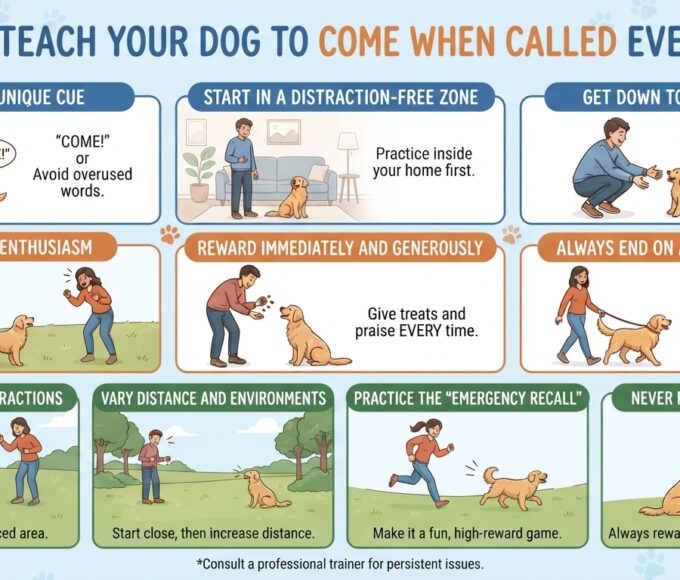
This can turn coming when called into an engaging activity.
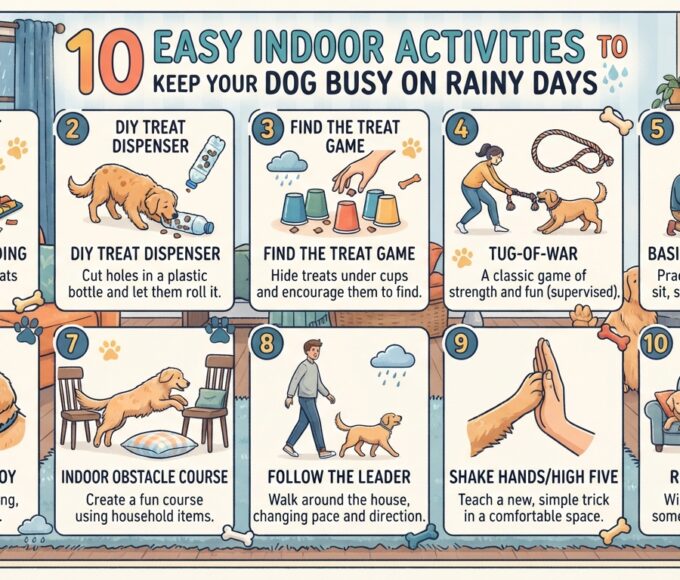
Find the Treat
Hide a small reward in an easy-to-find location and encourage your dog to search for it.
As your dog understands the game, you can gradually make the search more challenging.
Toy Retrieval
Use your dog’s favorite toy to practice returning an item to you.
Reward your dog for bringing the toy back rather than simply grabbing it and running away.
Obstacle Games
You can create simple obstacles using safe household objects or purpose-made equipment.
Avoid activities that require your dog to jump from unsafe heights or perform movements that could cause injury.
Build a Training Progress Tracker
Keeping track of your dog’s progress can help you see improvements that aren’t always obvious from one day to the next.
You can create a simple tracker like this:
| Skill | Started | Current Progress | Next Goal |
|---|---|---|---|
| Sit | Week 1 | Responds indoors | Practice outdoors |
| Stay | Week 1 | Holds briefly | Increase distance |
| Come | Week 2 | Responds in quiet areas | Practice with distractions |
| Leave it | Week 2 | Improving | Practice around toys |
The dates and goals will naturally vary from one dog to another.
How to Get More From Dog Training Videos
Simply watching dozens of videos won’t train your dog. The important part is turning useful information into consistent practice.
Choose One Skill at a Time
Avoid jumping between ten different techniques during one session.
Choose one behavior and give your dog plenty of opportunities to understand it.
Watch the Entire Demonstration
Before attempting an exercise, watch how the trainer introduces the behavior, rewards it, and progresses to the next step.
This can help prevent you from accidentally skipping important stages.
Pause and Practice
You don’t have to watch a video from beginning to end.
Pause after a demonstration and try the technique with your dog. Then replay the section if you need to check your timing or positioning.
Keep Notes
Write down the cues you’re using, what reward works best, and where your dog struggles.
This is especially helpful when several family members are training the same dog.
Be Consistent
If one person rewards a behavior while another person accidentally rewards the opposite behavior, training can become confusing.
Everyone in the household should try to use the same cues and basic rules.
What About Agility Training?
Agility-style exercises can add physical activity and mental stimulation to a dog’s routine.
YouTube contains plenty of demonstrations for homemade obstacle courses and beginner exercises.
However, safety should come first.
Avoid unstable equipment, slippery surfaces, excessive jumping, or activities that aren’t appropriate for your dog’s age, size, fitness level, or physical condition.
You don’t need a professional agility course to make training fun. Simple activities such as walking around cones, going through a safe tunnel, or following a target can provide variety.
YouTube Training Isn’t Right for Every Problem
Online videos can be useful for everyday skills, but some behavior problems are more complicated.
If your dog shows aggression, severe fear, repeated panic, serious separation-related distress, or another concerning behavior, an individualized assessment from a qualified veterinary or behavior professional may be more appropriate than trying random techniques from the internet.
Never continue an exercise that appears to frighten, hurt, or overwhelm your dog.
How to Tell Whether a Training Video Is Worth Following
Before trying advice from a YouTube trainer, consider a few questions:
Does the Trainer Explain the Method?
A good instructional video should explain what the dog is learning and why a particular step is being used.
Does the Dog Look Comfortable?
Pay attention to the dog’s body language throughout the demonstration.
A dog that appears frightened or overwhelmed shouldn’t be treated as an example of successful training.
Is the Exercise Appropriate?
A technique designed for an adult dog may not be suitable for a young puppy, senior dog, or dog with physical limitations.
Does the Trainer Encourage Gradual Progress?
Learning usually takes repetition. Be cautious of promises that a dog can completely change a complicated behavior almost instantly.
Common Skills You Can Practice at Home
YouTube tutorials can be particularly useful for basic behaviors such as:
- Sit
- Down
- Stay
- Come
- Leave it
- Drop it
- Wait
- Name recognition
- Loose-leash walking
- Going to a mat
- Calm greetings
Start in a relatively quiet environment and gradually introduce distractions as your dog becomes more reliable.
Frequently Asked Questions
Can I train my dog using YouTube videos?
Yes. YouTube can be a useful educational resource for teaching basic behaviors and learning different training techniques. The key is to practice consistently and choose methods that are appropriate and humane.
What should beginners look for in a dog-training channel?
Beginners may benefit from channels that explain exercises step by step, demonstrate timing clearly, and provide practical examples of how to reward desired behavior.
How long should a dog-training session be?
There is no single ideal duration for every dog. Many dogs do well with short sessions that end before they become bored or frustrated. Several brief practices can be more manageable than one long session.
What treats should I use during training?
Use small, dog-appropriate treats that your dog finds motivating. You can also use toys, play, or praise as rewards depending on what your dog values.
Should I use the same YouTube trainer for everything?
Not necessarily. Different trainers may specialize in different areas. However, constantly switching between conflicting techniques can make training confusing, so it’s better to understand a method before incorporating it.
What if my dog doesn’t respond to a technique?
Don’t assume your dog is being stubborn. The reward, environment, timing, difficulty, or training setup may need adjustment. Make the exercise easier and practice in a less distracting environment.
Can YouTube replace a professional dog trainer?
For basic skills, online videos can be helpful. But serious behavior problems, safety concerns, aggression, severe anxiety, or complicated cases may require individualized professional guidance.
Final Thoughts
YouTube can turn dog training into a much more visual and accessible learning experience. Channels such as Kikopup, Zak George’s Dog Training Revolution, Petco, and other educational resources provide demonstrations that can give owners new ideas to practice at home.
The most important part isn’t how many videos you watch. It’s how consistently you practice with your dog.
Keep sessions positive, make exercises manageable, reward progress, and give your dog time to learn. Training isn’t simply about getting your dog to obey commands—it can also become a fun way to communicate, build trust, and strengthen your relationship.









Leave a comment