






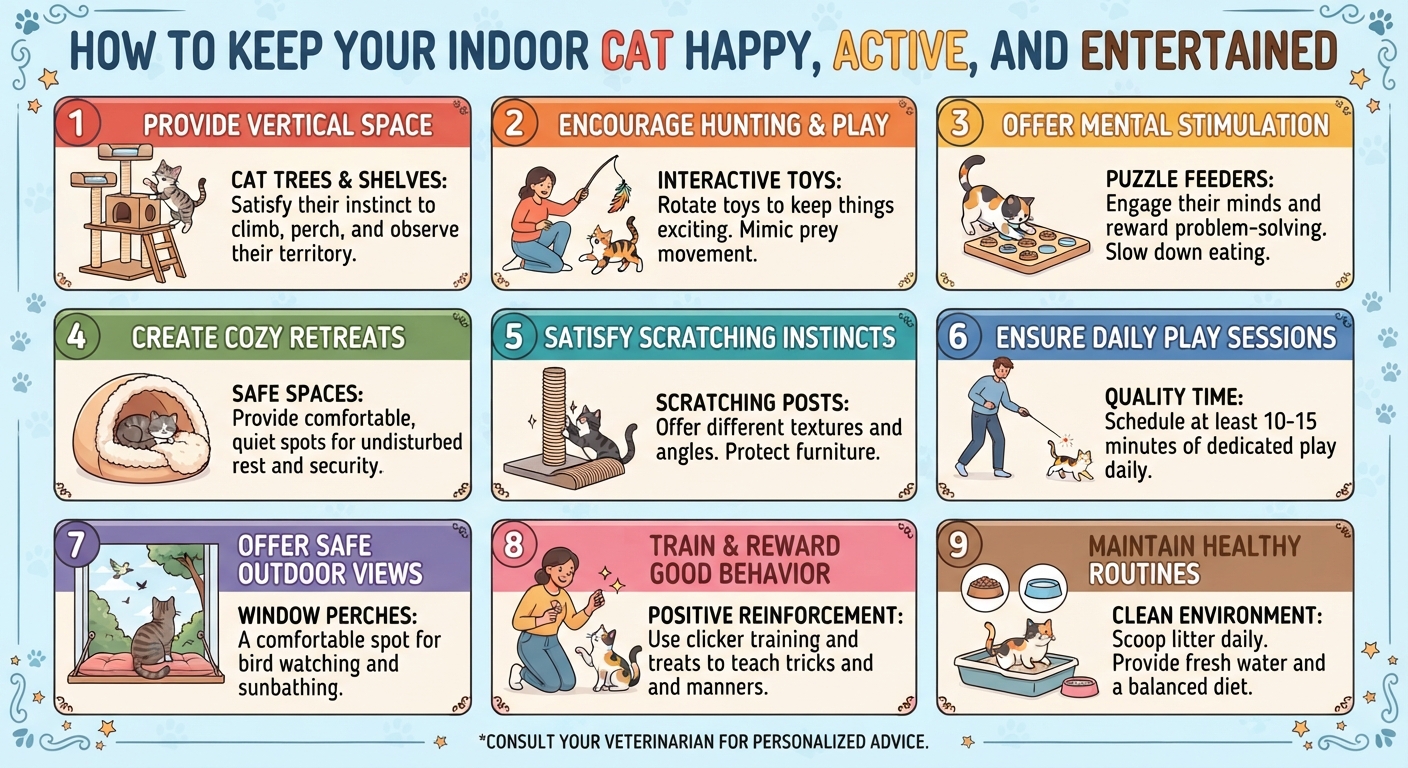
Indoor cats can live comfortable and rewarding lives, but they still need opportunities to move, explore, play, scratch, climb, and use their natural instincts.
Without enough stimulation, some cats may become bored or less active.
Fortunately, entertaining an indoor cat doesn’t require expensive equipment or hours of constant attention.
With a few simple activities and changes to the environment, you can make everyday life more interesting for your cat.
1. Schedule Daily Play Sessions
One of the simplest ways to keep an indoor cat active is regular interactive play.
Try short play sessions throughout the day rather than expecting your cat to play for a long period at once.
Wand toys can encourage cats to chase, stalk, pounce, and jump.
Move the toy in ways that imitate prey rather than simply waving it around randomly.
Allow your cat to occasionally catch the toy so the game remains rewarding.
2. Rotate Your Cat’s Toys
Cats can become less interested in toys when the same ones are available every day.
Instead of putting every toy on the floor, keep some stored away and rotate them.
For example:
Week 1: Balls and wand toys
Week 2: Puzzle toys and small toys
Week 3: Different interactive toys
When an old toy comes back out after some time, it may seem interesting again.
3. Give Your Cat Places to Climb
Vertical space can make a home more interesting.
Cat trees, shelves designed for pets, and secure elevated platforms can give cats opportunities to climb and observe.
Make sure anything your cat is allowed to climb is stable and safely installed.
A vertical environment can also give your cat places to retreat when they want some quiet time.
4. Make the Most of Windows
Windows can provide natural entertainment.
Your cat may enjoy watching:
- Birds
- Trees
- People
- Cars
- Other animals
- Changing weather
A secure window perch can turn an ordinary window into an enrichment area.
If your cat has access to an open window, make sure appropriate safety measures are in place to prevent falls or escapes.
5. Try Puzzle Feeders
Food-based enrichment can encourage cats to think and work for part of their food.
Puzzle feeders can make mealtimes more interactive.
Start with an easy option and gradually introduce more challenging puzzles if your cat enjoys them.
Always make sure the puzzle is appropriate for your cat and doesn’t prevent them from getting enough food.
6. Create Safe Hiding Places
Cats often appreciate having places where they can retreat.
A cardboard box, covered bed, or suitable cat hideaway can provide a quiet space.
Don’t force your cat out of their hiding place unless there is a safety reason.
Having a private area can help your cat feel secure in a busy household.
7. Introduce New Scents Safely
Cats rely heavily on their sense of smell.
You can occasionally introduce safe, interesting objects for your cat to investigate.
For example, a clean cardboard box from another part of the house may provide an interesting new scent.
Avoid introducing plants, essential oils, or substances without checking that they are safe for cats.
Many substances that seem harmless to people can be dangerous to pets.
8. Build a Simple Indoor Obstacle Course
You don’t need professional equipment to encourage movement.
You can create a simple setup using safe household objects.
For example:
- A cardboard tunnel
- A stable box
- A cat tunnel
- A low platform
- A scratching post
Make sure everything is stable and free from sharp edges.
Change the arrangement occasionally to give your cat something new to investigate.
9. Practice Simple Training
Yes, cats can learn behaviors too.
You can use positive reinforcement to teach simple behaviors such as:
- Coming when called
- Touching your hand
- Entering a carrier
- Sitting
- Targeting an object
Keep sessions short and rewarding.
Never punish your cat for failing to perform a behavior.
10. Give Your Cat a Scratching Area
Scratching is an important natural behavior.
Provide suitable scratching surfaces in areas your cat uses frequently.
Some cats prefer vertical posts, while others prefer horizontal scratching boards.
Experiment with different designs to discover what your cat prefers.
11. Make Mealtimes More Interesting
If your cat normally eats from a bowl, you can sometimes make feeding more interactive.
Depending on your cat’s diet and feeding plan, you could use suitable food puzzles or divide meals into multiple appropriate feeding opportunities.
Always make sure your cat receives the correct overall amount of food.
If your cat has a medical condition or special diet, check with your veterinarian before changing their feeding routine.
12. Spend Quality Time Together
Entertainment doesn’t always mean active play.
Some cats enjoy sitting near their owners, receiving gentle attention, or simply sharing the same room.
Pay attention to your cat’s body language.
If your cat wants attention, interact with them.
If they walk away, give them space.
Respecting their preferences helps create a positive relationship.
Signs Your Indoor Cat May Need More Stimulation
Every cat has different activity levels, but changes in behavior can be worth paying attention to.
Possible signs of boredom or insufficient enrichment may include:
- Excessive attention-seeking
- Destructive behavior
- Reduced interest in normal activities
- Overeating
- Sleeping much more than usual
- Repetitive behaviors
These signs can also have medical or behavioral causes, so don’t automatically assume boredom is the explanation.
If you notice a significant or sudden change in your cat’s behavior, speak with your veterinarian.
Create a Daily Routine
Cats often appreciate predictable routines.
You might create a simple daily schedule:
Morning: Short play session and breakfast.
Afternoon: Window time, puzzle feeder, or independent toy.
Evening: Interactive play and dinner.
Night: Quiet time and comfortable resting space.
Your schedule doesn’t need to be perfect.
Consistency is more important than creating an elaborate routine.
You Don’t Need Expensive Cat Toys
Keeping your indoor cat entertained doesn’t have to be expensive.
Simple items can provide enrichment when used safely.
Cardboard boxes, paper-based toys, and homemade puzzle activities can sometimes be more interesting than expensive toys.
The most important factors are safety, variety, and interaction.
Final Thoughts
Knowing how to keep an indoor cat entertained is largely about understanding what cats naturally enjoy.
Give your cat opportunities to chase, climb, scratch, explore, hide, observe, and solve simple problems.
Rotate toys, create vertical space, provide safe hiding areas, and schedule regular play sessions.
Most importantly, observe your individual cat. Their personality will tell you which activities they enjoy most.
A stimulating home doesn’t need to be complicated. A few thoughtful changes can turn an ordinary indoor environment into an engaging space for your feline companion.
FAQs
How can I entertain my indoor cat without buying toys?
Cardboard boxes, safe paper-based activities, window watching, simple training, and interactive play with household-safe objects can provide enrichment.
How long should I play with my indoor cat each day?
Several short sessions can work well. The ideal amount varies depending on your cat’s age, health, personality, and energy level.
Do indoor cats get bored?
They can become under-stimulated if they have few opportunities for activity and exploration, which is why environmental enrichment is important.
What is the best activity for an indoor cat?
There isn’t one activity that works for every cat. Interactive play, climbing, scratching, puzzle feeding, and window observation are all useful options.






Leave a comment