


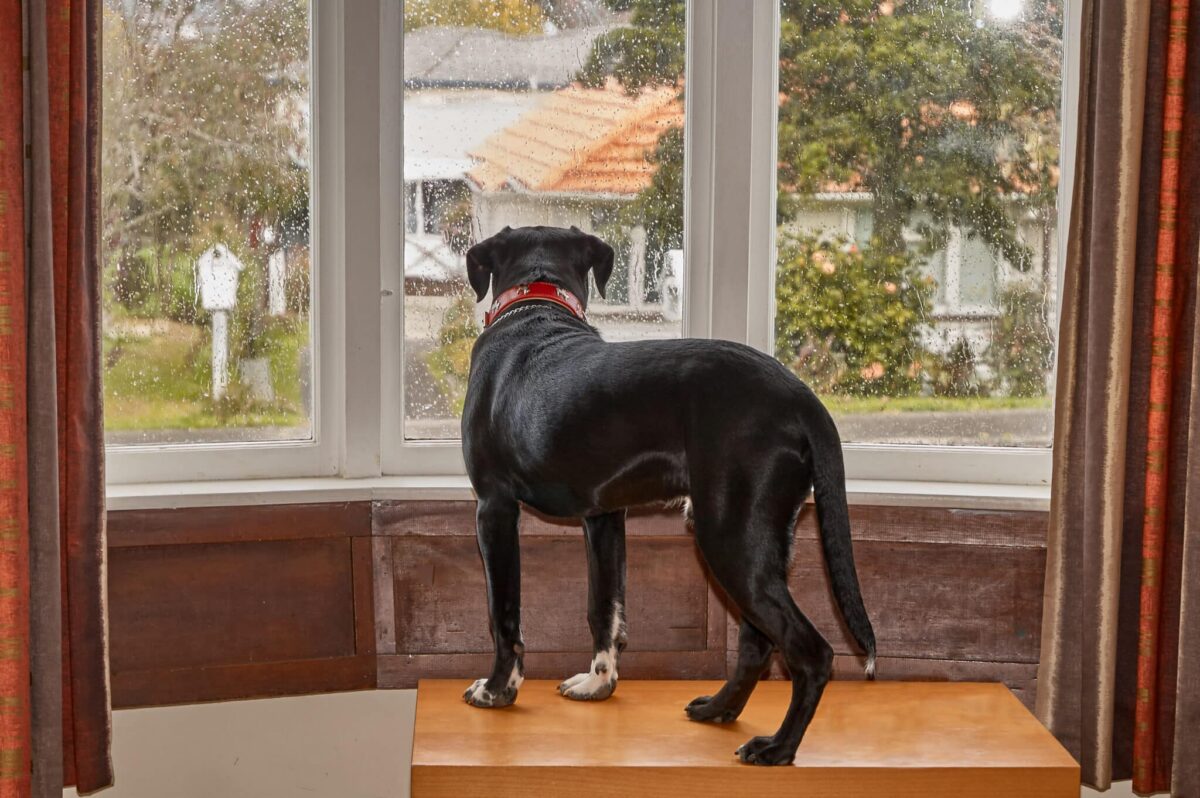
Leaving your dog home alone can be difficult, especially when you’re wondering whether they’re comfortable, bored, or getting into trouble while you’re away.
The good news is that thoughtful preparation can make alone time safer and more manageable. The right combination of a comfortable resting area, enrichment, fresh water, appropriate toys, and a dog-proofed environment can give your pet plenty to do while reducing opportunities for accidents.
However, there’s an important distinction between helping a dog relax while alone and expecting them to tolerate being left for excessively long periods. Dogs have individual needs based on their age, health, temperament, training, and bathroom requirements.
Whether you’re heading out for a few hours or arranging care during a longer day, here are 15 things that can help your dog stay comfortable and safe.
1. A Comfortable, Dog-Safe Resting Area
Every dog should have somewhere comfortable to relax when you’re away.
This might be:
- A dog bed
- A crate that has been positively introduced
- A gated room
- A quiet corner of the house
- A combination of a bed and secure resting area
The space should be large enough for your dog to move around comfortably and should be free from hazards.
Before leaving, inspect the area for electrical cords, medications, cleaning products, small objects, loose strings, toxic plants, and anything else your dog might chew or swallow.
If your dog enjoys using a crate, make sure they are already comfortable with it. A crate should never be introduced for the first time immediately before a long absence.
2. Fresh Drinking Water
Water is one of the most important things your dog needs during your absence.
Provide a clean bowl filled with fresh water and place it somewhere your dog can reach easily without knocking it over.
For dogs that regularly tip their bowls, a heavy-bottomed or spill-resistant bowl may be helpful.
An automatic water dispenser can also be useful, but introduce new equipment while you’re home so you can make sure your dog understands how to use it.
During hot weather, maintaining a comfortable indoor temperature and providing access to water become especially important.
3. A Safe Interactive Toy
A suitable interactive toy can turn some of your dog’s alone time into an opportunity for mental stimulation.
Food puzzles and durable treat-dispensing toys can encourage dogs to sniff, manipulate objects, and solve simple problems.
Good options may include:
- Food-stuffable rubber toys
- Puzzle feeders
- Snuffle mats
- Treat-dispensing toys
- Durable food puzzles
Choose toys appropriate for your dog’s size and chewing style.
Most importantly, test the toy while you’re home first. A toy that is advertised as durable isn’t necessarily safe for every dog.
4. A Durable Chew Toy
Chewing is a normal behavior for dogs, and an appropriate chew toy can provide an outlet while you’re away.
A durable rubber toy or another veterinarian-approved chew product may help prevent your dog from looking for entertainment in furniture, shoes, doors, or other household objects.
Don’t automatically leave every chew item unattended. If your dog tends to destroy toys and swallow pieces, they should only use those items under supervision.
Regularly inspect toys for:
- Cracks
- Missing pieces
- Torn sections
- Sharp edges
- Pieces small enough to swallow
Replace damaged toys immediately.
5. A Long-Lasting Food Puzzle
One way to make meals more engaging is to turn part of your dog’s normal food into an enrichment activity.
You might use an appropriate food puzzle or stuff a durable food toy with some of your dog’s regular kibble or wet food.
For some dogs, freezing a food-filled toy can make the activity last longer.
Avoid ingredients that are toxic to dogs, and remember that treats and food used in enrichment still contribute to your dog’s total daily calorie intake.
6. A Rotation of Safe Toys
You don’t necessarily need to leave a huge pile of toys on the floor.
In fact, rotating toys can help maintain novelty.
Keep some toys stored away and offer different combinations throughout the week. One day might feature a food puzzle and chew toy, while another includes a different enrichment toy.
A simple rotation could include:
Monday: Food puzzle + chew toy
Wednesday: Snuffle mat + durable toy
Friday: Stuffed food toy + puzzle
Weekend: Interactive play with you
Always leave only toys that you’ve determined are appropriate for unsupervised use.
7. A Dog-Proofed Home
Dog-proofing becomes particularly important when nobody is around to interrupt dangerous behavior.
Before leaving, check for:
- Electrical cables
- Medication
- Cleaning chemicals
- Toxic foods
- Small objects
- Plastic bags
- Trash
- Accessible houseplants
- Open windows
- Unsecured doors
- Objects that could fall
Keep tempting items such as shoes, socks, remote controls, and children’s toys out of reach if your dog likes to chew household objects.
A little preparation can prevent a serious accident.
8. A Bathroom Plan
Your dog’s bathroom needs should influence how long you leave them alone.
A healthy adult dog may be able to wait several hours, but puppies, senior dogs, dogs with medical conditions, and dogs with certain medications or digestive problems may need more frequent opportunities to go outside.
For longer absences, arrange a suitable solution such as:
- A trusted dog walker
- A pet sitter
- A neighbor
- A family member
- A secure outdoor toilet area where appropriate
Indoor potty pads may be useful in some situations, particularly for puppies or dogs with specific needs, but they aren’t a replacement for appropriate bathroom breaks when a dog can safely go outside.
9. A Dog Camera
A pet camera isn’t essential for every household, but it can provide useful information.
A camera can help you see whether your dog:
- Settles down
- Sleeps
- Paces
- Barks continuously
- Scratches doors
- Repeatedly tries to escape
- Plays with toys
- Shows signs of distress
This is particularly useful if you’re unsure how your dog behaves when nobody is home.
Some cameras include two-way audio or treat-dispensing features. These can be convenient, but talking through a camera doesn’t necessarily comfort every dog. Some dogs become more confused or excited when they hear their owner’s voice but cannot find them.
Use the feature based on your dog’s individual response.
10. Appropriate Background Noise
Some dogs relax more easily with gentle background sounds.
You can experiment with:
- Soft music
- White noise
- A radio
- Familiar household sounds
- Quiet television
Background noise may also help mask sudden sounds from outside, such as traffic, neighbors, or construction.
However, you don’t need to leave loud television or music running continuously. The goal is a calm environment, not constant stimulation.
11. A Familiar-Smelling Item
Your scent can be reassuring to some dogs.
A blanket, pillowcase, or other safe fabric item carrying a familiar household scent may help your dog feel comfortable.
This isn’t appropriate for every dog, though. If your pet tears fabric apart or swallows pieces, don’t leave clothing or blankets unattended.
A dog that destroys or ingests fabric needs safer alternatives.
12. Exercise and Mental Enrichment Before You Leave
Giving your dog an opportunity to exercise before you leave can help them settle, but the goal isn’t simply to exhaust them.
A balanced pre-departure routine might include:
- A relaxed walk
- Sniffing time
- Short obedience training
- A game of fetch
- Puzzle feeding
- Gentle play
Allow your dog some time to calm down afterward rather than immediately leaving while they’re highly excited.
The right amount of exercise depends on your dog’s age, breed, health, fitness, and temperament.
Puppies and older dogs, for example, have different exercise requirements from healthy adult dogs.
13. A Midday Dog Walker or Pet Sitter for Longer Absences
Some dogs simply shouldn’t be left alone for an entire workday without a break.
If you’ll be gone for an extended period, arranging a midday visit can make a major difference.
A trusted dog walker or pet sitter can provide:
- A bathroom break
- Exercise
- Fresh water
- Human interaction
- Medication if prescribed
- A check that everything is safe
For puppies, elderly dogs, dogs with medical needs, or dogs that struggle with being alone, additional care may be particularly important.
14. A Comfortable Temperature
Your dog needs a safe indoor environment while you’re away.
During hot weather, make sure the home has adequate ventilation and remains at a comfortable temperature.
During cold weather, provide appropriate bedding and avoid leaving dogs in environments that become dangerously cold.
Be especially cautious with dogs that are more vulnerable to temperature extremes, including:
- Very young puppies
- Senior dogs
- Dogs with certain medical conditions
- Flat-faced breeds
- Dogs with very thick coats
Never assume that because a dog normally enjoys outdoor activities, they can safely tolerate extreme temperatures while alone.
15. A Calm and Predictable Departure Routine
One of the most overlooked things your dog needs is a predictable routine.
Dogs notice patterns.
If you repeatedly follow the same calm sequence—prepare your belongings, give your dog a bathroom opportunity, provide their enrichment, and leave without creating a dramatic goodbye—it can make departures more predictable.
Try not to turn leaving into a major emotional event.
At the same time, don’t assume that a calm departure will solve genuine separation anxiety. Dogs with significant separation-related distress may need a structured behavior plan and professional help.
What Dogs With Separation Anxiety May Need
There’s a major difference between a dog that is comfortable being alone and one that experiences significant distress when separated from their owner.
Possible signs include:
- Persistent barking or howling
- Destructive behavior focused around exits
- Escape attempts
- Excessive drooling
- Pacing
- Repeatedly following the owner before departure
- House-soiling despite being reliably trained
- Panic when left alone
If your dog shows these behaviors consistently, giving them more toys isn’t necessarily enough.
Speak with your veterinarian or a qualified canine behavior professional. Treatment may involve gradual alone-time training, environmental management, behavior modification, and, in some cases, veterinary-prescribed medication.
Don’t Use Exercise as the Only Solution
A common piece of advice is to “tire your dog out” before leaving.
Exercise is valuable, but it shouldn’t be treated as a cure for anxiety.
An anxious dog may remain anxious even after a long walk. Excessive exercise can also be inappropriate for puppies, senior dogs, or dogs with orthopedic or medical conditions.
Think in terms of a balanced routine:
Physical activity + mental enrichment + bathroom opportunity + calm environment + appropriate alone-time training.
How Long Can a Dog Be Left Alone?
There isn’t one universal number that works for every dog.
The appropriate duration depends on:
- Age
- Bladder control
- Health
- Temperament
- Exercise needs
- Training
- Previous experience being alone
- Whether the dog has separation-related problems
Young puppies generally need much more frequent bathroom breaks and supervision than healthy adult dogs.
Senior dogs may also need more frequent breaks because of age-related changes or medical conditions.
If your schedule regularly requires long absences, consider arranging a dog walker, sitter, daycare, or another appropriate form of care rather than expecting your dog to cope with an unsuitable routine.
What Not to Leave With Your Dog
Safety isn’t just about what you provide. It’s also about what you remove.
Avoid leaving potentially dangerous items within reach, including:
- Loose electrical cords
- Human medication
- Toxic foods
- Cleaning chemicals
- Small children’s toys
- Plastic packaging
- Easily swallowed fabric
- Damaged toys
- Unsecured trash
- Accessible toxic plants
Be particularly careful with toys that can be shredded or swallowed.
A toy that is perfectly safe during supervised play may not be appropriate for several hours of unsupervised access.
A Simple Alone-Time Checklist
Before walking out the door, check:
☐ Fresh water is available
☐ Your dog has had an appropriate bathroom opportunity
☐ The home is comfortably heated or cooled
☐ Dangerous objects are out of reach
☐ Your dog’s resting area is comfortable
☐ Appropriate enrichment is available
☐ Any medication has been provided according to veterinary instructions
☐ Doors and windows are secure
☐ Your dog’s identification is up to date
☐ A walker or sitter is scheduled if needed
☐ Your dog has enough time to settle before you leave
Frequently Asked Questions
Is it okay to leave my dog home alone?
Many dogs can comfortably spend some time alone when they have been properly accustomed to it and their physical and emotional needs are met. The appropriate duration varies significantly between individual dogs.
Should I leave the TV on for my dog?
You can if your dog seems to enjoy it, but it’s not essential. Quiet music, radio, or white noise may work just as well for some dogs.
Does leaving a shirt with my scent help dogs?
A familiar scent may comfort some dogs, but don’t leave fabric unattended if your dog likes to chew or swallow clothing.
Should I leave all my dog’s toys out?
No. Offer only toys you’ve determined are safe for your dog to use without supervision. Rotating toys can also keep enrichment more interesting.
Is a dog camera worth buying?
A camera can be useful if you want to understand what your dog does while you’re away. It can also help identify behaviors that might otherwise go unnoticed, such as persistent pacing or barking.
What should I do if my dog destroys things whenever I leave?
Don’t assume the behavior is simply disobedience. Destruction can result from boredom, inadequate enrichment, frustration, or separation-related distress. A veterinarian or qualified behavior professional can help determine the underlying cause.
Can a dog be left alone all day?
Some adult dogs may tolerate several hours alone, but regularly leaving a dog alone for very long periods may not meet their bathroom, exercise, social, and emotional needs. Puppies, seniors, and dogs with medical or behavioral issues often need more frequent care.
Final Thoughts
Preparing your home before leaving your dog alone is about much more than putting out a bowl of food.
Your dog needs a safe environment, fresh water, appropriate enrichment, a comfortable place to rest, and a realistic plan for bathroom breaks and human interaction. Some dogs also benefit from background noise, familiar scents, cameras, or scheduled visits from a trusted person.
Most importantly, remember that toys and gadgets cannot replace appropriate care. If your dog struggles significantly when left alone, the answer isn’t simply adding more toys to the room. Understanding the reason behind the behavior and getting appropriate professional guidance can make a much bigger difference.
With thoughtful preparation and a routine suited to your dog’s individual needs, you can make alone time safer, calmer, and more comfortable for your four-legged companion.






Leave a comment