




Traveling with your dog can turn an ordinary trip into a memorable adventure. Whether you’re heading out for a weekend road trip, visiting family, going on vacation, or simply spending a day somewhere new, having the right supplies can make the journey much easier.
A well-packed dog travel bag means you won’t have to search for basic supplies when you’re miles from home. More importantly, it helps you maintain your dog’s normal routine and gives you the tools to handle unexpected situations.
The ideal travel bag doesn’t have to be enormous. It simply needs to contain the items your dog is most likely to need based on the destination, transportation method, length of the trip, weather, and your dog’s individual health requirements.
Here’s a practical checklist to help you build the perfect dog travel bag.
1. Pack Enough of Your Dog’s Regular Food
Travel isn’t the best time to experiment with a completely new diet.
Bring enough of your dog’s usual food for the entire trip, plus a little extra in case your journey is delayed.
A useful approach is to divide food into individual meal portions. This makes feeding easier and reduces the chance of accidentally giving your dog too much or too little food.
Don’t forget:
- Your dog’s normal food
- Measuring cup
- Treats
- Food storage container or sealed bags
- Collapsible food bowl
- Spoon or scoop if necessary
If you’re traveling for several days, keep food protected from moisture and excessive heat.
It’s also worth bringing some familiar treats that your dog already tolerates well.
2. Bring Plenty of Fresh Water
Water should be one of the first things you pack.
Your dog may drink differently while traveling because of excitement, weather, exercise, or changes in routine.
A portable water bottle designed for dogs can make it easier to offer water during walks and roadside stops.
A collapsible bowl takes up very little space and can be useful at rest stops, parks, hotels, and other destinations.
Travel water checklist
- Fresh drinking water
- Portable water bottle
- Collapsible bowl
- Extra water container for longer journeys
Never assume you’ll always be able to find clean drinking water when you need it.
3. Pack Medications and Important Health Supplies
If your dog takes prescription medication, make sure you bring enough for the entire trip.
It’s wise to carry a small amount of extra medication if your travel plans could be disrupted.
Keep medication in its original packaging when possible and follow the storage instructions.
You should also have your veterinarian’s contact information available.
Consider packing:
- Prescription medications
- Regular supplements, if recommended by your veterinarian
- Medication instructions
- Veterinary contact details
- Basic first-aid supplies
- Any condition-specific equipment your dog normally needs
Don’t give your dog human medication for travel-related problems unless your veterinarian specifically tells you to do so.
4. Create a Small Dog First-Aid Kit
A compact first-aid kit can be extremely useful for minor problems while you’re away from home.
It isn’t intended to replace veterinary treatment, but it can help you deal with small issues until professional care is available.
Depending on your dog’s needs, you might include:
- Gauze
- Bandages
- Adhesive tape
- Disposable gloves
- Tweezers
- Clean cloths
- Saline solution suitable for appropriate wound cleaning
- Pet-safe antiseptic recommended by your veterinarian
- Digital thermometer if you know how to use one safely
- Tick-removal tool
Avoid filling the kit with medications unless your veterinarian has specifically recommended them for your dog.
5. Bring Familiar Comfort Items
A new hotel room, unfamiliar house, airport, or campsite can be overwhelming for some dogs.
Familiar objects can make the new environment feel more recognizable.
Pack at least one item that smells like home.
This could be:
- A favorite blanket
- Their regular bed
- A familiar toy
- A favorite chew
- A small piece of bedding
Don’t pack every toy your dog owns. Choose a few reliable favorites that provide comfort without taking up unnecessary space.
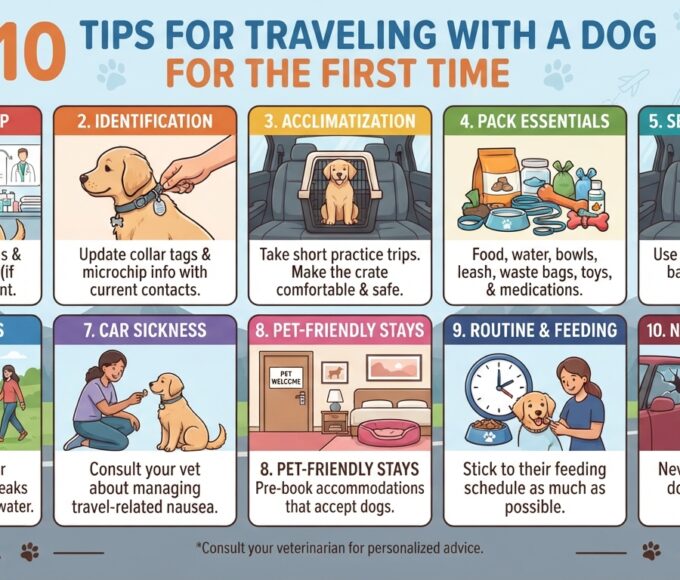
6. Keep Identification Up to Date
One of the most important parts of your dog’s travel equipment is identification.
Before leaving home, check that your dog’s identification information is current.
Your dog should ideally have:
- A properly fitted collar
- Identification tag
- Your current phone number
- Microchip registration with updated contact information
Consider taking a recent photo of your dog with you or keeping one easily accessible on your phone.
If your dog gets lost in an unfamiliar place, current identification can make reunification much easier.
7. Carry Veterinary and Travel Documents
Documentation becomes especially important when traveling across borders or using transportation services with specific requirements.
Depending on your destination and method of travel, you may need documents relating to vaccinations, health checks, identification, or other entry requirements.
Keep copies of relevant records in a waterproof folder or secure digital location.
Useful documents may include:
- Vaccination records
- Veterinary records
- Medication information
- Microchip details
- Health certificate when required
- Import or travel documentation when applicable
- Emergency contact information
Check the requirements before leaving rather than assuming your destination has the same rules as home.
8. Don’t Forget the Leash and Harness
A leash is one of the easiest things to overlook—and one of the most inconvenient things to forget.
Bring the leash your dog normally uses and make sure the equipment fits properly.
For many dogs, a well-fitted harness can provide useful control during travel, particularly in unfamiliar surroundings.
Consider packing:
- Everyday leash
- Properly fitted harness
- Backup leash
- Long line for appropriate secure areas
- Reflective accessories for low-light walks
A backup leash can be especially useful if the primary one breaks or gets lost.
9. Use Proper Restraint During Car Travel
Your dog’s travel bag is important, but how your dog travels inside the vehicle is even more important.
Dogs should be appropriately restrained while riding in a car.
Depending on your dog’s size and temperament, options may include:
- A properly secured travel crate
- A vehicle-compatible harness
- Another purpose-designed restraint system
Avoid allowing your dog to move freely around the vehicle.
A loose dog can distract the driver and may be thrown forward during sudden braking.
Never let your dog ride in your lap while driving.
Also avoid allowing dogs to ride with their heads hanging outside an open car window. Apart from injury risks, debris and sudden movements can cause serious problems.
10. Pack Waste Bags and Cleaning Supplies
Responsible pet travel means being prepared to clean up after your dog.
Bring more waste bags than you think you’ll need.
A small cleaning kit can also be useful for accidents in a vehicle or accommodation.
Consider packing:
- Waste bags
- Paper towels
- Pet-safe cleaning wipes
- Disposable gloves
- Small trash bags
- An absorbent towel
Keeping everything together in one waterproof pouch makes cleanup much easier.
11. Bring Grooming Supplies
Your dog doesn’t need a complete grooming salon in a travel bag, but a few basic supplies can be useful.
Depending on your dog’s coat and destination, consider:
- Brush or comb
- Pet-safe wipes
- Nail-care equipment if needed
- Small towel
- Dry shampoo or cleaning product only if appropriate for your dog
- Ear-care products only if your veterinarian has recommended them
If you’re visiting a beach, hiking area, or muddy trail, a towel can become one of the most useful things in your bag.
12. Add a Few Toys for Mental Stimulation
Travel can disrupt your dog’s normal routine.
A familiar toy can provide entertainment and help occupy your dog during quiet periods.
Instead of bringing an entire toy box, choose two or three useful items.
Good options might include:
- A durable chew toy
- A favorite plush toy
- A puzzle toy
- A food-stuffable toy
- A familiar ball
Avoid giving your dog a toy that can easily break apart or be swallowed while you’re unable to supervise.
13. Prepare for Weather Changes
Weather should influence what you pack.
For hot weather, consider:
- Portable water
- Collapsible bowl
- Cooling equipment appropriate for your dog
- Shade options
- Towels
For cold weather, some dogs may benefit from:
- A coat or sweater where appropriate
- Extra bedding
- Dry towels
- Warm sleeping equipment
Remember that dogs differ significantly in their ability to tolerate heat and cold. Puppies, senior dogs, dogs with health conditions, and flat-faced breeds may require additional precautions.
Never leave your dog unattended in a parked vehicle.
Even when the weather doesn’t feel extremely hot outside, the temperature inside a vehicle can become dangerous.
14. Pack Towels and a Waterproof Mat
A towel takes up relatively little space but can solve several travel problems.
It can be used to:
- Dry your dog after rain
- Clean muddy paws
- Protect hotel bedding
- Wipe off water after swimming
- Provide a temporary resting surface
A waterproof mat or blanket can also give your dog a designated place to settle.
This can be particularly helpful in hotels, vacation rentals, campsites, and other unfamiliar environments.
15. Bring Your Dog’s Normal Bedding if Space Allows
If you’re staying somewhere overnight, familiar bedding can make the new environment feel more comfortable.
Dogs rely heavily on scent, and familiar smells may help some dogs settle more easily.
If your dog’s normal bed is too large for travel, a familiar blanket can provide a similar sense of familiarity.
16. Keep Emergency Contacts Handy
Don’t rely entirely on your phone’s contacts list.
Write down or save important information somewhere easily accessible.
Consider keeping:
- Your regular veterinarian’s phone number
- An emergency veterinary clinic near your destination
- Your accommodation’s contact information
- Your own emergency contact
- Pet insurance information, if applicable
If you’re traveling to multiple destinations, identify emergency veterinary services along the route before departure.
17. Prepare for Motion Sickness
Some dogs become nauseous during car journeys.
Signs can include:
- Excessive drooling
- Lip licking
- Restlessness
- Whining
- Vomiting
- Repeated swallowing
Avoid giving your dog a large meal immediately before a long journey unless your veterinarian has advised otherwise.
Fresh air, appropriate breaks, and gradual travel training may help some dogs.
If motion sickness is severe or happens regularly, speak with your veterinarian. They can advise whether medication or another strategy is appropriate.
18. Help an Anxious Dog Feel More Secure
Travel anxiety can affect dogs differently.
Some become restless, while others may hide, pant, vocalize, or repeatedly try to escape.
A familiar blanket or toy may help, but don’t assume every dog will become calm simply because it has a favorite object.
Before a major trip
You can gradually introduce your dog to:
- Short car rides
- Their travel carrier
- Harnesses
- New environments
- Longer periods away from home
Build positive associations gradually rather than forcing your dog through overwhelming experiences.
If your dog experiences significant travel anxiety, ask your veterinarian about appropriate behavioral strategies before the trip.
19. Make a Separate “Quick Access” Section
Not everything should be buried at the bottom of your travel bag.
Keep frequently needed items somewhere easy to reach.
For example:
Top compartment:
- Waste bags
- Treats
- Leash
- Collapsible bowl
- Water bottle
- Towel
Main compartment:
- Food
- Toys
- Bedding
- Grooming supplies
- First-aid kit
Document pouch:
- Veterinary records
- Medication information
- Travel documents
- Emergency contacts
This organization can save time when you need something quickly.
Dog Travel Bag Checklist
| Item | Essential? |
|---|---|
| Regular food | Yes |
| Fresh water | Yes |
| Food and water bowls | Yes |
| Leash | Yes |
| Harness/collar | Yes |
| Identification tags | Yes |
| Waste bags | Yes |
| Medications | If prescribed |
| Veterinary records | Recommended |
| First-aid supplies | Recommended |
| Familiar blanket/bed | Recommended |
| Favorite toys | Recommended |
| Treats | Useful |
| Towel | Very useful |
| Grooming supplies | Depends on trip |
| Cooling/cold-weather supplies | Weather dependent |
| Cleaning supplies | Recommended |
| Backup leash | Useful |
| Travel crate/restraint | Required for appropriate car safety |
Adjust the Bag to Your Type of Trip
Not every journey requires the same supplies.
For a short day trip
You may only need:
- Water
- Bowl
- Food/treats
- Leash
- Waste bags
- Identification
- Towel
- One toy
For a weekend trip
Add:
- Full food supply
- Bedding
- Medications
- Grooming supplies
- Veterinary records
- First-aid kit
- Extra cleaning supplies
For a long road trip
Consider adding:
- Extra water
- Extra food
- Backup leash
- Larger first-aid kit
- More towels
- Cleaning supplies
- Comfort items
- Emergency information
- Appropriate travel restraint
For air travel
Airline requirements can be significantly different from road travel.
Check the specific airline’s current pet rules well in advance. Requirements may concern carrier dimensions, documentation, health certificates, reservations, breed restrictions, and whether the dog can travel in the cabin.
Never assume that a pet policy from one airline applies to another.
Do a Final Safety Check Before Leaving
Before you close the door and begin your trip, take a few minutes to inspect your dog’s equipment.
Check:
- Collar fit
- Identification tag
- Microchip information
- Harness condition
- Leash condition
- Carrier or crate security
- Medication supply
- Food supply
- Water
- Travel documents
Also make sure your dog is comfortable wearing any travel equipment before the actual journey begins.
Frequently Asked Questions
What should I put in a dog travel bag?
At minimum, pack your dog’s regular food, water, bowls, leash, identification, waste bags, and any required medications. Longer trips may also require bedding, toys, grooming supplies, veterinary records, first-aid items, towels, and cleaning supplies.
How much food should I bring?
Bring enough for the entire trip and consider carrying some extra in case of delays. Keeping food in individual meal portions can make feeding easier.
Should I bring my dog’s vaccination records when traveling?
It’s a good idea to carry relevant veterinary records, particularly for longer trips, boarding, air travel, or international travel. Specific documentation requirements depend on your destination and transportation method.
How can I keep my dog calm while traveling?
Familiar bedding, gradual travel training, regular routines, appropriate breaks, and a secure travel setup can help. Dogs with significant anxiety may benefit from a veterinary consultation before the trip.
Can I give my dog medication for travel anxiety or motion sickness?
Only use medication under veterinary guidance. The appropriate option and dose depend on the individual dog, and some medications can have unwanted effects.
How often should I give my dog water during a road trip?
Offer fresh water regularly and whenever you stop for appropriate breaks. Dogs may need more water in hot weather or after exercise.
Should I bring my dog’s favorite toy?
Yes, if it’s safe and practical. A familiar toy can provide comfort and mental stimulation in unfamiliar surroundings.
What if I forget something important?
Before traveling, identify pet stores and veterinary clinics along your route or near your destination. For essential items such as medication, food, and identification, however, it’s much better to prepare before departure rather than rely on finding replacements later.
Final Thoughts
A successful trip with your dog starts before you leave home.
The perfect dog travel bag doesn’t have to contain every pet product available. It simply needs to cover your dog’s food, water, safety, health, comfort, hygiene, and identification needs.
Think about where you’re going, how long you’ll be away, how you’re traveling, the weather, and your dog’s individual requirements. Pack familiar items, keep essential supplies easy to reach, and always prioritize safe transportation.
Most importantly, remember that preparation isn’t only about making your dog comfortable. It gives you peace of mind too.
With a little planning and a well-organized travel bag, you can spend less time worrying about forgotten supplies and more time enjoying the adventure with your four-legged companion.







Leave a comment