




Finding the right dog accessories can make everyday life with your pet easier, safer, and more enjoyable. From a properly fitted harness and comfortable bed to interactive toys and grooming supplies, the right accessories can support your dog’s comfort while also making routine tasks more convenient.
But with so many products available online and in pet stores, choosing where to shop isn’t always straightforward. Attractive designs and low prices can be tempting, but durability, safety, sizing, and suitability for your individual dog should come first.
Whether you’re preparing for a new puppy or replacing worn-out supplies for an adult dog, knowing what to look for can help you shop more confidently.
What Makes a Good Dog Accessories Shop?
A good pet supply store should offer more than a large selection of colorful products.
When choosing a dog accessories shop, consider whether it provides:
- Products for dogs of different sizes and ages
- Clear sizing information
- Detailed product descriptions
- Materials and safety information
- Durable everyday equipment
- Toys suited to different play styles
- Grooming and hygiene supplies
- Travel accessories
- Feeding equipment
- Helpful customer support
- Clear shipping and return policies
A large catalog isn’t automatically better. What matters is whether you can find appropriate products and understand how to use them safely.
1. Start With the Everyday Essentials
Before buying fashionable extras, make sure your dog’s basic needs are covered.
Most dogs need a reliable collection of everyday accessories, although the exact requirements vary by lifestyle.
Basic dog accessories include:
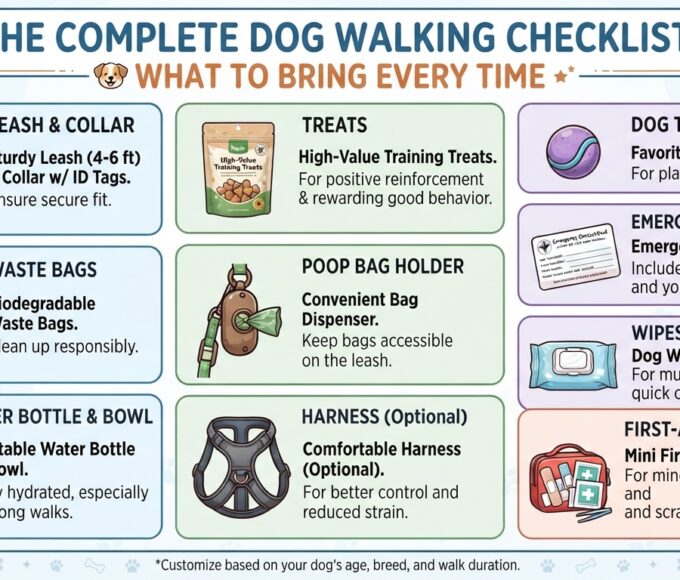
- Collar with identification
- Leash
- Properly fitted harness
- Food and water bowls
- Comfortable bed
- Safe toys
- Grooming supplies
- Waste bags
- Storage containers
- Travel equipment
For puppies, you may need to replace some items as they grow. Adult dogs may require equipment designed around their size, activity level, coat, or health needs.
2. Choose the Right Collar
A collar is useful for identification and everyday handling, but fit matters more than appearance.
The collar should be secure without being excessively tight.
You should be able to comfortably fit approximately two fingers between the collar and your dog’s neck, while still checking the manufacturer’s fitting recommendations.
Look for:
- Strong stitching
- Secure hardware
- Appropriate width
- Comfortable materials
- A reliable buckle or fastening system
- Space for an identification tag
Inspect the collar regularly for fraying, damaged stitching, or weakened hardware.
A fashionable collar isn’t useful if it is uncomfortable or poorly made.
3. Consider a Harness for Walks
For many dogs, a properly fitted harness can provide a useful alternative to attaching the leash directly to a collar.
Harness designs vary considerably, so look for one that allows comfortable movement without rubbing or restricting your dog’s shoulders.
When shopping, check:
- Neck and chest measurements
- Adjustment points
- Attachment location
- Material
- Stitching
- Buckle quality
- Manufacturer’s fitting instructions
Don’t choose a harness based solely on your dog’s weight. Two dogs with the same weight can have very different body shapes.
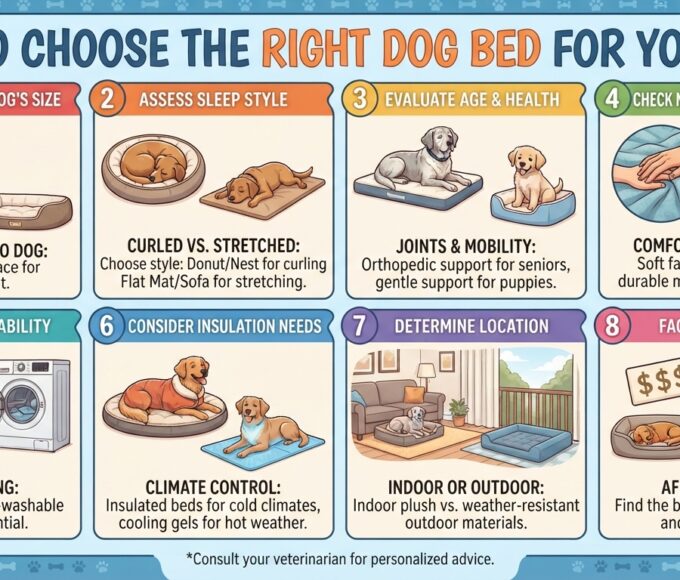
4. Invest in a Comfortable Dog Bed
Dogs spend a significant portion of their day resting, so a suitable bed can be an important part of their home environment.
Consider your dog’s:
- Size
- Sleeping position
- Age
- Mobility
- Coat
- Chewing habits
- Preference for enclosed or open sleeping spaces
A bed should give your dog enough room to stretch and change positions comfortably.
Dogs with mobility problems may benefit from beds designed to provide additional support, but your veterinarian can help determine whether a particular design is appropriate.
5. Pick Toys Based on Your Dog’s Personality
A good dog accessories shop should offer different types of toys rather than simply selling the same style in multiple colors.
Dogs have different play preferences.
Some enjoy:
- Fetch
- Tug
- Chewing
- Food puzzles
- Scent games
- Chasing
- Interactive play
- Plush toys
For dogs that enjoy solving problems, puzzle feeders and food-stuffable toys can provide useful mental enrichment.
For enthusiastic chewers, select toys specifically designed for appropriate chewing rather than choosing based only on appearance.
Always supervise your dog with unfamiliar toys until you know how they interact with them.
6. Don’t Ignore Grooming Accessories
Grooming products aren’t just about keeping your dog looking good.
Regular grooming can help you notice changes in the skin, coat, ears, nails, and other areas of the body.
Depending on your dog’s coat, useful supplies may include:
- Brush
- Comb
- Dog-specific shampoo
- Nail clippers or grinder
- Towels
- Grooming wipes
- Ear-care products recommended by your veterinarian
- Dental-care supplies
Different coats require different grooming tools. A brush that works well for a short-coated dog may be unsuitable for a heavily coated breed.
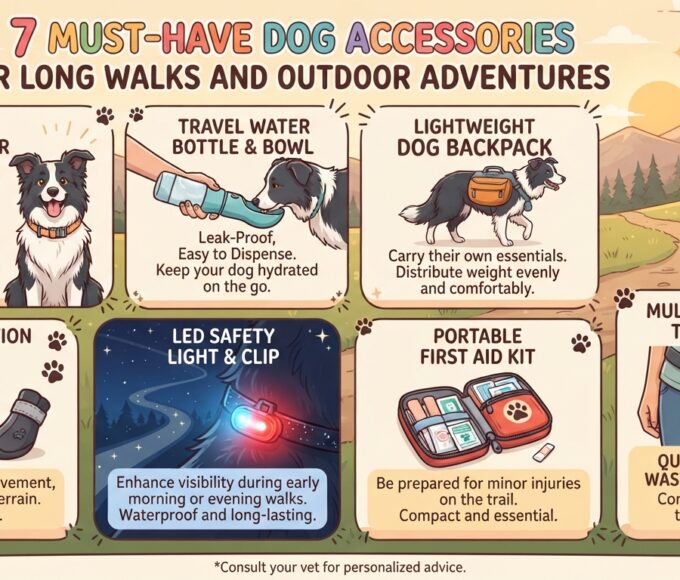
7. Look for Useful Travel Accessories
If you regularly travel with your dog, consider creating a dedicated travel kit.
Useful products can include:
- Collapsible food bowls
- Portable water containers
- Travel food storage
- Car restraints
- Travel crates or carriers
- Waterproof blankets
- Towels
- Waste-bag holders
- Portable beds
- Reflective accessories
For car journeys, choose a restraint or crate designed for vehicle travel rather than relying on an ordinary leash.
Never allow a dog to travel loose in the vehicle.
8. Think About Your Dog’s Size
Size is one of the most important factors when buying dog accessories.
A product designed for a Chihuahua isn’t appropriate simply because it looks attractive on a larger dog.
Check measurements rather than relying only on labels such as:
- Small
- Medium
- Large
- Extra Large
These categories aren’t standardized across every manufacturer.
For collars and harnesses, measure your dog’s body according to the product’s instructions.
For beds, measure your dog while they’re lying down and compare the measurement with the manufacturer’s recommended dimensions.
9. Pay Attention to Materials and Construction
Before buying an accessory, look beyond the product photograph.
Examine the available information about:
- Materials
- Stitching
- Fasteners
- Seams
- Washability
- Durability
- Intended use
For walking equipment, inspect areas that experience the most stress.
For toys, look for products appropriate to your dog’s size and chewing style.
For beds and blankets, removable and washable covers can be especially practical.
10. Don’t Buy Something Just Because It’s Trending
Pet products can become popular very quickly, particularly on social media.
Some trendy accessories are genuinely useful, while others are primarily decorative.
Before purchasing something, ask:
Will this make my dog’s life better, safer, cleaner, or more comfortable?
If the answer is no, you may not need it.
A simple, well-fitted harness is generally more useful than an expensive accessory that your dog finds uncomfortable.
11. Check Product Reviews Carefully
Customer reviews can provide useful information that isn’t obvious from a product description.
Look for repeated comments about:
- Sizing accuracy
- Durability
- Comfort
- Ease of cleaning
- Quality of materials
- Whether the product works as advertised
Don’t rely on a single review.
If several customers independently report the same problem, it’s worth considering before purchasing.
Also pay attention to reviews from people whose dogs are similar in size and activity level to yours.
12. Understand the Store’s Return Policy
Sizing mistakes happen frequently with dog accessories.
A store with a clear return or exchange policy can make online shopping less stressful.
Before ordering, check:
- Return window
- Exchange rules
- Refund method
- Return shipping requirements
- Conditions for used products
- Whether personalized items can be returned
This is particularly important when buying harnesses, clothing, beds, and other size-sensitive products.
13. Look for Clear Sizing Information
A trustworthy product listing should explain how to measure your dog.
For example, a harness may require:
- Neck circumference
- Chest/girth measurement
- Back length
- Weight
Don’t assume that your dog’s breed automatically tells you the correct size.
Even dogs of the same breed can have significantly different body proportions.
If you’re between sizes, follow the manufacturer’s specific instructions rather than guessing.
14. Build a Practical Dog Accessories Collection
You don’t need to buy everything at once.
A practical collection might look like this:
| Category | Useful Items |
|---|---|
| Walking | Collar, harness, leash |
| Identification | ID tag, microchip |
| Feeding | Food bowl, water bowl |
| Sleeping | Bed, washable blanket |
| Enrichment | Chew toys, puzzle toys |
| Grooming | Brush, nail-care tools |
| Hygiene | Waste bags, cleaning supplies |
| Travel | Carrier/crate, travel bowl, water bottle |
| Safety | Reflective gear, appropriate restraint |
| Dental care | Dog toothbrush and suitable toothpaste |
Start with the essentials and add accessories based on your dog’s actual needs.
Dog Accessories for Different Life Stages
Puppies
Puppies grow quickly and explore the world with their mouths.
Consider:
- Adjustable harness
- Lightweight leash
- Puppy-safe chew toys
- Washable bed
- Food and water bowls
- Grooming tools
- Puppy toothbrush
- Identification
- Puppy-safe enrichment toys
Avoid buying expensive equipment in a size your puppy will outgrow almost immediately unless it is designed to adjust as they grow.
Adult Dogs
Adult dogs often benefit from accessories chosen around their established lifestyle.
For an active dog, that could mean durable outdoor equipment and enrichment toys.
For a homebody, comfortable bedding, grooming tools, and interactive toys may be more important.
Senior Dogs
Older dogs may have different comfort and mobility needs.
Depending on the individual dog, useful products can include:
- Supportive bedding
- Non-slip mats
- Easy-access bowls
- Gentle grooming tools
- Appropriate ramps
- Comfortable harnesses
If your older dog has mobility problems or pain, discuss equipment choices with your veterinarian.
How to Shop Safely for Dog Accessories Online
Online shopping makes it easy to compare products, but don’t purchase solely because something has a good photograph.
Before ordering:
- Measure your dog.
- Read the complete product description.
- Check the recommended size.
- Examine material information.
- Read multiple customer reviews.
- Check shipping times.
- Review the return policy.
- Make sure the product is appropriate for your dog’s age and size.
- Consider whether your dog could chew, swallow, or become trapped by part of the product.
- Inspect the item when it arrives.
If a product arrives damaged or poorly constructed, don’t use it simply because you’ve already purchased it.
How to Know When an Accessory Needs Replacing
Dog accessories don’t last forever.
Replace equipment when you notice:
- Frayed straps
- Cracked plastic
- Broken buckles
- Loose stitching
- Damaged clips
- Excessive wear
- Torn bedding
- Toys with pieces coming loose
Toys should receive particular attention because damaged toys can become choking or ingestion hazards.
Regularly inspect your dog’s collar, harness, leash, bed, and toys.
Common Dog Accessories Shopping Mistakes
Buying Based Only on Appearance
A stylish product still needs to be functional and comfortable.
Ignoring Measurements
Size labels vary between manufacturers.
Buying Too Many Toys at Once
A smaller selection can make it easier to identify which toys your dog actually enjoys.
Choosing the Cheapest Option Every Time
Low prices aren’t necessarily bad, but an accessory that fails quickly may cost more in the long run.
Assuming Every “Pet-Safe” Product Is Right for Every Dog
Dogs have different chewing habits, sensitivities, body shapes, and health needs.
Forgetting Maintenance
An accessory that cannot be cleaned easily may become impractical.
Frequently Asked Questions
What should I look for in a good dog accessories shop?
Look for a store with clear product descriptions, accurate sizing information, a variety of useful products, transparent return policies, and accessible customer support.
What are the most important dog accessories?
For most dogs, basic walking equipment, identification, food and water bowls, a comfortable sleeping area, appropriate toys, and grooming supplies are good starting points.
How do I choose the right collar size?
Measure around your dog’s neck according to the manufacturer’s instructions. The collar should be secure and comfortable without being excessively tight.
Is a harness better than a collar?
Neither is automatically better for every dog. A properly fitted harness can be useful for walking and handling many dogs, while collars are commonly used for identification. Your dog’s size, health, behavior, and walking habits should influence your choice.
How often should dog accessories be replaced?
There is no universal replacement schedule. Inspect equipment regularly and replace anything that becomes damaged, excessively worn, unsafe, or difficult to clean.
Are expensive dog accessories always better?
Not necessarily. Price doesn’t guarantee that an accessory will be suitable for your dog. Focus on fit, safety, construction, materials, durability, and usefulness.
What accessories does a new puppy need?
Start with a collar or harness, leash, identification, food and water bowls, comfortable bedding, puppy-appropriate toys, grooming supplies, and safe enrichment items. You can gradually add other products as your puppy grows.
Final Thoughts
The best dog accessories shop isn’t necessarily the one with the biggest catalog or the trendiest products. It’s the one that helps you find safe, practical, comfortable, and appropriately sized products for your individual dog.
Start with everyday essentials, then choose additional accessories based on your dog’s age, size, coat, personality, activity level, and lifestyle.
Before buying anything, ask yourself whether the product serves a genuine purpose. A well-fitted harness, durable toy, comfortable bed, and reliable identification system can be far more valuable than a collection of accessories your dog never uses.
Good pet shopping is ultimately about more than making your dog look good. The right accessories should help make everyday life safer, healthier, and more comfortable for both you and your canine companion.






Leave a comment