







Cats may act independent, but they still depend on us for nutritious food, a safe environment, veterinary care, enrichment, and plenty of opportunities to behave like cats.
Whether you’ve just adopted your first kitten or you’ve shared your home with cats for years, a few simple habits can make everyday life healthier and more enjoyable.
From setting up comfortable resting spots to keeping the litter box clean and providing regular play, here’s a practical guide to caring for a happy feline companion.
1. Create a Comfortable Cat-Friendly Home
Cats benefit from having places where they can rest, hide, climb, scratch, and observe what’s happening around them.
Instead of giving your cat just one bed, consider creating several comfortable options throughout the home.
Useful additions include:
- A soft bed or blanket
- A quiet hiding place
- A sturdy scratching post
- A cat tree or elevated perch
- Interactive toys
- A comfortable window-viewing area
- Separate resting spaces in multi-cat households
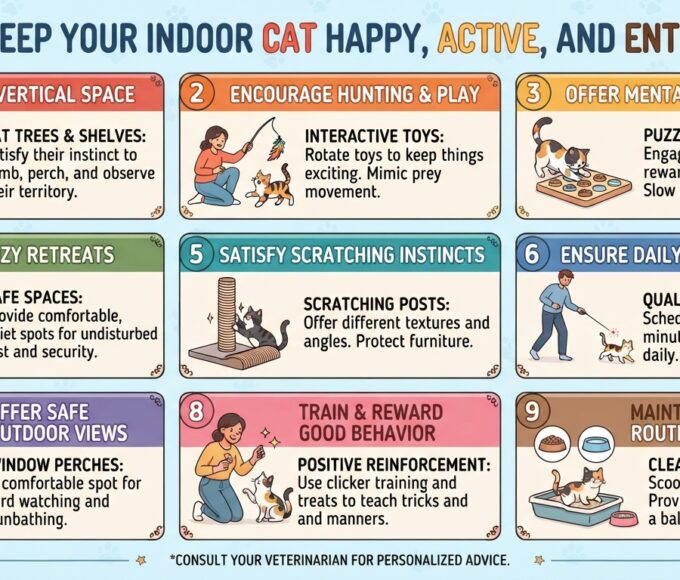
Vertical space can be particularly useful because many cats enjoy climbing and observing their surroundings from higher locations.
A cat-friendly environment should allow your cat to express normal behaviors while also providing places where they can retreat when they want privacy. Feline environmental guidelines emphasize meeting cats’ physical and behavioral needs as part of maintaining their wellbeing.
Keep Safety in Mind
Before bringing a cat into your home, check for hazards such as:
- Toxic plants
- Loose electrical cords
- Small objects that could be swallowed
- Open windows or unsafe balconies
- Accessible medications and cleaning products
- Unsecured chemicals
- Strings or other objects that could be swallowed during unsupervised play
A little preparation can prevent many avoidable problems.
2. Feed a Complete and Balanced Diet
Nutrition is one of the foundations of good feline health.
Cats have specific nutritional requirements, so choose a food designed to meet their nutritional needs and appropriate for their life stage.
Instead of judging food solely by marketing phrases or the first ingredient on the label, look for a product that is identified as complete and balanced for your cat’s life stage. WSAVA notes that ingredient lists alone can be misleading when evaluating pet food quality.
Your cat’s nutritional needs may change with:
- Age
- Body condition
- Activity level
- Health conditions
- Pregnancy or nursing
- Other individual factors
What About Wet Food?
Wet food can be a useful part of a cat’s diet and may contribute water to overall intake. However, whether a cat eats wet food, dry food, or a combination depends on the individual cat and the nutritional characteristics of the diet.
The most important goal is providing an appropriate, nutritionally complete diet in suitable portions.
Don’t Overdo the Treats
Treats are useful for bonding and positive reinforcement, but too many can contribute excess calories.
WSAVA recommends that treats account for no more than about 10% of a cat’s daily calorie intake.
3. Give Your Cat Daily Play and Mental Stimulation
Indoor cats still need opportunities to exercise their bodies and use their natural behaviors.
Cats often enjoy activities that resemble hunting, chasing, stalking, and pouncing.
Try offering:
- Wand toys
- Small chase toys
- Food puzzles
- Balls
- Scratching posts
- Climbing structures
- Boxes and tunnels
- Supervised interactive games
You don’t need to follow a rigid playtime schedule. Instead, offer regular opportunities for activity and pay attention to what your individual cat enjoys.
Use Toys Safely
Never leave potentially dangerous toys, strings, ribbons, or small objects unattended if your cat might chew or swallow them.
Laser toys can provide movement and chasing opportunities, but some cats may benefit from ending the game with a physical toy or treat they can actually catch.
4. Make Scratching Part of Everyday Life
Scratching is normal feline behavior. It helps cats stretch, maintain their claws, and interact with their environment.
Rather than trying to eliminate scratching, provide appropriate places for it.
Consider offering:
- Tall vertical scratching posts
- Horizontal scratchers
- Cardboard scratchers
- Different textures
- Scratching areas near places your cat already spends time
If your cat scratches the sofa, place an attractive scratching surface nearby and reward them for using it.
5. Keep the Litter Box Clean
A clean, accessible litter box can make a major difference to your cat’s comfort.
A commonly recommended starting point for multi-cat homes is one litter box per cat, plus one extra. Placement matters too: boxes should be located where cats can access them easily and where they feel secure.
Try to:
- Scoop regularly
- Keep boxes clean
- Avoid placing them beside loud appliances
- Provide easy access
- Watch for sudden changes in litter-box habits
If your cat suddenly stops using the litter box, don’t assume they’re simply being difficult. House-soiling can have medical, behavioral, environmental, or social causes and may require veterinary investigation.
6. Stay on Top of Grooming
Grooming needs vary significantly between cats.
Short-haired cats may need relatively little brushing, while long-haired cats generally require more frequent grooming to prevent mats and tangles.
Regular brushing can also give you an opportunity to check your cat’s:
- Skin
- Coat
- Ears
- Paws
- Nails
- Body condition
Introduce grooming gradually and reward calm behavior.
If your cat develops severe matting, skin irritation, unusual hair loss, or other concerning changes, consult your veterinarian.
7. Take Dental Health Seriously
Dental care is easy to overlook, but oral health is an important part of overall feline wellbeing.
Talk with your veterinarian about an appropriate dental-care routine. Regular examinations can help identify problems such as dental disease before they become more serious.
The FelineVMA currently lists dedicated feline oral-health and dental-care guidelines among its feline practice resources.
Don’t force unfamiliar dental products into your cat’s mouth. Introduce handling slowly and use products recommended for cats.
8. Schedule Regular Veterinary Care
Cats are very good at hiding signs of illness, so waiting until a problem becomes obvious isn’t always the best approach.
Routine veterinary visits allow your veterinarian to monitor your cat’s:
- Weight
- Body condition
- Teeth and gums
- Skin and coat
- Vaccination needs
- Parasite prevention
- Behavior
- General health
The appropriate visit frequency depends on your cat’s age, health, lifestyle, and individual risk factors.
Kittens, senior cats, and cats with ongoing medical conditions may require different schedules from healthy adult cats.
Cat-friendly veterinary guidelines also emphasize reducing stress during veterinary visits because stressful experiences can affect both the cat’s wellbeing and the quality of the examination.
9. Give Your Cat Safe Places to Hide
Hiding isn’t necessarily a sign that something is wrong.
Cats often use hiding spaces when they want to rest, feel uncertain, or simply get away from household activity.
Provide safe hiding options such as:
- Covered cat beds
- Cardboard boxes
- Cat tunnels
- Sheltered shelves
- Quiet rooms
However, pay attention to changes in hiding behavior. A cat that suddenly spends much more time hiding than usual, especially alongside appetite, litter-box, mobility, or behavior changes, should be evaluated by a veterinarian.
10. Watch Your Cat’s Body Language
Learning your cat’s communication style can help you understand when they want attention and when they need space.
For example, a relaxed cat may have:
- A loose body posture
- Calm facial expressions
- Comfortable movements
- A relaxed tail position
Signs of fear or stress can include:
- Hiding
- Flattened ears
- Crouching
- Avoiding interaction
- Sudden changes in normal behavior
Every cat is different, so learn what is normal for your individual companion.
A sudden behavioral change deserves attention because cats may show illness through subtle changes in behavior rather than obvious symptoms.
11. Keep Fresh Water Available
Fresh water should always be accessible.
Some cats prefer drinking from certain types of bowls or fountains, while others are perfectly happy with a standard bowl. Experiment with safe options to discover your cat’s preference.
Keep water containers clean and place them somewhere your cat can comfortably access.
If you notice a major increase or decrease in drinking, talk with your veterinarian.
12. Think Carefully About Outdoor Access
Outdoor environments can provide stimulation, but free-roaming also exposes cats to risks such as traffic, fights, predators, infectious diseases, parasites, and other hazards.
If you’d like your cat to experience the outdoors, consider controlled alternatives such as:
- A secure catio
- An enclosed garden area
- Supervised outdoor time
- Harness and leash training for cats that tolerate it
Not every cat will enjoy harness training, so never force it.
13. Make Your Home Interesting for an Indoor Cat
An indoor lifestyle doesn’t have to be boring.
Rotate toys rather than leaving every toy available all the time. Introduce new cardboard boxes, climbing opportunities, puzzle feeders, and supervised games to keep the environment interesting.
You can also move a perch to a different safe location or occasionally rearrange enrichment options.
The goal is variety without constantly disrupting your cat’s familiar territory.
Simple Cat Care Routine
| Care Task | General Approach |
|---|---|
| Feeding | Provide an appropriate complete and balanced diet |
| Fresh water | Keep clean water available |
| Play | Offer regular opportunities for interactive and independent activity |
| Scratching | Provide suitable scratching surfaces |
| Litter box | Scoop regularly and keep boxes clean |
| Grooming | Adjust frequency to coat type and individual needs |
| Dental care | Discuss an appropriate routine with your veterinarian |
| Veterinary care | Follow an individualized preventive-care schedule |
| Enrichment | Provide climbing, hiding, exploring, and puzzle opportunities |
| Safety | Keep toxic substances and household hazards inaccessible |
Frequently Asked Questions About Cat Care
How often should I play with my cat?
There isn’t one perfect number of minutes for every cat. Offer regular interactive play and observe what your cat enjoys. Several shorter play sessions can work well, especially for cats that lose interest quickly.
How often should I brush my cat?
It depends on the cat’s coat. Long-haired cats usually need more frequent grooming than short-haired cats. The important thing is to prevent tangles and keep grooming comfortable and stress-free.
How many litter boxes should I have?
A useful starting guideline is one box per cat plus one extra. In multi-cat households, spread them across suitable locations rather than putting every box together.
Is wet food better than dry food?
Neither format is automatically best for every cat. The key is that the overall diet meets the cat’s nutritional requirements and is appropriate for their individual needs. Wet food can contribute to water intake, while dry food may be convenient for some households.
How many treats can I give my cat?
Treats should be limited so they don’t displace a balanced diet or contribute excessive calories. WSAVA recommends keeping treats to no more than about 10% of daily calories.
Should my cat have a scratching post?
Yes. Scratching is a normal feline behavior, so providing suitable scratching surfaces gives your cat an appropriate outlet.
How can I tell if my cat is stressed?
Possible signs include increased hiding, avoidance, changes in appetite, altered grooming, changes in litter-box habits, or unusual behavior. Environmental needs and stress are closely connected in cats.
Should I let my cat roam outside?
That’s an individual decision, but unrestricted outdoor access carries additional risks. A secure outdoor enclosure or supervised access can provide stimulation while reducing some of those risks.
How often should my cat see a veterinarian?
The appropriate schedule depends on age, health, lifestyle, and individual risk. Rather than relying on one universal interval, ask your veterinarian to establish a preventive-care schedule for your cat.
Final Thoughts
Good cat care isn’t about creating a perfect home filled with expensive products. It’s about understanding what your cat needs and making those needs part of everyday life.
Provide nutritious food, fresh water, clean litter boxes, appropriate scratching surfaces, safe resting areas, regular enrichment, and veterinary care. Most importantly, pay attention to changes in your cat’s normal behavior.
Every cat has their own personality. Some are playful explorers, some are professional nappers, and others want to supervise everything you do from the highest shelf in the house.
Give your feline friend a safe environment, plenty of appropriate enrichment, and the freedom to be themselves—and you’ll be well on your way to a happier, healthier life together.
This Article Was Generated By AI.






Leave a comment