



Bringing a puppy home is an exciting moment. Those tiny paws, playful bursts of energy, and curious personality can quickly become a wonderful part of your daily life. But while puppies are adorable, they also need structure, supervision, training, proper nutrition, veterinary care, and plenty of patience.
The first few months are an important period for building healthy habits. Your puppy is learning how to behave around people, understand household routines, explore the world, and communicate their needs.
Whether this is your first dog or you’re simply looking for a refresher, these puppy care tips can help you create a safe, comfortable, and positive environment for your new companion.
1. Create a Consistent Daily Routine
Puppies are still learning what to expect from their surroundings. A predictable routine can make everyday life easier and help them understand when it’s time to eat, sleep, play, train, and go outside.
Your puppy’s schedule doesn’t need to be rigid. Instead, aim for a consistent pattern that works for your household.
A basic routine may include:
- Morning potty break
- Breakfast
- Short play or training session
- Nap and quiet time
- Additional potty breaks throughout the day
- Lunch for puppies who still need multiple meals
- Afternoon play and enrichment
- Dinner
- Evening potty break
- Calm time before bedtime
Young puppies often need to eliminate frequently, particularly after waking, eating, drinking, and playing. Take them out regularly and reward them calmly when they potty in the appropriate place.
Consistency is more important than creating a perfect schedule.
2. Puppy-Proof Your Home Before They Arrive
A puppy explores the world with its mouth, nose, and paws. Something that looks harmless to you may become dangerous when a curious puppy decides to chew, swallow, or knock it over.
Before bringing your puppy home, inspect the areas they will have access to.
Keep potentially dangerous items out of reach, including:
- Electrical cords
- Cleaning products
- Medications
- Small toys and objects
- Batteries
- Certain household plants
- Human foods that are unsafe for dogs
- Sharp objects
- Open trash cans
- Chemicals and pesticides
- Easily accessible cables or chargers
Pay particular attention to floor-level hazards. Puppies can squeeze into surprisingly small spaces and may chew furniture, shoes, rugs, or other household items.
Baby gates, puppy pens, secure storage containers, and closed cabinets can make supervision easier.
3. Choose Appropriate Puppy Food
Nutrition plays an important role in healthy growth. Puppies have different nutritional requirements from adult dogs because their bodies are developing rapidly.
Choose a complete and balanced puppy food appropriate for your puppy’s age and expected adult size. Large-breed puppies, for example, may have different nutritional needs from small-breed puppies.
Your veterinarian can help you determine:
- Which type of food is appropriate
- How much your puppy should eat
- How many meals they need
- Whether their body condition is healthy
- When to transition to adult food
Avoid assuming that a larger portion will make a puppy grow healthier or faster. Overfeeding can contribute to excessive weight gain and may be particularly concerning during growth.
Fresh, clean water should also be available throughout the day.
4. Start Training From the Beginning
You don’t need to wait until your puppy is several months old before beginning training.
Young puppies can start learning simple behaviors through short, positive sessions. Keep expectations realistic because puppies have limited attention spans.
Begin with useful skills such as:
- Responding to their name
- Sit
- Come
- Wait
- Leave it
- Drop it
- Walking calmly on a leash
- Settling on a mat or bed
- Gentle handling
Reward behaviors you want to see repeated. Depending on what motivates your puppy, rewards can include small treats, praise, toys, or play.
Keep training sessions brief and end while your puppy is still interested.
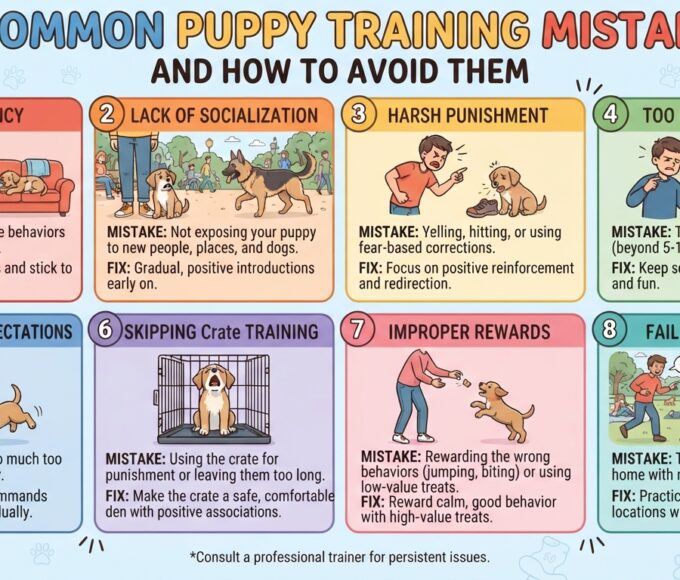
Avoid harsh punishment
Yelling, hitting, or frightening a puppy can damage trust and may create additional behavior problems. Instead, focus on teaching your puppy what you want them to do and rewarding appropriate choices.
5. Begin Potty Training Early
Potty training is one of the biggest challenges for many new puppy owners.
Accidents are normal. Puppies are still developing bladder control and haven’t yet learned the household rules.
Take your puppy to their designated potty area regularly, particularly:
- After waking up
- After meals
- After drinking
- After energetic play
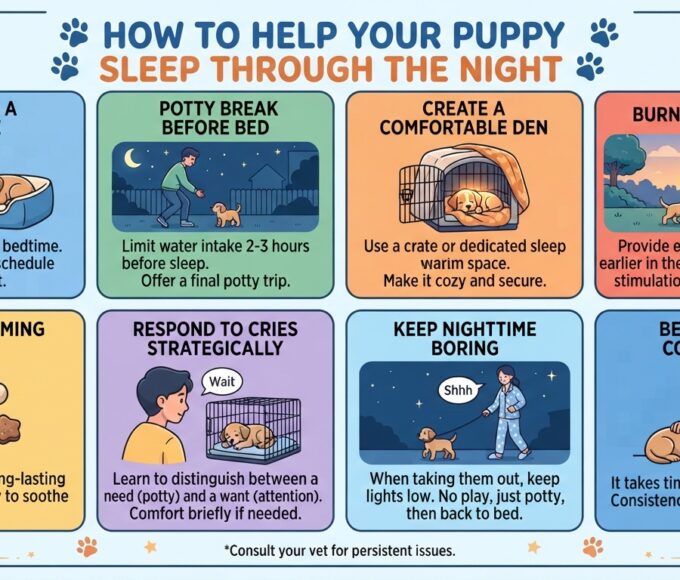
- Before bedtime
- When they show signs of needing to go
Watch for behaviors such as sniffing the floor, circling, wandering toward a door, or suddenly stopping play.
When your puppy successfully goes in the correct location, provide immediate praise or another appropriate reward.
If an accident happens indoors, clean the area thoroughly rather than punishing your puppy. Lingering odors can encourage repeat accidents.
6. Socialize Your Puppy Carefully
Socialization is about helping your puppy become comfortable with different people, animals, environments, sounds, surfaces, and everyday experiences.
Positive exposure during puppyhood can help build confidence, but socialization shouldn’t mean forcing a puppy into overwhelming situations.
Gradually introduce your puppy to experiences such as:
- Different types of people
- Household sounds
- Car rides
- Grooming and handling
- Different floor surfaces
- Collar and harness wearing
- Visitors
- Friendly, appropriately vaccinated dogs
- Veterinary handling
- Outdoor environments
Allow your puppy to approach new things at their own pace. If they appear frightened, increase distance and make the experience easier rather than forcing them closer.
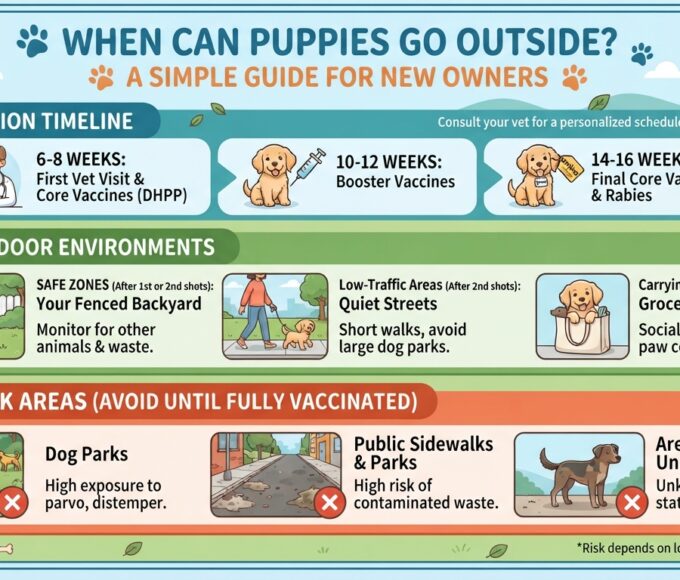
Because infectious diseases can be dangerous for young puppies, ask your veterinarian which environments and animal interactions are appropriate before your puppy has completed the recommended vaccination series.
7. Keep Vaccinations and Preventive Care on Track
Veterinary care should begin soon after bringing your puppy home.
Your veterinarian can create an appropriate preventive-care plan based on your puppy’s age, location, lifestyle, and health history.
Depending on the individual dog, preventive care may include:
- Core vaccinations
- Parasite prevention
- Fecal testing
- Flea and tick prevention
- Deworming when appropriate
- Identification such as a microchip
- Dental-care guidance
- Nutrition and growth monitoring
Don’t rely on a generic online vaccination schedule because puppies can have different medical needs.
Keep a record of vaccinations, medications, veterinary visits, and other important health information.
8. Give Your Puppy Safe Exercise and Mental Stimulation
Puppies have plenty of energy, but that doesn’t mean they should be exercised as much as possible.
Their bodies are still developing, and excessive forced exercise or repetitive high-impact activity can be inappropriate for growing puppies.
Instead, combine several forms of activity:
- Short walks when appropriate
- Gentle play
- Sniffing games
- Food puzzles
- Training sessions
- Safe exploration
- Age-appropriate toys
- Simple hide-and-seek games
Mental stimulation can be just as valuable as physical activity.
For example, allowing your puppy to sniff around safely or work out how to access food from an appropriate puzzle toy can provide useful enrichment without requiring intense physical exercise.
Ask your veterinarian about appropriate exercise for your puppy’s age, breed, size, and development.
9. Teach Your Puppy to Rest
One mistake new owners sometimes make is assuming that a tired puppy is always a happy puppy.
Puppies need substantial sleep and quiet time for normal development. An overtired puppy may actually become more difficult to manage, showing behaviors such as excessive biting, jumping, barking, or frantic running.
Create a comfortable area where your puppy can sleep without constant interruptions.
A crate, puppy pen, bed, or quiet section of the home can become a designated rest area.
Teach your puppy that relaxing alone is normal. This can also help them gradually become more comfortable when you aren’t constantly entertaining them.
10. Introduce Grooming Gradually
Grooming should become a normal part of your puppy’s life rather than something they only experience when they desperately need a bath or nail trim.
Start with very short, positive sessions.
You can gradually introduce:
- Brushing
- Touching the paws
- Looking inside the ears
- Handling the tail
- Examining the mouth
- Nail trimming
- Bathing
- Gentle towel drying
Give your puppy rewards during handling so they begin to associate grooming with positive experiences.
The amount of grooming required varies considerably between breeds and coat types.
11. Start Dental Care Early
Puppies eventually develop their adult teeth, making early dental habits valuable.
Introduce tooth brushing gradually using a toothbrush and toothpaste specifically designed for dogs. Human toothpaste should not be used unless specifically directed by a veterinarian.
At first, simply allow your puppy to become comfortable with having their mouth and teeth gently handled.
Regular dental care can help establish a lifelong routine and allows you to notice changes such as unusual odor, redness, swelling, broken teeth, or discomfort.
12. Teach Your Puppy to Be Comfortable With Handling
A puppy may eventually need to be handled by veterinarians, groomers, family members, or other caregivers.
Gentle handling exercises can include briefly touching:
- Paws
- Ears
- Mouth
- Tail
- Legs
- Collar area
- Body
Pair handling with rewards and stop if your puppy becomes overwhelmed.
This isn’t about forcing cooperation. The goal is to gradually teach your puppy that routine handling can be safe and predictable.
13. Provide Appropriate Toys for Chewing
Chewing is a normal puppy behavior, especially during the teething period.
Instead of expecting your puppy never to chew, give them appropriate alternatives.
Useful options can include:
- Puppy-safe chew toys
- Rubber enrichment toys
- Food-stuffable toys
- Soft toys designed for supervised play
- Puzzle toys
- Tug toys used appropriately
Inspect toys regularly and remove damaged items that could become choking or swallowing hazards.
If your puppy repeatedly targets shoes, furniture, or clothing, redirect them toward an appropriate toy instead of turning the situation into a chase game.
14. Teach Bite Inhibition and Appropriate Play
Puppies often use their mouths while playing. Nipping doesn’t necessarily mean a puppy is aggressive, but it can become a problem if appropriate boundaries aren’t taught.
Avoid encouraging rough games involving hands or allowing biting because it seems cute when the puppy is tiny.
Instead:
- Redirect biting toward an appropriate toy.
- Pause play if the puppy becomes overly rough.
- Reward calm interactions.
- Avoid exciting the puppy when they are already overstimulated.
- Give them appropriate opportunities to chew.
If biting is intense, persistent, accompanied by fear or aggression, or difficult to manage, seek help from a qualified veterinary behavior professional or reward-based trainer.
15. Help Your Puppy Learn to Spend Time Alone
A puppy shouldn’t be expected to spend an entire workday alone immediately after arriving home.
Gradually teach independence by allowing short periods of calm separation while they are safe and comfortable.
You can:
- Leave them with an appropriate enrichment toy
- Practice brief departures
- Keep arrivals and departures calm
- Gradually increase alone time
- Provide a comfortable resting area
- Avoid making every interaction highly exciting
If your puppy shows persistent distress when separated, speak with your veterinarian or a qualified behavior professional.
16. Learn Your Puppy’s Normal Behavior
One of the best things a new dog owner can do is learn what is normal for their individual puppy.
Pay attention to:
- Appetite
- Water consumption
- Energy level
- Stool consistency
- Urination
- Sleep
- Weight gain
- Coat and skin condition
- Breathing
- General behavior
Knowing your puppy’s normal routine makes it easier to recognize when something changes.
Signs that deserve veterinary attention
Contact your veterinarian if you notice concerning symptoms such as:
- Persistent vomiting
- Repeated diarrhea
- Significant loss of appetite
- Extreme lethargy
- Difficulty breathing
- Collapse
- Seizures
- Severe pain
- Blood in vomit or stool
- A swollen or painful abdomen
- Suspected poisoning
- Inability to keep water down
Very young puppies can become seriously ill quickly, so don’t hesitate to contact a veterinary professional when something seems significantly wrong.
17. Give Your Puppy a Safe Way to Explore
Curiosity is part of puppy development. Instead of trying to stop your puppy from exploring everything, create safe opportunities for discovery.
Set up controlled areas where they can investigate different textures, sounds, smells, and objects.
You might introduce:
- Cardboard boxes under supervision
- Snuffle mats
- Puppy-safe tunnels
- Different safe surfaces
- Food puzzles
- New toys
- Simple scent games
Always supervise new activities and remove anything your puppy tries to swallow.
18. Make Identification a Priority
Puppies can move surprisingly quickly, and even a careful owner can experience an accidental escape.
Make sure your puppy has appropriate identification.
Depending on your circumstances, this may include:
- A properly fitted collar
- An identification tag
- A registered microchip
- Current contact information
- A secure harness for walks
Check identification details whenever your phone number, address, or other contact information changes.
19. Be Patient With Mistakes
Your puppy isn’t going to understand your household rules overnight.
They may:
- Have potty accidents
- Chew something they shouldn’t
- Wake during the night
- Bark
- Jump on visitors
- Pull on the leash
- Ignore a cue they previously learned
These behaviors are part of the learning process.
Instead of expecting perfection, focus on repetition and consistency. Reward desirable behavior frequently and manage the environment so your puppy has fewer opportunities to practice unwanted behaviors.
20. Build Your Relationship Through Everyday Activities
Training and care aren’t just chores. They are opportunities to build trust.
Spend time doing simple activities together:
- Play
- Practice training
- Groom
- Explore safe environments
- Relax together
- Teach tricks
- Offer enrichment
- Take quiet walks
Your puppy is learning from every interaction. A calm, predictable, and rewarding relationship can provide a strong foundation as they mature.
Common Puppy Care Mistakes to Avoid
New puppy owners often have good intentions but may accidentally make things harder.
Some common mistakes include:
Expecting too much too soon
Puppies are babies. Learning takes repetition.
Overfeeding
More food isn’t necessarily better. Follow appropriate feeding guidance and monitor growth and body condition.
Skipping socialization
Keeping a puppy completely isolated can limit opportunities to learn about the world. Safe, controlled exposure is important.
Using punishment for accidents
Punishment doesn’t teach a puppy where they should eliminate. Supervision, routine, and positive reinforcement are more useful.
Over-exercising
Growing puppies need appropriate activity, not endless running or repetitive high-impact exercise.
Ignoring rest
A puppy that never gets enough sleep may become increasingly difficult to settle.
Buying unsafe toys
Always consider whether a toy could break apart or become a choking or swallowing hazard.
Treating every puppy as the same
Breed, size, age, health, temperament, and individual development all influence a puppy’s needs.
New Puppy Care Checklist
Before or shortly after bringing your puppy home, consider preparing:
- ☐ Complete and balanced puppy food
- ☐ Food and water bowls
- ☐ Comfortable bed
- ☐ Puppy-safe crate or pen
- ☐ Collar and identification tag
- ☐ Secure harness and leash
- ☐ Appropriate chew toys
- ☐ Puzzle or enrichment toys
- ☐ Grooming supplies
- ☐ Dog-specific toothbrush and toothpaste
- ☐ Waste bags and cleaning supplies
- ☐ Puppy-proofed living area
- ☐ Veterinary appointment
- ☐ Vaccination records
- ☐ Parasite-prevention plan
- ☐ Emergency veterinary contact information
Frequently Asked Questions About Puppy Care
When should I start training my puppy?
Training can begin when you bring your puppy home. Keep early sessions short, simple, and positive. Start with their name, attention, basic cues, handling, and household routines.
How many times a day should a puppy eat?
The appropriate feeding frequency depends on the puppy’s age, size, breed, food, and individual needs. Young puppies commonly eat several smaller meals throughout the day. Your veterinarian can help establish an appropriate schedule.
How much exercise does a puppy need?
There isn’t one universal exercise requirement for every puppy. Age, breed, size, health, development, and temperament all matter. Focus on age-appropriate play, exploration, training, and rest rather than trying to reach a fixed exercise number.
When can my puppy meet other dogs?
Ask your veterinarian about your puppy’s vaccination status and local disease risks. Controlled interactions with healthy, appropriately vaccinated dogs may be appropriate before the entire vaccination series is complete, but dog parks and other high-risk environments may need to be avoided until your veterinarian says they are safe.
How do I stop my puppy from chewing everything?
Provide appropriate chew toys, supervise your puppy, restrict access to valuable or dangerous objects, and redirect chewing toward acceptable items. Reward your puppy when they choose an appropriate toy.
How long does puppy potty training take?
It varies. Some puppies learn relatively quickly, while others need several weeks or longer. Consistent supervision, frequent potty opportunities, appropriate rewards, and patience can make the process easier.
Should my puppy sleep in a crate?
A crate can be a useful training and management tool when introduced positively. It should provide a safe resting space rather than be used as punishment. Puppies should not be confined for excessive periods.
When should I take my puppy to the veterinarian?
Schedule an initial veterinary visit soon after bringing your puppy home. The veterinarian can assess their health and establish a personalized plan for vaccinations, parasite prevention, nutrition, and future checkups.
Final Thoughts
Caring for a puppy involves much more than providing food and a place to sleep. Your puppy is learning how to live in a human household, interact with the world, communicate, and develop habits that may continue into adulthood.
A consistent routine, appropriate nutrition, veterinary care, positive training, safe socialization, mental stimulation, grooming, and plenty of rest can give your puppy a strong foundation.
Most importantly, remember that progress isn’t always perfectly linear. There will be accidents, chewed belongings, sleepless nights, and moments when you wonder whether your puppy is ever going to learn.
Stay patient, keep expectations realistic, and celebrate the small improvements. With time and consistent guidance, the tiny puppy you brought home can grow into a confident, well-adjusted companion.
This Article Was Generated By AI.







Leave a comment