


Bringing a puppy home for the first time is an exciting experience. Those tiny paws, playful moments, and curious personality can quickly become a special part of your everyday life. But while puppies are adorable, they also need plenty of care, supervision, training, and patience.
If you’re a first-time dog owner, knowing where to start can make those first few weeks much easier. From creating a predictable routine to providing proper nutrition and veterinary care, the habits you establish early can help your puppy grow into a healthy, confident, and well-behaved adult dog.
Here are five essential puppy care tips for first-time dog owners, along with answers to some of the most common questions new puppy parents have.
1. Create a Consistent Daily Routine
Puppies are still learning how the world works, and a predictable routine can help them feel more comfortable in their new home. Try to keep important parts of their day relatively consistent, including meals, bathroom breaks, naps, playtime, and training.
A simple puppy schedule might include:
- Morning potty break
- Breakfast
- Short play or training session
- Nap and quiet time
- Another potty break
- Lunch, depending on age and feeding plan
- Supervised play
- Evening meal
- Final bathroom trip before bedtime
A routine also makes house training easier because your puppy begins to learn when and where bathroom breaks happen.
Don’t worry if your schedule isn’t perfect every day. Puppies need flexibility too. The goal is to create a predictable pattern rather than following the clock rigidly.
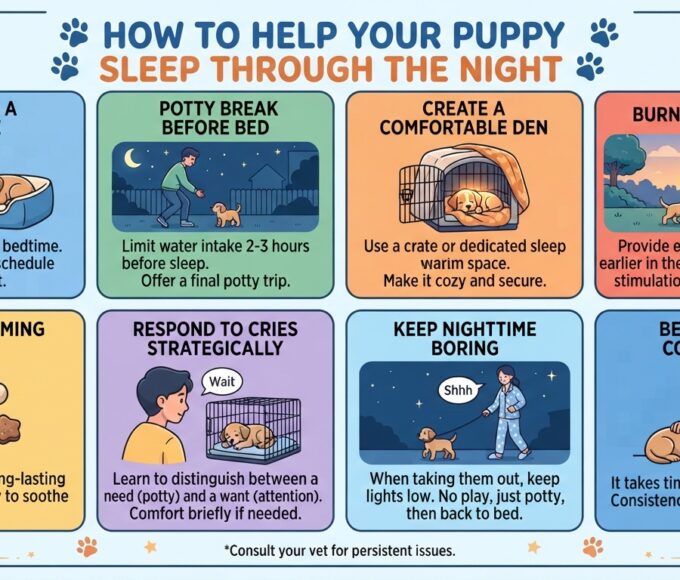
Give Your Puppy Plenty of Sleep
One mistake new owners sometimes make is assuming a tired puppy should keep playing. Puppies actually need a lot of sleep while they grow and develop.
If your puppy becomes overly excited, starts biting more than usual, or struggles to settle down, they may simply need a quiet nap.
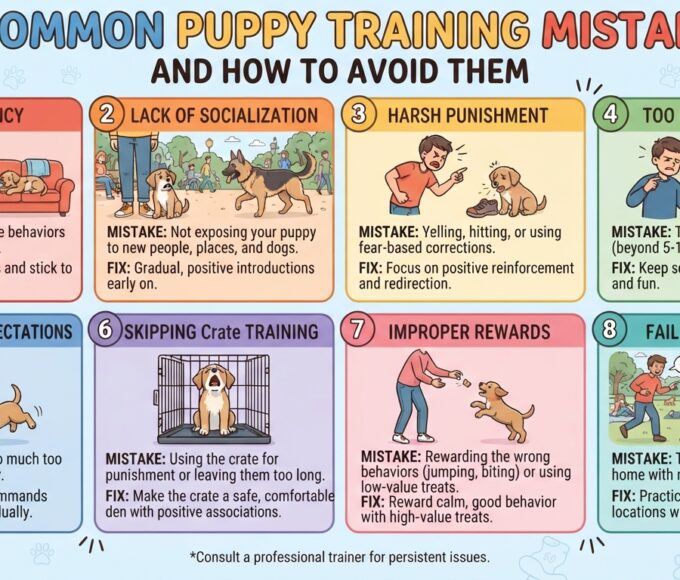
2. Start Socializing Your Puppy Early
Puppy socialization is about helping your dog become comfortable with the people, animals, places, sounds, surfaces, and experiences they are likely to encounter throughout life.
A well-socialized puppy can learn that unfamiliar experiences don’t always need to be frightening.
You can gradually introduce your puppy to things such as:
- Different people and visitors
- Household sounds
- Car rides
- Different floor surfaces
- Collars and harnesses
- Grooming and handling
- New environments
- Friendly, healthy dogs when appropriate
- Everyday sights and sounds
Keep New Experiences Positive
Socialization doesn’t mean forcing your puppy to interact with everything.
If your puppy looks frightened or overwhelmed, give them more distance and allow them to observe at their own pace. Reward calm behavior with praise, treats, or play.
Your veterinarian can also advise you about safe opportunities for socialization before your puppy has completed its vaccination series.
Early positive experiences can help build confidence, but remember that every puppy has a different personality and comfort level.
3. Feed a Balanced Puppy Diet
Nutrition is one of the most important parts of puppy care because growing dogs have different nutritional needs from adult dogs.
Choose a complete and balanced puppy food appropriate for your dog’s life stage and expected adult size. Large- and giant-breed puppies may have particularly specific nutritional requirements, so ask your veterinarian what type of food is appropriate.
Follow Appropriate Portion Sizes
More food isn’t necessarily better for a growing puppy. Overfeeding can contribute to excessive weight gain and may be particularly problematic for puppies that are still developing their bones and joints.
Follow the feeding guidance provided for the food you’re using and monitor your puppy’s body condition and growth.
Your veterinarian can help you determine:
- How much food your puppy needs
- How many meals they should receive
- Whether their weight is appropriate
- When to transition to adult food
- Whether treats need to be included in their daily calorie intake
Always make sure your puppy has access to fresh, clean water.
Be Careful With Human Foods
Some foods that are perfectly safe for people can be dangerous for dogs. Avoid giving your puppy foods such as chocolate, grapes and raisins, onions, garlic, and products containing xylitol.
When you’re unsure whether a food is safe, check with your veterinarian before giving it to your puppy.
4. Provide Age-Appropriate Exercise and Play
Puppies are naturally energetic and curious, but their bodies are still developing. Exercise should therefore be appropriate for their age, breed, size, and individual development.
Instead of focusing only on long walks, give your puppy different ways to stay active and mentally stimulated.
Try:
- Short play sessions
- Gentle games of fetch
- Supervised exploration
- Food puzzles
- Safe chew toys
- Basic training exercises
- Short walks when your veterinarian says they are appropriate
Mental Stimulation Matters Too
Puppies don’t just need physical activity. Their brains are constantly learning.
A few minutes of training, a puzzle toy, or a supervised sniffing game can provide valuable mental stimulation.
Avoid pushing a young puppy into strenuous exercise, repetitive jumping, or activities that may place unnecessary stress on developing joints. Your veterinarian can give you more specific guidance based on your puppy’s breed and growth stage.
5. Keep Up With Veterinary Care
One of the most important responsibilities of a new puppy owner is establishing a relationship with a veterinarian.
Your puppy’s early veterinary visits can help monitor growth and development while providing an opportunity to discuss vaccinations, parasite prevention, nutrition, behavior, and other aspects of care.
Depending on your puppy’s age and circumstances, your veterinarian may discuss:
- Vaccinations
- Deworming and parasite prevention
- Flea and tick prevention
- Nutrition and feeding
- Weight and growth
- Dental care
- Spaying or neutering
- Microchipping
- Behavior and training
- Future preventive healthcare
Don’t wait for your puppy to become seriously ill before seeking veterinary advice. Preventive care can help identify potential problems early.
Other Important Puppy Care Basics
The five tips above provide a strong starting point, but first-time owners should also prepare their home for a curious puppy.
Puppy-Proof Your Home
Puppies investigate the world with their mouths, so remove or secure anything they could chew, swallow, or knock over.
Before bringing your puppy home, consider securing:
- Electrical cords
- Cleaning products
- Medications
- Small objects
- Trash cans
- Toxic plants
- Easily accessible food
- Fragile decorations
Use baby gates or puppy pens when necessary to limit access to unsafe areas.
Give Your Puppy a Safe Resting Area
Your puppy should have a comfortable place where they can relax without constant interruptions.
A crate, puppy pen, or designated bed area can provide a useful space for sleeping and settling down. If you use crate training, introduce the crate gradually and make it a positive, comfortable place rather than using it as punishment.
Begin Training From Day One
Training doesn’t need to involve long sessions. Puppies can start learning simple behaviors as soon as they arrive home.
Focus on basics such as:
- Responding to their name
- Coming when called
- Sitting
- Walking calmly on a leash
- Appropriate chewing
- Potty habits
- Gentle handling
- Settling down
Keep sessions short, positive, and age-appropriate.
Frequently Asked Questions About Puppy Care
1. When should I start training my puppy?
You can begin basic training when your puppy comes home, often around eight weeks of age. Start with simple behaviors and use rewards to encourage the actions you want.
Training should be brief and positive because young puppies have limited attention spans.
2. How many times a day should a puppy eat?
The ideal feeding schedule depends on your puppy’s age, size, breed, food, and individual needs. Many young puppies are fed several smaller meals throughout the day, while older puppies may gradually move toward fewer meals.
Follow the food manufacturer’s guidance and ask your veterinarian to help establish an appropriate schedule.
3. How do I reduce potty accidents?
Take your puppy outside frequently, particularly after waking, eating, drinking, playing, and sleeping.
When your puppy eliminates in the correct place, reward them immediately with calm praise or a suitable treat.
Accidents are normal during house training. Avoid punishment, clean accidents thoroughly, and focus on creating a consistent routine.
4. Why does my puppy chew everything?
Chewing is normal puppy behavior. Puppies explore with their mouths, and teething can also increase their desire to chew.
Provide several safe, puppy-appropriate chew toys and redirect your puppy whenever they attempt to chew furniture, shoes, wires, or other inappropriate objects.
Supervision is especially important during the early months.
5. How can I teach my puppy to stay home alone?
Start with very short periods of separation and gradually increase the amount of time your puppy spends alone.
Create a comfortable area where your puppy can rest and provide safe enrichment activities when appropriate. Avoid suddenly leaving a young puppy alone for long periods.
If your puppy shows significant distress whenever you leave, speak with your veterinarian or a qualified behavior professional for guidance.
6. How much sleep does a puppy need?
Young puppies need substantial amounts of sleep as they grow and develop. Their exact sleep requirements vary with age and individual temperament.
Make sure your puppy has a quiet, comfortable place to rest and don’t feel that you need to keep them entertained all day.
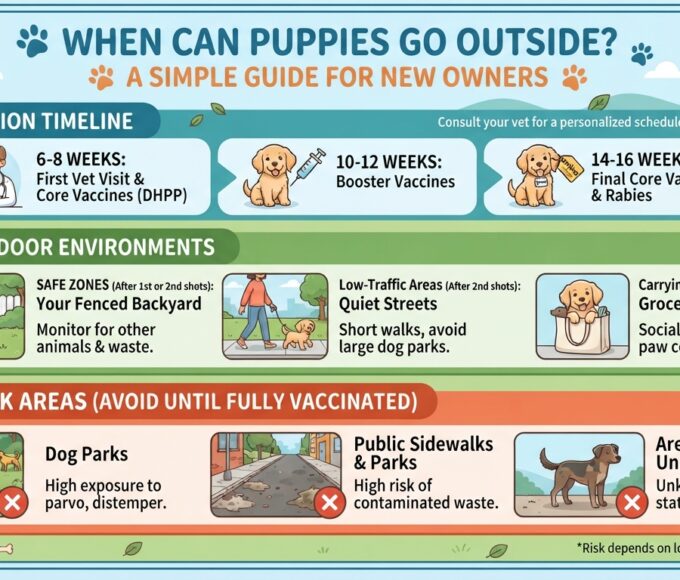
7. When can my puppy go outside?
This depends on your puppy’s vaccination status, local disease risks, and your veterinarian’s advice.
You can often introduce puppies to carefully controlled experiences before they are fully vaccinated, but high-risk environments should be avoided until your veterinarian says they are safe.
8. What should a first-time dog owner buy for a puppy?
Useful puppy essentials can include:
- Appropriate puppy food
- Food and water bowls
- Collar and identification tag
- Properly fitted harness
- Leash
- Comfortable bed
- Safe chew toys
- Age-appropriate enrichment toys
- Crate or puppy pen
- Poop bags
- Grooming supplies
- Enzyme-based accident cleaner
You don’t need to buy every available pet product. Start with the basics and add items as you learn what works for your puppy.
Final Thoughts
Caring for a puppy for the first time can feel overwhelming, but you don’t have to get everything perfect from day one. Your puppy is learning, and you’re learning too.
Focus on the fundamentals: maintain a predictable routine, provide positive socialization, feed appropriate nutrition, offer safe exercise and mental stimulation, and keep up with veterinary care.
With patience, consistency, supervision, and plenty of positive experiences, you can help your puppy develop into a healthy and confident companion.
Remember that puppyhood is temporary, so enjoy the playful moments, celebrate small improvements, and give your new dog plenty of time to grow and learn.
This Article Was Generated By AI.





Leave a comment