



Bringing a puppy home is an exciting milestone. Those tiny paws, playful antics, and curious personalities can quickly become the center of your household. But behind all the fun is an important responsibility: puppies depend on their owners for almost everything, from nutrition and veterinary care to training, socialization, rest, and safety.
The first few months of a puppy’s life are especially important because they are learning how to interact with people, animals, their surroundings, and everyday experiences. The habits you establish now can influence their behavior and wellbeing as they grow.
Whether you’re a first-time dog owner or simply want to refresh your puppy-care knowledge, this guide covers the most important things to do—and the common mistakes to avoid.
The Dos of Puppy Care
1. Do Feed a Complete and Appropriate Puppy Diet
Nutrition plays a major role in healthy growth. Puppies have different nutritional requirements from adult dogs because their bodies are developing rapidly.
Choose a complete puppy food appropriate for your puppy’s:
- Age.
- Expected adult size.
- Breed or body type.
- Growth stage.
- Individual health needs.
Large- and giant-breed puppies may have different nutritional requirements from small-breed puppies, so avoid assuming that one food is suitable for every dog.
Follow the feeding guidance provided by the manufacturer, but remember that feeding charts are starting points rather than rigid rules. Your veterinarian can help you determine whether your puppy is maintaining appropriate body condition and growing at a healthy rate.
Fresh drinking water should also be available throughout the day.
2. Do Schedule a Veterinary Visit
A new puppy should have a veterinary examination soon after coming home.
Your veterinarian can assess your puppy’s general health and help establish a preventive-care plan that may include:
- Vaccinations.
- Parasite prevention.
- Deworming when appropriate.
- Flea and tick prevention.
- Nutrition advice.
- Weight monitoring.
- Dental care.
- Spay or neuter discussions.
- Breed-specific health considerations.
Puppies require several vaccinations during their early months, and the exact schedule can vary depending on age, location, lifestyle, and veterinary recommendations.
Keep a record of vaccinations, medications, and important veterinary information so you can easily refer to it later.
3. Do Socialize Your Puppy Carefully
Socialization is one of the most important parts of puppy development.
A well-socialized puppy learns that different people, sounds, surfaces, environments, handling experiences, and appropriate animals don’t necessarily need to be frightening.
Socialization can include calmly introducing your puppy to:
- People wearing different types of clothing.
- Household noises.
- Car rides.
- Different floor surfaces.
- Grooming and gentle handling.
- Household appliances.
- New environments.
- Friendly, healthy, appropriately vaccinated dogs.
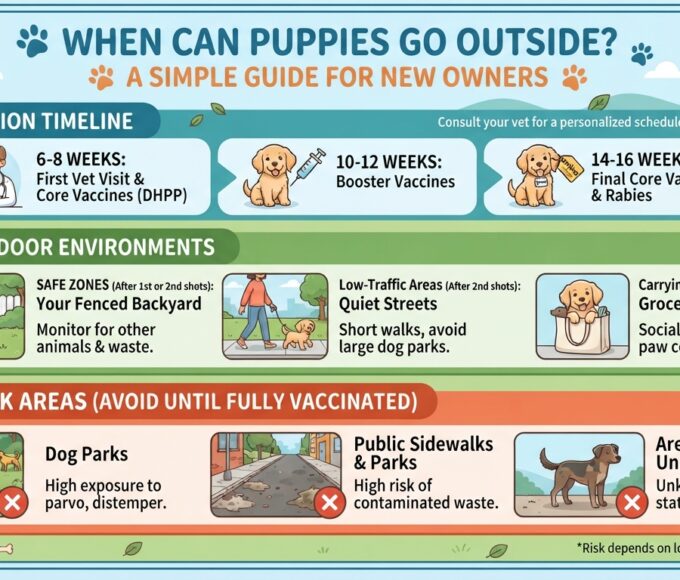
However, socialization does not mean taking a young puppy everywhere without considering disease risk.
Your veterinarian can advise you about when and where your puppy can safely interact with other dogs and visit public areas based on local disease risks and vaccination status.
Puppy classes run by responsible trainers can also be useful when they follow appropriate health and safety practices.
4. Do Establish a Predictable Routine
Puppies have a lot to learn, and a predictable daily routine can make life easier for both of you.
Try to establish reasonably consistent times for:
- Meals.
- Potty breaks.
- Training.
- Play.
- Walks or age-appropriate exercise.
- Quiet time.
- Sleep.
A routine helps your puppy understand what to expect and can make house training easier.
That doesn’t mean every minute needs to follow a strict schedule. Flexibility is important, too. The goal is to create structure without making your puppy unable to cope with changes.
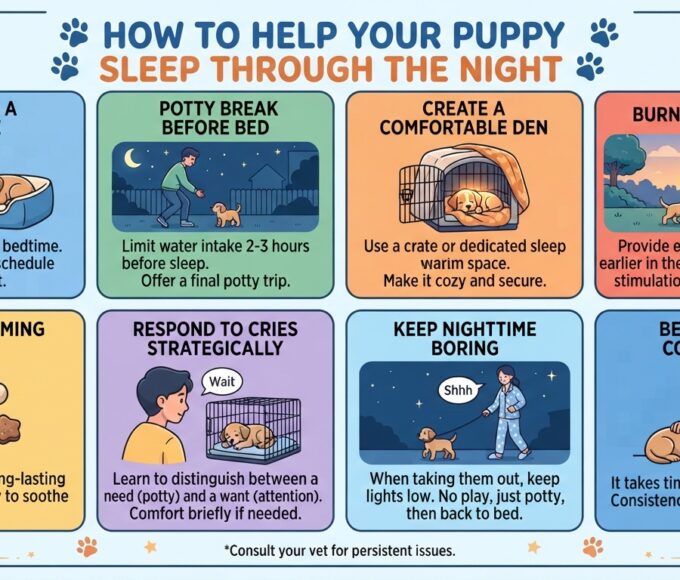
5. Do Prioritize Sleep and Rest
One puppy-care mistake that is easy to make is assuming that a tired puppy is always a happy puppy.
Puppies need substantial amounts of sleep as they grow. When they become overtired, they may become unusually mouthy, restless, hyperactive, or unable to settle.
Provide your puppy with a comfortable, quiet place where they can sleep without being constantly disturbed.
A crate, pen, bed, or puppy-safe room can give them a designated place to relax.
Learning to settle and nap independently is an important life skill.
6. Do Begin Training Early
Training doesn’t need to wait until your puppy is older.
Start with simple skills such as:
- Responding to their name.
- Coming when called.
- Sitting.
- Walking calmly on a leash.
- Waiting briefly.
- Going to a designated bed or mat.
- Accepting gentle handling.
- Trading objects rather than guarding them.
Keep training sessions short and positive.
Puppies have limited attention spans, so several brief sessions can be more productive than one long lesson.
Reward behaviors you want to see repeated with treats, praise, play, or another reward your puppy values.
7. Do Use Positive Reinforcement
Reward-based training can help puppies understand what you want them to do without relying on fear or intimidation.
For example, if your puppy sits when asked, immediately reward the behavior.
If your puppy calmly ignores something tempting, reward that choice.
If they go to the bathroom in the correct place, provide appropriate praise and reinforcement.
The key is timing. Puppies learn most effectively when the reward follows the desired behavior quickly.
Avoid hitting, yelling at, or physically intimidating your puppy. These approaches can create fear and may damage the trust you’re trying to build.
8. Do Give Your Puppy Safe Exercise and Mental Enrichment
Puppies need opportunities to move, explore, play, and learn.
However, exercise should be appropriate for their age, development, breed, and individual health.
Good forms of enrichment can include:
- Short play sessions.
- Sniffing games.
- Food puzzles.
- Basic training.
- Gentle exploration.
- Age-appropriate walks.
- Retrieving games.
- Safe chew toys.
Avoid assuming that more exercise is always better. Developing puppies can be vulnerable to excessive or inappropriate physical strain.
Ask your veterinarian about exercise recommendations if you’re unsure what is suitable for your puppy.
9. Do Start Dental Care Early
Puppy teeth are temporary, but that doesn’t mean dental care can wait.
Getting your puppy comfortable with having their mouth handled can make future dental care much easier.
Start gradually:
- Let your puppy sniff the toothbrush.
- Touch their lips and gums gently.
- Introduce pet-safe toothpaste.
- Reward calm behavior.
- Gradually begin brushing.
- Increase the duration over time.
Never use human toothpaste unless a veterinarian specifically recommends a product that is safe for dogs. Some human dental products contain ingredients that can be dangerous to pets.
Your veterinarian can also advise you about dental chews and other oral-care products.
10. Do Puppy-Proof Your Home
Puppies investigate the world with their mouths, paws, and noses.
Before bringing one home, look around from a puppy’s perspective.
Secure or remove:
- Electrical cords.
- Toxic plants.
- Cleaning products.
- Medications.
- Small objects.
- Loose strings.
- Accessible trash.
- Certain human foods.
- Chemicals.
- Unsecured household items.
Use baby gates or puppy pens where necessary.
Remember that puppy-proofing is not a one-time task. As your puppy grows, they may reach places they couldn’t access previously.
The Don’ts of Puppy Care
1. Don’t Overfeed Your Puppy
More food does not necessarily mean a healthier puppy.
Excessive calorie intake can contribute to unhealthy weight gain and may be particularly problematic during growth.
Instead of judging your puppy’s health solely by how much they eat, monitor their body condition and growth with guidance from your veterinarian.
Treats count toward daily calorie intake too.
2. Don’t Ignore House Training
Accidents are a normal part of puppyhood.
Instead of punishing your puppy for mistakes, focus on preventing accidents and rewarding successful bathroom trips.
Take your puppy out regularly, particularly:
- After waking up.
- After eating.
- After drinking.
- After playing.
- Before bedtime.
- When they show signs of needing to go.
When your puppy eliminates in the appropriate location, reward them promptly.
If an accident happens indoors, clean the area thoroughly so lingering odors don’t encourage repeated accidents.
3. Don’t Leave a Young Puppy Alone for Excessively Long Periods
Young puppies need frequent bathroom breaks, social interaction, supervision, and opportunities for learning.
Leaving a puppy alone for long periods can contribute to boredom and unwanted behaviors, while also creating practical problems such as accidents.
If your schedule requires you to be away for several hours, consider arranging help from a trusted pet sitter, family member, or qualified dog walker when appropriate.
Gradually teaching your puppy to spend short periods alone can also help them become more comfortable with independence.
4. Don’t Skip Training Because Your Puppy Is Small
A tiny dog still needs manners.
Allowing unwanted behavior simply because a puppy is small can create bigger problems later.
Jumping, excessive barking, nipping, pulling on the leash, stealing objects, and ignoring basic cues can become harder to manage as the dog grows.
Teach desirable behaviors from the beginning rather than waiting for bad habits to become established.
5. Don’t Punish Normal Puppy Behavior
Puppies chew, explore, investigate, and occasionally make mistakes.
Instead of expecting perfect behavior immediately, give them appropriate alternatives.
For example, if your puppy chews a shoe, calmly redirect them to an appropriate chew toy.
If they jump on visitors, teach an alternative behavior such as sitting or keeping four paws on the floor.
Training works best when you show your puppy what to do, not simply what not to do.
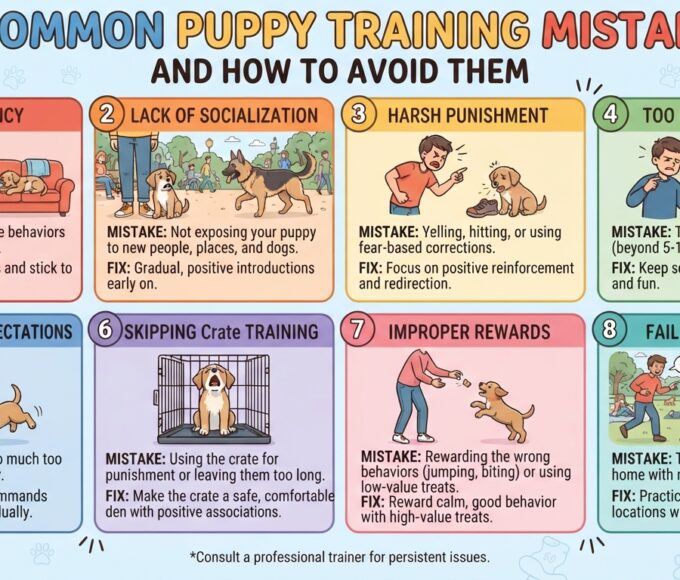
6. Don’t Use Harsh Physical Corrections
Physical punishment, frightening intimidation, and severe corrections can create fear and may interfere with learning.
If your puppy is struggling with a particular behavior, identify the reason behind it.
For persistent problems such as intense fear, aggression, resource guarding, or severe separation-related distress, consult a qualified veterinary behaviorist or reward-based professional trainer.
7. Don’t Give Your Puppy Unlimited Freedom
A puppy exploring the entire house unsupervised can quickly get into trouble.
Instead, gradually expand their access to different parts of the home as they demonstrate that they can behave safely.
Baby gates, puppy pens, crates used appropriately, and supervised freedom can help you manage their environment.
Think of management as preventing mistakes while your puppy is still learning.
8. Don’t Bathe Your Puppy Too Frequently
Puppies don’t need frequent baths simply because they are puppies.
Over-bathing can contribute to skin dryness or irritation, particularly if unsuitable products are used.
Bathe your puppy when they are genuinely dirty or when your veterinarian recommends a particular bathing routine.
Use a shampoo formulated specifically for dogs and rinse thoroughly.
If your puppy develops persistent itching, odor, redness, dandruff, or other skin changes, ask your veterinarian rather than simply bathing more often.
9. Don’t Ignore Changes in Behavior or Health
Puppies can become ill quickly, so unusual changes deserve attention.
Contact your veterinarian if your puppy develops concerning symptoms such as:
- Repeated vomiting or diarrhea.
- Significant loss of appetite.
- Extreme lethargy.
- Difficulty breathing.
- Collapse.
- Persistent coughing.
- Severe pain.
- Abdominal swelling.
- Bloody stool.
- Sudden neurological changes.
If you’re unsure whether something is serious, contacting your veterinary clinic for advice is safer than waiting and hoping the problem disappears.
10. Don’t Expect Every Puppy to Develop at the Same Speed
Puppies are individuals.
One may be confident and outgoing while another is cautious and sensitive. One may learn a command quickly while another needs more repetition.
Avoid comparing your puppy constantly with another dog.
Focus on gradual progress and give your puppy time to develop confidence and appropriate skills.
A Simple Daily Puppy-Care Checklist
A basic daily routine might include:
Morning
- Potty break.
- Breakfast.
- Short play or training session.
- Rest.
During the Day
- Regular bathroom opportunities.
- Appropriate meals according to the feeding plan.
- Short training sessions.
- Play and enrichment.
- Supervised exploration.
- Plenty of naps.
Evening
- Gentle play or training.
- Dinner if scheduled.
- Calm family interaction.
- Final bathroom breaks.
- Quiet bedtime routine.
The exact schedule should be adjusted according to your puppy’s age, breed, health, feeding plan, and household routine.
Frequently Asked Questions
When should I start training my puppy?
You can begin basic training as soon as your puppy comes home. Start with simple behaviors such as responding to their name, coming toward you, sitting, and calmly accepting handling.
How often should a puppy eat?
Feeding frequency depends on the puppy’s age, size, food, and individual needs. Young puppies commonly need multiple meals per day. Follow your veterinarian’s advice and the feeding guidance for the specific food you’re using.
How often should I take my puppy outside to potty?
Young puppies generally need frequent bathroom opportunities, especially after sleeping, eating, drinking, and playing. Their ability to hold their bladder improves as they mature.
How much sleep does a puppy need?
Puppies can sleep for many hours throughout the day because their bodies and brains are developing. Individual sleep requirements vary with age and activity level, so provide plenty of opportunities for uninterrupted rest.
Can I take my puppy to the dog park?
It depends on your puppy’s vaccination status, local disease risks, the park environment, and your veterinarian’s recommendations. A crowded dog park may not be the safest first socialization experience for a young puppy.
Controlled interactions with healthy, appropriately vaccinated dogs are often a better starting point.
What should I do if my puppy keeps biting?
Puppy mouthing is common, especially during play and teething. Redirect your puppy toward an appropriate toy, stop play briefly when biting becomes too rough, and reward calm interactions.
If biting is intense, fearful, or aggressive rather than ordinary puppy mouthing, seek professional guidance.
How do I help my puppy feel comfortable in a new home?
Give your puppy a quiet, safe area, maintain a predictable routine, provide appropriate toys, and avoid overwhelming them with too many new experiences at once.
Allow your puppy to approach new people and situations at a comfortable pace.
Final Thoughts
Raising a puppy takes patience, consistency, time, and plenty of supervision. The goal isn’t to create a perfectly behaved dog overnight. It’s to give a young dog the foundation they need to grow into a confident, healthy, and well-adjusted companion.
Feed them appropriately, provide veterinary care, introduce new experiences gradually, teach through positive reinforcement, protect their developing body, and give them plenty of rest.
Most importantly, remember that puppyhood is temporary.
The muddy paws, chewed toys, bathroom accidents, and midnight wake-ups won’t last forever. With thoughtful care and consistent guidance, those challenging moments can become part of the foundation for a wonderful lifelong relationship with your dog.







Leave a comment