




Bringing a new puppy home is an exciting experience, but preparing for your new furry family member takes more than choosing a name and buying food. The right puppy accessories can help your puppy feel comfortable, stay safe, learn good habits, and settle into their new home.
From food and water bowls to a comfortable bed, grooming supplies, toys, and identification, there are several essentials worth having before your puppy arrives. Choosing the right products from the beginning can also make everyday tasks such as feeding, training, grooming, and potty breaks much easier.
Here are 10 essential puppy accessories every new dog owner should consider.
1. Food and Water Bowls
Food and water bowls are among the first things you should purchase for a new puppy. Your puppy should have easy access to fresh drinking water throughout the day, along with a suitable bowl for their meals.
Stainless steel bowls are a popular choice because they are durable, easy to wash, and generally resistant to odors and stains. Ceramic bowls can also work well when they are made specifically for pets and are kept clean.
When choosing bowls, consider:
- Your puppy’s current size
- Their breed and expected adult size
- Whether the bowl is easy to clean
- Whether it has a non-slip base
- Whether the size is appropriate for your puppy
Place the bowls somewhere your puppy can easily reach them without being in the middle of a busy walkway.
2. Puppy Collar and Leash
A properly fitted puppy collar and leash are essential for safe walks, veterinary visits, and outdoor adventures.
Choose a lightweight collar that fits comfortably without being too tight. You should be able to fit roughly two fingers between the collar and your puppy’s neck, while still ensuring they cannot easily slip out of it.
A leash should be comfortable for you to hold and strong enough for your puppy’s size. As your puppy grows, check the collar regularly and adjust or replace it when necessary.
It’s also a good idea to attach an identification tag containing useful contact information.
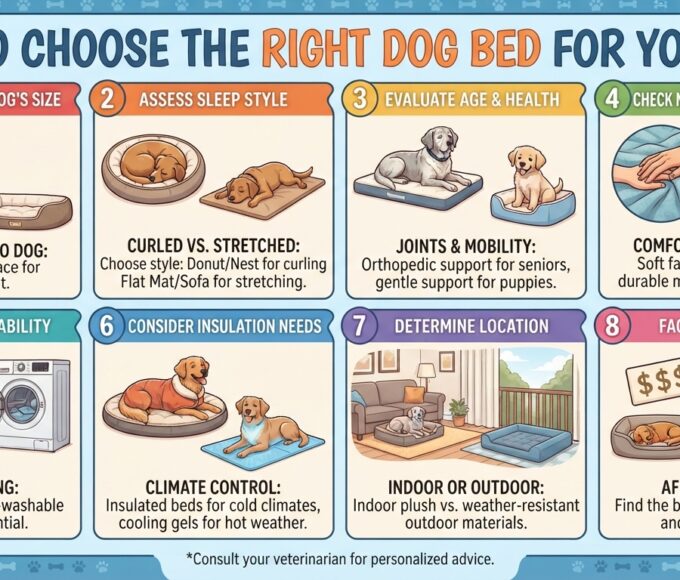
3. Comfortable Puppy Bed
Puppies spend a significant amount of time sleeping, so a comfortable puppy bed is an important addition to your home.
A dedicated bed gives your puppy a consistent place to rest and can help establish a routine. Look for a bed that provides enough room for your puppy to stretch out while still feeling cozy.
Practical features include:
- Washable or removable covers
- Durable materials
- Comfortable padding
- A size suitable for your puppy
- Easy-to-clean construction
Keep the bed in a quiet area where your puppy can rest without constant interruptions.
4. Safe and Engaging Puppy Toys
Puppies are naturally curious and playful. Having appropriate toys can provide mental stimulation, encourage healthy play, and give your puppy something suitable to chew.
Consider providing a mixture of toys, such as:
- Puppy-safe chew toys
- Soft toys
- Interactive toys
- Puzzle toys
- Fetch toys
- Treat-dispensing toys
Different toys serve different purposes. Chew toys can be particularly useful when puppies are exploring the world with their mouths.
Always supervise your puppy with unfamiliar toys and replace anything that becomes damaged or develops small pieces that could be swallowed.
Rotating toys instead of leaving every toy available at once can also help keep playtime interesting.
5. Puppy Grooming Supplies
Getting your puppy accustomed to grooming early can make future grooming sessions much easier.
The grooming supplies you need will depend on your puppy’s coat type. A short-haired puppy may require a different brush from a long-haired or curly-coated breed.
A basic puppy grooming kit may include:
- A suitable brush or comb
- Puppy-safe shampoo
- Nail clippers or a pet nail grinder
- Dog-safe ear-cleaning supplies
- A soft towel
- A grooming mat
Introduce grooming gradually and use positive reinforcement to help your puppy associate brushing and handling with positive experiences.
If you’re unsure about nail trimming, ear cleaning, or grooming a particular coat type, ask your veterinarian or a professional groomer for guidance.
6. Puppy Training Treats
Small training treats for puppies can be useful when teaching basic behaviors and encouraging positive habits.
Puppies generally respond well to reward-based training. When your puppy performs a desired behavior, you can reward them with a small treat, praise, or another form of positive reinforcement.
Choose treats that are:
- Small enough for training
- Appropriate for puppies
- Easy to break into smaller pieces
- Suitable for your puppy’s diet
Remember that treats should be given in moderation. If you’re using many treats during training, account for them as part of your puppy’s overall daily food intake.
7. Poop Bags and Potty Supplies
Potty training is an important part of bringing home a puppy, and you’ll need supplies for both indoor and outdoor cleanup.
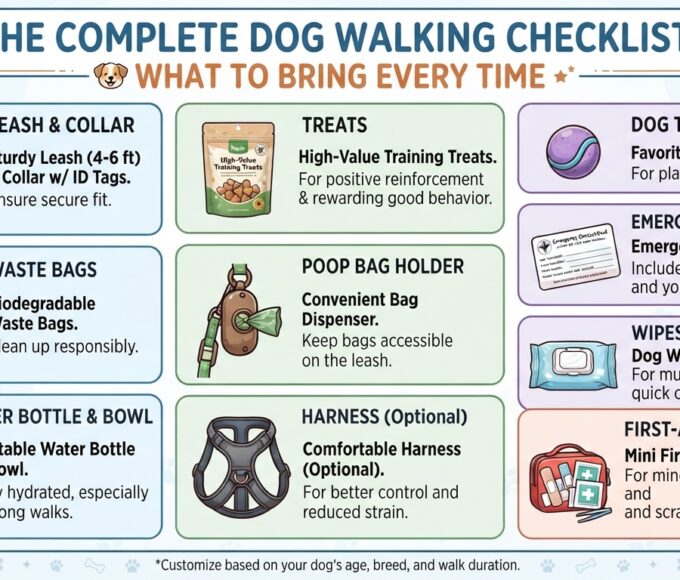
For walks, keep dog poop bags easily accessible. A small dispenser that attaches to your leash can make it easier to carry bags wherever you go.
Depending on your training approach and living situation, you may also need:
- Puppy training pads
- Enzyme-based cleaning products
- Paper towels
- A washable mat
- A designated potty area
Cleaning accidents thoroughly is important because lingering odors can encourage a puppy to return to the same location.
8. Puppy Crate or Playpen
A properly sized puppy crate or playpen can provide a secure area when you cannot supervise your puppy directly.
A crate can also become a comfortable resting space and may be useful as part of a structured potty-training routine. A playpen provides more room for puppies who need a safe area to move around while remaining contained.
The space should be large enough for your puppy to stand, turn around, lie down, and move comfortably.
Make the area welcoming by adding appropriate bedding and safe toys. Never use the crate as a punishment.
As your puppy grows, you may need to adjust the setup or purchase a larger crate.
9. ID Tag and Microchip
Identification is one of the most important safety considerations for a new puppy.
An ID tag attached to your puppy’s collar can provide a quick way for someone to contact you if your puppy gets lost. Depending on local requirements and your preferences, the tag may include information such as your phone number and your puppy’s name.
A microchip provides another form of identification. Unlike a collar tag, a microchip is placed under the skin and can be scanned by veterinary clinics or animal shelters.
A microchip is not a GPS tracker, so it is still important to use a collar and identification tag and keep your contact information updated.
10. Pet Insurance or a Veterinary Care Plan
Pet insurance isn’t an accessory in the traditional sense, but it is something new puppy owners may want to consider.
Puppies can sometimes require unexpected veterinary care, and veterinary costs can become significant depending on the treatment required. Pet insurance policies vary considerably, so carefully review what is covered, including exclusions, deductibles, reimbursement limits, waiting periods, and pre-existing conditions.
If insurance isn’t suitable for your situation, some owners choose to maintain a dedicated emergency pet fund instead.
The most important thing is to have a plan for unexpected veterinary expenses before an emergency occurs.
Additional Puppy Accessories Worth Considering
The 10 items above cover many of the basics, but several additional products can make life with a new puppy easier.
Depending on your lifestyle, you may also want:
Puppy Food Storage Container
An airtight food container can help keep your puppy’s food fresh and make feeding time more convenient.
Travel Carrier or Car Restraint
If you regularly travel with your puppy, consider a suitable carrier or vehicle restraint designed specifically for dogs.
Food Mat
A washable mat underneath food and water bowls can make cleaning up spills much easier.
Puppy Gates
Baby or pet gates can help restrict access to rooms where your puppy shouldn’t be roaming yet.
Dog Towel
Keeping a dedicated towel near the door is useful after rainy walks, baths, or muddy outdoor adventures.
Puppy First-Aid Supplies
A basic pet first-aid kit can be useful for minor situations, although it should never replace professional veterinary care when your puppy is injured or seriously unwell.
How to Choose the Right Puppy Accessories
You don’t necessarily need to buy every puppy product you see in a pet store. Focus on items that are safe, practical, appropriately sized, and easy to maintain.
Before purchasing an accessory, ask yourself:
- Is it suitable for my puppy’s age?
- Is it the correct size?
- Is it made from pet-safe materials?
- Can it be cleaned easily?
- Is it durable enough for my puppy?
- Will my puppy outgrow it quickly?
- Does it solve a genuine need?
Remember that puppies grow quickly. A collar, harness, bed, crate, or clothing item that fits today may not fit a few months from now.
Puppy-Proof Your Home Before Your Puppy Arrives
Accessories are only part of preparing for a new puppy. Your home should also be made as safe as possible.
Before bringing your puppy home, look for potential hazards such as:
- Electrical cables
- Small objects that can be swallowed
- Toxic household products
- Easily accessible medications
- Unsecured trash cans
- Dangerous plants
- Open doors or windows
- Areas where your puppy could become trapped
Use puppy gates or other barriers when necessary, and keep potentially dangerous items out of reach.
Creating a safe environment can prevent many common household accidents.
Frequently Asked Questions About Puppy Accessories
What should I buy for my puppy before bringing them home?
At minimum, prepare suitable puppy food, food and water bowls, a collar, identification tag, leash, comfortable bed or crate, appropriate toys, grooming supplies, and potty-cleanup supplies.
What toys are best for puppies?
Puppy-safe chew toys, interactive toys, and toys designed for gentle play can be useful. Choose toys appropriate for your puppy’s size and supervise play, particularly when introducing a new toy.
Does my puppy need a collar and a harness?
A collar can provide identification and is commonly used for everyday wear. A properly fitted harness may also be useful for walking, depending on your puppy and your training approach. Ask your veterinarian or qualified trainer if you’re unsure which option is appropriate.
How many toys should a new puppy have?
There is no fixed number. A small selection of different toy types is usually more useful than buying a large collection. Rotating toys can help maintain your puppy’s interest.
What size crate should I buy for my puppy?
The crate should allow your puppy to stand, turn around, lie down, and move comfortably. If you purchase a crate with a divider, you can adjust the available space as your puppy grows.
When should I start grooming my puppy?
You can begin gently introducing your puppy to brushing, paw handling, ear handling, and other routine grooming experiences from an early age. Keep sessions short and positive, and use rewards to build a good association.
Final Thoughts
Preparing the right puppy accessories before your new companion arrives can make those first few weeks much easier. Food and water bowls, a collar and leash, a comfortable bed, safe toys, grooming supplies, training treats, potty supplies, a crate or playpen, identification, and a plan for veterinary expenses are all useful parts of preparing for puppy ownership.
The goal isn’t to buy everything available at the pet store. Instead, choose products that meet your puppy’s actual needs, fit their current size, and help create a safe and comfortable environment.
With the right preparation, patience, and plenty of positive attention, you can help your new puppy settle into their home and begin building the foundation for a happy life together.






Leave a comment