



A road trip with your puppy can create some wonderful memories, but getting a young dog comfortable and safe in a moving vehicle takes preparation.
For a puppy, the car can be a strange environment. The engine makes unfamiliar noises, the ground moves beneath them, people and scenery pass quickly outside the windows, and a first journey may involve sensations they’ve never experienced before.
The good news is that car travel can become a normal and enjoyable part of your puppy’s life when you introduce it gradually and prioritize safety.
Whether you’re driving to the veterinarian, visiting family, or planning a longer road trip, these tips can help you make every journey safer and more comfortable.
1. Secure Your Puppy Properly
One of the most important rules of traveling with a puppy is simple: don’t allow them to roam freely inside the vehicle.
An unsecured puppy can distract the driver and may be thrown around the vehicle during sudden braking or a collision.
Depending on your puppy and vehicle, appropriate options may include:
- A properly secured travel crate
- A crash-tested canine harness designed for vehicle use
- An appropriately designed pet carrier
A regular walking leash attached to a collar should not be used as a makeshift seat belt.
Choose Equipment Carefully
Whatever restraint you use should be appropriate for your puppy’s size and properly installed according to the manufacturer’s instructions.
A crate should have adequate ventilation and enough room for your puppy to stand, turn around, and lie down comfortably without being excessively large.
2. Keep Your Puppy Out of the Front Seat
The front passenger seat isn’t an ideal location for a puppy.
Airbags are designed for human passengers and can seriously injure a small animal if they deploy during a crash.
The back seat is generally a better location for a puppy, particularly when combined with an appropriate restraint.
Never allow your puppy to sit on your lap while you’re driving.
It may seem harmless during a short trip, but even a moment of distraction can create a dangerous situation.
3. Never Let Your Puppy Ride in the Driver’s Lap
Puppies naturally want to be close to their people, but the driver’s seat is one place they should never be.
A puppy can:
- Block the steering wheel
- Interfere with pedals
- Distract the driver
- Move underneath the driver’s feet
- Become injured during sudden braking
Even if your puppy appears calm, they should remain secured in an appropriate location throughout the journey.
4. Introduce Your Puppy to the Car Gradually
Don’t make your puppy’s first car experience a five-hour road trip.
Start small.
Begin by allowing your puppy to explore the stationary vehicle while it is safely parked. Give them treats, praise, or another appropriate reward for remaining calm.
Once they’re comfortable, try sitting in the car with the engine running.
Then progress to very short drives.
For example:
Stage 1: Explore the parked car.
Stage 2: Sit inside with the engine off.
Stage 3: Start the engine while remaining parked.
Stage 4: Take a short drive around the neighborhood.
Stage 5: Gradually increase journey length.
If your puppy becomes frightened or sick, go back to an easier stage rather than forcing them to continue.
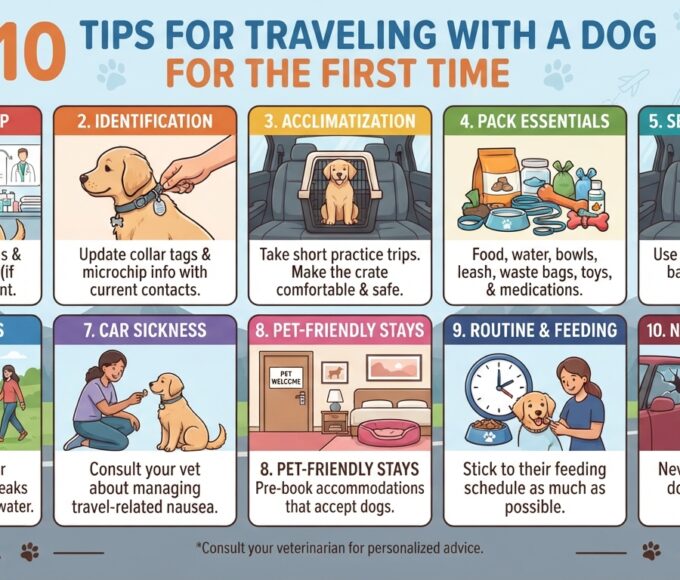
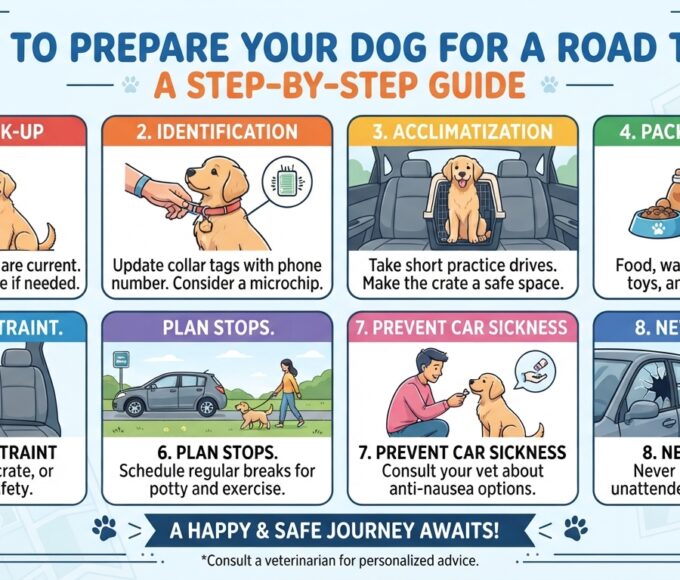
5. Take Short Practice Trips
Your early journeys don’t need to have an important destination.
A short drive followed by something enjoyable can help your puppy learn that getting into the car doesn’t always mean going somewhere stressful.
You could drive to:
- A quiet walking area
- A friend’s home
- A puppy class
- A safe outdoor location
- Another positive destination
This can prevent your puppy from learning that the car only predicts unpleasant experiences, such as veterinary appointments.
6. Pack a Puppy Travel Kit
Before leaving home, prepare everything your puppy may need.
A useful travel kit can include:
- Fresh drinking water
- Food
- Treats
- Food and water bowls
- Leash and harness
- Waste bags
- Towels
- A familiar blanket
- Appropriate toys
- Cleaning supplies
- Any prescribed medications
- Veterinary information
- Identification details
For longer journeys, bring enough of your puppy’s normal food rather than assuming you’ll easily find the same food along the way.
A towel or washable blanket can also be useful if your puppy becomes wet, muddy, or carsick.
7. Bring Familiar Items From Home
A new car can be full of unfamiliar sights and smells.
Bringing something your puppy already knows may make the environment feel more comfortable.
Consider taking:
- Their usual blanket
- A familiar bed
- A safe favorite toy
- A familiar-smelling item from home
Don’t overcrowd the restraint area with loose objects that could become dangerous during sudden braking.
8. Plan Regular Breaks
Puppies generally need more frequent bathroom opportunities than adult dogs.
On longer journeys, plan appropriate breaks so your puppy can:
- Use the bathroom
- Drink water
- Stretch
- Take a short walk when appropriate
- Relax away from the vehicle
The exact frequency depends on your puppy’s age, bladder control, health, and the length of the journey.
Don’t rely on a rigid “every two hours” rule for every puppy.
Keep Breaks Safe
Always put your puppy on a leash before opening the vehicle door.
A strange rest area can be frightening, and a puppy may suddenly bolt.
Also keep your puppy away from unknown animals and potentially contaminated areas, especially if they haven’t completed their recommended vaccination series.
9. Never Leave Your Puppy Alone in a Parked Car
This rule should be absolute.
Even when the weather doesn’t feel extremely hot outside, the temperature inside a parked vehicle can rise rapidly.
Cracking the windows doesn’t make leaving a puppy alone in a vehicle safe.
Heatstroke can become life-threatening very quickly.
If you need to visit a location where dogs aren’t allowed, make alternative arrangements rather than leaving your puppy unattended in the car.
10. Be Careful With Temperature
Puppies can be particularly vulnerable to uncomfortable environmental conditions.
During hot weather:
- Use air conditioning when necessary.
- Avoid stopping in direct sunlight.
- Plan travel during cooler parts of the day when practical.
- Never leave the puppy alone in the vehicle.
During cold weather, make sure your puppy has appropriate warmth and isn’t exposed to uncomfortable temperatures for extended periods.
Also remember that the temperature inside the vehicle matters more than how comfortable the weather feels outside.
11. Consider Motion Sickness
Motion sickness is relatively common in young dogs.
A puppy experiencing car sickness may:
- Drool excessively
- Lick their lips
- Whine
- Pant
- Become restless
- Vomit
- Appear anxious
Some puppies improve as they become accustomed to traveling, while others may continue to experience motion sickness.
How Can You Reduce Car Sickness?
You can try:
- Gradual car training
- Shorter journeys
- Avoiding a large meal immediately before travel
- Keeping the vehicle comfortably ventilated
- Driving smoothly
- Taking appropriate breaks
If your puppy repeatedly vomits or becomes extremely distressed in the car, speak with your veterinarian.
Never give human motion-sickness medication unless your veterinarian specifically recommends a medication and dose for your puppy.
12. Don’t Feed a Large Meal Immediately Before a Long Trip
A large meal immediately before traveling may make nausea and vomiting more likely in some dogs.
Instead, discuss an appropriate feeding schedule with your veterinarian, particularly if your puppy regularly experiences motion sickness.
Bring your puppy’s normal food and avoid experimenting with unfamiliar treats or foods during an important journey.
13. Keep the Vehicle Calm
A noisy, chaotic vehicle can make the experience more difficult for a nervous puppy.
Try to create a calm environment by:
- Keeping music at a reasonable volume
- Avoiding sudden shouting
- Driving smoothly
- Keeping the puppy securely restrained
- Maintaining a comfortable temperature
- Avoiding unnecessary stops and distractions
If your puppy becomes anxious, don’t punish them for whining or showing fear.
The goal is to help them feel secure rather than teaching them that expressing discomfort leads to punishment.
14. Don’t Let Your Puppy Hang Their Head Out the Window
The classic image of a dog enjoying the breeze through an open car window may look fun, but allowing your puppy to put their head outside creates unnecessary risks.
They could be struck by debris, injured by another vehicle, or attempt to jump out.
Your puppy should remain safely contained inside the vehicle.
15. Keep Windows and Doors Secure
A curious puppy can be surprisingly fast.
Before opening a vehicle door, make sure your puppy is safely restrained.
Be especially careful at rest stops, parking areas, and unfamiliar destinations.
A puppy that escapes near traffic can be extremely difficult to catch safely.
16. Make Identification a Priority
Before taking your puppy on a trip, make sure their identification information is current.
Depending on your circumstances, this may include:
- A properly fitted collar
- An identification tag
- A microchip
- Current owner contact information
Check that the phone number associated with the identification is still correct.
It’s also useful to carry a recent photograph of your puppy in case they become separated from you.
17. Bring Veterinary Information
For longer trips, keep important veterinary information accessible.
You may want to carry:
- Vaccination records
- Medication information
- Your veterinarian’s contact details
- Emergency veterinary contacts along your route
- Relevant medical records
If your puppy takes prescription medication, pack enough for the entire journey and keep it stored appropriately.
18. Plan Your Route Before You Leave
Don’t wait until you’re already driving to figure out where your next stop will be.
For longer journeys, identify suitable locations where you can safely take your puppy outside.
Also check your destination’s rules about dogs.
If you’re staying overnight, confirm in advance that the accommodation accepts pets and understand any restrictions or fees.
19. Be Careful About Socializing at Rest Stops
Traveling can expose your puppy to unfamiliar people, dogs, surfaces, and environments.
These experiences can become part of socialization, but they shouldn’t be forced.
Don’t assume every dog your puppy meets needs to become a playmate.
Instead, allow your puppy to observe unfamiliar situations from a comfortable distance and reward calm behavior.
For puppies that aren’t fully vaccinated, ask your veterinarian which environments and interactions are appropriate based on local disease risks.
20. Take Breaks From Long Periods of Confinement
Even with regular bathroom stops, long periods in a vehicle can be tiring for a young puppy.
During appropriate breaks, give your puppy an opportunity to move around safely, drink water, and relax.
Avoid turning every stop into an intense play session.
Sometimes the best break is simply a quiet few minutes away from the noise and movement of the car.
21. Never Allow Your Puppy to Ride Loose in the Cargo Area
If you drive an SUV, wagon, or similar vehicle, the cargo area isn’t automatically a safe place for an unsecured puppy.
A puppy can be thrown forward during sudden braking or become injured by loose luggage.
If your vehicle setup allows a crate or appropriate restraint to be safely installed, use it according to the equipment manufacturer’s instructions.
Keep luggage and other objects secured so they cannot shift into the puppy’s space.
22. Help Your Puppy Learn That the Car Is Normal
Some puppies jump into the car happily after only a few experiences.
Others need considerably more time.
Don’t compare your puppy with another dog.
Continue using gradual exposure and positive reinforcement.
If your puppy becomes anxious, shaking, drooling, vocalizing excessively, or trying to escape, make the experience easier rather than pushing through it.
Persistent severe anxiety may require help from your veterinarian or a qualified behavior professional.
What Should You Do If Your Puppy Vomits in the Car?
If your puppy becomes carsick, safely pull over when possible.
Give them a chance to settle and provide access to water.
Don’t immediately offer a large meal.
Clean the area thoroughly so your puppy isn’t forced to remain surrounded by the smell of vomit during the rest of the trip.
If vomiting happens repeatedly or your puppy shows other concerning symptoms, contact your veterinarian.
What If Your Puppy Is Extremely Anxious in the Car?
First, make sure the puppy is safely restrained and the vehicle is comfortable.
Then consider returning to shorter practice sessions.
You may need to spend several sessions simply sitting in the parked vehicle before attempting another drive.
Never punish your puppy for being afraid.
If anxiety remains severe despite gradual training, ask your veterinarian for advice. They can help determine whether motion sickness, anxiety, or another issue is contributing to the problem.
Puppy Car Travel Checklist
Before leaving, check that you have:
- Appropriate crash-safety restraint or secured travel crate
- Collar and identification
- Leash and harness
- Water
- Food
- Bowls
- Treats
- Familiar blanket
- Safe toy
- Waste bags
- Towels
- Cleaning supplies
- Prescribed medication
- Veterinary records
- Emergency veterinary information
- A recent photograph of your puppy
Frequently Asked Questions
How old should a puppy be before traveling in a car?
There isn’t a universal minimum age at which a puppy can safely ride in a car. Very young puppies can travel when necessary, including for veterinary care, provided appropriate safety and health precautions are followed.
Vaccination status is particularly important when deciding where to take a young puppy outside the vehicle. Ask your veterinarian about disease risks and appropriate socialization before taking an incompletely vaccinated puppy into public areas.
How can I keep my puppy calm during a car ride?
Start with short, positive trips. Use an appropriate restraint, bring a familiar item, keep the vehicle comfortable, and gradually increase journey length.
If your puppy shows significant anxiety, reduce the difficulty rather than forcing them to continue.
Can my puppy sit on my lap while someone else drives?
It’s safer to keep your puppy properly restrained rather than allowing them to ride loose on someone’s lap. A sudden stop can cause serious injury, and an unsecured puppy can also become a distraction.
Should I feed my puppy before a car journey?
A large meal immediately before travel may worsen motion sickness for some puppies. If your puppy regularly gets carsick, ask your veterinarian about an appropriate feeding schedule.
What should I do if my puppy gets car sick?
Safely stop when possible, allow your puppy to settle, provide water, and clean up the area. If vomiting is frequent or accompanied by other concerning symptoms, contact your veterinarian.
How often should I stop during a long trip?
Puppy bathroom and activity needs vary with age, health, and individual development. Plan regular breaks rather than expecting a young puppy to tolerate the same intervals as an adult dog.
Can my puppy travel before completing vaccinations?
A puppy may need to travel before completing its vaccination series, especially for veterinary appointments. However, public environments can expose young puppies to infectious diseases. Ask your veterinarian which places and interactions are appropriate for your puppy’s current vaccination status.
Final Thoughts
Traveling with a puppy can become a normal and enjoyable part of life when you introduce it carefully.
The most important priorities are safety, preparation, and patience.
Secure your puppy properly, keep them away from the front passenger airbag, plan regular breaks, bring familiar supplies, avoid leaving them alone in a parked vehicle, and introduce car travel gradually.
If your puppy experiences motion sickness or anxiety, don’t simply assume they’ll “get over it.” Shorter trips, positive experiences, and veterinary guidance can make a significant difference.
Your puppy doesn’t need to become a road-trip expert overnight.
With calm practice and the right precautions, those first short drives can eventually become the beginning of many safe adventures together.






Leave a comment