




Living with a dog involves much more than providing food and a place to sleep. Dogs need opportunities to exercise, explore, rest, play, learn, and spend time with their families. The right accessories can make all of these everyday activities safer and more comfortable.
With so many pet products available, however, it can be difficult to know what your dog actually needs. Some accessories are practical essentials, while others are simply fun extras. The best choices depend on your dog’s size, age, coat, health, personality, and daily routine.
From a properly fitted harness to an enriching puzzle toy and a comfortable bed, here are some useful accessories worth considering for your dog’s lifestyle.
1. A Properly Fitted Collar and Identification Tag
A collar is one of the most useful pieces of equipment your dog can have, particularly when it carries current identification information.
A good collar should:
- Fit comfortably without being excessively tight.
- Be appropriate for your dog’s size.
- Allow room for an identification tag.
- Be checked regularly as your dog grows or changes weight.
- Be replaced if the material, buckle, or attachment point becomes damaged.
The collar should never be treated as a substitute for a microchip. Ideally, your dog should have reliable identification through both an identification tag and a registered microchip where available.
Your contact information should be kept up to date.
2. A Safe Leash or Harness
A leash gives you control during walks and helps prevent your dog from wandering into traffic or unsafe areas.
Some dogs are more comfortable and easier to manage with a harness rather than having the leash attached directly to a collar. This can be particularly useful for dogs that pull or have specific physical considerations.
When selecting walking equipment, prioritize:
- Proper fit.
- Secure clips.
- Durable materials.
- Comfortable movement.
- Appropriate size.
- Your dog’s individual walking behavior.
A stylish design is a bonus, but safety should always come first.
Keep a Backup Leash
Having a spare leash can be surprisingly useful. A damaged clip or broken leash can turn an ordinary walk into a dangerous situation, especially while traveling.
3. A Comfortable Dog Bed
Dogs spend a significant amount of time resting, so a comfortable sleeping area is an important investment.
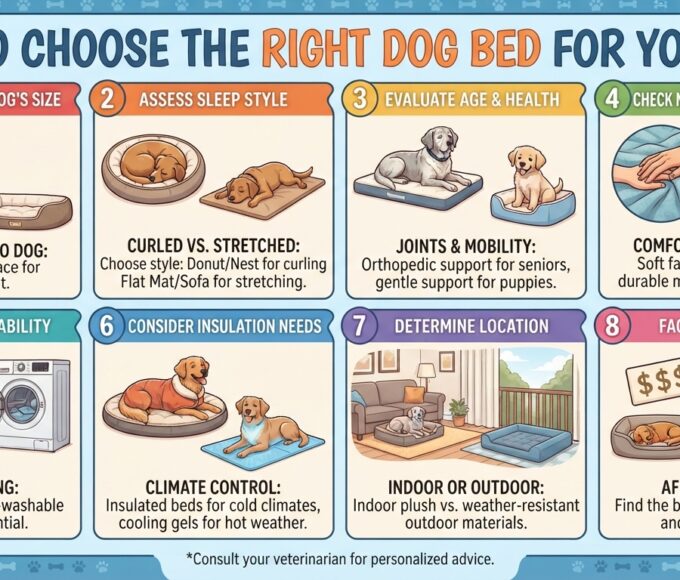
Choose a bed based on your dog’s:
- Size.
- Sleeping position.
- Age.
- Mobility.
- Coat type.
- Preference for warmth or cool surfaces.
Some dogs like to curl up in a raised or bolstered bed, while others prefer a flat mattress where they can stretch out.
Older dogs or dogs with joint problems may benefit from supportive orthopedic-style bedding, although a veterinarian can help you determine what is appropriate for a dog with a medical condition.
Don’t Forget Washability
A beautiful bed isn’t particularly useful if it’s difficult to clean.
Look for removable, washable covers whenever possible. Regular cleaning can help reduce accumulated hair, dirt, and odors.
4. Food and Water Bowls
Food and water bowls are everyday necessities, but the right design can make mealtimes easier.
Choose bowls that:
- Are appropriate for your dog’s size.
- Are stable enough not to slide easily.
- Are easy to clean.
- Are made from suitable, durable materials.
- Match your dog’s feeding needs.
Some dogs eat too quickly, and a veterinarian or qualified pet professional may recommend a slow-feeder bowl as part of a broader feeding strategy.
Your dog should have access to fresh, clean water throughout the day.
5. Interactive and Puzzle Toys
A dog doesn’t only need physical exercise. Mental stimulation is also an important part of a healthy lifestyle.
Interactive toys can encourage dogs to:
- Think through simple problems.
- Use their sense of smell.
- Work for food rewards.
- Explore different textures.
- Stay occupied appropriately.
- Practice natural behaviors.
Puzzle feeders and treat-dispensing toys can be particularly useful for food-motivated dogs.
However, difficulty should match the individual dog. A puzzle that is too difficult may frustrate them, while one that is too easy may provide little enrichment.
6. Durable Chew Toys
Chewing is a normal canine behavior.
Providing appropriate chew toys can give dogs a safe outlet for this behavior and may help reduce their interest in inappropriate household objects.
Choose toys based on your dog’s:
- Size.
- Chewing strength.
- Age.
- Playing style.
No toy is completely indestructible. Regularly inspect toys for cracks, missing pieces, or sections that could be swallowed.
Throw away damaged toys and replace them.
7. Grooming Supplies
Grooming isn’t only about making your dog look neat. It can also help you monitor their skin, coat, ears, paws, and nails.
A basic home grooming kit might include:
- A suitable brush or comb.
- Dog-specific shampoo.
- Nail clippers or a nail grinder.
- Towels.
- A grooming wipe.
- A dog toothbrush and appropriate toothpaste.
The correct brush depends heavily on the coat type. A short-haired dog may need a very different grooming tool from a long-haired or curly-coated breed.
Grooming Is Also a Health Check
Regular grooming gives you opportunities to notice changes such as:
- Skin irritation.
- Lumps or unusual swelling.
- Parasites.
- Matted fur.
- Redness.
- Broken nails.
- Ear problems.
If you notice something unusual, contact your veterinarian rather than assuming grooming alone will solve the problem.
8. Dental Care Products
Dental health is often overlooked when buying dog accessories.
A dog-specific toothbrush and veterinary-approved toothpaste can help owners establish an at-home dental-care routine.
Never use human toothpaste for dogs unless specifically directed by a veterinary professional, as some human products can contain ingredients that are unsafe for pets.
Dental chews may also be useful for some dogs, but they shouldn’t automatically be considered a replacement for brushing or professional veterinary dental care.
9. A Secure Travel Crate or Carrier
If you regularly travel with your dog, a suitable crate or carrier can make journeys safer and more organized.
The size should allow your dog to sit, stand, turn around, and lie down comfortably.
Introduce the crate gradually rather than forcing your dog inside for the first time on the morning of a trip.
A crate should become a safe and familiar space—not a punishment area.
For vehicle travel, use an appropriate secured crate or another safety system designed for transporting dogs.
10. Car Safety Equipment
Dogs shouldn’t be allowed to move freely around a vehicle while it is being driven.
Depending on your dog and vehicle, appropriate equipment may include:
- A crash-tested travel harness.
- A secured crate.
- A suitable vehicle barrier.
- A non-slip travel mat.
- A seat cover.
Choose equipment specifically designed for vehicle travel rather than assuming an ordinary walking harness provides crash protection.
Also avoid allowing your dog to ride with their head outside the car window. Flying debris can injure the eyes, ears, or face.
11. A Dog Travel Bag
A dedicated travel bag can keep your dog’s supplies organized when you’re away from home.
Useful items include:
- Food.
- Treats.
- Collapsible bowls.
- Water.
- Leash.
- Waste bags.
- Towels.
- Medications.
- Veterinary records.
- Identification information.
- A familiar toy.
- Basic first-aid supplies.
Keeping these items together means you’re less likely to forget something important when leaving for a trip.
12. Waste Bags and Cleaning Supplies
Responsible pet ownership doesn’t stop when you leave the house.
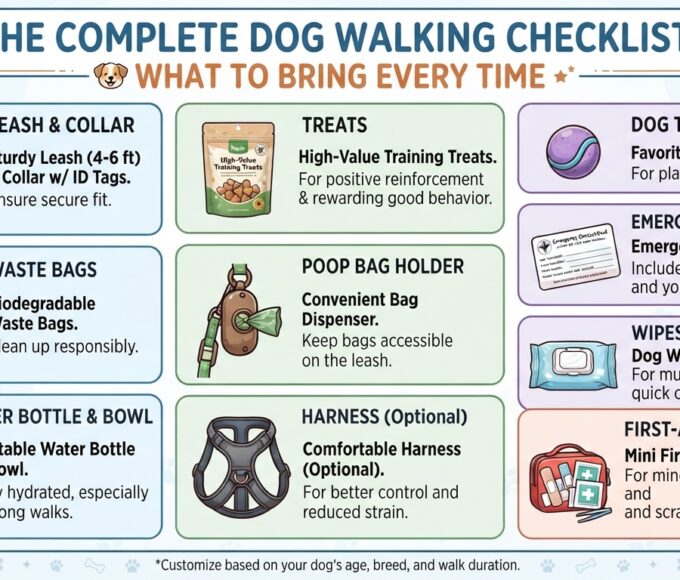
Keep waste bags attached to your walking equipment or stored somewhere easy to reach.
For longer trips, a small cleaning kit can also be useful.
Consider carrying:
- Waste bags.
- Paper towels.
- Disposable gloves.
- Pet-safe cleaning supplies.
- A few absorbent towels.
- Sealable bags for dirty items.
These supplies are especially helpful during road trips or hotel stays.
13. Training Accessories
Training doesn’t require an expensive collection of equipment.
A few simple accessories can make training sessions easier.
Useful items include:
- Small training treats.
- A treat pouch.
- A clicker if you use clicker training.
- A long line for appropriate supervised environments.
- Target-training accessories.
- Portable enrichment toys.
The most important part of training isn’t the equipment. It’s consistency, appropriate rewards, clear communication, and positive learning experiences.
14. Cooling and Weather Accessories
Your dog’s needs can change dramatically depending on the weather.
During hot conditions, useful supplies may include:
- A portable water bottle.
- A cooling mat.
- Shade equipment for outdoor activities.
- A lightweight towel.
- Appropriate walking equipment.
However, accessories shouldn’t be used to justify exposing a dog to dangerous heat.
Dogs can overheat quickly, particularly puppies, seniors, dogs with health problems, and breeds with shortened airways.
During very hot weather, prioritize shade, hydration, appropriate activity times, and access to a cool environment.
15. Reflective and High-Visibility Gear
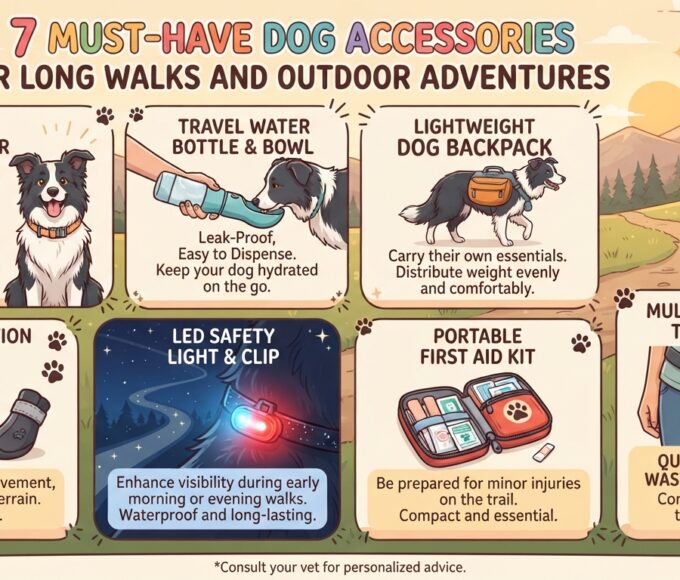
If you regularly walk your dog during early mornings, evenings, or in areas with poor visibility, reflective equipment can improve visibility.
Options include:
- Reflective collars.
- High-visibility harnesses.
- Reflective leashes.
- LED safety lights.
These accessories can make it easier for drivers, cyclists, and pedestrians to see you and your dog.
16. Baby Gates and Home Safety Accessories
Not every useful dog accessory is something your dog wears or plays with.
Baby gates and pet barriers can help create safe boundaries inside the home.
They can be useful for:
- Restricting access to stairs.
- Keeping dogs away from kitchens.
- Creating a quiet resting area.
- Separating pets when necessary.
- Preventing access to certain rooms.
These tools can be particularly helpful when introducing a puppy to a new home.
17. Storage for Food and Pet Supplies
Keeping food and supplies organized can make everyday care much easier.
A secure food container can help protect dry food from moisture and pests. Storage boxes can also keep toys, grooming equipment, medications, and walking supplies in one place.
For multi-pet households, clearly separating each animal’s food and medication can help prevent mistakes.
18. GPS Trackers and Smart Accessories
Technology has introduced a growing range of pet accessories, including GPS trackers and activity-monitoring devices.
A GPS tracker may provide an additional layer of protection for dogs who are prone to escaping or wandering.
However, technology shouldn’t replace basic identification and responsible supervision.
Think of smart accessories as an additional safety tool rather than your dog’s only protection.
How to Choose Accessories for Your Individual Dog
The most expensive product isn’t automatically the best choice.
Before buying something, ask:
Does my dog actually need it?
A product can be popular without being useful for your particular pet.
Is it the correct size?
An accessory that’s too large can be difficult to use, while one that’s too small may be uncomfortable or unsafe.
Is it appropriate for my dog’s behavior?
A powerful chewer may destroy a toy designed for a gentle player.
Is it easy to clean?
Accessories that accumulate food, moisture, hair, or dirt should be easy to maintain.
Is it safe?
Check for loose pieces, choking hazards, sharp edges, weak clips, and other potential risks.
Will my dog actually use it?
A beautiful accessory that your dog refuses to tolerate isn’t a particularly useful purchase.
Essential Accessories vs. Optional Extras
Not everything needs to be purchased immediately.
| Accessory | Importance |
|---|---|
| Collar and identification | Essential |
| Leash or suitable walking equipment | Essential |
| Food and water bowls | Essential |
| Comfortable bed | Essential |
| Appropriate food storage | Useful |
| Waste bags | Essential for walks |
| Basic grooming supplies | Essential |
| Suitable toys | Important |
| Dental-care supplies | Important |
| Travel equipment | Depends on lifestyle |
| Reflective gear | Useful for low-light walks |
| GPS tracker | Optional additional safety |
| Cooling accessories | Useful depending on climate |
| Training pouch/clicker | Optional |
| Pet barriers | Useful depending on home |
How to Keep Your Dog’s Accessories Clean
Even high-quality accessories need regular maintenance.
Wash food and water bowls frequently.
Clean washable beds according to their care instructions.
Inspect collars and harnesses for wear.
Wash toys when appropriate and discard damaged ones.
Brushes and grooming tools should also be cleaned regularly.
Keeping accessories clean can help reduce unpleasant odors and prevent dirt from accumulating around your dog’s living areas.
Common Mistakes When Buying Dog Accessories
Buying for appearance instead of function
A fashionable collar is only useful if it fits comfortably and securely.
Choosing the wrong size
Always check the manufacturer’s sizing information rather than guessing based on breed alone.
Assuming expensive means safer
Price does not guarantee that a product is appropriate for your dog.
Ignoring your dog’s behavior
A gentle toy may not survive a powerful chewer, while an overly challenging puzzle may frustrate a beginner.
Buying too many products at once
Start with the essentials and learn what your dog actually enjoys and needs.
Failing to inspect worn equipment
Regularly check collars, harnesses, leashes, toys, beds, and other equipment for damage.
Frequently Asked Questions
What accessories does every dog need?
The basics generally include appropriate identification, a collar or suitable harness, a leash, food and water bowls, comfortable bedding, appropriate food, grooming supplies, and safe toys.
How often should dog accessories be replaced?
There is no universal replacement schedule. Inspect items regularly and replace anything that becomes damaged, excessively worn, unsafe, or too small.
What size dog bed should I buy?
Measure your dog while they are lying in their preferred sleeping position. Choose a bed that gives them enough room to stretch and reposition comfortably.
Are interactive toys safe for dogs?
Many interactive toys can be useful, but they should be appropriate for your dog’s size and chewing habits. Supervise your dog when introducing a new toy and remove it if it becomes damaged.
Does my dog need a harness instead of a collar?
It depends on the individual dog. Some dogs do well with collars, while others may be more comfortable and easier to manage with a properly fitted harness. Dogs with specific medical or behavioral concerns should be evaluated individually.
Are GPS trackers necessary?
A GPS tracker isn’t essential for every dog, but it can provide an additional layer of security for dogs that are prone to escaping or getting lost. It should complement—not replace—an identification tag, microchip, and responsible supervision.
Final Thoughts
The right accessories can make everyday life with your dog safer, easier, and more enjoyable. But you don’t need to fill your home with every pet product available.
Start with the essentials: reliable identification, safe walking equipment, comfortable bedding, appropriate food and water supplies, grooming tools, and suitable enrichment.
Then consider your dog’s individual lifestyle. A frequent traveler may benefit from specialized travel equipment, while an energetic dog may get more value from enrichment toys and training supplies. A senior dog may need supportive bedding, while a dog who spends time outdoors may benefit from weather and visibility gear.
Ultimately, the best accessory is one that solves a real problem while keeping your dog comfortable and safe. Products can support good pet care, but they don’t replace the things dogs need most: proper nutrition, veterinary care, exercise, mental stimulation, training, companionship, and plenty of time with their people.






Leave a comment