







Bringing a cat home for the first time is exciting. Suddenly, your home has a new roommate with whiskers, opinions, and an impressive ability to find the most comfortable spot in the house.
But while cats can be relatively independent, they still need thoughtful care, proper nutrition, veterinary attention, enrichment, and a safe environment.
If you’re a first-time cat parent, don’t worry. You don’t need to know everything on day one. By learning a few basic principles and paying attention to your cat’s individual personality, you can give your new companion a comfortable and happy life.
1. Prepare the Essentials Before Your Cat Arrives
Getting the basics ready before bringing your cat home can make the transition much easier.
Your initial shopping list should include:
- A suitable litter box
- Cat litter
- Complete and balanced cat food
- Food and water bowls
- A comfortable bed or resting area
- Scratching surfaces
- Age-appropriate toys
- A secure cat carrier
- Grooming supplies
- Identification information
- A few safe hiding places
You don’t need to fill your home with dozens of products. Start with the essentials and add things as you discover what your cat actually enjoys.
2. Give Your Cat a Safe Starting Space
A new home can be overwhelming, particularly for a shy cat or kitten.
Instead of immediately giving your new companion access to the entire house, consider starting with a quiet, comfortable room.
The space can contain:
- Food and water
- A litter box
- A comfortable resting area
- A scratching surface
- A few toys
- A hiding place
Allow your cat to explore at their own pace. Some cats will confidently investigate everything within minutes, while others may need considerably more time.
Don’t force interaction. Sitting quietly nearby and allowing your cat to approach you can help build trust.
3. Create a Cat-Friendly Home
Cats benefit from having different areas for sleeping, playing, scratching, hiding, and observing their surroundings.
A cat tree or climbing structure can provide vertical space, while a window perch can give your feline an interesting place to watch the outside world.
Simple additions can make a difference:
- Cardboard boxes for hiding
- Soft blankets for resting
- Scratching posts
- Cat trees
- Window perches
- Interactive toys
- Quiet retreat areas
Make sure climbing structures are stable and windows are properly secured.
4. Choose a Complete and Balanced Cat Food
Nutrition is one of the most important parts of cat care.
Cats have specific nutritional requirements, so their primary diet should be a complete and balanced cat food appropriate for their life stage.
Kittens, adults, and senior cats can have different nutritional needs. Your veterinarian can also recommend a diet if your cat has a particular medical condition.
Both wet and dry foods can be used depending on your cat’s needs and preferences. Wet food can contribute to overall water intake, while dry food is convenient and easy to portion.
The most important thing is not whether the food looks expensive or has a particular ingredient listed first. Look for a nutritionally complete product appropriate for your cat.
5. Keep Fresh Water Available
Fresh drinking water should always be accessible.
Some cats prefer drinking from wide bowls, while others enjoy fountains or moving water. Experiment to find what your cat likes.
Place water somewhere clean and easy to access, and wash the bowl regularly.
If your cat suddenly starts drinking much more or much less than usual, mention the change to your veterinarian.
6. Be Careful With Human Foods
It’s tempting to share everything with a cute cat sitting beside you, but many human foods aren’t appropriate for pets.
Avoid giving cats foods containing ingredients such as:
- Onions and garlic
- Chocolate
- Alcohol
- Caffeinated products
- Certain artificial sweeteners
- Heavily seasoned foods
- Bones or other hazardous leftovers
Some foods can cause serious illness, so when you’re unsure whether something is safe, don’t feed it until you’ve checked with a veterinarian or another reliable veterinary source.
Treats should also remain a small part of the overall diet rather than replacing balanced cat food.
7. Make Playtime Part of the Routine
Cats are natural hunters, and play gives them an outlet for behaviors such as stalking, chasing, pouncing, and batting.
Interactive toys can make play much more engaging than simply leaving toys on the floor.
Good options include:
- Wand toys
- Toy mice
- Balls
- Puzzle feeders
- Treat-dispensing toys
- Cat tunnels
- Catnip toys for cats that respond to catnip
Several short play sessions can work well, especially for cats that lose interest quickly.
Watch your cat’s body language and let them take breaks when needed.
8. Use Puzzle Feeders for Mental Enrichment
Food doesn’t always have to arrive in a regular bowl.
Puzzle feeders can encourage cats to work for portions of their food, providing mental stimulation and a more engaging mealtime.
Start with an easy puzzle. If your cat immediately becomes frustrated, make the activity simpler.
You can also hide small portions of food around a safe area to encourage supervised searching and exploration.
9. Give Your Cat Appropriate Scratching Areas
Scratching isn’t bad behavior. It’s a normal feline activity.
Cats may scratch to stretch, maintain their claws, communicate, and interact with their environment.
Rather than trying to prevent scratching altogether, give your cat appropriate alternatives.
Try offering:
- Tall vertical scratching posts
- Horizontal cardboard scratchers
- Scratching pads
- Cat trees with scratching surfaces
Place scratching equipment near areas your cat already uses. A post hidden in an unused corner may be ignored while one beside a favorite sleeping spot could become a huge success.
10. Keep the Litter Box Clean
A clean litter box is essential for a comfortable cat.
Place the box somewhere quiet and easy to reach. Avoid putting it directly beside noisy appliances or in an area where your cat could feel trapped.
Scoop regularly and clean the box appropriately.
If you have multiple cats, providing multiple litter boxes can help reduce competition and give each cat more options.
If a previously reliable cat suddenly stops using the litter box, don’t assume they’re being difficult. Changes in litter-box behavior can sometimes indicate stress, environmental problems, or a medical issue.
11. Groom Your Cat Regularly
Cats do much of their own grooming, but many still benefit from occasional assistance.
Brushing can help remove loose hair and can be particularly useful for cats with long or dense coats.
Grooming also gives you an opportunity to notice changes such as:
- Mats
- Skin irritation
- Parasites
- Lumps
- Bald patches
- Unusual sensitivity
Introduce grooming gradually and keep sessions positive.
If your cat becomes extremely stressed, don’t force the process. A veterinarian or professional groomer may be able to help with difficult grooming needs.
12. Don’t Forget About Dental Care
Dental health is an important part of overall cat care.
If possible, introduce tooth brushing gradually using products specifically designed for cats. Never assume that human toothpaste is safe for your pet.
Regular veterinary examinations can also help identify dental problems.
Watch for signs such as:
- Bad breath
- Drooling
- Difficulty eating
- Pawing at the mouth
- Dropping food
- Changes in appetite
These signs deserve veterinary attention.
13. Give Your Cat Places to Hide
Even confident cats need somewhere they can retreat when they want privacy.
A cardboard box, covered bed, cat tunnel, or quiet corner can become a valuable safe space.
Never force your cat out of a hiding place simply because you want interaction.
If your cat is hiding constantly or suddenly becomes much more withdrawn than usual, however, pay attention. A significant behavior change can sometimes signal stress, fear, or illness.
14. Schedule Veterinary Care
One of the first things new cat owners should do is establish a relationship with a veterinarian.
Your veterinarian can assess your cat’s general health and discuss:
- Vaccinations
- Parasite prevention
- Nutrition
- Dental care
- Spaying or neutering
- Weight management
- Microchipping
- Preventive examinations
The appropriate vaccination and preventive-care schedule depends on factors such as age, health, lifestyle, and local disease risks.
Don’t wait until your cat becomes obviously sick before thinking about veterinary care.
15. Learn Your Cat’s Normal Behavior
Perhaps the most important cat-care skill is learning what is normal for your individual cat.
Pay attention to:
- Appetite
- Water consumption
- Sleeping habits
- Grooming
- Activity
- Social behavior
- Vocalization
- Litter-box habits
Cats can sometimes hide signs of illness, so subtle changes can be worth noticing.
A sudden change in normal behavior, especially when combined with appetite changes, vomiting, diarrhea, breathing problems, difficulty urinating, pain, or unusual lethargy, should be discussed with a veterinarian.
16. Socialize Your Cat at Their Own Pace
Not every cat wants to be carried around or introduced to everyone immediately.
Some cats are outgoing and love attention. Others prefer observing people from a safe distance.
Respect your cat’s personality.
Build trust through:
- Calm interaction
- Gentle play
- Treats
- Quiet conversation
- Allowing the cat to approach you
- Positive experiences
Never force a frightened cat into physical interaction.
17. Make Your Home Safe
Cats are naturally curious, which can sometimes get them into trouble.
Before allowing your cat to explore, look for potential hazards such as:
- Loose electrical cords
- Toxic plants
- Open windows
- Small objects that could be swallowed
- Accessible medications
- Cleaning chemicals
- Unsecured balconies
- Strings or ribbons
- Hot surfaces
- Unsafe household products
Remember that kittens can squeeze into surprisingly small spaces, climb furniture, and chew objects that adult cats may ignore.
18. Introduce Other Pets Slowly
If you already have another cat, dog, or pet, don’t immediately expect everyone to become best friends.
Introductions should be gradual and controlled.
Initially, keeping animals separated can give everyone time to adjust to new smells and sounds. You can gradually introduce them while monitoring their body language.
Never force animals into close contact.
If there is persistent aggression or serious fear, seek guidance from your veterinarian or a qualified behavior professional.
19. Make Time for Rest
Cats sleep a lot, and that’s normal.
Your cat needs comfortable areas where they can rest without being constantly disturbed.
Provide several options around the home, such as:
- A quiet bed
- A window perch
- A cat tree
- A covered hideaway
- A soft blanket
Don’t worry if your cat seems to spend much of the day sleeping. What matters is whether their overall behavior is normal for them.
20. Build a Consistent Routine
Cats often appreciate predictability.
Try to maintain reasonably consistent times for:
- Meals
- Play
- Litter maintenance
- Grooming
- Quiet time
A routine can make your cat’s environment easier to understand and can help you notice changes in their behavior.
Of course, life doesn’t need to follow a perfect schedule. Your cat can adapt to reasonable changes.
Quick Cat Care Checklist
| Need | What to Provide |
|---|---|
| Food | Complete and balanced cat food |
| Water | Fresh, clean drinking water |
| Litter | Clean, accessible litter box |
| Scratching | Appropriate scratching surfaces |
| Exercise | Interactive play and enrichment |
| Rest | Quiet, comfortable sleeping areas |
| Grooming | Brushing suited to the coat |
| Dental care | Cat-specific dental products and veterinary checks |
| Safety | Cat-proofed home |
| Veterinary care | Preventive examinations and recommended vaccines |
| Identification | Microchip and/or appropriate identification |
| Enrichment | Toys, climbing areas, hiding spots, and exploration |
Frequently Asked Questions
What should a new cat owner buy first?
Start with food, water bowls, a litter box and litter, a secure carrier, scratching equipment, a comfortable resting area, and a few safe toys.
You can add other accessories after you learn your cat’s preferences.
How often should I feed my cat?
Feeding frequency depends on the cat’s age, health, diet, and individual needs. Kittens generally require more frequent meals than adult cats.
Follow the food’s feeding guidance and your veterinarian’s recommendations rather than relying on one schedule for every cat.
How can I help my new cat settle in?
Give your cat a quiet starting area containing food, water, litter, a resting place, scratching equipment, and hiding options.
Allow them to explore gradually rather than forcing them to interact with everyone immediately.
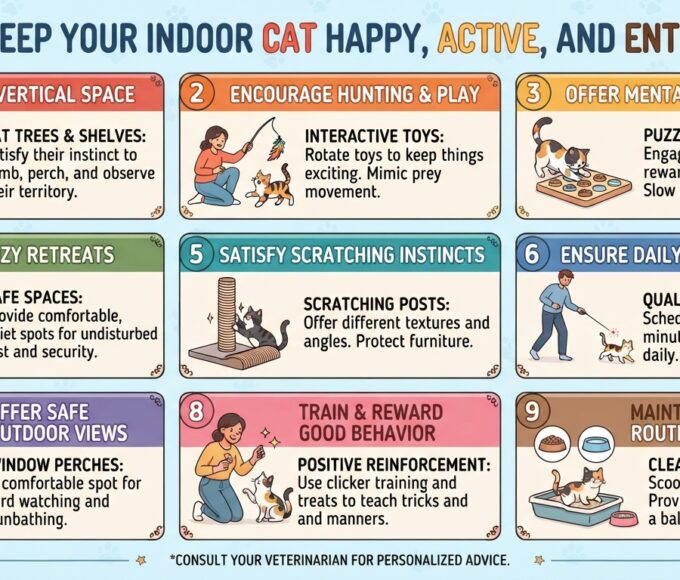
How do I keep my indoor cat entertained?
Use interactive play, scratching posts, climbing structures, puzzle feeders, tunnels, window perches, and rotating toys.
Mental stimulation is just as important as physical activity.
Does my cat really need a scratching post?
Providing appropriate scratching surfaces is highly recommended because scratching is a normal feline behavior.
Different cats prefer different textures and orientations, so you may need to experiment.
How do I know whether my cat is sick?
Watch for changes in appetite, drinking, litter-box habits, grooming, activity, breathing, social behavior, or general routine.
If something seems significantly different from normal, contact your veterinarian.
Should I let my new cat explore the whole house immediately?
Not necessarily. A gradual introduction can be easier for many cats, particularly those that are nervous or coming from a stressful environment.
Let your cat’s confidence guide the process.
How can I bond with my cat?
Play together, offer positive interactions, provide treats appropriately, speak calmly, and respect your cat’s boundaries.
Some cats enjoy cuddling, while others prefer sitting beside you. Both can be signs of a strong relationship.
Final Thoughts
Being a first-time cat parent can feel like a lot at first, but good cat care doesn’t have to be complicated.
Provide nutritious food, fresh water, clean litter, safe places to rest, opportunities to scratch and play, regular veterinary care, and plenty of patience.
Most importantly, get to know your individual cat. Their personality will tell you a lot about what makes them comfortable, what they enjoy, and when something seems unusual.
With time, you’ll learn the difference between the “I’m hungry” meow, the “play with me” stare, and the classic “I have absolutely no idea why I knocked that off the table” expression.
Welcome to cat parenting. Your new furry roommate may already believe they own the house—but that’s part of the fun.








Leave a comment