




Some dogs are perfectly happy spending the afternoon curled up on the sofa. Others seem to have a built-in need to run, chase, explore, and stay in motion.
Throughout history, people have selectively bred dogs for physical abilities such as sprinting, hunting, herding, retrieving, and covering long distances. As a result, certain breeds developed remarkably athletic bodies capable of accelerating quickly, changing direction with precision, or maintaining a fast pace over considerable distances.
If you enjoy running, hiking, dog sports, or simply watching an athletic dog stretch its legs, these breeds are fascinating to learn about.
However, owning a fast dog doesn’t mean you should simply take it outside and let it run freely. Many athletic breeds have strong prey drives and can reach speeds that make them difficult to catch. Secure fencing, reliable training, appropriate exercise, and careful management are essential.
Here are 13 dog breeds particularly well known for speed and athletic ability.
1. Greyhound
When people think about fast dogs, the Greyhound is usually one of the first breeds that comes to mind.
Greyhounds are famous for their explosive acceleration and incredible sprinting ability. Their long legs, flexible spine, deep chest, lean body, and powerful hindquarters create a physique designed for rapid bursts of speed.
A Greyhound can reach roughly 40–45 miles per hour in short sprints under suitable conditions.
Interestingly, their need for speed doesn’t mean they want to run all day.
Many Greyhounds are surprisingly relaxed at home and enjoy spending much of their time resting after appropriate exercise.
What Greyhound owners should know
- They need safe places to exercise.
- Their prey drive can be strong.
- Off-leash running should only happen in secure areas.
- Their thin coats provide limited protection in cold weather.
- They benefit from comfortable bedding.
- Short bursts of exercise may be more appropriate than endless running.
A Greyhound’s athleticism is impressive, but its calm indoor personality can surprise people who assume every racing-type dog is constantly hyperactive.
2. Whippet
The Whippet is a smaller relative of the Greyhound that combines impressive sprinting ability with a compact athletic frame.
Whippets can reach speeds of around 35 miles per hour, depending on the individual dog and conditions.
They were developed for activities involving speed and pursuit, and their bodies are remarkably efficient runners.
Fast outside, relaxed inside
Whippets are often described as dogs with an interesting two-speed lifestyle.
They may enthusiastically sprint around a safe area and then happily spend hours relaxing with their family.
They can be excellent companions for people who enjoy active play but also appreciate a dog that can settle indoors.
Because Whippets are slender and relatively lightly built, owners should also provide appropriate surfaces and avoid situations where high-speed running could lead to collisions or injuries.
3. Saluki
The Saluki is an ancient sighthound associated with the Middle East and surrounding regions.
These elegant dogs were developed for hunting and pursuing fast-moving prey across challenging terrain.
Their long legs, lightweight structure, flexible movement, and powerful stride allow them to cover ground at impressive speeds.
A Saluki may reach approximately 40 miles per hour in a fast sprint.
An athlete with endurance
Salukis aren’t simply sprinters. Their historical role required them to travel across open landscapes in pursuit of prey.
They can be independent and may have a strong instinct to chase moving animals.
For that reason, owners should be particularly cautious about off-leash exercise outside secure areas.
A securely fenced running area can allow a Saluki to exercise its natural athletic ability without the dangers associated with chasing wildlife or crossing roads.
4. Afghan Hound
The Afghan Hound is instantly recognizable because of its long, flowing coat and elegant appearance.
Underneath that glamorous coat, however, is a powerful athletic dog.
Afghan Hounds were developed for hunting in rugged terrain, where speed, agility, and stamina were valuable assets. Their long legs and flexible bodies allow them to move quickly across difficult ground.
They can reach speeds of approximately 35–40 miles per hour during a sprint.
Don’t judge this dog by its appearance
An Afghan Hound may look like a show-ring superstar, but it was historically bred for demanding physical work.
Owners should be prepared for:
- Regular exercise
- Secure outdoor areas
- Coat maintenance
- Mental stimulation
- Consistent training
- Careful off-leash management
Their independent nature can also make training different from working breeds that are intensely focused on pleasing their handlers.
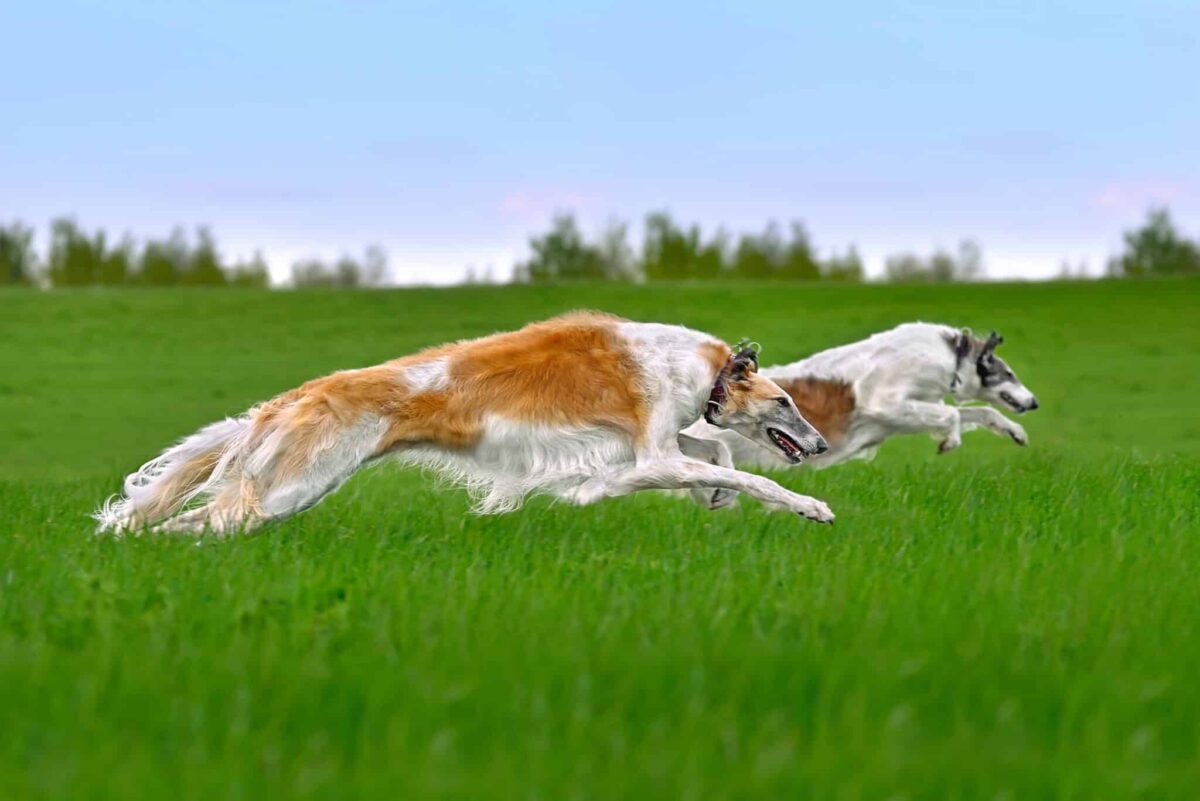
5. Borzoi
The Borzoi, historically known as the Russian Wolfhound, is another impressive sighthound.
Its long, narrow body and powerful legs were developed for pursuit, and the breed was historically used in hunting situations requiring speed over open terrain.
A Borzoi can reach impressive sprinting speeds, often cited at around 35–40 miles per hour.
Graceful but athletic
Borzois tend to have an elegant appearance and can be relatively calm indoors.
Their chase instinct, however, should never be underestimated.
A dog capable of running at high speed can quickly disappear if it spots something interesting in the distance.
Secure fencing and reliable management are therefore particularly important.
6. Dalmatian
The Dalmatian is famous for its spotted coat, but its athletic history is just as interesting.
Dalmatians were historically associated with carriage work and were valued for their ability to travel alongside horses.
That background helps explain their stamina and willingness to remain active.
Some Dalmatians can reach approximately 30–35 miles per hour.
A breed that needs activity
A Dalmatian generally isn’t the best choice for someone searching for a sedentary companion.
They often enjoy:
- Running
- Long walks
- Hiking
- Fetch
- Training
- Dog sports
- Interactive games
Regular exercise should be paired with mental stimulation. Simply making an energetic dog run harder isn’t always the answer to boredom or behavioral problems.
7. Jack Russell Terrier
The Jack Russell Terrier proves that impressive athletic ability doesn’t require a large body.
These small terriers were developed for hunting and working around foxes, giving them remarkable determination, agility, and quick reactions.
A Jack Russell can reach roughly 20–25 miles per hour in a sprint.
But speed isn’t necessarily its most impressive physical characteristic.
Quick, agile, and determined
Jack Russells can rapidly change direction and navigate obstacles with impressive precision.
They often enjoy activities such as:
- Agility
- Flyball
- Fetch
- Scent games
- Obedience training
- Terrier-style games
Their intelligence and energy can also become challenging when they don’t receive enough appropriate stimulation.
A small dog can still have enormous exercise and training needs.
8. Vizsla
The Vizsla is an athletic Hungarian hunting breed known for speed, endurance, and close cooperation with its handler.
Its lean, muscular body is designed for movement, while its hunting background gives it the stamina needed to stay active for extended periods.
Vizslas can reach approximately 35–40 miles per hour when sprinting.
Ideal for active households
Vizslas often enjoy being involved in their owner’s activities.
They may thrive with:
- Running
- Hiking
- Retrieving
- Swimming
- Field activities
- Agility
- Advanced obedience
They also tend to form strong bonds with their families, so exercise should include interaction rather than simply leaving the dog outside alone.
9. Weimaraner
Known for its distinctive silver-gray coat, the Weimaraner is an athletic sporting breed with substantial energy.
Historically developed for hunting, Weimaraners were expected to work actively in the field.
Their long legs, muscular build, and strong endurance contribute to impressive running ability, with top speeds commonly reported in the 30–35 mile-per-hour range.
Speed isn’t their only need
Weimaraners need more than occasional walks around the block.
They generally benefit from a combination of:
- Physical exercise
- Training
- Exploration
- Problem-solving
- Interactive play
- Time with their owners
Without enough appropriate activity and structure, a bored Weimaraner may find its own entertainment.
10. Border Collie
Border Collies are perhaps better known for intelligence and herding ability than pure speed, but their athleticism is exceptional.
They can reportedly reach speeds around 25–30 miles per hour, while their ability to accelerate, stop, turn, and respond to movement makes them particularly impressive athletes.
Speed plus precision
A Border Collie’s greatest advantage isn’t simply how fast it can run.
It’s the combination of:
Speed + intelligence + agility + responsiveness
This makes Border Collies especially successful in sports such as:
- Agility
- Flyball
- Herding trials
- Disc competitions
- Obedience
- Canine freestyle
They need mental challenges as much as physical exercise.
11. Rhodesian Ridgeback
The Rhodesian Ridgeback is a powerful African breed historically developed for hunting and tracking large game.
Its athletic body combines strength, speed, and endurance.
Ridgebacks can reach approximately 30 miles per hour and are capable of covering substantial distances when properly conditioned.
A strong dog needs strong training
A Ridgeback’s athletic ability comes with physical power.
Early training and good leash manners are important because an adult dog that suddenly decides to chase something can be extremely difficult to control.
They can make excellent companions for active owners who understand their exercise, training, and independence needs.
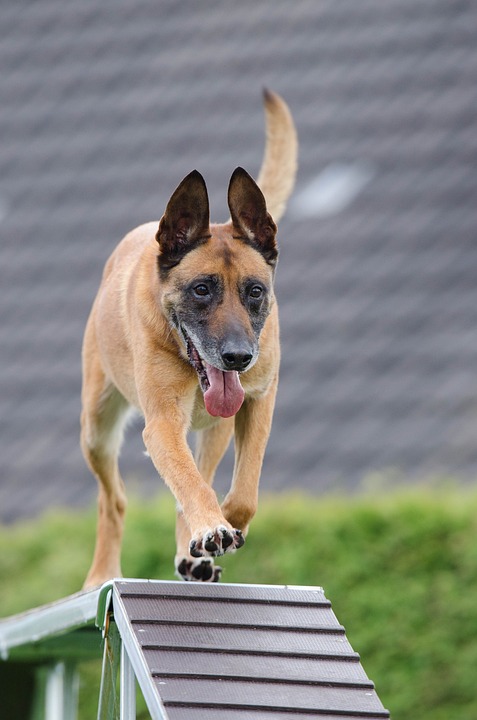
12. Belgian Malinois
The Belgian Malinois is an exceptionally athletic working breed.
These dogs are widely recognized for their agility, speed, responsiveness, and ability to learn complex tasks.
Rather than being bred simply to run quickly, Malinois were developed for demanding working roles requiring a combination of physical ability and mental focus.
They can reach speeds in the 30–35 mile-per-hour range during fast running.
An advanced athlete
A Belgian Malinois usually needs considerably more than casual exercise.
They can thrive when given structured outlets such as:
- Obedience
- Scent work
- Agility
- Tracking
- Working-dog activities
- Structured play
This is not typically a breed for someone who wants a dog that can entertain itself in the backyard.
Their intelligence and working drive require responsible ownership.
13. Italian Greyhound
The Italian Greyhound is one of the smallest members of the sighthound family.
Despite its tiny frame, this breed retains many of the physical characteristics associated with its larger relatives.
Italian Greyhounds can reach approximately 25 miles per hour, which is remarkable for such a small dog.
Small body, serious sprinting ability
Italian Greyhounds can be playful and energetic but are also known for enjoying comfortable indoor living.
Their delicate build means owners need to be cautious during high-speed play.
Falls, collisions, and jumping from furniture can result in injuries, particularly in young or poorly conditioned dogs.
Safe exercise areas and sensible handling are important.
What Makes These Dogs So Fast?
Fast dog breeds tend to share several physical characteristics.
Long legs
Longer limbs can help dogs cover more ground with each stride.
Lean bodies
Excess body weight can make running less efficient. Many athletic breeds have relatively lean physiques designed for movement.
Powerful hindquarters
Strong rear legs provide much of the propulsion required for acceleration.
Flexible spines
Some sprinting breeds use significant spinal flexibility to lengthen their stride.
Efficient movement
Athletic dogs often have body structures that allow them to move efficiently rather than simply relying on muscular strength.
However, every breed is different, and speed records can vary between individuals.
Fast Doesn’t Mean High-Energy All Day
One common misconception is that the fastest dogs must be the most hyperactive dogs.
That’s not necessarily true.
Greyhounds and Whippets, for example, can demonstrate extraordinary sprinting ability while also being perfectly content to relax at home.
Conversely, a breed that isn’t among the world’s fastest runners may have extremely high daily exercise and mental-stimulation requirements.
Top speed and everyday energy level are two different things.
When choosing a dog, consider its complete lifestyle requirements rather than focusing only on how quickly it can run.
How to Safely Exercise a Fast Dog
A fast dog needs a safe place to use its abilities.
Use secure fencing
A dog capable of reaching 30–40 miles per hour can cover a huge distance in seconds.
Don’t rely on an unfenced field simply because your dog usually comes when called.
Build fitness gradually
A young or previously inactive dog shouldn’t immediately be pushed into intense running.
Increase activity gradually and allow the dog’s muscles, joints, and cardiovascular system to adapt.
Watch the weather
Running in hot or humid conditions can be dangerous.
Dogs can overheat quickly, particularly during intense exercise. Avoid hard workouts during the hottest part of the day and provide access to water and shade.
Pay attention to surfaces
Repeated high-speed running on slippery, extremely hard, or uneven surfaces can increase injury risk.
Choose appropriate exercise areas whenever possible.
Don’t force exercise
Watch your dog for signs of fatigue or discomfort.
A dog that suddenly slows down, begins limping, struggles to breathe, becomes unusually weak, or seems confused should stop exercising and receive appropriate attention.
Which Fast Dog Is Right for You?
The fastest breed isn’t automatically the best match for an active household.
Before choosing one, consider:
| Factor | Questions to Ask |
|---|---|
| Exercise | How much activity can I provide every day? |
| Space | Do I have a secure place for running? |
| Training | Can I consistently work on recall and leash skills? |
| Prey drive | Could the dog chase cats, wildlife, or other moving objects? |
| Weather | Is my climate suitable for the breed? |
| Mental stimulation | Can I provide training and enrichment as well as exercise? |
| Lifestyle | Does the dog’s energy level match my routine? |
| Health | Am I prepared for breed-specific veterinary and physical needs? |
A dog should be selected based on the complete picture, not a single impressive statistic.
Frequently Asked Questions
What is the fastest dog breed?
The Greyhound is widely recognized as one of the fastest dog breeds, with top sprinting speeds commonly reported around 40–45 miles per hour.
Are fast dogs difficult to own?
Not necessarily. Some exceptionally fast breeds can be calm and relaxed at home. However, many athletic breeds need appropriate exercise, training, and secure areas where they can safely run.
Can I let a fast dog run off leash?
Only in an appropriate secure area unless you have an exceptionally reliable recall and a safe environment. Sighthounds and other dogs with strong chase instincts may suddenly pursue wildlife or another moving object.
Do fast dogs need to run every day?
Not necessarily. Exercise requirements vary considerably by breed, age, health, conditioning, and individual temperament. A dog’s needs should be met through an appropriate combination of physical and mental activities.
Are small dogs capable of being fast?
Absolutely. Jack Russell Terriers and Italian Greyhounds are good examples of small dogs with impressive sprinting and agility abilities.
What is more important than a dog’s top speed?
For most owners, factors such as temperament, exercise requirements, trainability, health, grooming, prey drive, and compatibility with the household are much more useful than a maximum running speed.
Final Thoughts
From the lightning-fast Greyhound to the compact and agile Jack Russell Terrier, dogs have evolved into remarkably capable athletes.
Some excel at explosive sprinting, while others combine speed with endurance, agility, herding ability, or hunting instincts. Their physical abilities are a fascinating reflection of the jobs humans historically bred them to perform.
But living with an athletic dog isn’t simply about having a four-legged racing machine.
These dogs need safe exercise, appropriate training, mental stimulation, good conditioning, and responsible management. A securely fenced area, proper warm-up and conditioning, weather awareness, and reliable everyday manners can make a huge difference.
Whether you’re looking for a running companion, a dog-sport partner, or simply enjoy watching canine athletes in action, understanding the breed’s complete needs will help you find a dog whose lifestyle fits your own.








Leave a comment