



Bringing a puppy home is exciting, but teaching a young dog how to behave in a human household takes time, patience, and consistency.
Puppies are naturally curious. They may chew furniture, have accidents indoors, jump on people, bark for attention, or struggle to settle down. These behaviors don’t mean your puppy is being “bad.” They’re often signs that your puppy is still learning what is expected.
Effective puppy training is about teaching those skills in a way your puppy can understand.
Positive reinforcement, clear routines, appropriate management, and plenty of patience can help your puppy develop good habits while building trust between you and your new companion.
Here are the most important do’s and don’ts to keep in mind.
The Do’s of Puppy Training
1. Start Training Early
You don’t need to wait until your puppy is older to begin teaching basic skills.
From the moment your puppy comes home, you can start establishing simple routines and rewarding desirable behaviors.
Teach your puppy where to sleep, where to eliminate, how to respond to their name, and which household behaviors are appropriate.
Early training isn’t about expecting perfect obedience. It’s about giving your puppy a clear foundation.
Remember that puppies have limited attention spans and immature impulse control, so keep expectations realistic.
2. Use Positive Reinforcement
Reward-based training is a powerful way to teach puppies what you want them to do.
When your puppy performs a desirable behavior, immediately provide an appropriate reward. Depending on the puppy, this could be a small treat, praise, affection, a toy, or access to something they enjoy.
For example, if your puppy sits when you ask, reward the sit.
Over time, your puppy learns that responding to your cue leads to something positive.
Why timing matters
The reward should come close to the behavior you’re trying to reinforce. This helps your puppy understand which action earned the reward.
As your puppy becomes more reliable, you can gradually vary the rewards while continuing to reinforce good behavior.
3. Keep Your Rules Consistent
Puppies learn through repetition.
If jumping on the sofa is allowed one day but punished the next, your puppy may struggle to understand what you expect.
Everyone in the household should try to follow the same basic rules.
For example, if you don’t want your puppy jumping on guests, family members and visitors should avoid rewarding that behavior with attention.
Consistency doesn’t mean being harsh. It means making the desired behavior predictable and understandable.
4. Keep Training Sessions Short and Engaging
Young puppies can become distracted quickly.
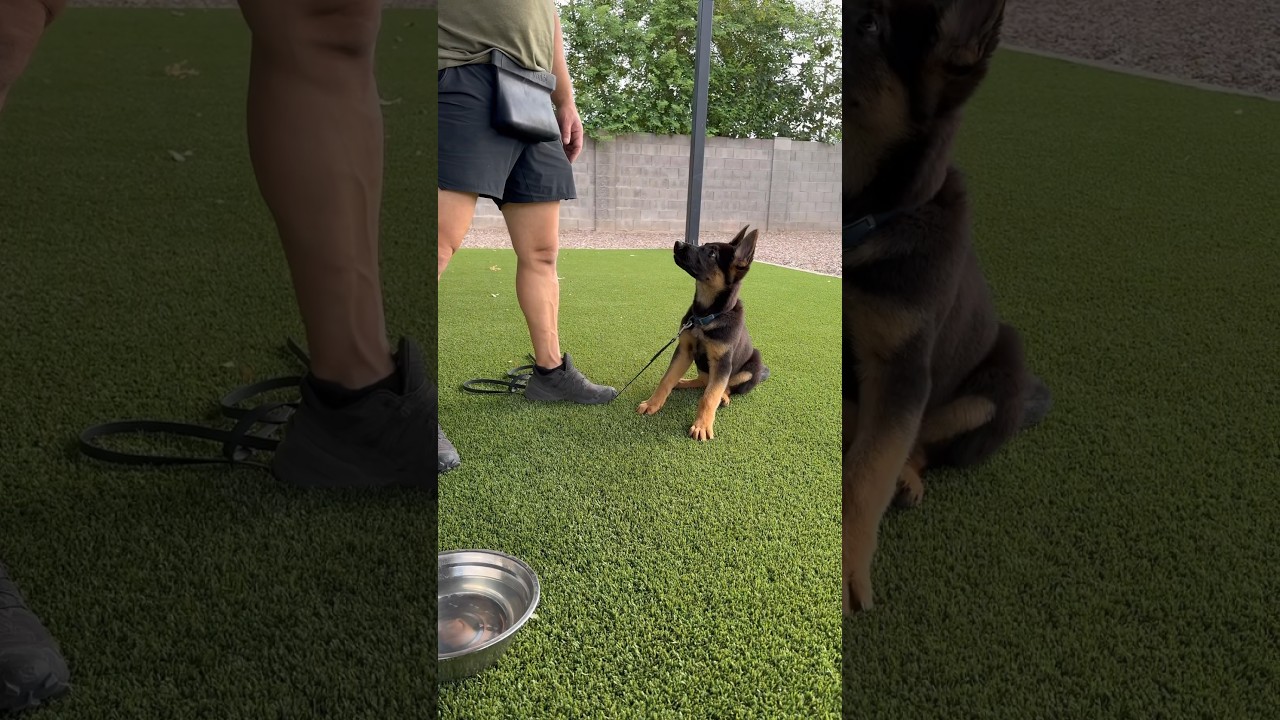
Instead of expecting your puppy to concentrate for a long training session, practice for a few minutes at a time throughout the day.
You can work on simple skills such as:
- Responding to their name
- Sitting
- Coming when called
- Leaving an object alone
- Walking calmly on a leash
- Settling on a bed or mat
- Waiting briefly before receiving food
End sessions while your puppy is still interested and successful.
Short, enjoyable practice sessions can be more productive than pushing a tired or frustrated puppy to continue.
5. Socialize Your Puppy Carefully
Socialization is an important part of raising a confident dog.
A puppy can gradually experience different people, sounds, surfaces, environments, handling experiences, and other appropriate situations.
The goal isn’t to overwhelm your puppy with as many experiences as possible.
Instead, introduce new things at a pace your puppy can handle while creating positive associations.
Watch your puppy’s body language. If they appear frightened or overwhelmed, increase distance and give them time to relax.
Because young puppies may not yet be fully vaccinated, ask your veterinarian how to socialize safely while reducing exposure to infectious diseases.
6. Teach Your Puppy What to Do Instead
When your puppy does something you don’t want, think about what behavior you’d prefer.
If your puppy is chewing furniture, for example, calmly redirect them toward an appropriate chew toy.
If they’re jumping on people, reward them for keeping four paws on the floor.
If they’re grabbing something dangerous, teach a reliable “leave it” or exchange the item for something appropriate.
Training becomes much clearer when you show your puppy the behavior you want instead of simply telling them what not to do.
The Don’ts of Puppy Training
1. Don’t Use Fear or Physical Punishment
Hitting, kicking, yelling aggressively, or using other frightening methods can damage your relationship with your puppy.
Punishment can also increase fear and may make certain behavior problems more difficult to manage.
Instead, focus on teaching your puppy what behavior earns rewards.
If you’re struggling with a particular behavior, management and professional reward-based training can help.
2. Don’t Use Physical Force to Make Your Puppy Obey
Avoid physically forcing your puppy into positions or using harsh leash corrections.
For example, rather than physically pushing a puppy into a sit, use a treat or another appropriate reward to encourage the movement and reward the completed behavior.
Training should help your puppy understand what you want rather than making them afraid of getting it wrong.
3. Don’t Expect Your Puppy to Understand Human Rules Immediately
A puppy doesn’t automatically know that shoes aren’t chew toys, carpets aren’t bathrooms, and guests shouldn’t be greeted by jumping.
These are learned behaviors.
Give your puppy opportunities to succeed by controlling their environment.
Use baby gates, puppy pens, crates when appropriately introduced, closed doors, and supervision to prevent unwanted behavior while your puppy learns.
Management is an important part of training.
4. Don’t Punish Accidents After They Happen
House training requires patience.
If you discover a puddle on the floor after the accident has already happened, punishing your puppy won’t teach them what they did wrong.
Instead, clean the area thoroughly and focus on improving your potty routine.
Take your puppy to their designated bathroom area frequently, especially after sleeping, eating, drinking, playing, and waking up.
When they eliminate in the correct place, reward them promptly.
5. Don’t Expect Too Much Too Soon
Puppies don’t become perfectly trained overnight.
Some skills may develop quickly, while others can take considerably longer.
Your puppy may understand a command one day and seem to forget it the next. That’s normal during development.
Break difficult behaviors into smaller steps and reward progress.
Training should be measured by improvement rather than perfection.
6. Don’t Accidentally Reward Unwanted Behavior
Sometimes people unintentionally reinforce behaviors they don’t want.
For example, a puppy that jumps up may receive attention, petting, or excited talking from visitors. From the puppy’s perspective, jumping worked.
Instead, reward calm greetings.
If your puppy barks for attention, consider whether their needs have been met and teach an appropriate alternative behavior rather than automatically giving attention during barking.
The exact approach depends on why the behavior is happening.
7. Don’t Give Up on Training
Puppy training can be tiring.
There may be accidents, chewed objects, sleepless nights, barking, and moments when you wonder whether your puppy is learning anything at all.
Progress isn’t always linear.
Continue practicing, adjust your approach when something isn’t working, and seek professional help if you’re dealing with a behavior problem you can’t manage safely.
A qualified reward-based trainer or veterinary behavior professional can provide guidance for more challenging situations.
Essential Commands to Teach Your Puppy
You don’t need to teach dozens of commands immediately.
Start with useful behaviors that improve communication and safety.
Name Recognition
Your puppy should learn that their name means something good and worth paying attention to.
Say their name and reward them when they look toward you.
Sit
Sit is a simple behavior that can become useful in many situations, including greeting people and waiting for food.
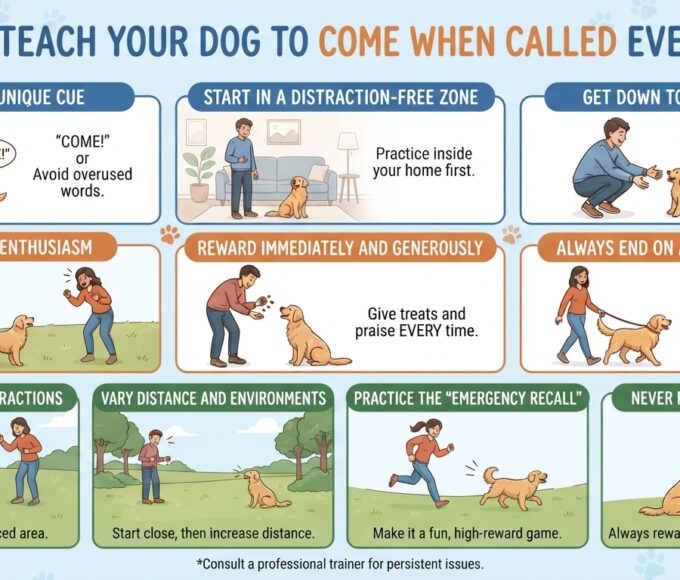
Come
A reliable recall can be extremely important for safety.
Practice in controlled environments and gradually increase distractions as your puppy becomes more reliable.
Never call your puppy to you for punishment.
Leave It
This cue can help teach your puppy not to pick up or interact with something you want them to avoid.
Practice with low-risk objects first and reward your puppy for choosing to disengage.
Wait
A brief wait can help your puppy learn impulse control around doors, food bowls, and other everyday situations.
Loose-Leash Walking
Instead of expecting a puppy to walk perfectly from day one, reward them for staying near you and keeping the leash relatively loose.
Gradually build the skill through short, positive sessions.
How to Make Puppy Training Easier
Training becomes much easier when you set your puppy up for success.
Provide Enough Sleep
Puppies need substantial amounts of sleep. An overtired puppy may become unusually mouthy, restless, or difficult to settle.
Make sure your puppy has a quiet, comfortable place where they can rest without constant interruptions.
Puppy-Proof Your Home
Remove tempting or dangerous objects before your puppy gets access to them.
Keep medications, cleaning products, electrical cords, toxic foods, small objects, and other hazards safely out of reach.
Preventing a problem is often easier than correcting it later.
Use the Right Rewards
Rewards don’t always have to be food.
Depending on the situation, you can use:
- Small treats
- Praise
- Toys
- Play
- Petting
- Access to a favorite activity
- The opportunity to explore
Use whatever your puppy finds motivating and appropriate.
Practice in Different Environments
A puppy that can sit perfectly in the quiet living room may struggle to sit at a busy park.
That’s because dogs don’t automatically generalize a behavior to every environment.
Once your puppy understands a skill in a quiet location, gradually practice it around different distractions.
Make Training Part of Everyday Life
You don’t need to schedule formal training sessions every time you want your puppy to learn.
You can practice throughout the day.
Ask for a sit before putting down the food bowl. Reward your puppy for coming when called inside the house. Practice waiting briefly before opening a door.
These small moments add up.
Frequently Asked Questions
How long does it take to train a puppy?
There isn’t one exact timeline.
Basic behaviors can begin developing quickly, but reliable behavior in different environments can take weeks, months, or longer.
Factors such as age, temperament, previous experiences, environment, consistency, and the difficulty of the behavior all influence progress.
Training should continue throughout your dog’s life.
What are the most important things to teach a puppy?
Start with practical behaviors such as responding to their name, coming when called, sitting, leaving objects alone, waiting briefly, and walking appropriately on a leash.
House training and appropriate socialization are also important parts of early development.
Should I take my puppy to a training class?
A well-run puppy class can be useful for learning training techniques and providing carefully managed social experiences.
Before enrolling, ask about the trainer’s methods and look for classes that use reward-based training and appropriate safety practices.
Your veterinarian can also help you determine when group settings are appropriate based on your puppy’s vaccination status and local disease risks.
What should I do if my puppy keeps misbehaving?
First, try to understand why the behavior is happening.
Your puppy may be tired, bored, overstimulated, seeking attention, needing a bathroom break, or simply not yet understand what you expect.
Manage the environment, redirect the puppy toward an appropriate behavior, and reward that behavior.
If the problem is persistent, severe, or involves aggression, fear, separation-related distress, or safety concerns, consult your veterinarian or a qualified behavior professional.
Final Thoughts
Puppy training isn’t about creating a perfectly obedient dog as quickly as possible.
It’s about teaching your puppy how to live successfully in your household while building trust and communication.
Start early, use rewards, keep sessions short, establish consistent routines, and give your puppy plenty of opportunities to succeed. Avoid fear, physical punishment, unrealistic expectations, and harsh corrections.
Most importantly, remember that your puppy is still learning.
With patience, repetition, appropriate management, and positive reinforcement, those tiny lessons you practice today can help develop the habits and communication skills your dog carries into adulthood.
This Article Was Generated By AI.






Leave a comment