


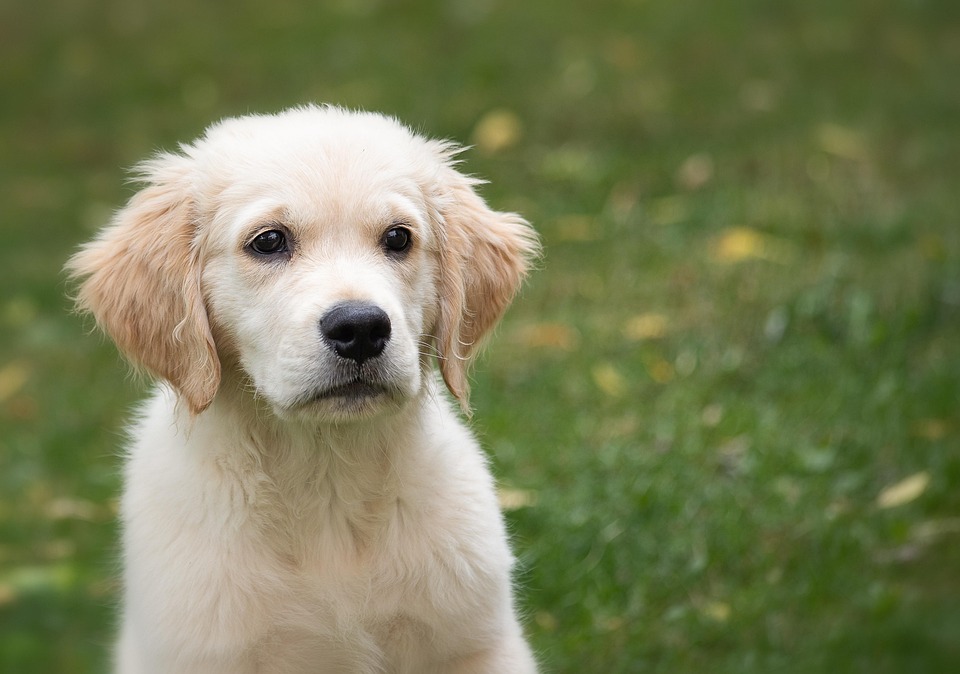
Bringing a puppy home is an exciting milestone. Those tiny paws, curious eyes, and playful personality can quickly become the center of your household. But along with the cuddles and games comes an important responsibility: teaching your puppy how to live safely and comfortably in a human home.
Puppy training is not simply about teaching commands such as “sit” or “stay.” It is about helping your puppy understand routines, boundaries, communication, appropriate behavior, and how to respond to unfamiliar situations.
The good news is that you do not need to train your puppy perfectly from day one. With patience, consistency, positive reinforcement, and age-appropriate expectations, you can gradually build the skills your puppy needs to become a confident and well-mannered companion.
Why Is Puppy Training So Important?
Training gives puppies structure and helps them understand what you expect from them. It can also make everyday life easier for both you and your dog.
A well-planned training routine can help your puppy learn:
- Where to go to the bathroom
- How to respond to their name
- Basic obedience cues
- Appropriate ways to play
- How to settle down and relax
- How to walk on a leash
- How to interact appropriately with people and other animals
- Which household items are off-limits
- How to cope with new environments and experiences
Training also provides mental stimulation. Puppies are naturally curious, and learning new skills gives them an appropriate outlet for that curiosity.
1. Start Training as Soon as Your Puppy Comes Home
You do not have to wait until your puppy is several months old to begin teaching them.
From the first day, your puppy can start learning simple household routines and associations. For example, you can introduce their name, establish meal times, begin bathroom routines, and reward calm behavior.
However, starting early does not mean expecting your puppy to behave like an adult dog.
Young puppies have limited attention spans and immature impulse control. Keep early lessons simple and focus on building positive habits rather than demanding perfection.
Start With Simple Skills
Some useful early skills include:
- Responding to their name
- Looking toward you when called
- Sitting for a treat
- Following you for a few steps
- Accepting gentle handling
- Going to their bed or resting area
- Waiting briefly before receiving food
- Walking calmly through the house
These small lessons become the foundation for more advanced training later.
2. Use Positive Reinforcement
Positive reinforcement is one of the most useful approaches for puppy training.
The basic idea is simple: when your puppy performs a behavior you want, you reward it. The reward could be a small treat, praise, play, affection, or access to something your puppy enjoys.
For example, if your puppy sits when you ask, immediately reward the behavior. Your puppy gradually learns that responding to the cue produces something worthwhile.
Why Timing Matters
The reward should come soon after the desired behavior so your puppy can make the connection.
For example:
“Sit” → puppy sits → immediate reward
The clearer this connection is, the easier it is for your puppy to understand what you are teaching.
Avoid relying on fear, intimidation, or harsh punishment. Punishment can create confusion or anxiety and may damage the trust you are trying to build.
3. Keep Training Sessions Short
Puppies can become distracted or tired quickly. Long training sessions may cause frustration for both you and your puppy.
Instead, try several short sessions throughout the day.
For example:
- Morning: 5 minutes of name recognition and “sit”
- Afternoon: 5 minutes of recall practice
- Evening: 5 minutes of leash or settling exercises
You can also incorporate training into everyday activities rather than treating every lesson as a formal session.
Ask your puppy to sit before putting down their food, reward them for coming when called, or praise them when they settle quietly while you work.
4. Be Consistent With Commands and Rules
Consistency is one of the most important parts of puppy training.
If one person allows the puppy on the sofa while another person constantly removes them, your puppy may struggle to understand the rule.
Everyone in the household should agree on important boundaries.
For example, decide:
- Whether the puppy is allowed on furniture
- Which rooms are accessible
- Where the puppy sleeps
- Which words are used for commands
- Where meals are given
- Where bathroom breaks happen
- Which behaviors should be redirected
Using the same cue words also helps.
If one person says “come,” another says “here,” and another uses the puppy’s name for recall, the puppy may take longer to understand what is expected.
5. Begin House Training With a Routine
House training is one of the first major challenges many new puppy owners face.
A consistent bathroom schedule can make the process much easier.
Take your puppy outside or to their designated bathroom area regularly, particularly:
- After waking up
- After eating
- After drinking a significant amount
- After playing
- Before bedtime
- After naps
Very young puppies may need frequent bathroom opportunities because they have limited bladder control.
Reward Success
When your puppy goes to the correct place, calmly praise them and provide a reward soon afterward.
If an accident happens indoors, clean the area thoroughly to remove lingering odors. Avoid scolding your puppy after the fact because they may not understand why they are being punished.
Accidents are part of the learning process for many puppies.
6. Teach Your Puppy Their Name
Name recognition is an incredibly useful foundation skill.
Start in a quiet environment with minimal distractions.
Say your puppy’s name in a cheerful voice. When they look toward you, immediately reward them.
Repeat this several times during short sessions.
Eventually, your puppy should learn that their name means they should pay attention to you.
Once they respond reliably indoors, gradually practice in more distracting environments.
7. Teach Basic Commands
Once your puppy understands that training is rewarding, you can begin introducing basic cues.
Useful early commands include:
Sit
“Sit” can be useful before meals, during greetings, or before crossing a doorway.
Come
Recall is an important safety skill. Practice in secure areas first and reward your puppy generously for coming back to you.
Down
“Down” can help your puppy learn to settle and remain calm.
Stay or Wait
These cues can gradually teach your puppy impulse control. Start with very short periods and increase the difficulty slowly.
Leave It
This can help prevent your puppy from picking up potentially dangerous or inappropriate objects.
Remember that each behavior should be taught gradually. Do not expect a young puppy to perform reliably in a highly distracting environment immediately.
8. Set Clear Boundaries Without Being Harsh
Puppies explore their surroundings with their mouths, paws, and noses. Chewing furniture, grabbing socks, jumping up, and investigating trash are common challenges.
Instead of simply punishing unwanted behavior, give your puppy an appropriate alternative.
For example:
Puppy chewing a shoe → calmly remove the shoe → offer an appropriate chew toy → praise the puppy for using the toy.
This teaches your puppy what they can do instead of only telling them what they cannot do.
Puppy-proofing your home also reduces opportunities for trouble.
Keep dangerous or valuable objects out of reach and use barriers where necessary.
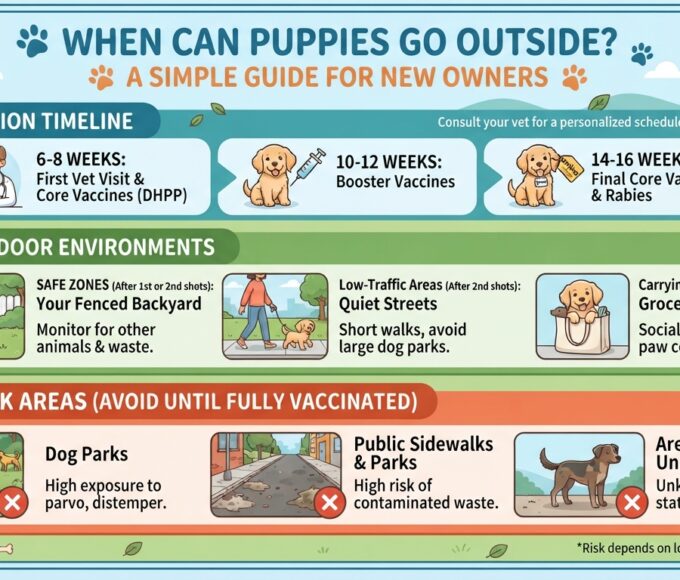
9. Socialize Your Puppy Carefully
Socialization is about helping a puppy become comfortable with different people, animals, environments, sounds, surfaces, and experiences.
Good socialization does not mean forcing your puppy to interact with everyone.
Instead, introduce new experiences gradually and keep them positive.
Your puppy might encounter:
- Different types of people
- Friendly, appropriately vaccinated dogs
- Car rides
- Household noises
- Different floor surfaces
- Grooming equipment
- Veterinary handling
- Collars and harnesses
- Outdoor environments
Watch your puppy’s body language. If they appear overwhelmed, increase distance or make the experience easier.
A veterinarian or qualified positive-reinforcement trainer can help you create a safe socialization plan, particularly during the early vaccination period.
10. Teach Appropriate Biting and Chewing Habits
Puppies naturally explore with their mouths, and many go through a chewing or nipping stage.
That does not mean you should allow them to bite hands and clothing whenever they want.
If your puppy becomes mouthy during play, calmly redirect them toward an appropriate toy.
Provide safe puppy-appropriate chew options and rotate them to maintain interest.
Avoid turning hands into toys during rough play. The goal is to teach your puppy that toys are appropriate targets for chewing and interactive play.
11. Introduce Leash Training Gradually
Walking nicely on a leash is a learned skill.
Before expecting your puppy to take a long walk, allow them to become comfortable wearing a properly fitted collar or harness.
You can begin indoors:
- Let your puppy wear the equipment for short periods.
- Reward calm behavior.
- Introduce the leash.
- Practice following you for a few steps.
- Reward your puppy for staying near you.
- Gradually practice in more distracting environments.
Do not expect a young puppy to walk perfectly immediately. Loose-leash walking requires practice and patience.
12. Teach Your Puppy to Settle
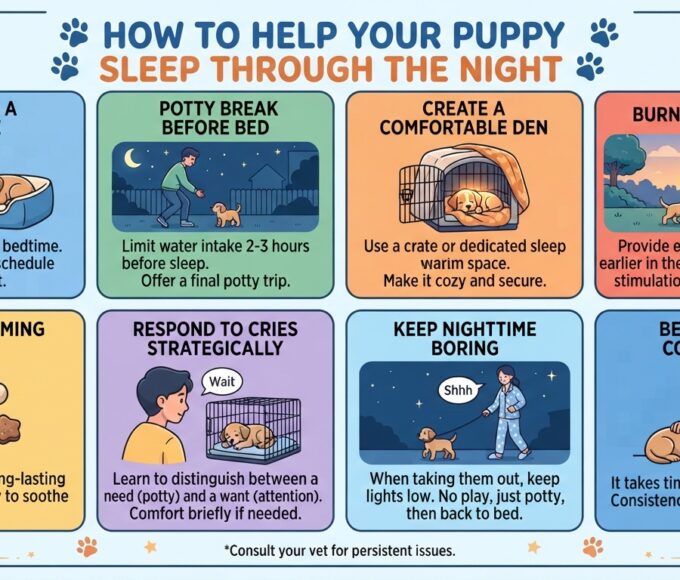
Puppies need plenty of sleep and rest, but many become overtired and struggle to settle.
Teaching calm behavior can be just as valuable as teaching energetic skills.
Reward your puppy when they voluntarily lie down quietly. You can also establish a comfortable resting area where your puppy can relax without constant stimulation.
A predictable daily routine can help your puppy understand when it is time to play and when it is time to rest.
13. Practice Alone Time Gradually
Puppies need to learn that being separated from their owners for reasonable periods can be safe and normal.
Start with very short periods of separation while your puppy is comfortable. Gradually increase the duration as they become more confident.
A safe puppy-proofed area, comfortable bedding, and appropriate enrichment can help.
Avoid suddenly leaving a puppy alone for a long period if they have never practiced being separated from you.
If your puppy shows persistent distress when left alone, consider speaking with a veterinarian or qualified behavior professional.
14. Reward Calm Behavior
One common training mistake is only paying attention to a puppy when they are doing something wrong.
Instead, notice and reward good behavior when it happens naturally.
For example, if your puppy:
- Lies quietly beside you
- Sits instead of jumping
- Watches another dog calmly
- Drops an object
- Waits patiently
- Walks beside you
- Settles in their bed
Reward them when appropriate.
This helps your puppy learn that calm, desirable behaviors are worth repeating.
15. Be Patient With Mistakes
Puppies are learning an entirely new set of rules.
They will have accidents. They may chew things. They may forget commands they seemed to understand yesterday. They may become distracted by something that appears completely unimportant to you.
Progress is rarely perfectly linear.
Instead of focusing only on mistakes, look for gradual improvement.
If your puppy can sit for two seconds today when they could not sit at all last week, that is progress.
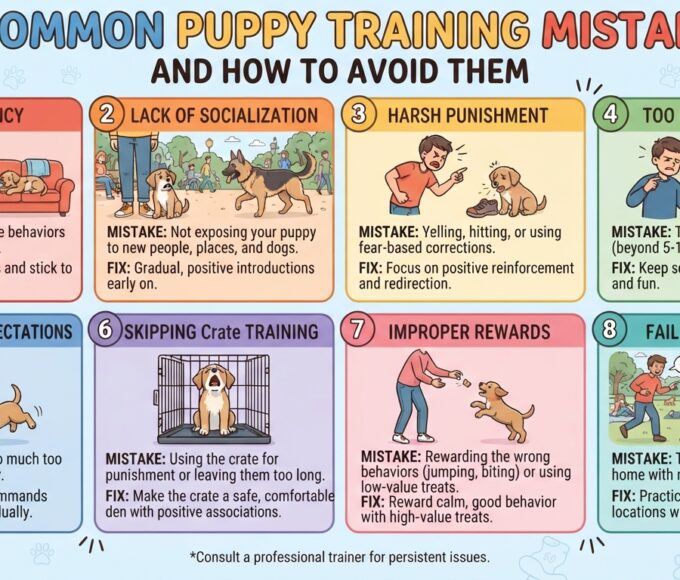
Common Puppy Training Mistakes to Avoid
Even with good intentions, owners can accidentally make training harder.
Training for Too Long
Long sessions can lead to boredom and frustration.
Changing Rules Constantly
Inconsistent household rules can confuse your puppy.
Expecting Adult-Level Behavior
A puppy’s ability to control impulses develops over time.
Repeating Commands Over and Over
If you repeatedly say “come, come, come” without reinforcing the behavior, your puppy may learn that the first cue does not matter.
Using Harsh Punishment
Fear-based methods can interfere with trust and may worsen some behavior problems.
Skipping Socialization
A puppy that experiences very few new situations may have more difficulty adjusting later.
Ignoring the Environment
Training becomes much easier when your home is arranged to prevent unnecessary opportunities for unwanted behavior.
A Simple Puppy Training Schedule
A basic routine could look something like this:
| Time | Training Opportunity |
|---|---|
| Morning | Bathroom break, name practice, breakfast |
| Mid-morning | Short obedience session and play |
| Afternoon | Bathroom break, recall practice, nap |
| Evening | Leash practice, calm behavior, basic commands |
| Night | Final bathroom break and quiet routine |
The exact schedule should be adjusted according to your puppy’s age, individual needs, household routine, and veterinary guidance.
How Long Does Puppy Training Take?
There is no single timeline that applies to every puppy.
Some puppies learn certain behaviors quickly, while others need more repetition. Breed tendencies, previous experiences, environment, motivation, and individual temperament can all influence learning.
Think of puppy training as an ongoing process rather than a course that ends after a few weeks.
The skills learned during puppyhood should continue to be reinforced throughout your dog’s life.
When Should You Contact a Professional Trainer?
Professional help can be valuable when you are struggling with a particular behavior or simply want guidance.
Consider consulting a qualified, reward-based trainer or veterinary behavior professional if your puppy shows:
- Persistent fear
- Significant aggression
- Severe distress when alone
- Resource guarding
- Repeated biting that is difficult to manage
- Extreme reactions to people or other animals
- Training problems that are not improving
If a sudden behavior change occurs, particularly alongside signs of pain or illness, speak with your veterinarian. Medical issues can sometimes influence behavior.
Frequently Asked Questions
How early can I start training my puppy?
You can begin teaching simple skills from the time your puppy comes home. Keep lessons short and age-appropriate, and focus on building positive associations.
How long should puppy training sessions be?
Short sessions are generally easier for young puppies. A few minutes at a time can be enough, especially when you repeat training throughout the day.
What should I use as a puppy training reward?
Small treats, praise, play, toys, or access to something your puppy enjoys can all work. Choose rewards that are appropriate for your puppy and use food treats in moderation.
What if my puppy keeps having accidents?
Review the bathroom schedule, increase the frequency of trips outside, supervise your puppy more closely, and reward successful bathroom trips. If accidents are unusually frequent or suddenly increase, consult your veterinarian.
Is it okay to punish a puppy for bad behavior?
Harsh punishment is generally not a productive training strategy. Redirect unwanted behavior, manage the environment, and reinforce the behavior you want to see instead.
When should obedience training begin?
Basic obedience can begin during puppyhood. Start with simple behaviors and gradually increase distractions and difficulty as your puppy develops.
Final Thoughts
Puppy training is about much more than teaching a list of commands. It is an opportunity to build communication, trust, confidence, and healthy routines from the beginning.
Start with simple skills, keep sessions short, reward desirable behavior, establish consistent boundaries, and introduce new experiences gradually. Most importantly, remember that your puppy is still learning.
There will be mistakes and challenging days, but steady practice can make a significant difference over time.
With patience and positive guidance, those early training sessions can help lay the foundation for a happy, confident, and well-adjusted companion.
This Article Was Generated By AI.






Leave a comment