



Bringing a puppy home is exciting, but raising a healthy dog involves much more than providing food, toys, and a comfortable bed.
During their first months of life, puppies are growing rapidly and developing habits that can influence their health and behavior for years to come. Good nutrition, preventive veterinary care, appropriate exercise, parasite control, grooming, training, and a safe home environment all play important roles.
There isn’t one perfect routine for every puppy. A Chihuahua puppy, Great Dane puppy, and Border Collie puppy will have very different nutritional, exercise, and developmental needs.
The goal is to understand your individual puppy and work with your veterinarian to create a care routine that supports healthy growth.
Here are 12 practical ways to help your puppy get the best possible start.
1. Feed a Complete and Balanced Puppy Diet
Nutrition is one of the foundations of puppy health.
Puppies need diets formulated specifically for growth because their nutritional requirements differ from those of adult dogs. Their food needs to provide appropriate amounts of energy, protein, fats, vitamins, minerals, and other nutrients.
Look for a complete and balanced puppy food appropriate for your puppy’s life stage and expected adult size. Large- and giant-breed puppies have particular growth requirements, so they should generally receive food formulated specifically for large or giant breeds.
Avoid making table scraps a major part of your puppy’s diet.
Some human foods can also be dangerous for dogs, while excessive treats can contribute to unhealthy weight gain.
Your veterinarian can help determine:
- What type of food is appropriate
- How much your puppy should eat
- How frequently meals should be offered
- When to transition to adult food
- Whether your puppy is growing at an appropriate rate
Because puppies grow quickly, their feeding needs can change frequently.
2. Keep Your Puppy at a Healthy Weight
A puppy doesn’t need to be chubby to be healthy.
Excess weight during growth can contribute to unnecessary strain on developing bones and joints, while inadequate nutrition can also interfere with healthy development.
Instead of simply filling the food bowl whenever it looks empty, use measured portions and monitor your puppy’s body condition and growth.
Your veterinarian can help you determine whether your puppy is gaining weight appropriately.
Regularly monitoring growth is particularly important for large and giant breeds, which mature more slowly and have specific nutritional considerations.
3. Stay on Schedule With Veterinary Visits
Puppies need more frequent veterinary attention than healthy adult dogs.
Merck Veterinary Manual notes that puppies are generally examined every 3–4 weeks until about 4 months of age, although the exact schedule depends on the individual puppy and veterinarian.
These appointments aren’t only about vaccines.
Your veterinarian can monitor:
- Growth
- Body condition
- Teeth
- Heart and lungs
- Skin and coat
- Eyes and ears
- Parasites
- Development
- Nutrition
- Behavior
- Preventive care
Regular visits also give you an opportunity to ask questions before small concerns become larger problems.
4. Complete Your Puppy’s Vaccination Series
Vaccination is one of the most important parts of preventive puppy care.
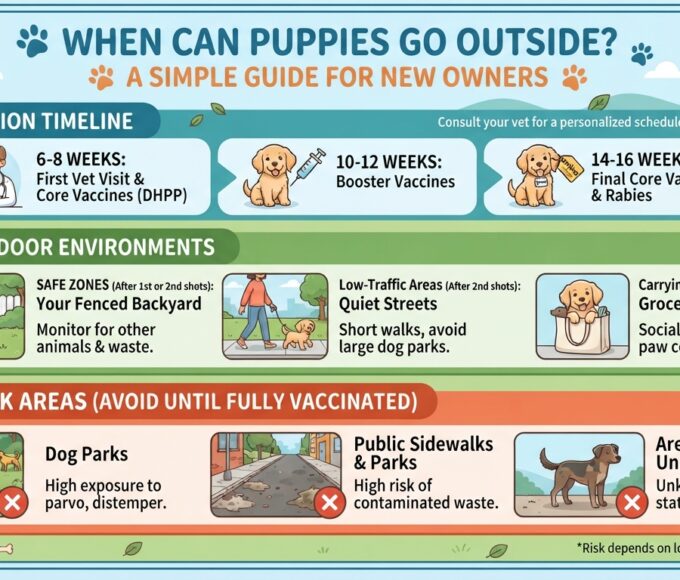
AAHA’s canine vaccination guidelines identify vaccines against diseases including distemper, adenovirus, parvovirus, leptospirosis, and rabies as core recommendations, with some recommendations depending on the dog’s individual circumstances and local requirements.
For puppies, core combination vaccines are generally given in a series beginning around 6–8 weeks of age and repeated every 2–4 weeks until at least 16 weeks of age. Puppies in higher-risk environments may need the series to continue longer.
Rabies vaccination should follow local laws and veterinary recommendations.
Your puppy may also need additional vaccines depending on factors such as:
- Geographic location
- Lifestyle
- Exposure to other dogs
- Boarding or daycare
- Travel
- Local disease risks
Don’t assume that a vaccine schedule used for another puppy is automatically appropriate for yours.
5. Protect Your Puppy From Parasites
Puppies can be vulnerable to intestinal parasites as well as external parasites such as fleas and ticks.
Parasite prevention should therefore be part of your puppy’s routine veterinary care.
Your veterinarian may recommend:
- Fecal testing
- Deworming
- Flea prevention
- Tick prevention
- Heartworm prevention where appropriate
- Other parasite-control measures based on local risks
Merck notes that puppy fecal examinations may be performed every 2–4 weeks until two negative tests are obtained, depending on the circumstances.
Don’t give an over-the-counter parasite product simply because it worked for another dog. Puppies vary in age, size, health status, and risk, so ask your veterinarian which products are appropriate.
6. Give Your Puppy Appropriate Exercise
Puppies have plenty of energy, but more exercise isn’t always better.
Growing puppies need opportunities to move, explore, play, and develop coordination. However, excessive or inappropriate physical activity can be problematic, particularly for very young puppies and large or giant breeds.
Good activities can include:
- Short walks appropriate for your puppy’s vaccination and exposure risk
- Gentle games
- Supervised exploration
- Age-appropriate play
- Short training sessions
- Food puzzles and other enrichment activities
Pay attention to your puppy’s behavior.
If they become excessively tired, reluctant to continue, or uncomfortable, give them time to rest.
Merck Veterinary Manual specifically cautions that too much exercise can be harmful for very young dogs and that exercise needs to be adjusted for factors such as age, fitness, breed, and weather.
7. Provide Mental Stimulation
Physical exercise isn’t the only way to tire out a puppy.
Their brains are constantly learning, which means mental enrichment can be just as valuable.
Try activities such as:
- Simple obedience training
- Name-recognition games
- Food puzzles
- Sniffing games
- Finding hidden treats
- Learning new tricks
- Exploring safe environments
- Playing with appropriate toys
Short training sessions can be particularly useful because they combine learning, interaction, and mental stimulation.
Use reward-based training and keep sessions short enough that your puppy remains interested.
8. Start Grooming Habits Early
Grooming isn’t just about making a puppy look good.
Regular grooming allows you to become familiar with your puppy’s normal skin, coat, ears, paws, and nails. That can make it easier to notice changes that may require veterinary attention.
Depending on your puppy’s breed and coat, grooming may include:
- Brushing
- Nail trimming
- Bathing when necessary
- Ear care
- Coat trimming
- Dental care
Start slowly.
A puppy that learns early that having its paws touched or being gently brushed is a normal experience may find future grooming much easier.
Never force a frightened puppy through a grooming session if you can safely pause and introduce the experience more gradually.
9. Begin Dental Care Early
Puppy teeth eventually give way to adult teeth, but that doesn’t mean dental care should wait.
Getting your puppy accustomed to having their mouth handled can make future dental care easier.
You can gradually teach your puppy to accept gentle tooth brushing with products designed specifically for dogs.
Avoid using human toothpaste unless your veterinarian specifically recommends a product that is safe for dogs. Some human dental products can contain ingredients that aren’t appropriate for pets.
Your veterinarian can also check your puppy’s teeth during routine examinations and identify developmental concerns.
10. Create a Safe Puppy-Proofed Home
Puppies investigate the world with their mouths.
Unfortunately, that curiosity can get them into trouble.
Before bringing a puppy home, look around your house from the perspective of a curious young dog.
Secure or remove:
- Medications
- Cleaning products
- Toxic plants
- Electrical cords
- Small objects
- Dangerous chemicals
- Easily swallowed items
- Accessible trash
- Foods that are unsafe for dogs
Keep doors, cabinets, and storage areas secure when necessary.
Don’t forget about outdoor spaces. Make sure your puppy cannot easily escape through fences, gates, balconies, or other openings.
A puppy-proofed home isn’t just more convenient—it can help prevent poisoning, choking, injuries, and other emergencies.
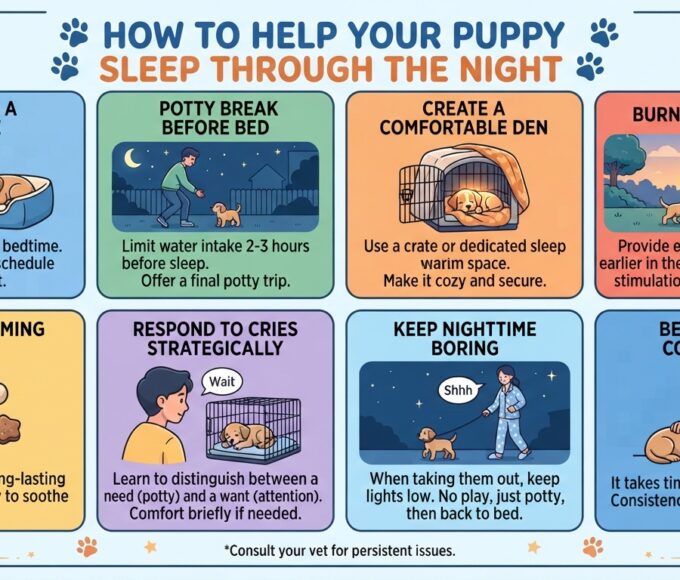
11. Give Your Puppy Plenty of Sleep
Puppies can spend a surprisingly large part of the day sleeping.
Rest is an important part of growing and learning, so don’t assume that every moment of quiet means your puppy needs more entertainment.
Create a comfortable resting area where your puppy can sleep without constant interruptions.
A crate, puppy-safe room, pen, or designated bed can provide a predictable place for naps.
Young puppies may need frequent periods of rest throughout the day.
If your puppy becomes excessively irritable or unable to settle, they may simply be overtired.
12. Build a Consistent Daily Routine
Puppies learn through repetition.
A predictable schedule can make everyday life easier to understand and can help with house training and other early lessons.
Try to establish reasonably consistent times for:
- Meals
- Bathroom breaks
- Walks
- Play
- Training
- Grooming
- Rest
The routine doesn’t have to be identical every day.
Life happens, and puppies need to learn flexibility too. But having a general structure can make it easier for your puppy to understand what happens next.
Don’t Forget Safe Socialization
Puppy wellness isn’t only physical.
Early experiences can influence how a dog responds to people, animals, sounds, surfaces, handling, and new environments later in life.
Introduce your puppy gradually to appropriate experiences while taking their vaccination status and local disease risks into account.
Potential experiences can include:
- Different household sounds
- Gentle handling
- Car rides
- Different surfaces
- Friendly, appropriately vaccinated dogs
- New people
- Grooming experiences
- Safe outdoor environments
Socialization shouldn’t mean forcing your puppy into overwhelming situations.
If your puppy looks frightened, give them space and make the experience easier.
Your veterinarian can help you decide which environments are appropriate while your puppy is completing their vaccination series.
Learn Your Puppy’s Normal Behavior
One of the best things you can do for your puppy’s health is learn what “normal” looks like for them.
Pay attention to:
- Appetite
- Water consumption
- Energy
- Stool
- Urination
- Breathing
- Sleep
- Movement
- Skin and coat
- Behavior
When you know your puppy’s normal habits, unusual changes are easier to notice.
Merck Veterinary Manual notes that changes in appetite, activity, vomiting, diarrhea, urination, coughing, sneezing, or discharge can be signs that a dog needs veterinary attention.
When Should You Call the Vet?
Puppies can become seriously ill quickly, so don’t ignore significant changes.
Contact your veterinarian if your puppy develops concerning symptoms such as:
- Repeated vomiting
- Significant or persistent diarrhea
- Refusal to eat
- Severe lethargy
- Difficulty breathing
- Persistent coughing
- Significant weakness
- Bloody diarrhea
- Unusual neurological behavior
- Severe pain
- Difficulty standing or walking
Some symptoms require emergency veterinary attention rather than waiting for a routine appointment.
If you aren’t sure whether something is serious, calling your veterinary clinic for guidance is often the safest option.
Frequently Asked Questions
How often should a puppy see the veterinarian?
Puppies are generally seen every 3–4 weeks during their early months, with the exact schedule determined by the veterinarian based on vaccination, growth, parasite control, and individual health needs.
What food should I give my puppy?
Choose a complete and balanced diet formulated for puppies and appropriate for your puppy’s expected adult size. Large- and giant-breed puppies may require specially formulated growth diets.
How much exercise does a puppy need?
Exercise requirements vary considerably by age, breed, size, health, and development. Focus on age-appropriate play and activity rather than trying to exhaust your puppy. Avoid excessive exercise, particularly with very young or rapidly growing dogs.
When should puppies receive vaccinations?
Core puppy vaccination schedules commonly begin around 6–8 weeks of age and continue at 2–4 week intervals until at least 16 weeks, but your veterinarian should determine the appropriate schedule for your puppy.
How can I tell if my puppy is overweight?
Your veterinarian can assess body condition and growth rather than relying only on the number on a scale. Regular weight checks are particularly useful during puppyhood because nutritional needs change rapidly.
Should puppies be groomed?
Yes. Getting puppies accustomed to brushing, nail care, ear handling, and other appropriate grooming tasks early can make future care easier. Grooming also gives owners opportunities to notice changes in the skin, coat, ears, paws, and other areas.
Can puppies eat human food?
Some human foods are safe in small quantities, but many are inappropriate or dangerous for dogs. Puppy food should provide the majority of their nutrition, and treats or extras should be chosen carefully.
How can I keep my puppy mentally stimulated?
Use short training sessions, food puzzles, scent games, safe exploration, and age-appropriate toys. Mental enrichment can help prevent boredom while teaching your puppy useful skills.
A Healthy Puppy Is More Than a Well-Fed Puppy
Keeping a puppy healthy isn’t about one perfect food, one vaccination, or one exercise routine.
It’s the combination of many small habits.
Feed an appropriate diet.
Keep vaccinations and parasite prevention up to date.
Provide age-appropriate exercise and mental enrichment.
Start grooming and dental-care habits early.
Give your puppy plenty of sleep.
Create a safe and predictable home.
And learn what your puppy’s normal behavior looks like.
Most importantly, build a relationship with your veterinarian and ask questions whenever you’re unsure.
Final Thoughts
Puppyhood passes quickly, but the habits you establish during those first months can help set the foundation for a healthier adult dog.
A nutritious diet supports growth. Preventive veterinary care helps identify problems early. Vaccinations and parasite control reduce important health risks. Appropriate exercise and enrichment help puppies develop physically and mentally, while grooming, dental care, socialization, and a safe home environment support their overall well-being.
There is no substitute for individualized veterinary advice, because every puppy is different.
Give your puppy patience, protection, proper care, and plenty of positive experiences—and you’ll be giving your new companion the best possible start in life.






Leave a comment