



Designer dogs have become incredibly popular among people looking for a companion with a distinctive combination of appearance and personality traits.
These dogs are generally crosses between two established breeds. The result can be a puppy that combines characteristics from both sides of its ancestry—but genetics don’t work like a recipe book. Puppies from the same cross can look and behave quite differently from one another.
Some may have curly coats, while others have straighter hair. One puppy may be outgoing and energetic, while another from the same litter may be more relaxed.
That’s part of what makes these dogs interesting.
Popular Poodle crosses, small companion-dog mixes, and Husky crosses have all developed dedicated followings. But before choosing one, prospective owners should look beyond the adorable appearance and consider exercise requirements, grooming, training, health considerations, and the traits of both parent breeds.
Here are 13 designer dog breeds that have become especially well known.
1. Labradoodle
The Labradoodle is a cross between a Labrador Retriever and a Poodle.
The cross became famous partly because of efforts to produce a guide dog with a coat that might be easier for some allergy sufferers to tolerate. However, Labradoodles are not guaranteed to be hypoallergenic, and individual dogs can produce different amounts of allergens.
Labradoodles can be intelligent, social, playful, and highly people-oriented. They may also inherit the Labrador’s enthusiasm and the Poodle’s need for mental stimulation.
Potential owners should be prepared for:
- Regular exercise
- Training and mental enrichment
- Regular coat maintenance
- Plenty of human interaction
- Variation in adult size and coat type
Their friendly appearance can make them look like easygoing family dogs, but an energetic Labradoodle still needs an active lifestyle.
2. Goldendoodle
The Goldendoodle combines a Golden Retriever with a Poodle.
These dogs are popular for their fluffy coats and generally people-focused personalities. Depending on their genetics, Goldendoodles can range from relatively relaxed companions to energetic dogs that need considerable daily activity.
Their intelligence can make training enjoyable, but it also means they benefit from having something constructive to do.
Goldendoodles may have:
- Wavy, curly, or straighter coats
- Different adult sizes
- High exercise needs
- Strong social tendencies
- Regular grooming requirements
Despite frequent marketing as allergy-friendly dogs, there is no guarantee that a Goldendoodle will cause fewer allergy symptoms. People with dog allergies should spend time with an individual dog before making a commitment.
3. Cockapoo
The Cockapoo is a cross between a Cocker Spaniel and a Poodle.
Usually smaller than many other popular designer dogs, Cockapoos are known for their expressive faces, affectionate personalities, and playful behavior.
Their size can vary depending on the Poodle parent, and their coats can range from wavy to curly.
Cockapoos often enjoy being involved in family activities and can thrive when they receive regular attention, exercise, and training.
Their grooming needs shouldn’t be overlooked. A curly or densely textured coat can become tangled without regular brushing and professional grooming when necessary.
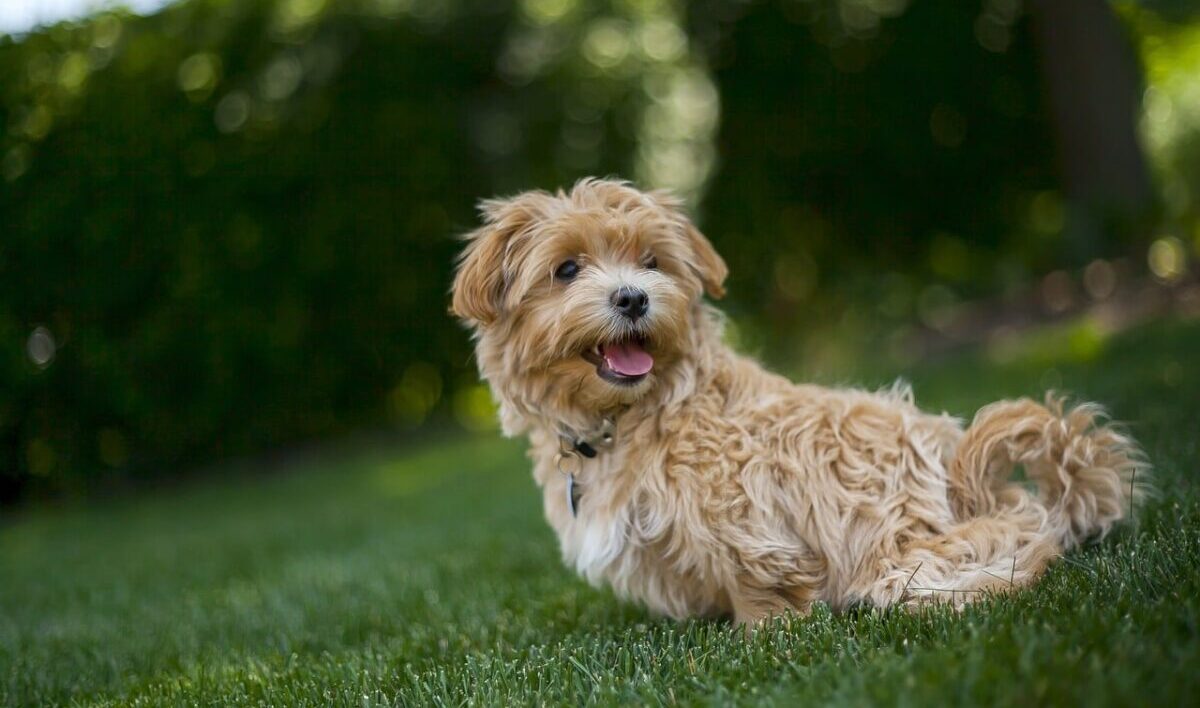
4. Maltipoo
A Maltipoo is a cross between a Maltese and a Poodle.
These small companion dogs are popular among people looking for a relatively compact dog with an affectionate personality.
Maltipoos can be playful and energetic despite their small size. Many enjoy spending substantial amounts of time with their owners and may struggle if routinely left alone for long periods.
Their coats can vary, but regular grooming is often necessary to prevent matting.
Before choosing a Maltipoo, consider:
- Their need for companionship
- Grooming requirements
- Small-dog training needs
- Exercise and play requirements
- Their individual temperament
A small dog still needs training, enrichment, and appropriate exercise.
5. Schnoodle
The Schnoodle combines a Schnauzer with a Poodle.
Because both parent breeds can be intelligent and active, Schnoodles often benefit from owners who enjoy training and interactive activities.
Their adult size can vary considerably depending on the varieties of Schnauzer and Poodle involved.
A Schnoodle may inherit:
- The Schnauzer’s alertness
- The Poodle’s intelligence
- A playful personality
- A strong interest in family activities
- A coat requiring regular maintenance
Some can also be vocal or energetic, so they shouldn’t be selected solely because they are small or cute.
6. Pomsky
The Pomsky is a cross between a Pomeranian and a Siberian Husky.
Their popularity exploded partly because many have a miniature-Husky appearance, sometimes including facial markings and striking eyes.
But their appearance doesn’t tell you everything about their needs.
Pomskies can inherit energy, curiosity, vocal behavior, and other traits from both parent breeds. Their fluffy coats may also require substantial grooming.
Potential owners should be prepared for:
- Regular exercise
- Mental stimulation
- Coat care
- Training
- Possible vocal behavior
- Variation in adult size and temperament
The biggest mistake would be assuming that a small body automatically means a low-energy dog.
7. Yorkipoo
The Yorkipoo combines a Yorkshire Terrier with a Poodle.
This small cross can be lively, curious, affectionate, and confident.
The Yorkshire Terrier side can contribute typical terrier traits such as alertness and determination, while the Poodle side can contribute intelligence and a willingness to learn.
Yorkipoos can be well suited to smaller homes when their exercise, enrichment, and training needs are met.
Their coat can vary, and regular grooming may be necessary.
Because of their small size, owners should also be careful around larger dogs and young children who may accidentally injure a tiny dog during rough play.
8. Puggle
A Puggle is a cross between a Pug and a Beagle.
This combination can produce an affectionate and playful companion with a curious personality.
Puggles may inherit the Beagle’s strong interest in scents and exploration, while Pug ancestry can contribute to their people-oriented nature.
However, prospective owners should consider health traits from both parent breeds.
Because Pugs have brachycephalic facial anatomy, owners should pay particular attention to breathing, exercise tolerance, and heat. A Puggle’s facial structure varies, so the individual dog’s anatomy matters.
They can be playful dogs, but their exercise should be appropriate for their physical condition and environmental temperature.
9. Cavapoo
The Cavapoo is a cross between a Cavalier King Charles Spaniel and a Poodle.
Their small size, expressive faces, and affectionate personalities have made them extremely popular.
Cavapoos can be playful and intelligent while also enjoying plenty of time beside their owners.
However, their parent breeds have health considerations that responsible breeders should take seriously. Cavalier King Charles Spaniels, for example, are predisposed to several inherited conditions, so health screening and responsible breeding matter.
A prospective owner should ask breeders or rescue organizations about:
- Parent health testing
- Veterinary history
- Temperament
- Grooming requirements
- Exercise needs
- Expected adult size
A cute puppy should never be the only factor in the decision.
10. Bernedoodle
The Bernedoodle is a cross between a Bernese Mountain Dog and a Poodle.
Depending on the parents and generation, Bernedoodles can range from relatively small to very large.
Many have fluffy or wavy coats, and their appearance can resemble a teddy bear.
But larger Bernedoodles require owners to think carefully about space, exercise, grooming, food costs, and long-term care.
They may be affectionate and people-oriented, but no crossbreed has a guaranteed temperament.
Before adopting one, consider the characteristics of both parent breeds rather than focusing exclusively on the puppy’s appearance.
11. Morkie
The Morkie is a cross between a Maltese and a Yorkshire Terrier.
These tiny dogs can have surprisingly bold personalities.
They may be affectionate and playful while also being alert and vocal. Their small bodies make them convenient for many living situations, but small size doesn’t eliminate the need for training.
Morkies can also be physically delicate, so households with very young children should take extra care with supervision and handling.
Regular coat maintenance may also be necessary depending on the individual dog’s hair type.
12. Chiweenie
The Chiweenie combines a Chihuahua with a Dachshund.
This little cross can have an enormous personality packed into a small body.
Chiweenies may be energetic, curious, alert, and strongly attached to their owners. They can also inherit the tendency of either parent breed to be vocal.
Their small size makes them easy to carry, but they still benefit from regular activity and mental stimulation.
Owners should also consider potential health characteristics inherited from both parent breeds, including dental concerns common in small dogs and the Dachshund’s predisposition to back problems.
Keeping a healthy body weight and avoiding unnecessary high-impact activity can be important for dogs with Dachshund ancestry.
13. Shorkie
The Shorkie is a cross between a Shih Tzu and a Yorkshire Terrier.
These small dogs can be affectionate, playful, and very attached to their families.
Their compact size can make them appealing to apartment dwellers, although every dog still needs appropriate exercise and enrichment.
Shorkies may inherit characteristics from both parent breeds, including alertness and a desire for human companionship.
Their coat can also require considerable grooming, particularly if it grows long.
Because they are small, gentle handling and careful supervision around larger dogs and young children are important.
Are Designer Dogs Healthier Than Purebred Dogs?
It’s tempting to assume that crossing two breeds automatically produces a healthier dog.
That’s not guaranteed.
A mixed-breed dog can inherit genetic conditions associated with either parent breed. Some inherited diseases may become less likely through appropriate genetic diversity, while others can still occur depending on the parents and the specific traits involved.
Responsible breeding therefore matters regardless of whether the dog is purebred or a designer cross.
If you’re purchasing a puppy, ask about health screening performed on both parents and request appropriate veterinary records.
Are Designer Dogs Hypoallergenic?
No dog is completely hypoallergenic.
People with dog allergies generally react to proteins found in substances such as dander, saliva, and other biological materials—not simply to the amount of hair a dog sheds.
Some individual dogs may produce or spread fewer allergens than others, and people may react differently to different dogs.
That’s why labels such as “hypoallergenic Labradoodle” or “allergy-free Goldendoodle” should be treated cautiously.
If allergies are a concern, spend time with the specific dog before making a long-term commitment and discuss your situation with a healthcare professional if necessary.
Do Designer Dogs Have Predictable Temperaments?
Not completely.
A puppy inherits genetic material from both parents, but there is considerable variation in which traits appear and how strongly they appear.
Environment, early experiences, socialization, training, health, and individual personality also influence behavior.
Two puppies from the same litter can therefore grow into noticeably different adult dogs.
That’s why prospective owners should research both parent breeds rather than relying on the designer breed’s name alone.
What Should You Ask Before Getting a Designer Dog?
Whether you’re buying from a breeder or adopting through a rescue, ask questions before committing.
Important questions include:
- What are the health histories of both parents?
- Have appropriate health screenings been performed?
- What is the puppy’s expected adult size?
- What type of coat is expected?
- How much grooming will be required?
- What exercise level should you expect?
- How does the puppy behave around people and other animals?
- What veterinary care has the puppy received?
- What vaccinations and parasite prevention have been provided?
- What socialization has the puppy experienced?
A responsible source should be willing to discuss health, temperament, and care requirements rather than focusing only on appearance.
How to Choose the Right Designer Dog for Your Lifestyle
The most popular dog isn’t necessarily the right dog for you.
Instead, think about your actual daily routine.
If You Want a Small Companion
Maltipoos, Yorkipoos, Morkies, Chiweenies, and Shorkies may appeal to people looking for smaller dogs, but they still require training, exercise, grooming, and social interaction.
If You Want an Active Dog
Labradoodles, Goldendoodles, Schnoodles, and Pomskies can have substantial energy and may suit households prepared for regular exercise and mental stimulation.
If Grooming Is a Concern
Don’t assume a short-looking puppy will stay that way.
Designer crosses can have highly variable coats. Ask what grooming requirements are expected based on both parents and the individual puppy.
If You Have Children
Look at the individual dog’s temperament, size, energy level, and history rather than assuming a breed name guarantees a family-friendly personality.
Young children should always be supervised around dogs.
Final Thoughts
Designer dogs have earned their popularity for understandable reasons.
Their unusual appearances, wide range of sizes, and combinations of traits can make them fascinating companions. From the fluffy Goldendoodle and Labradoodle to the tiny Morkie and energetic Pomsky, there’s enormous variety among these crosses.
But a designer label doesn’t guarantee a particular personality, coat, health profile, or lifestyle.
The best way to choose one is to look beyond the adorable puppy photos.
Research both parent breeds. Understand the dog’s potential exercise and grooming requirements. Ask about health testing. Consider the individual puppy’s temperament. And make sure the dog’s needs fit comfortably into your household.
A designer dog may look like a carefully assembled combination of two breeds, but every puppy is still an individual.
And that’s often the most important thing to remember when choosing your next companion.
This Article Was Generated By AI.






Leave a comment