



Bringing a puppy home is an exciting experience. Those tiny paws, playful personalities, and endless curiosity can quickly become the center of your household. But behind the cuddles and games is an important responsibility: helping a young dog grow into a healthy, confident, and well-mannered adult.
Puppy care involves much more than choosing a food bowl and teaching your dog to sit. Puppies need appropriate nutrition, veterinary care, sleep, exercise, socialization, grooming, training, and plenty of opportunities to safely explore their surroundings.
The first months are also an important time for building good habits. What a puppy learns during this period can influence how comfortable they become with people, animals, handling, new environments, and everyday routines.
Whether you’re bringing home your first puppy or simply want to improve your current routine, this guide covers the essentials of raising a happy and healthy young dog.
Preparing Your Home for a Puppy
Before your puppy arrives, take some time to make your home safe.
Puppies investigate the world with their mouths and paws, so ordinary household objects can quickly become hazards.
Puppy-proof your home
Keep potentially dangerous items out of reach, including:
- Electrical cords
- Cleaning products
- Medications
- Small objects that could be swallowed
- Toxic plants
- Human foods that are unsafe for dogs
- Sharp objects
- Easily accessible trash
- Small children’s toys
Use baby gates or other barriers if there are areas of the home your puppy shouldn’t enter.
Your puppy should also have a comfortable place to sleep and retreat when they need quiet time.
Prepare essential supplies
Useful items include:
- Puppy food
- Food and water bowls
- Comfortable bed
- Collar and identification tag
- Properly fitted harness
- Leash
- Safe chew toys
- Interactive toys
- Grooming supplies
- Enzyme-based cleaning products
- Crate or puppy-safe sleeping area
- Waste bags
- Puppy-safe treats
You don’t need to buy every available pet product. Start with the essentials and add items as you learn what your puppy actually needs.
Start Training From Day One
Training doesn’t need to mean long formal sessions.
From the moment your puppy comes home, they’re learning what behaviors earn attention, what areas are safe, how household routines work, and how people communicate with them.
Even simple everyday interactions can become training opportunities.
1. Begin With Simple Behaviors
Start with practical skills such as:
- Responding to their name
- Sitting
- Coming when called
- Waiting briefly
- Walking calmly
- Leaving an object alone
- Settling on a bed or mat
Keep sessions short and positive.
A puppy’s attention span is limited, so several brief sessions throughout the day are often more productive than one long session.
2. Use Positive Reinforcement
Reward-based training helps puppies understand which behaviors you want repeated.
Depending on the puppy, rewards can include:
- Small treats
- Praise
- Play
- Toys
- Petting
- Access to something the puppy enjoys
Timing matters.
When your puppy performs the desired behavior, provide the reward promptly so they can make the connection between the action and the consequence.
3. Be Consistent
Imagine teaching your puppy that jumping on people isn’t allowed.
If one family member rewards jumping with attention while another tries to stop it, the puppy receives mixed messages.
Everyone in the household should agree on basic rules.
For example:
- Is the puppy allowed on the sofa?
- Where should they sleep?
- Where should they eat?
- What words will be used for important cues?
- Which rooms are off-limits?
Consistency makes learning easier.
4. Don’t Expect Perfection
Puppies are babies.
They will make mistakes, forget behaviors, become distracted, have accidents, chew inappropriate objects, and occasionally ignore a cue they’ve previously learned.
That doesn’t mean training has failed.
Focus on repetition, management, patience, and rewarding progress.
House Training Your Puppy
Potty training is one of the first major challenges for many new puppy owners.
The goal isn’t simply to punish accidents. It’s to teach the puppy where you want them to eliminate.
Establish a routine
Take your puppy to their designated bathroom area regularly, particularly:
- After waking up
- After eating
- After drinking a lot of water
- After energetic play
- Before bedtime
- Whenever they show signs they need to go
Young puppies have limited bladder control, so accidents are normal.
When your puppy eliminates in the correct place, reward them immediately.
If an accident happens indoors, clean the area thoroughly with a suitable enzymatic cleaner. Lingering odors can encourage repeated accidents.
Avoid punishment
Yelling at or physically punishing a puppy for an accident can create fear and doesn’t teach the desired behavior effectively.
Instead, focus on prevention and supervision.
Socialization Is More Than Meeting Other Dogs
Socialization is one of the most important parts of puppy development.
A well-socialized puppy isn’t necessarily one that has met hundreds of dogs. Instead, the goal is to help them learn that different people, places, sounds, surfaces, and experiences can be safe.
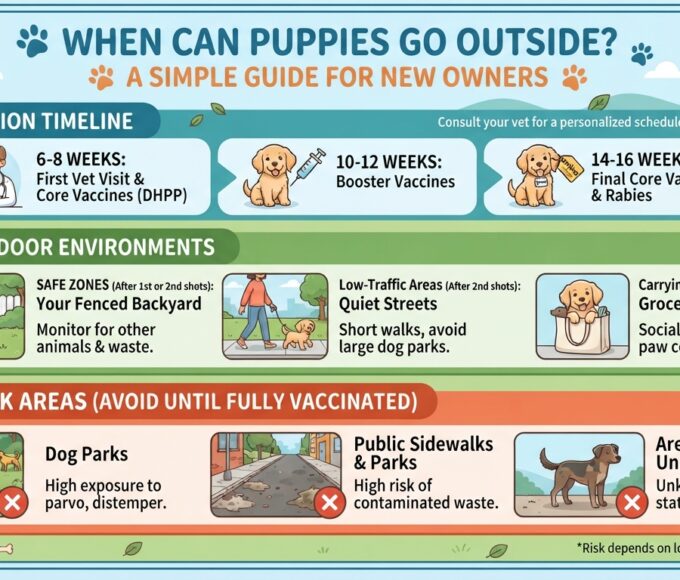
Depending on veterinary guidance and local disease risks, puppies can gradually experience:
- Different types of people
- Household sounds
- Car rides
- Grooming and handling
- Different floor surfaces
- New environments
- Calm, healthy dogs
- Veterinary visits
- Household appliances
- Traffic sounds
- Gentle handling of paws and ears
Experiences should be gradual and positive.
Don’t force a frightened puppy into an overwhelming situation.
If your puppy appears scared, create more distance, reduce the intensity, and give them time to recover.
Puppy Nutrition: Building the Foundation for Growth
Nutrition plays a major role in puppy development.
Growing dogs need a diet that supplies appropriate levels of energy, protein, fat, vitamins, and minerals.
The exact nutritional needs vary according to age, adult size, breed, health, and individual circumstances.
Choose an appropriate puppy diet
Look for a commercially prepared food that is complete and balanced for your puppy’s life stage.
Large-breed puppies may have different nutritional requirements from puppies expected to remain small as adults.
If you’re unsure which food is appropriate, ask your veterinarian.
Don’t simply feed more because your puppy is growing
Rapid growth isn’t necessarily healthier growth.
Overfeeding can contribute to excessive weight gain and may be particularly problematic for developing large-breed puppies.
Follow the feeding guidance provided for the food and adjust portions with your veterinarian based on your puppy’s growth and body condition.
How Often Should a Puppy Eat?
Young puppies generally need more frequent meals than adult dogs because of their smaller stomachs and developing bodies.
The appropriate schedule depends on age and individual needs.
A typical routine may involve several meals throughout the day when a puppy is very young, gradually transitioning toward fewer meals as they mature.
Your veterinarian can help establish an appropriate schedule for your puppy.
Rather than following a rigid schedule from a generic article, consider your puppy’s age, size, health, and growth pattern.
Treats Are Useful—But Keep Them Small
Treats can be extremely helpful during training.
However, puppies don’t need large quantities of treats to learn.
Use small pieces and account for treats as part of their overall daily food intake.
Healthy alternatives may include appropriately sized commercial training treats or small portions of their regular food.
Avoid giving puppies foods that are dangerous to dogs, including chocolate, grapes and raisins, onions, garlic, and products containing xylitol.
When in doubt about a food, ask your veterinarian before giving it to your puppy.
Fresh Water Should Always Be Available
Clean drinking water is essential.
Keep fresh water available throughout the day and wash the bowl regularly.
Puppies can become dehydrated more quickly than many owners realize, particularly during hot weather, illness, or periods of increased activity.
If your puppy suddenly drinks dramatically more or less water than usual, discuss the change with your veterinarian.
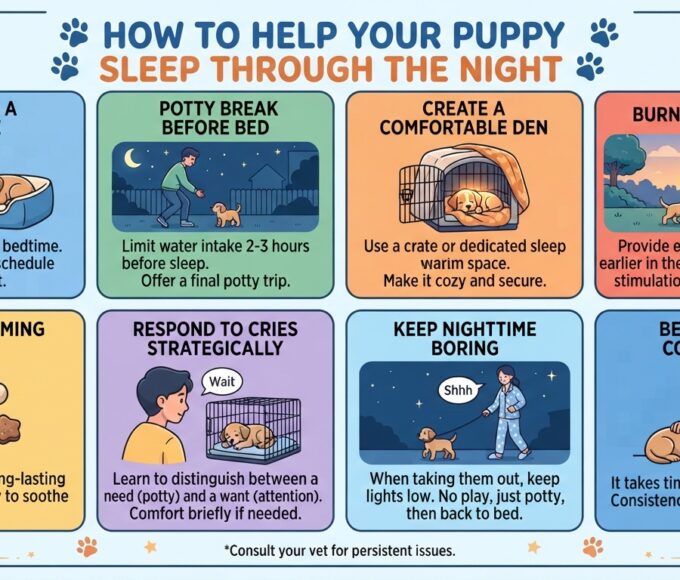
Puppy Sleep Is Extremely Important
One of the most overlooked parts of puppy care is sleep.
Puppies can sleep for many hours throughout the day because their bodies and brains are developing rapidly.
A puppy that becomes excessively tired may become:
- Irritable
- Overexcited
- Mouthy
- Unable to settle
- More difficult to train
Don’t assume every period of hyperactivity means your puppy needs more exercise.
Sometimes they simply need a quiet environment and a nap.
Give your puppy a comfortable, safe sleeping area where they can rest without constant interruptions.
How Much Exercise Does a Puppy Need?
Puppies need movement and play, but more exercise isn’t always better.
Their bodies are still developing, and excessive forced exercise can place unnecessary stress on growing joints and bones.
Instead of relying on one universal rule such as “30 minutes every day,” consider:
- Age
- Breed
- Adult size
- Individual energy level
- Physical development
- Weather
- Veterinary advice
Good puppy activities
Appropriate activities may include:
- Gentle play
- Short walks when appropriate
- Exploring safe environments
- Training games
- Sniffing
- Food puzzles
- Finding hidden treats
- Gentle tug games
- Supervised interaction with suitable dogs
Avoid forcing a young puppy to run long distances or participate in strenuous repetitive exercise.
Mental Stimulation Matters
A puppy can be physically tired and still mentally bored.
Mental enrichment helps satisfy natural curiosity and can reduce the temptation to invent their own entertainment.
Try:
Food puzzles
Use puppy-safe puzzle feeders to make meals more engaging.
Scent games
Hide small pieces of food in easy-to-find locations and let your puppy use their nose.
Training
Teach simple behaviors and gradually increase difficulty.
Exploration
Allow your puppy to safely investigate new environments at their own pace.
Mental stimulation doesn’t need to be complicated. Even a few minutes of learning can be valuable.
Veterinary Care Should Start Early
Your puppy’s first veterinary visit is an important step.
The veterinarian can assess your puppy’s overall health and establish an appropriate preventive-care plan.
Depending on age and location, this may include:
- Vaccinations
- Parasite prevention
- Deworming
- Flea and tick control
- Nutrition guidance
- Growth monitoring
- Dental care
- Identification and microchipping
- Spay/neuter discussion when appropriate
Puppies typically require more frequent veterinary visits during their early months than healthy adult dogs.
Keep a record of vaccinations, medications, treatments, and other important health information.
Learn to Recognize Signs That Something Is Wrong
Puppies can become unwell quickly, so owners should pay attention to changes in normal behavior.
Contact your veterinarian if you notice concerning symptoms such as:
- Persistent vomiting
- Repeated diarrhea
- Significant loss of appetite
- Unusual weakness
- Difficulty breathing
- Severe coughing
- Bloated abdomen
- Pale or abnormal gums
- Collapse
- Seizures
- Difficulty standing
- Significant dehydration
- Sudden major behavior changes
If your puppy appears seriously ill or has trouble breathing, collapses, or experiences another emergency, seek veterinary care immediately.
Don’t give human medications unless your veterinarian specifically tells you to do so.
Teach Your Puppy to Enjoy Grooming and Handling
Grooming is easier when a puppy learns early that being handled doesn’t have to be frightening.
Gradually introduce:
- Touching the paws
- Looking inside the ears
- Brushing
- Gentle bathing
- Nail trimming
- Tooth brushing
- Wearing a collar or harness
Keep early sessions short.
Reward calm behavior and stop before your puppy becomes overwhelmed.
This preparation can make future grooming and veterinary examinations considerably easier.
Don’t Forget Dental Care
Puppies eventually develop adult teeth, and early dental habits can help establish a lifelong routine.
Introduce tooth brushing gradually using products designed specifically for dogs.
Never use human toothpaste unless your veterinarian specifically recommends a product that is safe for dogs.
Chewing is also a normal part of puppy development, particularly during teething.
Provide safe, appropriately sized chew toys and supervise your puppy with anything they might break apart or swallow.
Managing Puppy Biting and Chewing
Puppies explore with their mouths.
Nipping during play and chewing household objects can be frustrating, but these behaviors are common during puppyhood.
Instead of constantly telling your puppy “no,” give them appropriate alternatives.
If your puppy bites your hands during play:
- Calmly stop the interaction.
- Offer an appropriate toy.
- Reward them for engaging with the toy.
- Resume play when they’re calmer.
For chewing, keep tempting household objects out of reach and provide several safe alternatives.
Management is an important part of puppy training.
Helping Your Puppy Adjust to a New Home
The first few days can be overwhelming.
Your puppy has suddenly left familiar surroundings and entered a completely new environment.
Give them time.
Create a predictable routine
Try to keep meals, bathroom breaks, rest, play, and bedtime reasonably consistent.
Provide a safe space
Your puppy should have somewhere they can retreat when they need rest.
Avoid overwhelming introductions
There’s no need to invite a large crowd to meet your puppy immediately.
Let them gradually become comfortable with their new surroundings.
Build trust
Spend time playing, training, feeding, grooming, and simply sitting calmly with your puppy.
The relationship develops through hundreds of small interactions.
Teaching Your Puppy to Be Comfortable Alone
Puppies need companionship, but they also need to learn that being alone briefly can be safe.
Start with very short periods and gradually increase the duration as your puppy becomes comfortable.
You can practice by:
- Leaving the room briefly
- Providing a safe chew or food puzzle
- Returning calmly
- Avoiding dramatic departures and greetings
If your puppy shows intense distress whenever you’re separated, speak with a veterinarian or qualified behavior professional rather than simply increasing the amount of time they’re left alone.
Puppy Identification and Safety
Even puppies that live mostly indoors can escape unexpectedly.
Make sure your puppy has appropriate identification.
Consider:
- Identification tag
- Microchip
- Secure collar or harness
- Recent photographs
- Updated contact information
Teach a reliable recall gradually and practice it in safe, enclosed environments before expecting your puppy to respond around major distractions.
Never assume a young puppy will automatically come back when called.
A Simple Puppy Care Checklist
| Area | What Your Puppy Needs |
|---|---|
| Nutrition | Complete, balanced puppy diet |
| Water | Fresh drinking water |
| Training | Short, positive sessions |
| Socialization | Safe, gradual exposure to new experiences |
| Exercise | Age-appropriate movement and play |
| Sleep | Plenty of uninterrupted rest |
| Veterinary care | Vaccinations and preventive healthcare |
| Grooming | Regular brushing and gentle handling |
| Dental care | Early introduction to tooth brushing |
| Safety | Puppy-proofed home and secure identification |
| Enrichment | Toys, puzzles, sniffing, and learning |
| Companionship | Positive interaction with family |
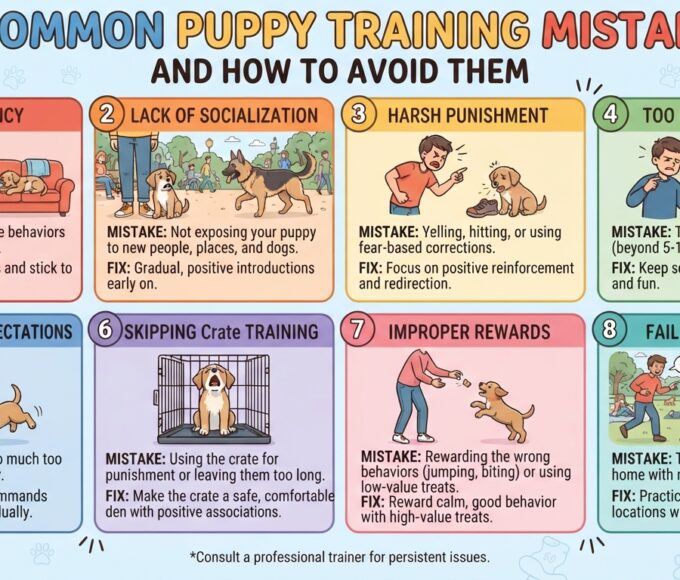
Common Puppy-Care Mistakes to Avoid
Even well-intentioned owners can make mistakes.
Mistake 1: Overfeeding
A puppy being excited about food doesn’t mean they need unlimited food.
Mistake 2: Too much exercise
More exercise isn’t automatically better for a developing puppy.
Mistake 3: Skipping socialization
Keeping a puppy isolated can make new experiences more difficult later.
Mistake 4: Using punishment
Fear-based methods can damage trust and may make behavior problems more complicated.
Mistake 5: Ignoring sleep
Overtired puppies can become much harder to manage.
Mistake 6: Changing food suddenly
Sudden dietary changes can cause digestive upset. Transition to a new diet gradually unless your veterinarian advises otherwise.
Mistake 7: Giving inappropriate chew items
Anything that breaks apart easily or can be swallowed can create a choking or intestinal-obstruction risk.
Mistake 8: Treating every puppy the same
A Chihuahua puppy, Great Dane puppy, and Border Collie puppy can have dramatically different nutritional, exercise, and training needs.
Frequently Asked Questions
When should I start training my puppy?
You can begin teaching simple behaviors as soon as your puppy comes home. Keep sessions short, positive, and appropriate for their developmental stage.
How often should puppies visit the veterinarian?
Puppies generally need several veterinary visits during their early development for health assessments and preventive care. Your veterinarian can create a schedule based on your puppy’s age, vaccination history, health, and local disease risks.
When should I start potty training?
Start as soon as your puppy comes home. Establish a routine, supervise closely, reward appropriate elimination, and expect accidents while bladder control develops.
How much exercise does a puppy need?
There is no single exercise amount that applies to every puppy. Age, breed, size, development, health, and individual temperament all matter. Focus on age-appropriate play, exploration, training, and movement rather than exhausting your puppy.
What should I feed my puppy?
Choose a complete and balanced food formulated for your puppy’s life stage. Large-breed puppies may require food specifically formulated for their growth needs. Your veterinarian can help you choose an appropriate diet.
How do I stop my puppy from biting?
Redirect biting toward appropriate toys, reward desirable play, and calmly end interactions when play becomes too rough. Consistency is important, and puppies generally need time to develop better bite control.
How can I make my puppy feel safe?
Provide a predictable routine, a comfortable resting area, gentle handling, positive training, and plenty of opportunities to explore new experiences gradually.
Final Thoughts
Raising a puppy can be challenging, messy, exhausting, and incredibly rewarding.
The goal isn’t to create a perfectly behaved dog overnight. It’s to give your puppy the foundation they need to become a confident, healthy, and adaptable adult.
Focus on the basics: good nutrition, preventive veterinary care, positive training, safe socialization, appropriate exercise, plenty of sleep, mental enrichment, and a secure home environment.
Most importantly, remember that puppies develop at different rates. Your veterinarian and qualified training or behavior professionals can provide guidance tailored to your puppy’s breed, age, health, and individual personality.
With patience and consistency, those tiny paws can grow into the foundation of a lifelong friendship.
This Article Was Generated By AI.






Leave a comment