





Pet accessories aren’t just about making your dog or cat look adorable. The right collar, harness, bed, bowl, grooming tool, or toy can make everyday life safer, more comfortable, and more enjoyable for both you and your pet.
With thousands of pet products available, however, choosing the right items can quickly become confusing. A product that works perfectly for one animal may be completely unsuitable for another. Your pet’s size, age, coat, activity level, behavior, health needs, and daily routine should all influence your choices.
Instead of buying accessories simply because they look attractive, think about how each item will actually be used.
Here’s how to choose pet accessories that match your pet’s individual needs.
1. Start With Your Pet’s Size
Size is one of the first things to consider when shopping for pet accessories.
A tiny collar designed for a Chihuahua isn’t appropriate for a Great Dane, while a large, heavy harness may be uncomfortable for a small dog.
Before buying an accessory, check the manufacturer’s measurements rather than relying only on labels such as “small,” “medium,” or “large.”
Measure your pet when necessary, including:
- Neck circumference
- Chest circumference
- Back length
- Weight
- Paw size, depending on the product
For growing puppies and kittens, remember that their measurements can change quickly. Check the fit regularly instead of assuming an accessory will remain suitable for months.
2. Choose the Right Collar or Harness
Collars are useful for identification and, depending on the pet and situation, everyday management. However, the right choice depends on your animal.
A collar should fit securely without being painfully tight. As a general starting point, you should be able to comfortably fit about two fingers between the collar and your dog’s neck, although the exact fit depends on the animal and collar design.
Watch for signs of an incorrect fit, such as:
- Hair loss around the neck
- Redness
- Chafing
- Difficulty breathing
- Constant scratching at the collar
- The collar slipping over the head
For dogs that pull strongly on walks or have certain neck or airway concerns, a properly fitted harness may be a better option than relying on a collar for leash control.
Cats require additional consideration. A properly designed breakaway collar can reduce the risk of a collar becoming dangerously caught on an object.
3. Pick a Leash Based on Your Dog’s Behavior
Leashes aren’t one-size-fits-all.
A calm, well-trained dog may do well with a standard leash, while a powerful or energetic dog may require a stronger leash and a secure harness.
Consider:
- Your dog’s size
- Pulling strength
- Training level
- Walking environment
- Leash material
- Handle comfort
- Clip strength
For everyday walks, a sturdy standard leash is often a simple and practical choice.
Retractable leashes can provide additional freedom in appropriate open areas, but they require careful handling and aren’t ideal for every dog or environment. They can be particularly difficult to manage around traffic, crowded sidewalks, or dogs that pull suddenly.
4. Consider Your Pet’s Age
A puppy has different accessory needs from an adult dog, and a senior pet may require completely different equipment.
Puppies and kittens
Young pets may benefit from:
- Adjustable collars or harnesses
- Age-appropriate toys
- Washable bedding
- Chew-safe toys
- Easy-to-clean food bowls
- Training accessories
Because they grow rapidly, check accessories frequently.
Adult pets
Adult animals typically need products that suit their established size, activity level, and routine.
Senior pets
Older pets may benefit from:
- Orthopedic or supportive bedding
- Non-slip mats
- Easily accessible food and water
- Gentle grooming tools
- Ramps or steps where appropriate
- Comfortable harnesses
If an older pet has mobility problems or another health condition, discuss equipment choices with your veterinarian.
5. Match Accessories to Your Pet’s Coat
Grooming accessories should be selected according to coat type rather than simply buying the most popular brush.
For example, long or dense coats may require tools capable of reaching through the coat, while short-coated animals may need only occasional brushing.
Depending on your pet, grooming supplies might include:
- Bristle brushes
- Slicker brushes
- Combs
- Deshedding tools
- Nail clippers or grinders
- Pet-safe shampoo
- Ear-cleaning products recommended for your pet
- Dental-care supplies
Using the wrong grooming tool can pull hair, irritate the skin, or make grooming unpleasant.
If you’re unsure which brush is appropriate, ask a professional groomer or veterinarian.
6. Choose Food and Water Bowls Carefully
Food bowls may seem like a simple purchase, but material and design can matter.
Common choices include:
- Stainless steel
- Ceramic
- Food-safe plastic
Stainless steel is popular because it is durable and relatively easy to clean.
Ceramic bowls can also work well when they are made with pet-safe materials and kept free from cracks or chips.
Whatever material you choose, clean food and water bowls regularly.
Some pets may also benefit from specialized feeding arrangements. For example, a slow-feeder bowl can help certain dogs that eat too quickly, while puzzle feeders can provide mental enrichment.
For pets with specific medical or mobility needs, ask your veterinarian whether a particular feeding setup would be appropriate.
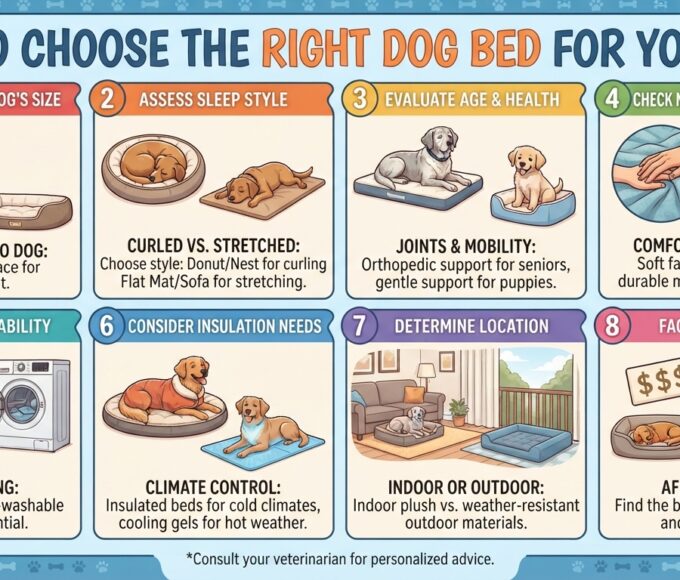
7. Think About Your Pet’s Sleeping Habits
A comfortable sleeping area gives your pet a place to rest and feel secure.
When choosing a bed, consider:
- Your pet’s size
- Sleeping position
- Age
- Mobility
- Chewing habits
- Temperature
- Ease of cleaning
A pet that likes to stretch out may need a larger flat bed, while one that curls into a ball might prefer a bed with raised edges.
Senior dogs or pets with joint discomfort may benefit from supportive bedding, although bedding isn’t a substitute for veterinary treatment when pain or mobility problems are present.
For cats, provide comfortable resting areas in locations where they feel safe. Many cats appreciate having choices, such as a quiet elevated spot and a cozy enclosed area.
8. Select Toys for More Than Entertainment
Toys can provide exercise, enrichment, and opportunities for natural behaviors.
Instead of choosing toys only based on appearance, think about what your pet enjoys doing.
For dogs:
- Fetch toys can encourage movement.
- Chew toys can provide appropriate chewing outlets.
- Puzzle toys can encourage problem-solving.
- Tug toys can support interactive play when used safely.
For cats:
- Wand toys can encourage chasing and pouncing.
- Balls can promote independent play.
- Food puzzles can provide enrichment.
- Scratching posts support normal scratching behavior.
Always supervise pets with toys when appropriate, especially if they are powerful chewers. Remove toys that become damaged or develop pieces that could be swallowed.
9. Consider Your Pet’s Lifestyle
Your pet’s daily routine should influence your purchases.
An active dog that regularly hikes with its owner may need very different equipment from a small dog that primarily takes short neighborhood walks.
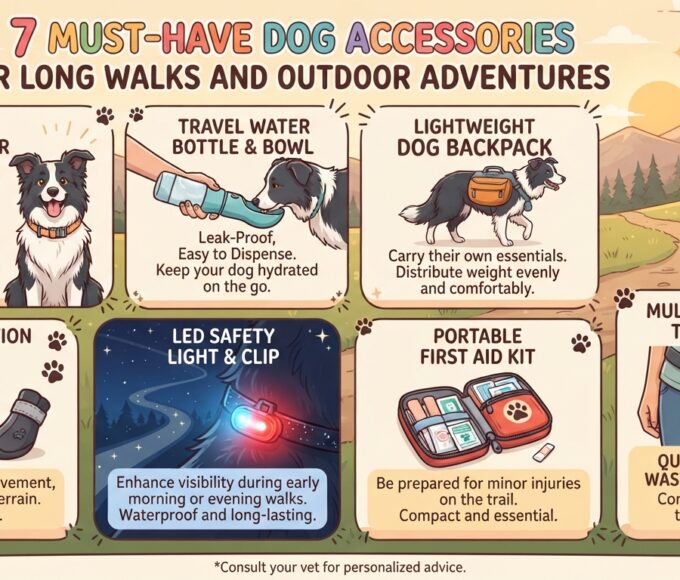
Active pets may benefit from:
- Durable harnesses
- Reflective gear
- Travel water bowls
- Portable water containers
- Outdoor beds or blankets
- Secure travel equipment
Mostly indoor pets may need:
- Interactive toys
- Puzzle feeders
- Comfortable bedding
- Scratching equipment for cats
- Grooming supplies
- Indoor enrichment
Don’t buy equipment for a lifestyle your pet doesn’t actually have.
10. Prioritize Safety Over Appearance
A beautiful accessory isn’t useful if it puts your pet at risk.
Before buying, inspect the product for:
- Loose parts
- Sharp edges
- Weak stitching
- Easily detached decorations
- Small pieces
- Poor-quality clips
- Materials that may irritate the skin
Avoid accessories that your pet can easily chew apart and swallow.
For walking equipment, pay particular attention to the strength of buckles, clips, straps, and stitching.
A decorative item should never interfere with your pet’s ability to breathe, move, eat, see, or communicate normally.
11. Consider Your Pet’s Personality
Two pets of the same breed and size can have completely different preferences.
One dog may love squeaky toys while another ignores them. One cat may enjoy a soft bed while another prefers sleeping on a window perch.
Observe your pet.
Does your dog:
- Love chewing?
- Pull on walks?
- Enjoy swimming?
- Prefer quiet activities?
- Get bored easily?
- Spend lots of time outdoors?
Does your cat:
- Love climbing?
- Scratch furniture?
- Prefer hiding?
- Enjoy interactive play?
- Like elevated resting places?
Your pet’s behavior provides useful clues about which accessories are worth buying.
12. Don’t Overlook Identification
Identification equipment is one of the most practical things you can purchase.
For dogs and cats that wear collars, an identification tag can display useful contact information.
A microchip, where available, provides another form of identification and can be especially valuable if a pet becomes separated from its collar.
Make sure your contact information remains current.
An ID tag with an old phone number isn’t much help if your pet goes missing.
13. Choose Travel Accessories Carefully
If your pet travels with you, you’ll need equipment that keeps them comfortable and secure.
Depending on your animal and transportation method, this might include:
- A secure carrier
- Crash-tested vehicle restraint
- Travel bowls
- Portable water container
- Waterproof blanket
- Waste bags
- Travel food container
- Familiar toy or blanket
Never improvise a restraint using equipment that hasn’t been designed for travel safety.
For air travel or other forms of transportation, check the carrier’s current requirements before purchasing equipment.
14. Don’t Buy Everything at Once
It’s easy to get carried away when shopping for a new pet.
You don’t need every accessory available.
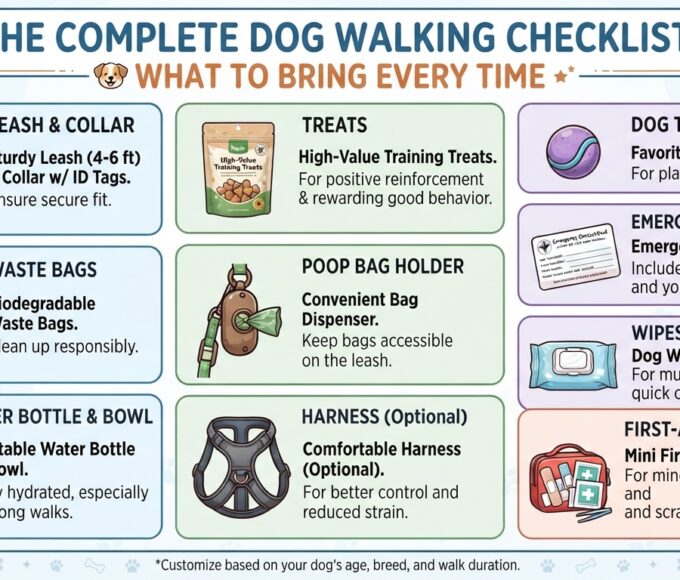
Start with the essentials:
Basic dog accessories
- Properly fitted collar or harness
- Leash
- ID tag
- Food and water bowls
- Bed
- Appropriate toys
- Grooming supplies
- Waste bags
Basic cat accessories
- Secure collar if appropriate
- ID tag
- Food and water bowls
- Comfortable sleeping area
- Toys
- Scratching post
- Grooming tools
- Appropriate carrier
Once you understand your pet’s preferences, you can add accessories that provide additional convenience or enrichment.
15. Consider Your Pet’s Specific Health Needs
Some animals need accessories designed around individual health or mobility requirements.
For example, a pet with limited mobility may benefit from non-slip flooring or supportive bedding. A dog recovering from an injury may require specific equipment recommended by a veterinarian.
Don’t assume a product marketed as “therapeutic” or “orthopedic” is automatically appropriate.
If your pet has a medical condition, ask your veterinarian before purchasing specialized equipment.
16. Don’t Forget About Style—But Put Function First
There’s nothing wrong with choosing attractive accessories.
A colorful collar, stylish bandana, patterned bed, or fun toy can reflect your pet’s personality and your own taste.
Just follow one simple rule:
Style should complement safety and comfort, not replace them.
If a decorative accessory is uncomfortable or restricts movement, it isn’t worth using simply because it looks good.
How to Tell if an Accessory Is a Good Choice
Before buying anything, ask yourself these five questions:
- Is it the correct size?
- Is it comfortable for my pet?
- Is it safe and durable?
- Does it suit my pet’s lifestyle?
- Will my pet actually use it?
If the answer to all five is yes, you’re much more likely to have found a worthwhile accessory.
Common Pet Accessory Shopping Mistakes
Even well-intentioned owners can make mistakes when buying supplies.
Avoid:
- Choosing products based only on appearance
- Buying the wrong size
- Ignoring your pet’s chewing habits
- Forgetting to check products for damage
- Buying equipment your pet doesn’t need
- Using accessories that cause rubbing or discomfort
- Assuming every pet likes the same toys
- Waiting too long to replace worn equipment
Inspect frequently used accessories regularly and replace them when they become unsafe.
Frequently Asked Questions
How tight should a dog collar be?
A collar should be secure without being painfully tight. As a general guide, you should usually be able to fit about two fingers between the collar and your dog’s neck, while still ensuring the dog cannot easily slip out.
What is better: a collar or harness?
Neither is universally best for every dog. The appropriate choice depends on your dog’s size, behavior, walking habits, and health. A properly fitted harness can be useful for dogs that pull or for certain dogs with neck-related concerns.
How often should pet accessories be replaced?
It depends on the item and how heavily it is used. Inspect collars, leashes, harnesses, beds, and toys regularly. Replace anything that has significant fraying, broken clips, exposed stuffing, sharp edges, or other safety problems.
What type of toys are best for pets?
The best toy depends on the animal and its personality. Choose toys that encourage safe play, natural behaviors, exercise, or mental stimulation, and remove damaged toys promptly.
Does my pet need expensive accessories?
Not necessarily. Price doesn’t automatically determine quality or suitability. A simple, durable, properly fitted product can be more useful than an expensive accessory your pet doesn’t enjoy using.
Should I buy accessories according to my pet’s breed?
Breed can provide useful clues about size, coat type, activity level, and common behaviors, but it shouldn’t be the only consideration. Individual personality, age, health, and lifestyle are equally important.
Final Thoughts
Choosing the right pet accessories is really about understanding the animal behind the product.
Instead of asking, “What is the most popular pet accessory?” ask, “What does my pet actually need?”
Consider their size, age, coat, personality, activity level, daily routine, and any special requirements. Prioritize safety and comfort, then look for products that make life more convenient and enjoyable.
You don’t need a house full of pet gadgets to give your companion a great life. A few carefully chosen, durable accessories that genuinely suit your pet can make a much bigger difference.
This Article Was Generated By AI.








Leave a comment