



A nervous dog may hesitate around unfamiliar people, strange sounds, new environments, other animals, or even everyday objects.
Helping your dog become more confident isn’t about forcing them to face everything they fear. Instead, confidence grows when dogs are given safe opportunities to explore, make choices, solve problems, and experience new things at a comfortable pace.
With patience and positive reinforcement, simple exercises can help a shy or uncertain dog become more comfortable navigating the world.
What Does Canine Confidence Mean?
A confident dog isn’t necessarily the most outgoing dog at the park.
Canine confidence is better understood as a dog’s ability to remain relatively comfortable and recover when encountering something unfamiliar. A confident dog may notice a strange object or sound, pause, investigate it, and then continue.
A nervous dog may instead freeze, retreat, bark, avoid the situation, or become reactive.
Confidence doesn’t mean being fearless. It means having the ability to cope with unfamiliar situations without becoming overwhelmed.
Why Is Confidence Important for Dogs?
Confidence can influence how a dog handles stress, social interactions, new surroundings, and changes in their daily routine.
When a dog feels secure, they may be better able to pause and assess what’s happening instead of immediately reacting.
Dogs with lower confidence may have stronger emotional responses to situations that another dog finds completely ordinary. Their reactions aren’t necessarily a sign that they’re being stubborn or disobedient.
Fear and uncertainty can significantly affect how a dog behaves.
That’s why confidence-building should focus on helping your dog feel safe rather than simply teaching them to tolerate something they find frightening.
What Can Cause a Dog to Lack Confidence?
A dog’s confidence can be influenced by both genetics and life experiences.
Temperament inherited from parents can affect how naturally cautious, curious, or environmentally sensitive a dog is. Early socialization and experiences can also play an important role.
Some dogs naturally investigate unfamiliar objects and environments. Others are more cautious and need additional time before they feel comfortable.
Previous negative experiences, limited exposure to new situations, changes in environment, or insufficient positive social experiences may also contribute to fearful behavior.
It’s important to remember that every dog is an individual. Breed tendencies can sometimes provide clues about temperament, but they don’t determine exactly how an individual dog will behave.
Start Small and Make Success Easy
The biggest mistake when working with a nervous dog is moving too quickly.
If an exercise causes your dog to panic or become overwhelmed, make it easier.
For example, if your dog is frightened by a new object, don’t immediately ask them to walk directly toward it. Start at a distance where they can notice the object while remaining relatively relaxed.
Reward small steps.
A short session of 5 to 15 minutes is often enough. End while your dog is still engaged and comfortable rather than continuing until they become exhausted or stressed.
Understand These Basic Training Terms
A few simple concepts can make confidence exercises easier to understand.
Marker: A word such as “yes” or a click that tells your dog exactly when they performed the desired behavior. The marker should be taught separately before using it during more difficult exercises.
Reward: Something your dog finds valuable. This might be a small treat, a favorite toy, praise, or an opportunity to play.
Lure: Using a treat or toy to encourage your dog to move into a particular position or toward something.
With nervous dogs, the best reward is the one they actually value.
1. Try the Check-In Game
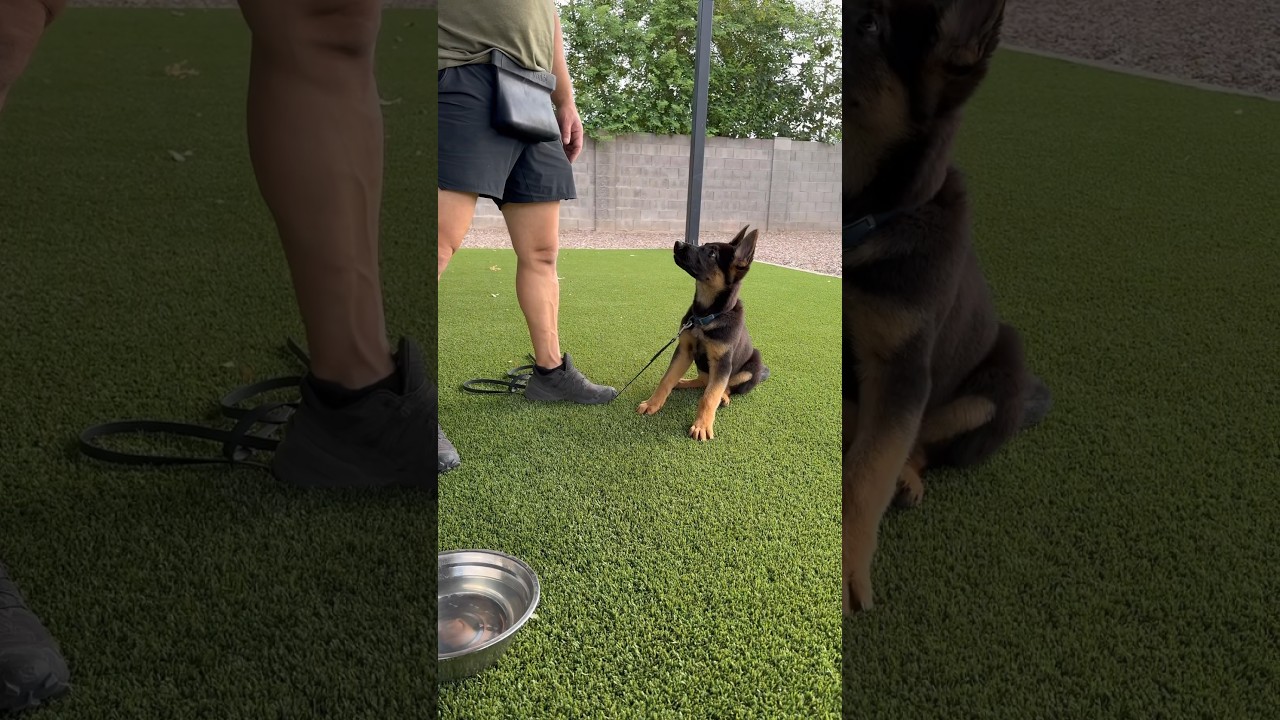
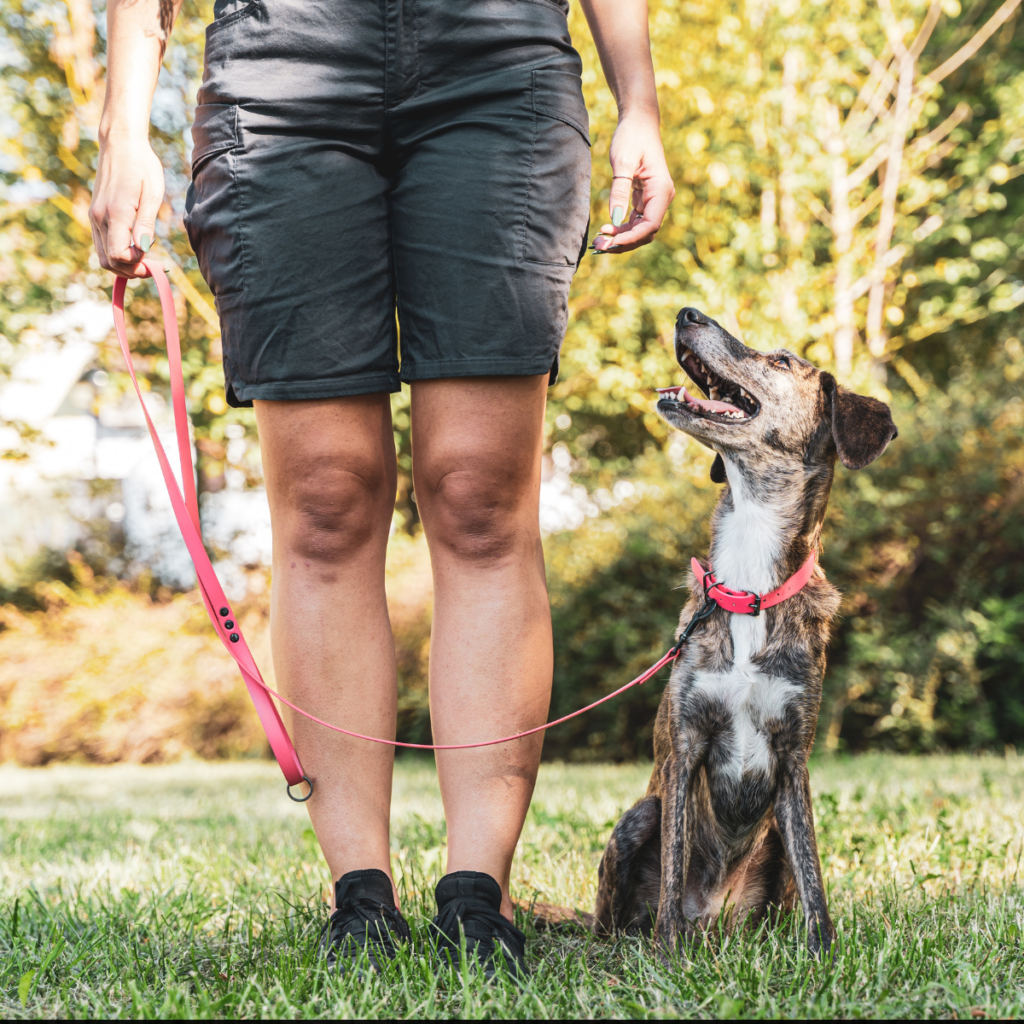
The check-in game teaches your dog to notice something interesting and then reconnect with you.
It’s especially useful around manageable distractions such as people, dogs, noises, or unfamiliar surroundings.
How to play:
- Begin somewhere your dog already feels comfortable.
- Allow your dog to notice a person, dog, sound, or other distraction.
- Wait for your dog to look back toward you.
- Mark the moment they check in with you.
- Give them a reward.
- Repeat several times.
- Gradually practice in environments with slightly more distractions.
Don’t immediately move into a busy environment.
If your dog struggles to focus on you, the environment may simply be too challenging. Return to a quieter location and try again another day.
Over time, your dog can learn that noticing something unfamiliar doesn’t automatically mean they need to react.
2. Practice Surface Exploration
New surfaces can be surprisingly intimidating for some dogs.
A nervous dog might hesitate to walk across a slippery floor, wooden platform, textured mat, cardboard, or another unfamiliar surface.
This exercise encourages curiosity without forcing interaction.
How to practice:
- Place a safe, stable new surface somewhere with minimal distractions.
- Let your dog investigate it from a comfortable distance.
- Reward them for looking at or moving toward it.
- If they willingly make contact, reward them.
- Even one paw touching the surface can be a successful first step.
- Let your dog move away if they want to.
- Repeat and gradually encourage more interaction.
Don’t drag your dog onto the surface.
The goal is for your dog to discover that exploring unfamiliar things can lead to positive experiences.
Always make sure the surface is stable, clean, and safe before allowing your dog to interact with it.
3. Play the “101 Things” Box Game
A simple cardboard box can become a useful confidence-building tool.
The idea is to encourage your dog to experiment and discover different ways to interact with an object instead of waiting for you to tell them exactly what to do.
This can help encourage problem-solving and independent thinking.
How to play:
- Put an empty, safe cardboard box in a quiet room.
- Let your dog investigate it naturally.
- Mark and reward the first interaction you see.
- This might be looking at the box, sniffing it, approaching it, or touching it.
- Continue rewarding interactions.
- Once your dog understands that interacting with the box earns rewards, begin rewarding a specific new behavior.
- Gradually build toward behaviors such as putting their paws inside the box, sitting beside it, or touching it.
Don’t demonstrate what you want your dog to do.
Instead, allow them to experiment and reward the behaviors you want to encourage.
Once your dog becomes comfortable with one behavior, you can change the challenge and look for something new.
You can also move the game to another room once your dog understands it, helping them practice focusing in slightly different environments.
4. Use the Treat Toss Game
Treat tossing is a simple way to encourage exploration and help your dog recover after investigating something unfamiliar.
It can also be combined with other confidence-building exercises.
Here’s how it works:
- Start with your dog in a comfortable environment.
- Toss a small treat a short distance away.
- Allow your dog to find it.
- When they return their attention toward you, reward them again.
- Gradually vary the direction and distance of your treat tosses.
- Introduce different safe surfaces or environments as your dog becomes more comfortable.
Keep the difficulty appropriate for your dog.
If your dog becomes worried, shorten the distance or return to a familiar environment.
Combining the Games in Everyday Situations
These exercises become particularly useful when you’re dealing with something your dog finds suspicious.
Imagine your dog, Rufus, suddenly notices a fallen tree branch on a familiar walking route.
Instead of pulling Rufus toward the branch, you can begin by tossing a treat several feet away from it.
After Rufus gets the treat, reward him for checking back with you.
Repeat the process while gradually changing the location of the treats so that Rufus can approach the branch at his own pace.
When he is comfortable being closer, reward small interactions such as sniffing the branch.
Eventually, if the branch is stable and safe, Rufus may become comfortable stepping over it or walking around it.
The important part is that Rufus controls the pace.
You aren’t forcing him to confront the object. You’re creating a series of manageable experiences that can help him become more comfortable.
Watch Your Dog’s Body Language
Confidence-building should never be about pushing a dog until they shut down.
Pay attention to signs that your dog is becoming uncomfortable, such as:
- Hiding or retreating
- Freezing
- Cowering
- Repeated lip licking
- Excessive panting
- Turning away
- Trying to escape
- Refusing food
- Barking or growling
- Becoming unusually tense
If you notice these signs, increase the distance from the trigger, reduce the difficulty, or end the session.
A successful training session doesn’t have to involve a dramatic breakthrough. Sometimes calmly looking at something unfamiliar is already progress.
Never Force a Nervous Dog
Forcing a fearful dog closer to something they don’t understand can make the experience more frightening.
Instead, give your dog choices whenever possible.
Allow them to approach, investigate, retreat, and try again.
Your job is to create safe opportunities for learning—not to force your dog to overcome fear instantly.
When to Get Professional Help
Some dogs have fears or behavioral problems that require more than simple confidence games.
Consider speaking with a qualified reward-based dog trainer or veterinary behavior professional if your dog has severe fear, persistent reactivity, aggression, attempts to escape, or behavior that creates a safety concern.
A professional can help identify your dog’s triggers and create a gradual training plan suited to their individual needs.
Frequently Asked Questions
Can you teach a nervous dog to be more confident?
Yes, many dogs can become more comfortable through carefully managed experiences, positive reinforcement, and gradual exposure. However, progress varies from dog to dog.
How long should confidence training sessions be?
Start with short sessions of around 5 to 15 minutes. Some dogs may benefit from even shorter sessions, particularly when they’re easily overwhelmed.
Should I force my dog to face their fears?
No. Forcing a nervous dog into an uncomfortable situation can increase fear. Instead, work at a distance where your dog can remain relatively comfortable and gradually increase the challenge.
Are treats good for confidence training?
Treats can be an effective reward if your dog finds food motivating. If your dog prefers toys or play, those can also be used as rewards.
What if my dog refuses to interact with something?
Don’t force them. Reward smaller steps, such as looking toward the object or moving slightly closer. If your dog remains uncomfortable, increase the distance and try again later.
Final Thoughts
Building confidence takes patience.
A nervous dog doesn’t need to become the most social dog in the neighborhood. The goal is to help them feel safer, make better choices, and recover more easily when they encounter something unfamiliar.
Simple games such as check-ins, surface exploration, box-based problem solving, and treat tossing can provide opportunities for your dog to practice these skills.
Keep sessions short, reward progress, respect your dog’s boundaries, and remember that small victories count.
With time and consistent positive experiences, a cautious dog can learn that the unfamiliar world isn’t always something to fear.






Leave a comment