





Traveling with your dog can turn an ordinary trip into a memorable adventure. Whether you’re heading out for a weekend road trip, visiting family, staying at a pet-friendly hotel, or traveling farther from home, your dog still needs many of the same essentials they rely on every day.
The challenge is remembering everything before you leave.
A forgotten leash, missing medication, empty water bottle, or lack of identification can quickly turn a relaxing trip into a stressful situation. That’s why putting together a dedicated dog travel bag is one of the simplest ways to make traveling with your pet easier.
A good travel bag should contain more than food and a leash. It should help you handle feeding, hydration, bathroom breaks, minor emergencies, comfort, identification, medication, and unexpected delays.
Here’s what to pack and how to organize it.
Why a Dedicated Dog Travel Bag Is Worth Having
You could simply throw a few items into your suitcase before every trip, but a dedicated pet bag saves time and reduces the chance of forgetting something important.
Keeping your dog’s travel supplies together also makes it easier to find what you need when you’re standing at a rest stop, checking into accommodation, or dealing with an unexpected delay.
A well-prepared bag can help you:
- Keep your dog fed and hydrated.
- Maintain familiar routines while traveling.
- Clean up after bathroom breaks.
- Handle minor injuries or emergencies.
- Carry medications and health records.
- Keep your dog comfortable in unfamiliar surroundings.
- Provide familiar toys and bedding.
- Respond quickly if your plans change.
Before each trip, check the bag rather than assuming everything is still there.
1. Collapsible Food and Water Bowls
Regular bowls can take up unnecessary space in a travel bag. Collapsible silicone or fabric bowls are easier to store and can be opened whenever your dog needs food or water.
Consider carrying:
- One food bowl.
- One water bowl.
- A spare bowl if you’re traveling for several days.
- A small mat or towel underneath the bowls.
Portable bowls are especially useful during road trips because you can offer water during scheduled breaks without needing to unpack your dog’s belongings.
Always use clean water and wash the bowls regularly.
2. Your Dog’s Regular Food
Travel isn’t the best time to experiment with a completely different diet.
Pack enough of your dog’s usual food for the entire journey, plus some extra for unexpected delays. If you’re traveling somewhere remote or staying for several days, having a little additional food can be particularly useful.
Changing food suddenly can cause digestive upset in some dogs.
For easier organization, portion meals into sealed containers or bags rather than carrying one large open bag.
Don’t Forget Treats
Treats can be useful for:
- Rewarding calm behavior.
- Reinforcing training.
- Helping your dog settle in a new environment.
- Keeping them occupied during appropriate activities.
However, treats should remain a reasonable part of your dog’s overall diet.
3. Fresh Water and a Portable Water Bottle
Access to clean water isn’t always guaranteed during travel.
A portable dog water bottle or leak-resistant container can make hydration much easier during walks, drives, and outdoor activities.
Offer water regularly, particularly during warm weather or after physical activity.
Never leave your dog inside a parked vehicle while you go looking for water or supplies. Temperatures inside vehicles can become dangerously high even when conditions outside don’t seem extreme.
4. Collar, Harness, and Leash
A secure leash setup is one of the most important items in your travel bag.
Your dog should have a properly fitted collar or harness, depending on what works safely for them, along with a sturdy leash.
For extra security, consider packing:
- A spare leash.
- Backup identification.
- A long line for appropriate supervised areas.
- Reflective or high-visibility equipment for nighttime walks.
Check the condition of your equipment before leaving. A damaged clip or worn-out leash can become a serious problem in an unfamiliar place.
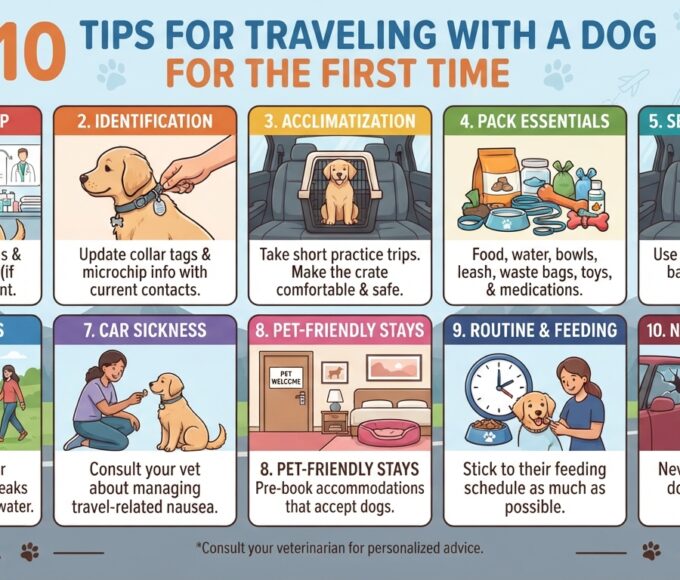
5. Identification and Emergency Contact Information
Dogs can become disoriented in unfamiliar environments, and even normally reliable dogs may attempt to escape when frightened.
Make sure your dog’s identification information is current.
Your travel kit should include:
- A collar with an identification tag.
- Your current phone number.
- An additional emergency contact.
- Microchip registration information.
- A recent photograph of your dog.
- Veterinary contact details.
If your dog is microchipped, verify that the registration details are up to date before traveling.
A recent photo can also be extremely useful if your dog becomes lost.
6. Vaccination Records and Important Documents
Depending on where you’re traveling, you may need health records or other documentation.
Keep digital and, when appropriate, printed copies of relevant documents such as:
- Vaccination records.
- Medication information.
- Prescription details.
- Veterinary contact information.
- Identification or microchip information.
- Travel documentation required for your destination.
Requirements can vary considerably between countries, airlines, accommodations, and other forms of transportation, so research your specific trip before departure.
7. A Small Dog First-Aid Kit
A basic pet first-aid kit can be useful for minor problems that occur while you’re away from home.
Depending on your dog’s needs, it may include:
- Gauze.
- Bandages.
- Disposable gloves.
- Pet-safe antiseptic or wound-cleaning supplies.
- Tweezers.
- Clean towels.
- Digital thermometer.
- Saline solution where appropriate.
- Any veterinarian-prescribed emergency supplies.
Avoid giving your dog human medication unless a veterinarian specifically tells you to do so. Some medications that are commonly used by people can be dangerous for dogs.
For serious injuries, poisoning, breathing problems, heat-related illness, or other emergencies, seek veterinary care rather than relying on a travel first-aid kit.
8. Prescription Medications
If your dog takes medication, make sure you bring enough for the entire trip.
It’s sensible to carry a little extra in case your return is delayed.
Keep medication in its original packaging when possible and bring relevant prescription information. Store medicines according to their required conditions, particularly if they are sensitive to heat or moisture.
Before a long trip, check whether your destination has access to an emergency veterinary clinic that could help if medication is lost.
9. Towels and a Familiar Blanket
A couple of towels can have surprisingly many uses.
You might need one after:
- Rain.
- Swimming.
- A muddy walk.
- An unexpected spill.
- A bathroom accident.
A familiar blanket can also provide your dog with a recognizable scent and comfortable resting surface.
Dogs often settle more easily when at least part of their environment smells familiar.
10. Familiar Toys and Comfort Items
Travel can expose your dog to unfamiliar sounds, people, smells, rooms, and routines.
Bringing a favorite toy or comfort item can provide some familiarity.
Good choices may include:
- A favorite soft toy.
- A durable chew toy.
- A puzzle toy your dog already knows how to use.
- A familiar blanket.
- A favorite bed or mat if space allows.
Avoid introducing a brand-new toy that your dog has never used before if you aren’t sure how they will interact with it.
Always choose toys appropriate for your dog’s chewing habits and supervise when necessary.
11. Waste Bags and Cleaning Supplies
Bathroom breaks are unavoidable, so waste bags should be easy to reach.
Pack more than you think you’ll need, especially for longer trips.
A small cleaning kit can also be helpful. Consider including:
- Waste bags.
- Paper towels.
- Disposable gloves.
- Pet-safe cleaning supplies.
- A few old towels.
- Sealable bags for dirty items.
Responsible cleanup is especially important when staying at hotels, visiting public parks, or using shared outdoor spaces.
12. Food Storage Containers
Keeping your dog’s food sealed helps prevent spills and keeps unwanted insects or odors away.
A resealable container can be useful for both dry food and treats.
For longer trips, divide meals into individual portions. This makes feeding easier and reduces the temptation to accidentally overfeed your dog.
13. Grooming Supplies
You don’t need to pack your entire grooming kit, but a few basics can be useful.
Depending on your dog’s coat and destination, consider:
- Brush or comb.
- Pet-safe wipes.
- Small towel.
- Nail care supplies if needed.
- Coat-cleaning products.
- Ear-care supplies recommended by your veterinarian.
Outdoor trips can leave dogs covered in mud, sand, burrs, or other debris, making basic grooming supplies particularly useful.
14. A Secure Carrier or Travel Crate
For some dogs and types of transportation, a carrier or crate is an important part of travel safety.
A properly sized crate can provide a secure resting area and prevent your dog from moving around the vehicle.
If you’re traveling by car, don’t allow your dog to roam freely around the passenger compartment. A suitable crash-tested restraint, travel crate, or other secure system can reduce the risk of distraction and injury.
If your dog isn’t accustomed to a carrier or crate, introduce it well before the trip instead of waiting until departure day.
15. Car Safety Equipment
If you’re taking a road trip, your dog’s safety inside the vehicle deserves special attention.
Depending on your setup, useful equipment can include:
- A crash-tested harness.
- A secured travel crate.
- A vehicle barrier.
- A seat cover.
- A non-slip travel mat.
- Window shades where appropriate.
Never allow your dog to ride unsecured in a way that lets them interfere with the driver.
Also avoid allowing your dog to ride with their head outside the window. While many dogs enjoy the sensation, flying debris and sudden movement can cause injuries.
16. A Travel-Friendly Sleeping Setup
Dogs may sleep poorly when they’re suddenly placed in an unfamiliar environment.
If possible, bring a familiar bed, mat, or blanket.
At a hotel or vacation rental, choose a quiet location where your dog can rest without constant foot traffic.
Don’t assume that a tired dog will automatically sleep comfortably in a strange environment. A predictable resting space can make the transition easier.
17. Cooling and Weather Supplies
Weather should influence what you pack.
For warm-weather travel, consider:
- Extra drinking water.
- A cooling mat where appropriate.
- Portable shade.
- A lightweight towel.
- A suitable harness rather than equipment that restricts breathing.
- A plan for avoiding the hottest part of the day.
Dogs can overheat quickly, and some are particularly vulnerable because of their age, health, coat, size, or body shape.
For cold destinations, pack appropriate bedding and weather protection based on your dog’s individual needs.
Never Leave Your Dog Alone in a Parked Car
This deserves special emphasis.
A parked vehicle can become dangerously hot very quickly, even if the windows are partially open or the weather initially feels comfortable.
If you can’t safely take your dog with you, arrange another option.
18. Keep a List of Nearby Veterinary Clinics
Before traveling, look up veterinary services near your destination.
Save the contact information for:
- A regular veterinary clinic.
- An emergency veterinary hospital.
- An after-hours service if available.
You may never need these numbers, but finding them in advance is much easier than searching during an emergency.
How to Organize Your Dog’s Travel Bag
Organization matters just as much as what you pack.
Try dividing the bag into sections:
Easy-access section
- Leash
- Waste bags
- Water bottle
- Treats
- Towels
Food section
- Meals
- Treats
- Bowls
- Food storage
Health section
- Medications
- First-aid supplies
- Veterinary records
Comfort section
- Blanket
- Toys
- Sleeping items
Keep emergency supplies somewhere you can reach quickly rather than burying them beneath food and clothing.
Dog Travel Bag Checklist
| Item | Essential? |
|---|---|
| Food | Yes |
| Fresh water | Yes |
| Food and water bowls | Yes |
| Collar/harness and leash | Yes |
| Identification tag | Yes |
| Waste bags | Yes |
| Medications | If prescribed |
| Veterinary records | Often useful |
| First-aid supplies | Recommended |
| Blanket/towel | Recommended |
| Familiar toy | Recommended |
| Cleaning supplies | Recommended |
| Carrier/crate | Depending on travel method |
| Travel restraint | For car journeys |
| Grooming supplies | Depending on trip |
| Cooling/weather supplies | Depending on climate |
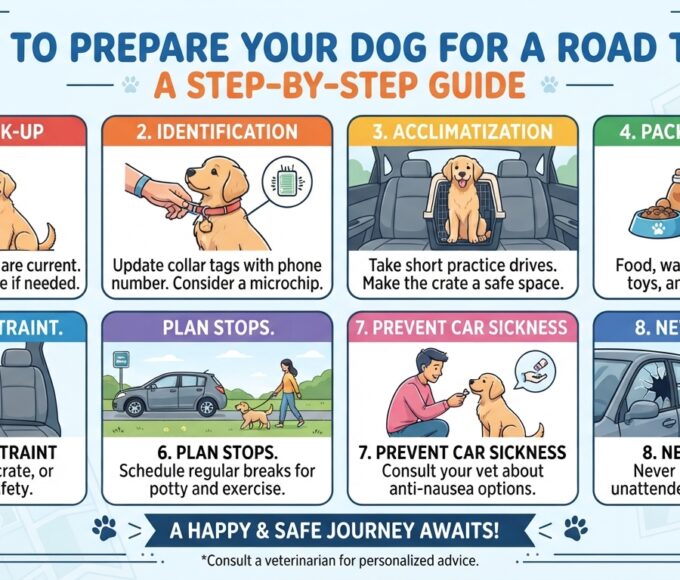
How to Prepare Your Dog Before Leaving
Packing the bag is only one part of successful travel.
Before departure:
Take a test trip
If your dog isn’t accustomed to car rides, begin with short journeys and gradually increase the distance.
Keep meals predictable
Avoid making major dietary changes immediately before travel.
Check identification
Confirm that your phone number and other identification information are current.
Review medications
Make sure you have enough medication for the trip plus a reasonable backup supply.
Research your destination
Confirm pet policies, nearby veterinary care, walking areas, and any restrictions.
Pack for delays
Flights can be delayed and road trips can take longer than expected. Extra food, water, waste bags, and medication can make unexpected changes much easier to handle.
Helping Your Dog Stay Calm While Traveling
Some dogs become nervous when traveling.
Familiar objects can help, but preparation is even more important.
Try to:
- Introduce travel gradually.
- Maintain familiar routines.
- Give your dog appropriate exercise before a journey.
- Offer bathroom breaks during longer trips.
- Keep the environment as calm as possible.
- Avoid forcing your dog into unfamiliar situations.
- Reward relaxed behavior.
- Give them a secure place to rest.
If your dog experiences severe travel anxiety or motion sickness, speak with your veterinarian before the trip. They can discuss appropriate options for your individual dog.
What About Motion Sickness?
Some dogs experience nausea during car journeys.
Signs can include:
- Excessive drooling.
- Lip licking.
- Restlessness.
- Whining.
- Vomiting.
- Repeated swallowing.
Avoid giving a large meal immediately before a journey if your veterinarian has advised a different approach. Keep the vehicle well ventilated and drive smoothly.
If motion sickness is severe or happens repeatedly, ask your veterinarian about appropriate treatment options.
Traveling by Plane With Your Dog
Air travel requires considerably more preparation than a typical car journey.
Airlines can have different rules regarding:
- Carrier dimensions.
- Pet weight.
- Cabin travel.
- Required documentation.
- Health certificates.
- Breed restrictions.
- Temperature restrictions.
- Fees and reservations.
Never assume that one airline’s rules apply to another.
Check the current requirements directly with the airline well before your departure date.
For international travel, destination countries may also have their own entry requirements.
What If Your Dog Gets Lost?
The risk of a lost pet is one reason identification should be treated as essential rather than optional.
If your dog goes missing:
- Start searching the immediate area.
- Contact local animal shelters and veterinary clinics.
- Notify local animal-control authorities where applicable.
- Use your dog’s recent photo in lost-pet notices.
- Contact the microchip registry if your dog is microchipped.
- Inform nearby businesses and people who may have seen your dog.
- Continue checking surrounding areas as dogs can travel farther than expected.
A current identification tag and updated microchip information can greatly improve the chances of being reunited.
Common Dog Travel Packing Mistakes
Even experienced owners can forget something.
Avoid these common mistakes:
- Packing too little food.
- Forgetting medication.
- Using an old or damaged leash.
- Leaving identification information outdated.
- Bringing toys that aren’t safe for unsupervised use.
- Forgetting waste bags.
- Failing to research accommodation rules.
- Not preparing for extreme weather.
- Changing your dog’s food suddenly.
- Waiting until travel day to introduce a crate.
- Forgetting extra supplies in case of delays.
A quick checklist the night before departure can prevent many of these problems.
Frequently Asked Questions
Can I take my dog on an airplane?
Some airlines allow dogs to travel in the cabin, while others have additional restrictions or may not accept pets on certain routes. Policies vary, so check your specific airline’s current requirements before booking.
How can I keep my dog calm during travel?
Gradual preparation, familiar bedding or toys, regular routines, appropriate breaks, and positive reinforcement can help. Dogs with significant anxiety may benefit from discussing travel strategies with a veterinarian before departure.
What should I do if my dog gets carsick?
Keep journeys gradual, avoid large meals immediately before travel when appropriate, provide good ventilation, and drive smoothly. If vomiting or nausea is frequent, consult your veterinarian about possible causes and treatment.
Should I bring my dog’s vaccination records?
It’s a good idea to carry relevant veterinary records, particularly when traveling across borders, staying at certain accommodations, using boarding facilities, or visiting unfamiliar veterinary clinics.
How much extra food should I pack?
Bring enough for the entire trip and some additional food in case of unexpected delays. The exact amount depends on the length of your journey and your dog’s normal feeding routine.
Should my dog wear an identification tag while traveling?
Yes. A current identification tag with reliable contact information provides an immediate way for someone to contact you if your dog becomes separated from you. Microchip information should also be kept current.
Can I leave my dog alone in a hotel room?
Only if the accommodation specifically allows it and your dog can safely and comfortably remain alone. Some properties prohibit unattended pets, while others have specific requirements. Always check the rules before leaving your dog alone.
Final Thoughts
A successful trip with your dog starts long before you reach your destination. The right travel bag gives you a practical way to carry the food, water, identification, medication, safety equipment, and comfort items your dog may need along the way.
Start with the essentials, then customize the bag according to your dog’s age, health, size, personality, and travel style.
Most importantly, don’t focus only on packing. Prepare your dog for the journey itself, use appropriate safety equipment, plan for unexpected delays, and research the requirements of your destination.
With thoughtful preparation, traveling with your dog can be less stressful and much more enjoyable—and you’ll be better prepared for whatever the journey brings.





Leave a comment