




For some children, coming home from school means homework, snacks, and a little time to relax. For one young boy, it also means being greeted by a very enthusiastic four-legged family member.
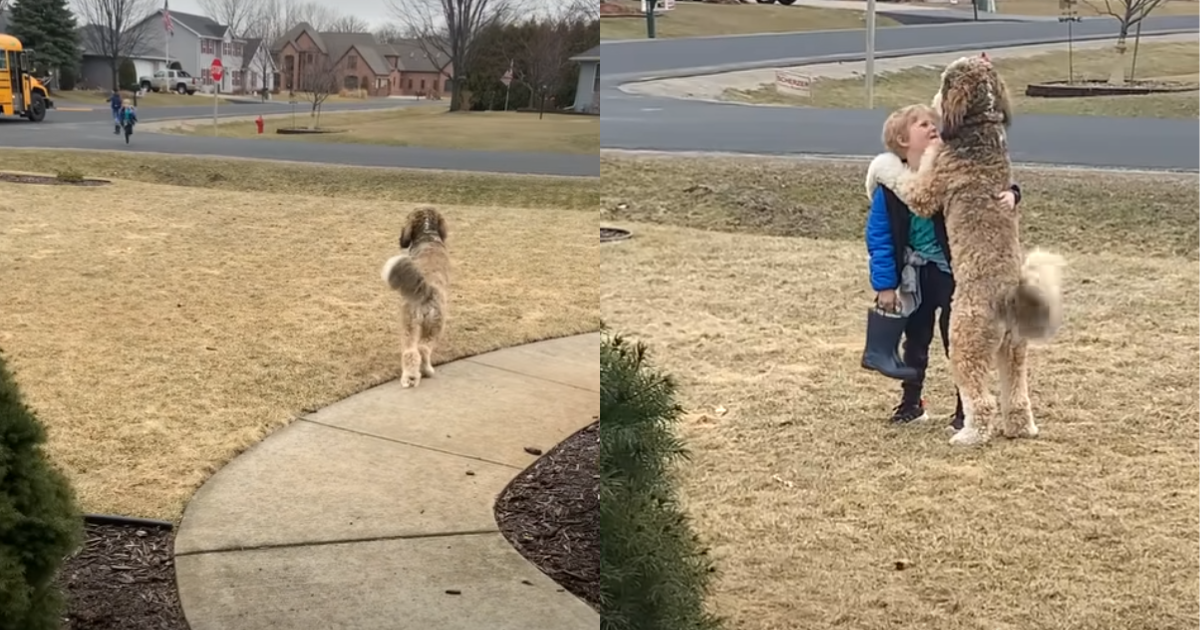
A heartwarming video captured a Bernedoodle waiting for his young human brother to return from school. As soon as the school bus arrives, the dog appears ready for the reunion. When the boy gets off the bus and runs toward him, the Bernedoodle responds with an affectionate greeting that looks like something the two have practiced countless times before.
The sweet interaction quickly captured the attention of viewers online, but beyond the adorable hug is something even more meaningful: a glimpse into the relationship that can develop between a child and a dog who grow up together.
A School-Day Reunion Worth Waiting For
The video begins with the Bernedoodle waiting outside as the school bus approaches.
The dog appears alert and interested in what is happening, seemingly recognizing that someone special is about to arrive. When the boy finally gets off the bus, he wastes little time making his way across the yard.
The Bernedoodle meets him with plenty of excitement.
As the two come together, the dog rises up and places his front paws around the boy, creating an adorable moment that resembles a hug. The boy responds with an equally enthusiastic embrace.
Rather than looking surprised by the dog’s behavior, the child seems completely comfortable with it.
That familiarity suggests this may have become a regular part of their routine.
For the dog, the end of the school day may represent an important moment of reconnection. For the child, it is a reminder that someone has been waiting for him all day.
The Reunion Continues With Plenty of Affection
The hug isn’t the end of their greeting.
The Bernedoodle continues showing affection, including giving his young companion plenty of enthusiastic kisses.
The boy appears just as happy to see his dog, creating a simple interaction that says a lot without either of them needing words.
Dogs can form remarkably strong social bonds with the people they live with. For a family dog, routines such as morning departures, meal times, walks, bedtime, and school arrivals can become predictable events.
When a favorite family member leaves at roughly the same time every day and returns later, the dog may learn to recognize those patterns.
That’s part of what makes reunions like this so entertaining to watch.
Why Dogs Can Become Such Important Childhood Companions
A family dog can become much more than a pet.
For children, living with a dog can provide opportunities to learn about empathy, responsibility, communication, boundaries, and caring for another living creature.
Of course, adults remain responsible for the dog’s care. Young children should not be expected to manage feeding, exercise, medication, or other important responsibilities on their own.
But age-appropriate involvement can still be valuable.
A child might help:
- Refill a water bowl with adult supervision
- Practice simple training cues
- Participate in gentle play
- Help brush the dog when appropriate
- Put toys away
- Learn how to approach the dog respectfully
- Recognize when the dog wants space
These everyday experiences can help children understand that affection works both ways: loving a dog also means respecting its needs.
What Is a Bernedoodle?
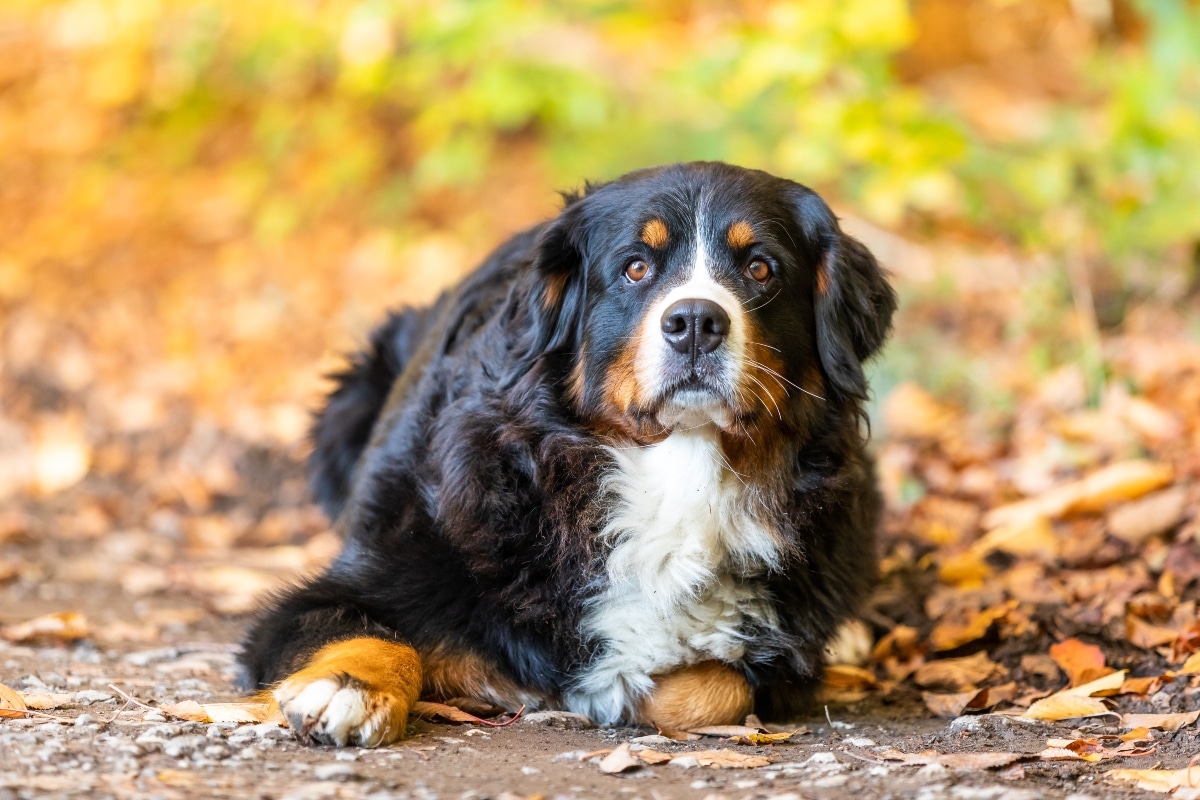
A Bernedoodle is a cross between a Bernese Mountain Dog and a Poodle.
Because it is a mixed breed, Bernedoodles can vary considerably in appearance, size, coat type, energy level, and temperament.
Some may have a curlier coat associated with Poodles, while others may have a coat that more closely resembles the Bernese Mountain Dog parent.
Their adult size can also vary depending on the size of the Poodle parent and other factors.
This variation is important for anyone considering a Bernedoodle. Two dogs described as Bernedoodles may have noticeably different physical and behavioral characteristics.
Bernedoodles Can Be Playful and People-Oriented
Many Bernedoodles are described by their owners as affectionate, intelligent, playful, and highly interested in family interaction.
Those qualities can make them enjoyable companions for households that have enough time for training, exercise, grooming, and social interaction.
However, it is important not to assume that every Bernedoodle will automatically behave like the dog in the viral video.
A dog’s personality is influenced by genetics, early experiences, training, socialization, environment, and individual temperament.
Some may be outgoing and playful, while others may be calmer, more reserved, or more independent.
Growing Up Together Can Create a Strong Bond
When a dog and child share a household from an early age, they have many opportunities to become familiar with one another.
The dog learns the child’s voice, movements, routines, and scent. The child learns how the dog communicates through body language and behavior.
Over time, ordinary activities can become shared experiences.
A child might read a book while the dog rests nearby. They might play together in the yard, sit beside one another while watching television, or simply spend quiet time in the same room.
These small moments can contribute to a strong relationship.
The school-bus reunion is simply one particularly adorable example.
Why Supervision Still Matters
Even when a dog and child have an exceptionally close relationship, adults should supervise their interactions.
A friendly dog can still become uncomfortable if it is startled, injured, frightened, overly excited, or disturbed while eating or sleeping.
Children should learn some basic rules:
Don’t disturb a dog while eating
Dogs should be allowed to enjoy their food without being bothered.
Respect sleeping dogs
A child should avoid suddenly climbing onto or waking a sleeping dog.
Don’t pull ears or tails
Dogs can find rough handling painful or frightening.
Give the dog an escape option
Every dog should have a quiet place where it can retreat when it wants to rest.
Watch excited play
Large dogs can accidentally knock over a small child even when they have no intention of hurting them.
Supervision protects both the child and the dog.
A Hug Isn’t Always a Dog’s Favorite Form of Affection
The video shows a dog appearing comfortable with the child’s embrace, but that doesn’t mean every dog enjoys hugs.
Some dogs tolerate hugs, while others actively dislike being held around the body.
Parents can teach children to look for signs of comfort and discomfort.
A relaxed dog may have:
- A loose body
- Relaxed facial muscles
- Normal breathing
- Comfortable movement
- A willingness to remain near the child
Potential signs of discomfort can include:
- Turning the head away
- Moving away
- Tucking the tail
- Lip licking
- Yawning when not tired
- Stiffening the body
- Flattening the ears
- Trying to hide
If a dog moves away, children should be taught to let it go.
Dogs Benefit From More Than Affection
Although the Bernedoodle in this story clearly enjoys attention from his young companion, a healthy relationship involves more than cuddles.
Dogs need appropriate exercise, mental stimulation, nutrition, veterinary care, grooming, rest, and training.
For a Bernedoodle in particular, owners should be prepared to spend time on coat maintenance. Coat texture varies considerably, but many individuals require regular brushing and professional grooming.
Their intelligence can also make enrichment important.
Puzzle toys, scent games, obedience training, trick training, and interactive play can provide useful mental stimulation.
Could a Bernedoodle Be Right for a Family?
Potential owners should look beyond an adorable video when considering any breed or crossbreed.
A Bernedoodle may be appealing to a family that wants an affectionate and active companion, but prospective owners should consider:
- Available living space
- Daily exercise requirements
- Grooming responsibilities
- Training commitment
- Expected adult size
- Household schedule
- Time the dog will spend alone
- Veterinary expenses
- Compatibility with existing pets
- Individual temperament
The goal isn’t simply to find a cute dog.
It is to find a dog whose needs match the household’s ability to provide care.
The Importance of Teaching Children About Dogs
One of the most valuable things parents can do is teach children that dogs have feelings, preferences, and boundaries.
Instead of simply telling a child to “be nice to the dog,” adults can demonstrate what respectful interaction looks like.
Children can learn to:
- Approach calmly.
- Let the dog choose whether to interact.
- Avoid disturbing the dog while it eats or sleeps.
- Use gentle hands.
- Never ride, climb on, or roughly handle a dog.
- Leave the dog alone when it retreats.
- Tell an adult if the dog appears frightened or uncomfortable.
These lessons can help create safer and more respectful relationships.
Why This Simple Moment Resonated With So Many People
There is something universally relatable about being excited to see someone you love after a long day apart.
The Bernedoodle’s reaction makes that feeling visible.
The dog waits.
The boy arrives.
They run toward each other.
Then comes the hug, followed by plenty of affection.
It is a simple routine, but moments like this can become some of the most memorable parts of childhood.
For the dog, the boy is clearly an important member of his world. For the child, having a loyal companion waiting at home can make an ordinary school day feel a little more special.
Frequently Asked Questions
Are Bernedoodles good family dogs?
Many Bernedoodles can make affectionate family companions, particularly when they receive appropriate training, socialization, exercise, grooming, and attention. However, individual temperament varies, so families should evaluate the specific dog rather than relying only on breed reputation.
Are Bernedoodles good with children?
Some Bernedoodles can develop close relationships with children, especially when they are properly socialized and raised in a suitable environment. Children should always be supervised around dogs, regardless of breed.
Are Bernedoodles easy to train?
Their Poodle heritage can contribute to intelligence and trainability, but individual dogs vary. Consistent, reward-based training and appropriate mental stimulation are important.
How much grooming does a Bernedoodle need?
It depends heavily on the dog’s coat. Curlier coats generally require frequent brushing to reduce matting and may need regular professional grooming.
Do Bernedoodles need a lot of exercise?
Many Bernedoodles are active and benefit from daily physical activity and mental enrichment. Their exact needs depend on their age, size, health, temperament, and individual energy level.
Can dogs really miss their owners?
Dogs form strong social attachments and can show behavioral changes when separated from familiar people. However, human descriptions such as “missing someone” should be interpreted carefully rather than assuming dogs experience emotions exactly as humans do.
Final Thoughts
The heartwarming reunion between this Bernedoodle and his young human brother is a wonderful example of how meaningful an everyday pet relationship can become.
The dog doesn’t need an elaborate trick or special occasion to make the moment memorable. Simply waiting for the school bus, greeting his favorite person, and sharing a few affectionate moments is enough.
For families considering bringing a dog into their home, the story also offers an important reminder: the strongest bonds are built over time.
Through consistent care, positive training, respectful interactions, play, and companionship, children and dogs can become an important part of each other’s daily lives.
And sometimes, the sweetest part of coming home is knowing that a wagging tail has been waiting for you.





Leave a comment