



Training a pet can be one of the most rewarding parts of living with an animal, but it rarely happens overnight.
Whether you’re teaching a puppy to sit, helping an adult dog stop jumping on guests, or introducing a senior dog to a new routine, learning takes repetition and patience. Some behaviors may improve quickly, while others require weeks or months of consistent practice.
The key is to focus on what you want your pet to learn rather than becoming frustrated when progress isn’t immediate.
Consistent training helps pets understand what is expected of them, while patience gives them the time they need to develop new habits.
Why Consistency Matters in Pet Training
Animals learn through repeated experiences and associations.
If you reward your dog for sitting calmly today but ignore the same behavior tomorrow, your dog may have a harder time understanding what earns reinforcement.
Consistency doesn’t mean every training session has to be identical. It means the important rules, cues, and consequences should remain reasonably predictable.
For example, if you don’t want your dog jumping on people, everyone in the household should follow the same basic approach rather than allowing the behavior sometimes and discouraging it at other times.
Use the Same Cues
Choose simple commands or hand signals and use them consistently.
If one person says “down” while another says “lie down” for the same behavior, your pet may eventually learn both, but using a consistent cue can make the learning process clearer.
Keep commands short and avoid repeating them over and over when your pet hasn’t responded.
Keep Household Rules Clear
Pets can become confused when household expectations constantly change.
If your dog isn’t allowed on the sofa, decide whether that rule applies consistently. If you’re teaching your dog to wait before going through a door, make the routine predictable.
Clear expectations make it easier for your pet to understand which behaviors are desirable.
Patience Is Just as Important
Consistency provides structure, but patience gives your pet the opportunity to learn.
Dogs don’t automatically understand human language or household rules. They have to discover which behaviors produce useful or rewarding outcomes.
Some dogs learn quickly, while others need more repetitions or different approaches.
Instead of asking, “Why doesn’t my dog understand this yet?” try asking:
“What can I change to make this behavior easier for my dog to learn?”
That small change in perspective can make training much less frustrating.
Focus on Positive Reinforcement
Reward-based training is a useful way to teach pets what you want them to do.
When your dog performs a desired behavior, you can reinforce it with something meaningful to them, such as:
- A small food reward
- Praise
- Play
- A favorite toy
- Access to something they enjoy
The reward should be delivered at the right moment so your dog can connect the behavior with the positive outcome.
For example, if you’re teaching a dog to sit, reward them shortly after they place their bottom on the ground.
Over repeated sessions, the dog can learn that sitting is a behavior worth repeating.
Don’t Expect Perfection
One of the biggest mistakes pet owners can make is expecting a newly learned behavior to work perfectly in every situation.
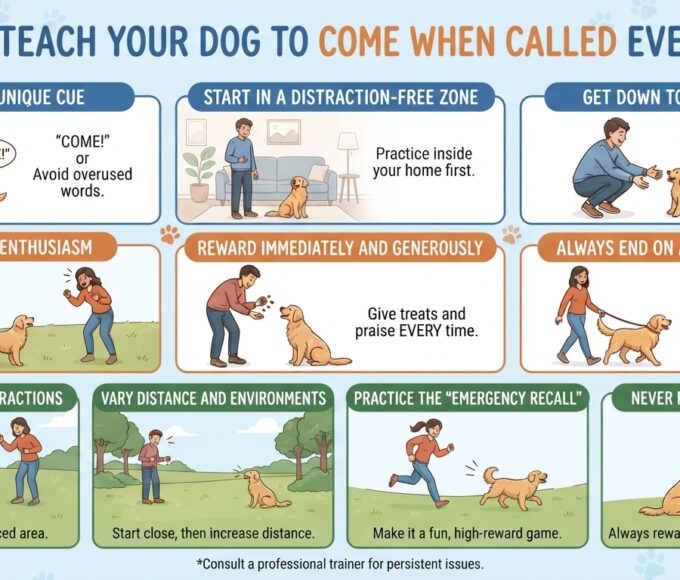
A dog might sit reliably in a quiet living room but struggle when asked to sit at a busy park.
That’s normal.
Dogs have to learn that a behavior applies in different environments and around different distractions.
Build difficulty gradually.
Start in a quiet environment, then slowly introduce distractions as your dog becomes more reliable.
Keep Training Sessions Short and Engaging
Long training sessions can become tiring for both you and your pet.
Instead, consider practicing for a few minutes at a time throughout the day.
Short sessions can be incorporated into ordinary routines:
- Ask for a sit before putting down the food bowl.
- Practice waiting before opening the door.
- Reward calm behavior when guests arrive.
- Practice coming when called in a safe area.
- Reward your dog for settling quietly.
Frequent, manageable practice can make training feel like a normal part of everyday life.
What to Do When Your Pet Makes a Mistake
Mistakes are part of learning.
If your dog jumps on a visitor, grabs something they shouldn’t have, or ignores a cue, reacting with anger usually doesn’t teach the behavior you actually want.
Instead, calmly manage the situation and redirect your pet toward an appropriate behavior.
For example, if your dog jumps for attention, you can wait for their feet to return to the floor and then reward calm behavior.
The goal is to teach your pet what to do, rather than simply telling them what not to do.
Avoid Fear and Physical Punishment
Training should not depend on frightening, hurting, or intimidating an animal.
Harsh punishment can create fear and may damage the relationship between a pet and its owner. It can also make some behavior problems more difficult to manage.
A reward-based approach focuses on teaching desirable behaviors and reinforcing them.
If you’re struggling with a serious behavior problem, a qualified professional who uses humane, reward-based methods can help you develop an appropriate training plan.
Everyone in the Household Should Be Consistent
Training becomes much easier when everyone follows the same basic rules.
Imagine that one family member rewards a dog for sitting politely while another gives attention whenever the dog jumps up.
The dog receives conflicting information.
Before beginning training, discuss household rules with everyone who interacts regularly with the pet.
Agree on:
- Which behaviors you want to encourage
- Which behaviors need to be redirected
- Which commands or signals you’ll use
- Which rewards are most effective
- Where the pet is allowed to go
- How you’ll respond to common problems
Consistency across people can prevent unnecessary confusion.
Learn to Recognize Your Pet’s Motivation
Not every pet finds the same reward exciting.
Some dogs work enthusiastically for food. Others become more motivated by toys, play, praise, or access to something they want.
Pay attention to what your pet naturally values.
A reward doesn’t have to be elaborate. Sometimes a few seconds of play or enthusiastic praise is enough.
The better you understand your pet, the easier it becomes to make training engaging.
Training Should Match Your Pet’s Age and Abilities
Training isn’t just for puppies.
Puppies
Young puppies are still learning how the world works. Keep sessions short and focus on basic skills, safe socialization, house training, handling, and appropriate chewing.
Adult Dogs
Adult dogs can learn new behaviors and may benefit from training that addresses specific household challenges.
An adult dog may also arrive with habits that need to be changed gradually.
Senior Dogs
Older dogs can continue learning, although physical limitations, hearing changes, vision problems, or cognitive changes may affect how training should be approached.
Use appropriate cues and adjust expectations according to the individual dog’s abilities.
What If Training Isn’t Working?
If your pet doesn’t seem to be progressing, don’t automatically assume they’re stubborn or unwilling to learn.
Consider whether:
- The behavior is too difficult for their current skill level.
- The environment contains too many distractions.
- The reward isn’t motivating enough.
- Training sessions are too long.
- The cue isn’t being used consistently.
- The behavior hasn’t been practiced in different settings.
- Your pet is tired, frightened, stressed, or uncomfortable.
- There may be an underlying medical problem.
A sudden change in behavior can sometimes have a medical cause. If a previously well-trained pet suddenly begins behaving differently, speak with your veterinarian.
For persistent or complex behavior problems, a qualified veterinary behaviorist or reward-based professional trainer may be able to help.
Common Pet Training Mistakes to Avoid
Changing the Rules
Allowing a behavior sometimes and punishing it at other times can make expectations unclear.
Repeating Commands Constantly
Repeating a cue many times can make it less meaningful. Instead, make the behavior easier and reinforce the correct response.
Expecting Immediate Results
Learning takes time. Judge progress over repeated sessions rather than expecting perfection after one day.
Training Only When Something Goes Wrong
Training shouldn’t happen only after your pet misbehaves. Regularly practice desirable behaviors when your pet is calm and successful.
Using Punishment Instead of Teaching
Telling a dog what not to do doesn’t necessarily show them what you want instead. Whenever possible, teach and reward an appropriate alternative.
Ignoring the Environment
Management is an important part of training. If your dog constantly steals food from the kitchen, keeping food out of reach prevents the behavior from being rehearsed while you teach an alternative.
Simple Ways to Build Consistency Into Everyday Life
You don’t need a complicated training schedule.
Small moments throughout the day can become learning opportunities.
Try:
Before meals: Ask for a simple behavior such as sitting calmly.
Before walks: Reward your dog for waiting patiently while you prepare the leash.
At the door: Practice waiting instead of rushing outside.
During play: Practice dropping a toy and receiving it back.
When guests arrive: Reward calm behavior instead of rewarding jumping.
During quiet time: Reinforce your dog for settling on their bed.
These tiny repetitions can add up over time.
Frequently Asked Questions
How long does it take to train a pet?
There is no universal timeline. Training speed depends on the individual animal, the behavior being taught, the training environment, motivation, and how consistently the behavior is practiced.
Simple behaviors may develop quickly, while more complicated behaviors can take considerably longer.
What is the most important part of pet training?
Consistency is one of the most important factors. Your pet should receive clear and predictable information about which behaviors are being reinforced.
Patience, appropriate rewards, good timing, and management are also important.
Is positive reinforcement effective for dogs?
Yes. Reward-based training can teach dogs a wide range of behaviors by reinforcing actions you want them to repeat.
Rewards can include food, play, praise, toys, or other things the individual dog finds valuable.
Should I punish my dog when they make a mistake?
Punishment isn’t necessary for teaching most household behaviors and can create fear or confusion. Instead, manage the situation, redirect your dog, and reinforce an appropriate alternative.
What if my dog learns at a slower pace than other dogs?
Avoid comparing your dog with another animal. Learning speed varies between individuals.
Break the behavior into smaller steps, use an appropriate reward, reduce distractions, and give your dog plenty of opportunities to succeed.
Can older dogs still learn new behaviors?
Absolutely. Senior dogs can continue learning, although training may need to account for physical or sensory changes.
If an older dog suddenly struggles with behaviors they previously knew, a veterinary checkup may be appropriate.
When should I contact a professional trainer?
Consider professional help if you’re dealing with persistent fear, aggression, separation-related problems, reactivity, destructive behavior, or another issue that you cannot safely manage yourself.
Choose a professional who uses humane, reward-based training methods.
Final Thoughts
Successful pet training isn’t about getting perfect results as quickly as possible.
It’s about building understanding through repetition, clear communication, appropriate rewards, and patience.
Your pet may make mistakes. Some lessons may take longer than expected. There may even be days when progress seems to disappear.
That’s part of the process.
Stay consistent, keep expectations realistic, reward the behaviors you want to see more often, and adjust your approach when something isn’t working.
With time and thoughtful training, small improvements can develop into reliable habits—and the process can strengthen the relationship you share with your pet along the way.
This Article Was Generated By AI.





Leave a comment