





A road trip can be even more enjoyable when your dog is riding along.
From discovering new walking trails to relaxing together at a pet-friendly destination, traveling with your dog can create memorable experiences and give you more time to enjoy each other’s company. But a successful trip requires more than putting your dog in the car and heading out.
Dogs can become stressed by unfamiliar surroundings, long journeys, new sounds, different routines, and unfamiliar people. Careful preparation can make the experience safer and more comfortable for everyone.
Whether you’re planning a weekend escape or a long-distance adventure, these practical tips can help you prepare for traveling with your dog.
1. Plan Your Route Before Leaving
A little research can prevent plenty of problems during a road trip.
Before you leave, identify:
- Dog-friendly accommodation
- Suitable rest stops
- Parks and walking areas
- Veterinary clinics along your route
- Pet-friendly restaurants or outdoor dining areas
- Places where your dog can safely exercise
Don’t assume that every hotel, restaurant, park, or attraction will allow dogs.
Check current pet policies before making reservations, particularly if your dog is large or you are traveling with more than one pet.
Planning your stops ahead of time also means you won’t have to search for a suitable place while you’re already tired and on the road.
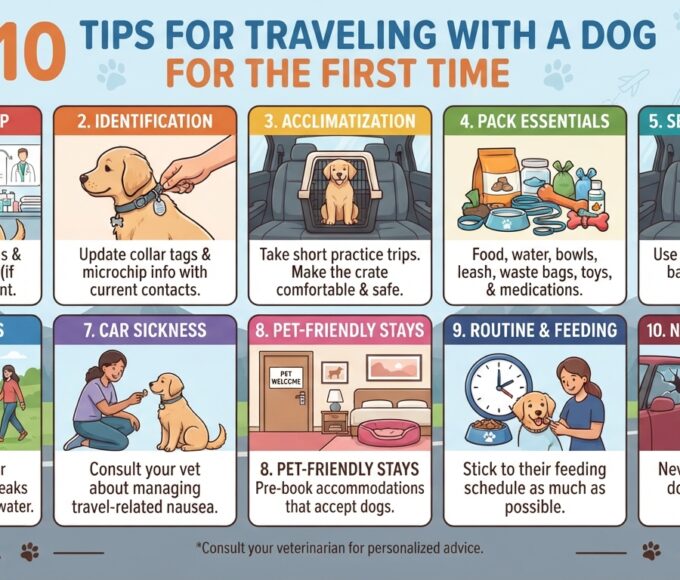
2. Make a Dog Travel Checklist
It’s easy to remember your own luggage and forget something important for your dog.
Before leaving, prepare a dedicated travel bag containing the essentials.
Consider packing:
- Regular food
- Fresh drinking water
- Food and water bowls
- Leash and collar
- Identification tags
- Waste bags
- Medications
- Copies of important veterinary records
- Familiar bedding
- A favorite toy
- Grooming supplies
- Towels
- Appropriate cleaning supplies
- A suitable travel crate or restraint
Bring enough of your dog’s regular food for the journey and, when practical, some extra in case your return is delayed.
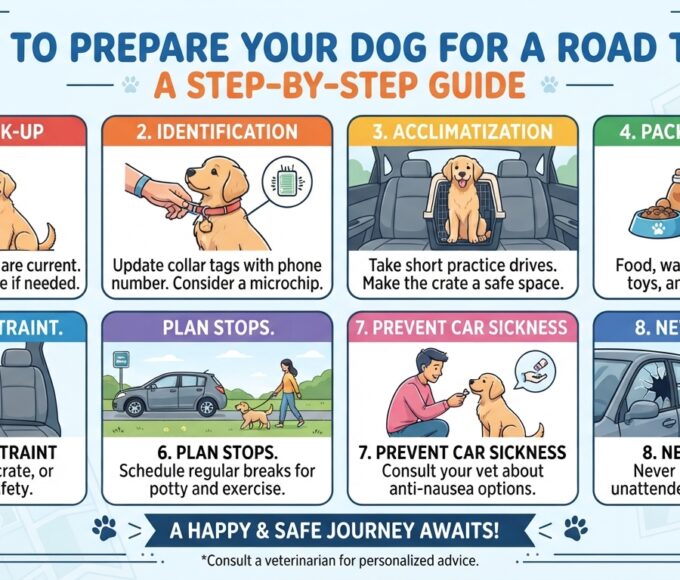
3. Get Your Dog Comfortable With the Car
If your dog isn’t accustomed to traveling, don’t make their first experience a six-hour journey.
Start with short drives.
Let your dog spend time near the parked car, then gradually introduce brief trips. Keep these experiences calm and positive.
As your dog becomes more comfortable, gradually increase the length of the journeys.
This can help you discover whether your dog experiences anxiety, motion sickness, or other problems before you’re far from home.
4. Use a Proper Safety Restraint
A dog should not be allowed to move freely around a moving vehicle.
An unrestrained dog can become a distraction for the driver and may be injured during sudden braking or a collision.
Depending on your dog and vehicle, appropriate options can include:
- A properly secured travel crate
- A crash-tested vehicle harness
- A suitable pet travel carrier
Choose equipment designed for vehicle travel and appropriate for your dog’s size.
Never attach a restraint in a way that could injure your dog during sudden movement.
5. Keep Your Dog in the Back Seat When Appropriate
For many vehicles, the back seat is a safer location for a dog than the front passenger seat because front airbags are designed for human passengers and can seriously injure animals.
Keep your dog properly restrained and make sure they cannot interfere with the driver.
If you’re using a crate, secure it so it cannot slide around during travel.
The safest arrangement will depend on your vehicle and the restraint system you’re using.
6. Take Regular Breaks
Long journeys can be tiring for dogs.
Plan regular stops where your dog can safely get out, stretch, walk, and relieve themselves.
Don’t wait until your dog becomes restless before considering a break.
During stops:
- Keep your dog securely leashed.
- Choose a safe area away from traffic.
- Give them time to walk and sniff.
- Offer water.
- Allow them to relieve themselves.
- Check that they’re comfortable before continuing.
A few extra minutes at a rest stop can make the remainder of the journey much easier.
7. Never Leave Your Dog Alone in a Parked Car
This is one of the most important travel-safety rules.
Don’t leave your dog alone in a parked vehicle, even if the windows are partially open or you expect to be away for only a few minutes.
Temperatures inside vehicles can rise rapidly, creating a potentially life-threatening situation.
Weather conditions can also change unexpectedly.
If you need to visit a location where dogs aren’t allowed, make alternative arrangements rather than leaving your dog inside the car.
8. Keep Your Dog’s Routine as Familiar as Possible
Travel introduces plenty of changes.
You can make the transition easier by maintaining familiar routines whenever practical.
Try to keep:
- Feeding times reasonably consistent
- Bathroom routines familiar
- Exercise appropriate to your dog’s normal needs
- Bedtime routines predictable
- Familiar sleeping items available
Your dog doesn’t need an identical schedule, but some consistency can make unfamiliar surroundings easier to handle.
9. Bring Familiar Items From Home
A favorite blanket or toy can provide a familiar smell in an unfamiliar environment.
You might bring:
- Their usual bed
- A blanket
- Favorite toys
- A familiar chew item
- Their normal food bowl
These objects won’t eliminate travel stress, but they can help make a hotel room, vacation rental, or other temporary space feel less unfamiliar.
10. Make Sure Your Dog Has Identification
Before leaving home, check your dog’s identification information.
Make sure their collar tag has current contact information and confirm that their microchip registration details are up to date.
A recent photograph can also be useful if your dog becomes separated from you.
Take extra precautions when traveling because unfamiliar locations can increase the risk of a dog becoming lost.
Never assume your dog will automatically know how to find their way back in a new place.
11. Pack Your Dog’s Medications
If your dog takes medication, bring enough for the entire trip plus an appropriate reserve in case your plans change.
Keep medications in secure packaging and follow the usual dosing instructions.
If your dog has a medical condition, bring relevant veterinary records and your veterinarian’s contact information.
For dogs with complex medical needs, it can also be helpful to identify an emergency veterinary hospital near your destination before leaving home.
12. Be Prepared for Motion Sickness
Some dogs become nauseous during car rides.
Signs can include:
- Excessive drooling
- Lip licking
- Restlessness
- Whining
- Vomiting
- Refusing food
Avoid giving your dog a large meal immediately before a long journey unless your veterinarian has recommended otherwise.
Keep the vehicle comfortably ventilated and take breaks when necessary.
If your dog regularly experiences motion sickness, talk with your veterinarian before the trip. A veterinarian can determine whether medication or another strategy may be appropriate.
Don’t give your dog human motion-sickness medication unless a veterinarian specifically recommends it and provides appropriate instructions.
13. Be Careful With Food and Treats
Travel isn’t the best time to introduce a completely new diet.
Sudden dietary changes can contribute to digestive upset, which is particularly inconvenient when you’re hundreds of miles from home.
Whenever possible, bring your dog’s usual food and treats.
Be cautious about allowing your dog to eat unfamiliar foods from restaurants, roadside stops, or other people.
Keeping their diet relatively consistent can help reduce unnecessary stomach problems.
14. Research Your Destination
A destination may advertise itself as pet-friendly, but that doesn’t necessarily mean your dog can go everywhere.
Check the rules before arriving.
Look into:
- Dog-friendly beaches
- Hiking regulations
- Leash requirements
- Local parks
- Pet-friendly restaurants
- Hotel restrictions
- Breed or size restrictions where applicable
- Areas where dogs aren’t permitted
Knowing the rules ahead of time makes it easier to plan activities your dog can actually enjoy.
15. Give Your Dog Time to Adjust
When you arrive somewhere new, your dog may need time to investigate the environment.
Allow them to sniff and explore gradually rather than immediately overwhelming them with unfamiliar people and activities.
Watch their body language.
Signs such as excessive panting, hiding, trembling, repeated lip licking, pacing, avoidance, or unusual vocalization may indicate that your dog is uncomfortable or stressed.
If your dog seems overwhelmed, provide a quiet place where they can rest.
What Should You Do at a Dog-Friendly Hotel?
Even a social dog may behave differently in an unfamiliar hotel room.
Before allowing your dog to explore freely, check the room for hazards.
Look for:
- Accessible electrical cords
- Small objects
- Unsafe balcony access
- Open windows
- Toxic substances
- Items your dog might chew
- Places where they could become trapped
Keep your dog’s food, medication, and belongings organized.
Follow the hotel’s pet rules and don’t leave your dog alone if they become distressed or are likely to damage the room.
What If Your Dog Gets Lost During the Trip?
Losing a dog away from home can be especially frightening.
If your dog disappears:
- Contact local animal shelters and veterinary clinics.
- Report the missing pet to local authorities or animal-control organizations where appropriate.
- Use your dog’s microchip information.
- Share a recent photograph locally.
- Search nearby areas carefully.
- Contact the accommodation where you’re staying.
- Ask local residents and businesses to keep watch.
Keep your dog’s identification information accessible before every trip rather than searching for it after something goes wrong.
Can Dogs Fly on an Airplane?
Some airlines allow dogs to travel, but rules vary considerably.
Requirements can depend on the airline, destination, dog’s size, carrier, and whether the dog travels in the cabin or through another approved arrangement.
Air travel can also be stressful or medically inappropriate for some dogs.
If you’re considering flying, check the airline’s current pet policy well before booking and discuss the trip with your veterinarian if your dog has health concerns or is particularly anxious.
Never assume that an airline’s rules are the same as another carrier’s.
What About International Travel?
International travel with a dog requires additional preparation.
Depending on the countries involved, you may need specific:
- Vaccinations
- Health certificates
- Microchip documentation
- Import permits
- Parasite treatments
- Veterinary examinations
Requirements can change and may depend on your departure country, destination, transit countries, and method of travel.
Start researching well before your departure date rather than waiting until the final week.
Should You Take Your Dog Everywhere?
Not necessarily.
Some dogs love exploring new places, while others are happiest with familiar surroundings.
Consider your dog’s:
- Age
- Health
- Temperament
- Anxiety level
- Exercise needs
- Tolerance for car rides
- Reaction to unfamiliar environments
If your dog becomes extremely stressed by travel, leaving them with a trusted caregiver or boarding facility may sometimes be a better option.
The goal isn’t to take your dog on every adventure. It’s to choose the option that best suits their individual needs.
A Simple Dog Road Trip Checklist
Before pulling out of the driveway, make sure you have:
- Food
- Water
- Food and water bowls
- Collar and identification tag
- Leash
- Waste bags
- Travel crate or vehicle harness
- Bed or blanket
- Toys
- Medications
- Veterinary records
- Microchip information
- Grooming supplies
- Towels
- Cleaning supplies
- Recent photograph
- Emergency veterinary information
- Pet-friendly accommodation confirmation
Frequently Asked Questions
How often should I stop when traveling with my dog?
There isn’t one perfect interval for every dog. Puppies, senior dogs, dogs with medical conditions, and dogs that become restless may need more frequent breaks. Plan regular opportunities to stretch, drink water, walk, and relieve themselves.
Can my dog sit in the front seat?
The front passenger seat is generally not the safest place for a dog because of airbags. Keeping your dog appropriately restrained in the rear seating area is usually preferable.
Should I feed my dog before a long car ride?
A large meal immediately before traveling may make nausea more likely for some dogs. Your dog’s feeding schedule should take their individual needs into account. If motion sickness is a problem, ask your veterinarian for personalized advice.
What should I do if my dog vomits in the car?
Pull over somewhere safe, allow your dog to settle, provide appropriate ventilation, and clean the area when practical. If vomiting is frequent or severe, contact your veterinarian, especially if other symptoms occur.
Can I let my dog off-leash during a road trip?
Only in areas where off-leash activity is legally permitted and genuinely safe. An unfamiliar environment can make even a normally reliable dog more likely to become lost.
How can I make a hotel stay easier for my dog?
Bring familiar bedding and toys, maintain a predictable routine, inspect the room for hazards, provide appropriate exercise, and give your dog a quiet place to rest.
Is traveling good for every dog?
No. Some dogs enjoy new experiences, while others find travel stressful. Consider your dog’s individual temperament, health, and comfort before deciding whether to take them along.
Final Thoughts
Traveling with your dog can turn an ordinary trip into an experience you’ll remember for years.
The key is preparation.
Secure your dog properly in the vehicle, plan regular breaks, pack familiar food and belongings, keep identification current, research pet-friendly destinations, and never leave your dog alone in a parked car.
Most importantly, pay attention to your dog’s behavior throughout the journey.
A successful dog-friendly trip isn’t about visiting as many places as possible. It’s about making sure your companion is safe, comfortable, and able to enjoy the experience too.
With thoughtful planning and a little flexibility, the road ahead can become part of some of your favorite memories together.
This Article Was Generated By AI.








Leave a comment