



For a tiny puppy living on the streets, the world can feel enormous.
Cars, unfamiliar people, loud noises, cold nights, hunger, and countless other dangers can be overwhelming for a young dog that should still be relying on a mother or a caring family. When one woman came across a fragile puppy sitting alone among a pile of leaves, she immediately realized that he needed help.
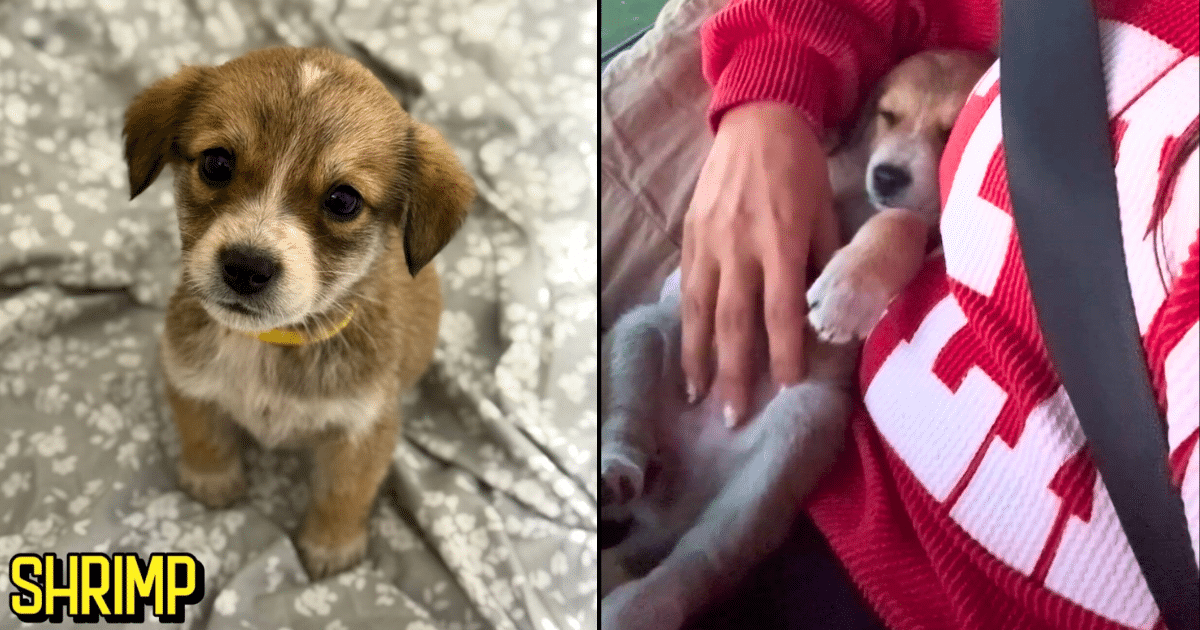
The puppy was incredibly small—young enough that he appeared to be no more than a couple of months old. He was severely undernourished and in poor condition, with large areas of his body seemingly missing fur.
But despite how difficult his situation looked, his story was about to change.
A Tiny Puppy With Nowhere to Go
The little puppy had apparently been left to fend for himself.
Instead of a warm bed and regular meals, he had only the outdoor environment around him. He was so small that the world must have seemed enormous compared with his tiny body.
When the woman noticed him, she didn’t simply walk past.
She understood that the puppy was vulnerable and needed professional care. She went to her car, found a box, and carefully placed the frightened little dog inside.
Rather than attempting to treat him herself, she took him directly to a veterinary clinic.
That decision would become the beginning of his transformation.
The Vet Visit Reveals What He Had Been Through
At the clinic, veterinarians examined the puppy and quickly noticed that his skin and coat were in poor condition.
Much of his fur was missing, and his skin was irritated. The veterinary team diagnosed him with dermatitis, a general term for inflammation of the skin.
Parasites and other underlying problems can contribute to skin irritation and hair loss in dogs, so determining the cause is important before treatment.
The puppy received professional care, including a thorough cleaning and treatment for his irritated skin.
For a dog who had apparently spent his early life struggling to survive, even something as simple as being cleaned and cared for was a major change.
More importantly, his new guardian was given instructions for continuing his recovery after leaving the clinic.
His New Life Begins
Once the puppy was well enough to leave the veterinary clinic, he finally had something he had been missing for much of his short life: a safe home.
His new owner wanted him to have more than just food and shelter.
She bought him toys and introduced him to the other pets in the household.
The tiny puppy quickly began discovering what it meant to be cared for.
Instead of searching for scraps, he had regular meals.
Instead of looking for somewhere safe to sleep, he had a home.
Instead of being alone, he had people and animals around him.
And slowly, his personality began to emerge.
A New Canine Friend
One of the biggest changes in the puppy’s life was gaining a canine companion.
The two dogs quickly developed a close relationship and enjoyed playing together.
For a puppy who had previously been alone outside, having another dog around provided companionship and opportunities for play and social interaction.
Of course, every dog introduction should be handled carefully. Dogs have different personalities, and successful relationships depend on factors such as temperament, age, social skills, and appropriate supervision.
In this puppy’s case, however, the relationship blossomed.
His canine sibling became a favorite playmate.
From Fragile Puppy to Healthy Young Dog
Recovery didn’t happen overnight.
His owner continued caring for him and took him on regular walks as he became stronger.
As his health improved, his physical transformation became increasingly noticeable.
His fur gradually returned.
His body became healthier.
And the puppy who had once looked painfully thin began filling out.
Eventually, he had so much new coat growth that he needed a grooming session to keep his fur manageable.
The change was remarkable.
Just a few months earlier, he had been a tiny, neglected puppy struggling to survive.
Now he was beginning to look like a completely different dog.
Discovering the World Safely
As his strength returned, his life became much bigger—but this time in a positive way.
His owner took him on walks through different environments, including parks, city areas, and places near the water.
These experiences gave him opportunities to encounter new sights, sounds, smells, people, and other dogs.
Early and ongoing socialization can help dogs become more comfortable with different environments when it is introduced gradually and positively.
The puppy appeared to embrace his new experiences.
He became increasingly sociable and seemed eager to interact with the world around him.
The once-frightened street puppy was becoming a confident companion.
Three Months Make an Incredible Difference
Perhaps the most remarkable part of the story was how much could change in such a short period.
After approximately three months of proper care, the puppy looked dramatically healthier.
His coat had grown back, his body had filled out, and his overall appearance had changed.
But the physical transformation was only part of the story.
The puppy had also gained something much more important: security.
He had a family.
He had a canine friend.
He had regular meals and veterinary care.
He had toys to play with.
He had opportunities to explore.
And, perhaps most importantly, he had someone who had decided that his life was worth saving.
Why Rescue Stories Like This Matter
Stories about rescued animals can sometimes make the transformation look almost instantaneous, but successful rehabilitation usually involves patience and consistent care.
A neglected or abandoned animal may need:
- Veterinary examinations
- Treatment for parasites or skin conditions
- Proper nutrition
- Vaccinations and preventive care
- Safe exercise
- Grooming
- Socialization
- Training
- A quiet place to rest
- Time to become comfortable around people
Not every rescue dog will recover at the same speed.
Some animals carry behavioral challenges long after their physical health improves. Others may need months or years of patient rehabilitation.
That’s why responsible rescue is so important.
A Reminder About Stray Puppies
If you encounter a very young puppy alone outdoors, the safest approach is to assess the situation before immediately taking the puppy away.
A mother dog may be nearby searching for food.
However, if the puppy appears injured, severely weak, cold, extremely thin, or otherwise in immediate danger, contacting a veterinarian or local animal rescue organization can be an important first step.
Avoid giving unfamiliar medications or attempting complicated treatments at home.
Young puppies can deteriorate quickly, and professional assessment is especially important when there are signs of illness, dehydration, parasites, or malnutrition.
The Power of One Compassionate Decision
The puppy’s story began with uncertainty.
He was tiny, vulnerable, and apparently alone in a world much larger than he was.
Then one person stopped.
She didn’t know exactly what his future would look like. She simply recognized that he needed help and chose to do something about it.
That decision led to veterinary care, a safe home, a canine companion, regular walks, proper nutrition, and the opportunity to grow into a happy dog.
His transformation is a beautiful reminder that helping an animal doesn’t always require a grand gesture.
Sometimes it begins with noticing.
Sometimes it means making one phone call to a rescue organization.
Sometimes it means taking an injured animal to a veterinarian.
And sometimes, as this puppy’s story shows, one small act of compassion can completely change the direction of another life.
Frequently Asked Questions
What condition did the rescued puppy have?
The puppy was reportedly diagnosed with dermatitis, a condition involving inflammation of the skin. Skin irritation and hair loss can have several possible causes, including parasites, allergies, infections, and other medical problems, so veterinary examination is important.
Can a puppy’s fur grow back after severe hair loss?
It depends on the underlying cause. When a treatable condition is responsible, a dog’s coat may gradually return as the skin heals. The timeline varies depending on the individual dog and the original problem.
What should I do if I find a stray puppy?
First, assess whether the puppy is injured or in immediate danger. If the puppy appears seriously ill, weak, injured, or abandoned, contact a veterinarian or reputable local rescue organization for guidance. If the puppy appears healthy, there may still be a mother nearby, so removing it immediately isn’t always the best option.
Do rescued dogs always become friendly?
Not necessarily. Every rescue dog has a different history and personality. Some quickly become affectionate and social, while others need considerable time and patient training before they feel comfortable.
How long does it take a rescued dog to recover?
There is no universal timeline. Physical recovery may take weeks or months, while emotional and behavioral adjustment can take considerably longer. Consistent care, veterinary support, patience, and a stable environment can make a major difference.
Final Thoughts
The tiny puppy who once sat alone among leaves had every reason to be frightened of the enormous world around him.
But his life changed when someone chose to stop and help.
With veterinary treatment, proper nutrition, grooming, exercise, companionship, and a loving home, he was able to grow from a fragile puppy into a healthy and sociable young dog.
His story isn’t just about a remarkable physical transformation. It’s about what can happen when a vulnerable animal is finally given the safety and care it needs.
For this little dog, the world may once have seemed frighteningly huge.
Now, it’s a place filled with walks, toys, friends, and a family to call his own.






Leave a comment