



Mixed-breed dogs come in an almost endless variety of shapes, sizes, coats, and personalities. Some are the result of accidental pairings, while others are intentionally bred from two established breeds to combine particular characteristics.
Popular crosses such as the Cockapoo, Goldendoodle, Maltipoo, and Labradoodle have become especially well known for their charming appearances. But their appeal goes beyond a cute face. Each mix can inherit different physical and behavioral traits from either parent, which means even puppies from the same litter can grow into noticeably different dogs.
That’s also why choosing a mixed breed shouldn’t be based on appearance alone. A prospective owner should research both parent breeds and consider exercise requirements, grooming, training, health considerations, size, and temperament.
With that in mind, here are 10 popular and adorable dog breed mixes worth getting to know.
1. Puggle — Pug × Beagle
The Puggle combines two very recognizable breeds: the Pug and the Beagle.
These dogs can inherit the Pug’s affectionate personality while also picking up some of the Beagle’s curiosity and enthusiasm. Their appearance can vary considerably, but many have expressive faces, compact bodies, and a muzzle that falls somewhere between the two parent breeds.
Puggles can be playful and social, making them appealing to families and individuals who enjoy an active companion.
However, the idea that crossing a Pug with a Beagle automatically eliminates breathing problems isn’t accurate. A Puggle may have a somewhat longer muzzle than a typical Pug, but its respiratory anatomy and heat tolerance can still vary.
What to consider
- Usually social and people-oriented
- Can be playful and energetic
- May inherit a strong scent-tracking instinct from the Beagle
- Training may require patience
- Exercise needs vary between individuals
- Heat should be taken seriously, particularly in dogs with shorter muzzles
Puggles can be charming companions, but owners should prepare for a dog with both personality and curiosity.
2. Cockapoo — Cocker Spaniel × Poodle
Cockapoos are one of the better-known Poodle crosses, combining a Cocker Spaniel with a Poodle.
Their coats can range from loose waves to tighter curls, and their size depends partly on which type of Poodle is involved. Their appearance can therefore be quite variable.
Many Cockapoos are affectionate, playful, and eager to interact with their families. Both parent breeds are intelligent, so training and enrichment can be particularly rewarding.
Their coats are often promoted as hypoallergenic, but there is no guarantee that a Cockapoo will produce fewer allergens. Coat type and shedding can differ even among individual dogs.
Cockapoo care may include:
- Regular brushing
- Professional grooming
- Daily interaction
- Mental stimulation
- Age-appropriate exercise
- Positive-reinforcement training
For someone who wants a small-to-medium companion with a playful personality, a Cockapoo can be an appealing option.
3. Labradoodle — Labrador Retriever × Poodle
The Labradoodle combines the Labrador Retriever with the Poodle and is one of the most recognizable designer dog crosses.
The original concept was associated with creating a guide dog that might be more suitable for someone concerned about allergies, although individual Labradoodles can have very different coats and allergen profiles.
Today, Labradoodles are popular family companions because many are social, intelligent, playful, and highly engaged with their owners.
Their intelligence can be a major advantage during training, but it also means they need mental stimulation. A bored Labradoodle can find its own entertainment, which may not always be what the owner had in mind.
Potential needs include:
- Daily physical activity
- Puzzle toys
- Training games
- Regular coat maintenance
- Social interaction
- Consistent household rules
Their size can also vary considerably, so prospective owners should find out how large the parents are and understand that adult size isn’t always predictable in a crossbreed.
4. Maltipoo — Maltese × Poodle
With their fluffy coats and expressive eyes, Maltipoos are often described as having a teddy-bear appearance.
This mix combines the Maltese with either a Toy or Miniature Poodle. Most are relatively small, although their exact adult size can vary.
Maltipoos often enjoy being close to their families and can be playful, affectionate, and responsive to training.
Their small size doesn’t mean they require no activity. Regular walks, play, training, and enrichment are still important.
Their coat can also require considerable maintenance. Without regular brushing and grooming, some dogs can develop painful mats.
Maltipoo owners should be prepared for:
- Frequent brushing
- Regular professional grooming
- Dental care
- Gentle training
- Daily companionship
- Interactive play
They can be particularly appealing to people looking for a small companion with an engaging personality.
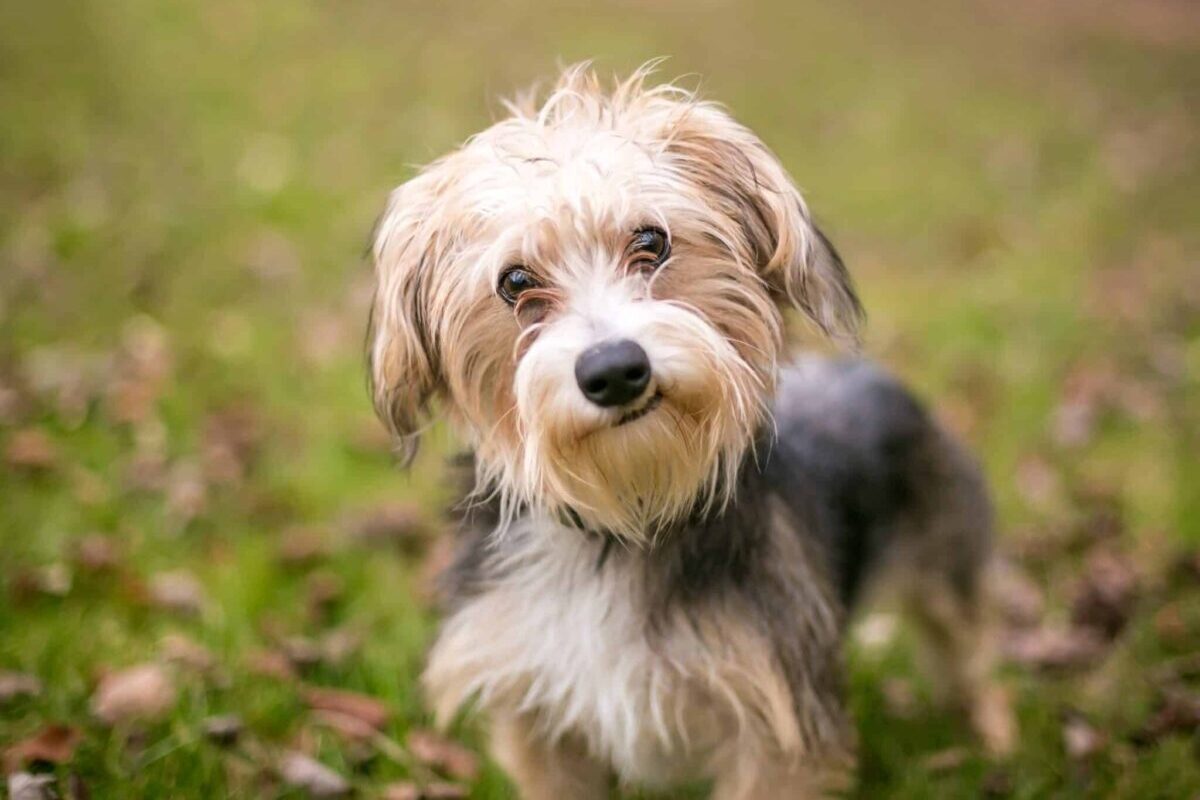
5. Yorkipoo — Yorkshire Terrier × Poodle
The Yorkipoo combines the Yorkshire Terrier’s confident personality with the intelligence and versatility associated with the Poodle.
These little dogs can have plenty of attitude. Despite their compact size, they may be energetic, alert, curious, and eager to participate in whatever their owners are doing.
Their coat can vary considerably depending on which traits they inherit. Some may have straighter hair, while others develop a wavier or curlier coat.
Things to know about Yorkipoos:
- They can be energetic despite their small size
- Early socialization is important
- They may be vocal
- Training should be consistent and positive
- Coat care can be demanding
- Small dogs still need daily enrichment
A Yorkipoo can be a great fit for someone who wants a small dog without a particularly sedentary personality.
6. Morkie — Maltese × Yorkshire Terrier
Morkies are a cross between the Maltese and Yorkshire Terrier.
They’re typically small, but their personalities can be surprisingly bold. Both parent breeds are companion-oriented, and many Morkies enjoy spending significant amounts of time with their people.
Their coats can be silky and attractive, although keeping them in good condition requires regular grooming.
Because of their tiny size, owners should also be careful around larger dogs, young children, furniture, and stairs. Small dogs can be injured easily by accidental falls or rough handling.
Morkies may suit owners who enjoy:
- A close human-dog relationship
- Indoor companionship
- Short walks and play sessions
- Grooming and coat care
- Training small dogs
- Interactive games
Their small size is convenient, but they still need training and structure.
7. Goldendoodle — Golden Retriever × Poodle
Few mixed breeds have become as recognizable as the Goldendoodle.
This cross combines the Golden Retriever with the Poodle, often producing dogs with shaggy or curly coats and an enthusiastic approach to life.
Many Goldendoodles are social and enjoy interacting with people. They can also be intelligent and eager to learn, making training an important part of their daily routine.
However, Goldendoodles can vary significantly in size, coat, energy level, and temperament.
The common assumption that every Goldendoodle is low-shedding or allergy-friendly is also misleading. Coat genetics are complicated, and some individuals may shed more than expected.
Goldendoodle care can involve:
- Regular brushing
- Professional grooming
- Plenty of exercise
- Mental enrichment
- Training
- Socialization
- Careful weight management
Their adorable appearance is certainly part of their appeal, but their long-term needs should be considered before bringing one home.
8. Schnoodle — Schnauzer × Poodle
A Schnoodle is a cross between a Schnauzer and a Poodle.
One interesting feature of this mix is its potential range of sizes. A Schnoodle can be relatively small or considerably larger depending on the Schnauzer and Poodle varieties used.
Many are intelligent, active, and strongly connected to their owners. They may enjoy learning tricks, playing games, and participating in family activities.
The Schnauzer side can also contribute alertness and a tendency to be vocal, while Poodle ancestry may contribute intelligence and trainability.
Schnoodle owners should consider:
- Exercise requirements
- Grooming
- Barking tendencies
- Socialization
- Mental stimulation
- Training consistency
The result can be a distinctive-looking dog with a lively personality.
9. Shorkie — Shih Tzu × Yorkshire Terrier
The Shorkie combines the Shih Tzu and Yorkshire Terrier.
These small dogs can inherit the Shih Tzu’s affectionate companion-dog qualities along with the confident and spirited nature of the Yorkie.
Their coats may be long and silky, which gives them an unmistakably cute appearance but also creates a grooming commitment.
Shorkies can become very attached to their families, so owners should encourage healthy independence from an early age rather than rewarding constant attention-seeking.
Helpful habits include:
- Short, positive training sessions
- Regular grooming
- Gentle socialization
- Appropriate daily exercise
- Interactive toys
- Gradual alone-time practice
They’re tiny dogs with plenty of personality and shouldn’t be treated like accessories simply because of their size.
10. Cavachon — Cavalier King Charles Spaniel × Bichon Frise
The Cavachon brings together the Cavalier King Charles Spaniel and Bichon Frise.
Many Cavachons have soft, fluffy coats, rounded facial features, and expressive eyes. Their personalities can be affectionate and sociable, although individual dogs can inherit different characteristics from either parent.
Because both parent breeds are generally associated with human companionship, Cavachons often enjoy spending time with their families.
Their coat should not be overlooked. A fluffy appearance requires regular maintenance, and owners should establish a brushing routine early.
Cavachon care may include:
- Regular brushing
- Professional grooming when needed
- Daily walks and play
- Positive training
- Socialization
- Routine veterinary care
They can make charming companions for people who want a small, social dog.
What Makes Mixed-Breed Dogs So Appealing?
The appeal of these crosses isn’t simply their appearance.
Mixed breeds can bring together characteristics from two different breeds, creating combinations that are visually and behaviorally interesting.
For example:
- A Poodle cross may inherit a curly or wavy coat.
- A Retriever cross may inherit an enthusiastic retrieving instinct.
- A Terrier cross may have a confident and energetic personality.
- A companion-breed cross may enjoy close human interaction.
- A Beagle cross may inherit a strong interest in following scents.
But inheritance isn’t predictable enough to guarantee a particular result.
Two puppies from the same cross can look and behave very differently.
Are Designer Dog Mixes Hypoallergenic?
This is one of the most common misconceptions surrounding Poodle mixes.
No dog can be guaranteed to be completely hypoallergenic.
Allergies are often triggered by proteins found in a dog’s dander, saliva, and other biological materials rather than simply by visible hair. Some dogs shed less than others, which may make them more manageable for certain allergy sufferers, but there is no universal guarantee.
If someone in the household has significant allergies, spending time around the individual dog before adoption or purchase can provide useful information.
What Should You Consider Before Choosing a Mixed Breed?
A cute puppy can be difficult to resist, but appearance shouldn’t be the only deciding factor.
Consider these questions first:
| Factor | What to Ask |
|---|---|
| Size | How large could the adult dog become? |
| Exercise | How much daily activity might both parent breeds require? |
| Grooming | Will the coat need frequent brushing or professional grooming? |
| Temperament | What traits are common in both parent breeds? |
| Training | Are the parent breeds independent, sensitive, energetic, or highly driven? |
| Health | What inherited conditions should you research? |
| Alone time | Can the dog comfortably fit your daily schedule? |
| Children | Is the individual dog’s temperament suitable for your household? |
| Other pets | How might prey drive or social preferences affect compatibility? |
| Cost | Can you comfortably afford food, grooming, training, and veterinary care? |
Researching the parents can tell you much more than a designer name alone.
Adopt or Buy? What Should You Look For?
If you’re considering one of these mixes, responsible sourcing matters.
When purchasing from a breeder, ask about health testing, veterinary records, the parents’ temperaments, living conditions, and how puppies are socialized.
If adopting, remember that shelters and rescue organizations can have wonderful mixed-breed dogs of all ages. An adult dog’s personality may also be easier to evaluate because much of its temperament and size are already established.
Whatever route you choose, avoid selecting a dog solely because it looks like a particular social-media trend.
Frequently Asked Questions
Are mixed-breed dogs healthier than purebred dogs?
Not automatically. Health depends on genetics, breeding practices, inherited conditions, environment, nutrition, veterinary care, and the individual dog. A crossbreed can inherit health problems from either parent.
Do Poodle mixes always have curly, low-shedding coats?
No. Coat type can vary substantially. Even puppies from the same litter may have different coats.
Are these mixes good family dogs?
Some individuals can be excellent family companions, but breed mix alone doesn’t guarantee a particular temperament. Children’s ages, supervision, training, the dog’s personality, and the household environment all matter.
Are small mixed breeds easier to care for?
Not necessarily. Small dogs can still be energetic, vocal, stubborn, sensitive, or grooming-intensive. Their small size doesn’t eliminate their behavioral and exercise needs.
Can you predict exactly how a mixed-breed puppy will look?
No. You can make educated guesses based on the parents, but genetics can produce considerable variation in coat, color, size, facial structure, and body shape.
Final Thoughts
Puggle, Cockapoo, Labradoodle, Maltipoo, Yorkipoo, Morkie, Goldendoodle, Schnoodle, Shorkie, and Cavachon are just a small sample of the many fascinating dog crosses people can encounter.
Their adorable appearances are certainly part of the attraction, but there’s much more to choosing one than a fluffy coat or cute face.
Every mixed-breed dog is an individual. Some may inherit more characteristics from one parent breed, while others can look and behave like a surprisingly even combination of both.
Before bringing one home, look beyond the puppy stage and think about the adult dog’s potential size, energy, grooming needs, training requirements, health considerations, and temperament.
The cutest dog for your household isn’t necessarily the one with the most fashionable appearance. It’s the one whose needs and personality fit your family, your schedule, and the life you can provide.






Leave a comment