



Bringing a puppy home is exciting, but the first few months also come with plenty of questions.
What should your puppy eat? How much exercise is enough? When should vaccinations begin? How do you socialize a puppy safely? And how can you raise a confident dog without overwhelming them?
A puppy’s early experiences can help shape their health, behavior, and relationship with people. Good nutrition, veterinary care, appropriate exercise, positive training, safe socialization, grooming, rest, and plenty of affection all play important roles.
You don’t have to do everything perfectly.
The goal is to create a safe, predictable environment where your puppy can grow, learn, and gradually become comfortable with the world around them.
Here are 12 practical tips to help you get started.
1. Feed a Complete and Balanced Puppy Diet
Growing puppies have different nutritional requirements from adult dogs.
Choose a complete and balanced food formulated for puppies and appropriate for your puppy’s expected adult size when applicable. Large- and giant-breed puppies can have particularly important nutritional considerations because excessive or unbalanced nutrition may affect skeletal development.
Follow the feeding recommendations on the food packaging as a starting point, but don’t treat them as a universal prescription. Your veterinarian can help determine how much your individual puppy should eat.
Keep an Eye on Body Condition
A puppy should grow steadily rather than simply becoming as large as possible as quickly as possible.
Regularly monitor your puppy’s:
- Weight
- Body condition
- Appetite
- Growth
- Stool quality
- Energy level
Avoid giving excessive treats or table scraps, as extra calories can quickly add up.
2. Establish a Safe Exercise Routine
Puppies are naturally energetic, but their developing bodies need appropriate activity rather than unlimited exercise.
Short walks, supervised play, gentle exploration, and age-appropriate games can help puppies develop coordination and confidence.
The right amount of exercise depends on factors such as:
- Age
- Breed
- Size
- Health
- Individual energy level
- Weather
- Physical development
Avoid turning exercise into endurance training for a young puppy.
Don’t Forget Mental Exercise
A short training session or sniffing game can be just as valuable as physical activity.
A healthy puppy needs a balance of activity and plenty of sleep.
3. Begin Socialization Early and Carefully
Socialization is one of the most important parts of raising a confident dog.
It doesn’t mean forcing your puppy to greet everyone.
Instead, it means gradually helping your puppy experience different people, environments, sounds, surfaces, handling experiences, and appropriately selected animals in ways that are positive and manageable.
For example, your puppy might gradually become familiar with:
- People wearing hats
- Car rides
- Household appliances
- Different floor surfaces
- Gentle handling
- Doorbells
- Outdoor sounds
- Veterinary handling
- New but safe environments
Keep Experiences Positive
If your puppy becomes frightened or overwhelmed, increase distance or end the experience.
The goal isn’t to expose a puppy to as much as possible as quickly as possible.
It’s to help them learn that new experiences can be safe.
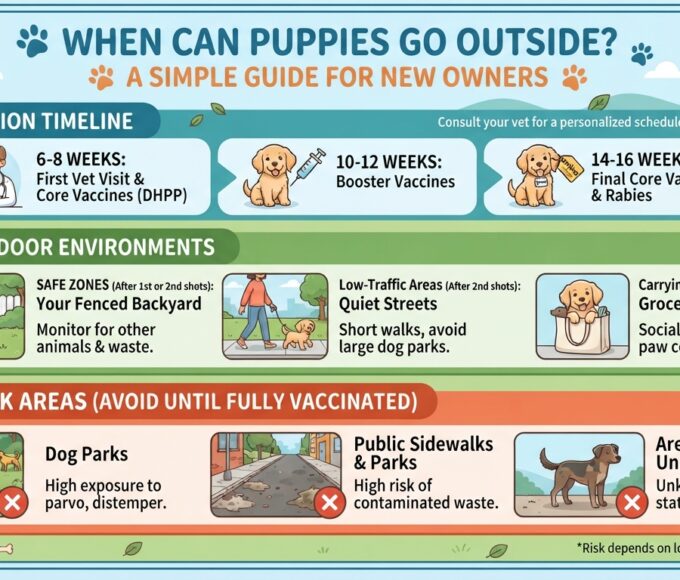
Because young puppies may not yet have completed their vaccination series, ask your veterinarian about appropriate ways to socialize them while reducing exposure to infectious diseases.
4. Keep Up With Veterinary Visits
Your veterinarian is an important part of your puppy’s first year.
Young puppies typically need several veterinary visits as they grow. These appointments may include vaccinations, parasite prevention, growth monitoring, physical examinations, and discussions about nutrition and behavior.
Your veterinarian can also advise you about:
- Vaccination schedules
- Deworming and parasite control
- Flea and tick prevention
- Nutrition
- Dental care
- Spaying or neutering
- Microchipping
- Exercise
- Breed-specific health considerations
Don’t wait for your puppy to become seriously ill before establishing veterinary care.
5. Stay Consistent With Parasite Prevention
Puppies can be vulnerable to intestinal parasites and external parasites such as fleas and ticks.
Your veterinarian can recommend a prevention plan based on your puppy’s age, location, lifestyle, and health.
Watch for possible warning signs such as:
- Persistent diarrhea
- Vomiting
- Poor weight gain
- A swollen or unusual-looking abdomen
- Visible worms
- Excessive scratching
- Fleas or ticks
- Unusual tiredness
Never assume a home remedy is safe simply because it is marketed for animals. Ask your veterinarian before giving your puppy medications or parasite products.
6. Start Positive Training From Day One
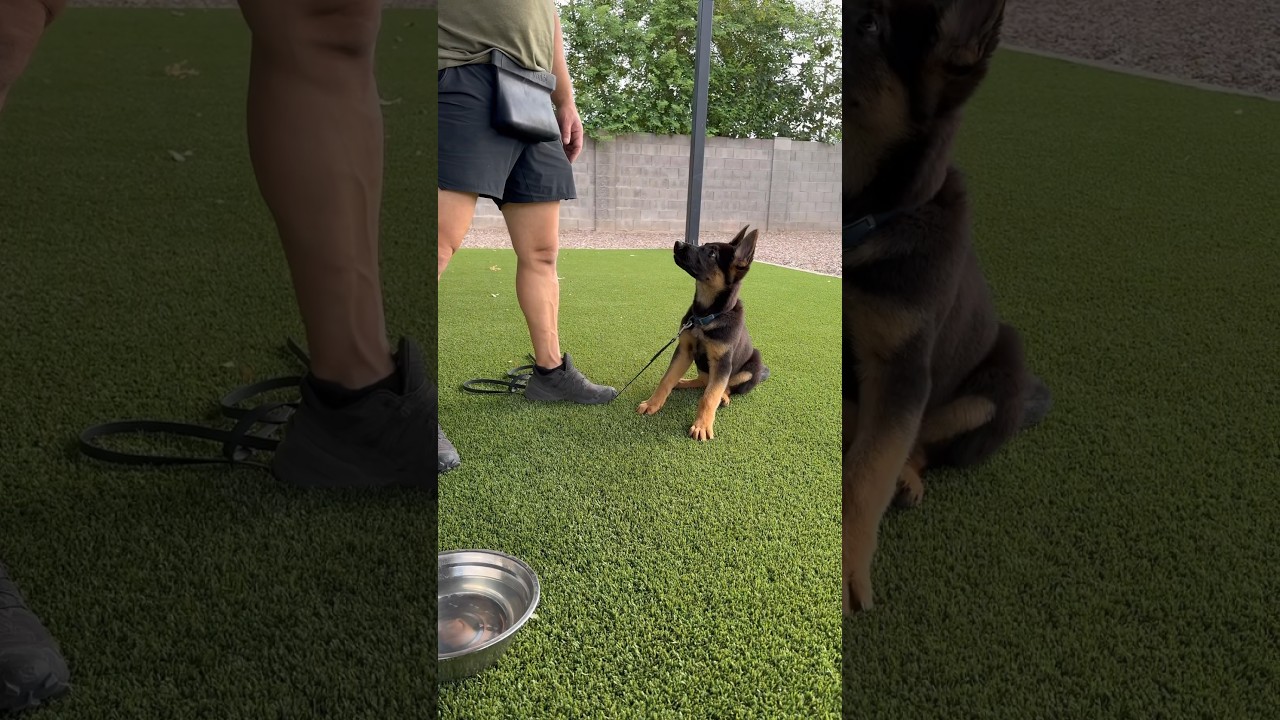
You don’t need to wait until your puppy is older to begin training.
Puppies can start learning appropriate behaviors as soon as they arrive home.
Begin with simple skills such as:
- Responding to their name
- Coming when called
- Sitting
- Walking calmly
- Leaving objects alone
- Settling on a mat
- Handling exercises
- Basic household manners
Use Rewards
Reward-based training helps puppies understand which behaviors you want to see again.
Rewards can include:
- Small food treats
- Praise
- Toys
- Play
- Access to something the puppy wants
Keep sessions short and enjoyable.
A few minutes of successful training can be more productive than a long session that leaves your puppy frustrated.
7. Make Your Home Puppy-Safe
Puppies investigate the world with their mouths.
That means ordinary household objects can become dangerous.
Before your puppy arrives, secure or remove:
- Electrical cords
- Cleaning products
- Medications
- Small objects
- Batteries
- Toxic plants
- Human food
- Trash
- Sharp objects
- Easily accessible chemicals
Keep doors, cabinets, windows, and potentially dangerous areas secured.
Think Like a Puppy
Get down close to floor level and look around.
Anything your puppy can reach, chew, swallow, knock over, or pull down deserves consideration.
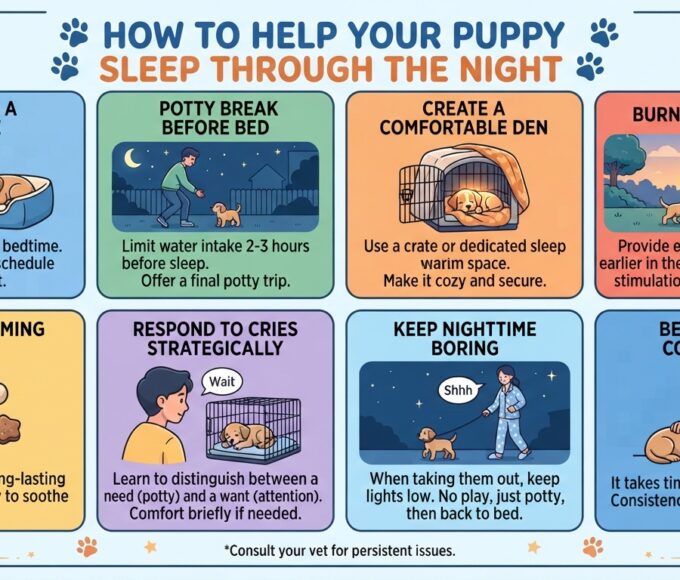
8. Give Your Puppy Plenty of Sleep
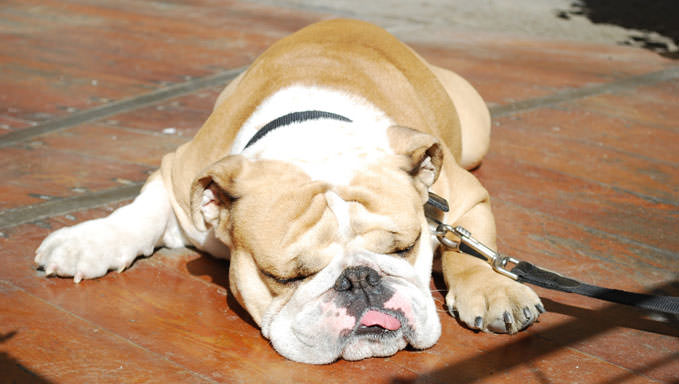
Puppies can spend a surprisingly large amount of time sleeping.
Growing bodies and developing brains require plenty of rest.
A puppy that becomes excessively tired may become irritable, hyperactive, mouthy, or unable to settle.
Instead of constantly entertaining your puppy, build quiet periods into the daily routine.
A comfortable crate, puppy-safe pen, or quiet resting area can help your puppy learn that downtime is normal.
9. Teach Your Puppy How to Be Alone
Puppies need companionship, but they also need to gradually learn that being separated from their people for appropriate periods is safe.
Don’t suddenly expect a puppy that has spent every minute with you to tolerate a long absence.
Instead, gradually introduce short periods of independence.
You can encourage this by:
- Giving your puppy a safe resting area
- Providing an appropriate chew or enrichment item
- Briefly leaving the room
- Returning calmly
- Gradually increasing separation when your puppy remains comfortable
If your puppy shows intense distress when left alone, speak with a veterinarian or qualified behavior professional.
10. Make Grooming a Positive Experience
Grooming isn’t just about appearance.
Puppies benefit from learning that having their body handled is normal.
Gradually introduce:
- Brushing
- Paw handling
- Nail trimming
- Ear checks
- Mouth handling
- Bathing
- Being touched around the face and body
Keep sessions short and reward calm behavior.
Start Dental Care Early
Getting a puppy comfortable with having their mouth handled can make future dental care much easier.
Ask your veterinarian about appropriate puppy dental products and techniques.
11. Provide Mental Stimulation
A puppy’s brain is constantly developing, so learning and exploration are important.
You can provide mental enrichment through:
- Puzzle toys
- Food-dispensing toys
- Scent games
- Short training sessions
- Hide-and-seek
- Safe exploration
- Appropriate chew toys
- Simple problem-solving games
Rotate toys instead of leaving every toy available all the time.
This can make familiar items interesting again.
Don’t Overdo It
Mental stimulation should not mean keeping your puppy busy every waking moment.
Learning to relax is also an important skill.
12. Give Plenty of Affection—But Respect Their Boundaries
Puppies need positive relationships with their people.
Play with your puppy, talk to them, provide gentle affection, and spend quiet time together.
At the same time, allow your puppy to move away when they want space.
Children should also learn how to interact respectfully with a puppy. Puppies should not be treated like stuffed toys.
Teach children to avoid disturbing the puppy while they’re:
- Eating
- Sleeping
- Chewing
- Resting
- Hiding
- Using their safe space
A puppy that learns people respect their boundaries can develop greater trust in their family.
Create a Predictable Daily Routine
A consistent routine can make puppy life easier for everyone.
Your day might include:
Morning: Bathroom break → breakfast → gentle play → rest
Midday: Bathroom break → training → enrichment → nap
Afternoon: Play or exploration → meal if appropriate → rest
Evening: Walk or age-appropriate activity → calm interaction → bathroom break → bedtime
The exact schedule will vary based on your puppy’s age and individual needs.
The important part is creating predictable patterns for eating, sleeping, bathroom breaks, activity, and quiet time.
Teach Your Puppy Good Bathroom Habits
House training requires patience and consistency.
Take your puppy outside frequently, particularly:
- After waking
- After eating
- After drinking
- After playing
- Before bedtime
- When they show signs they need to eliminate
When your puppy eliminates in the appropriate location, reward them promptly.
What If There Is an Accident?
Don’t punish your puppy after the fact.
They won’t understand why they’re being punished for something that happened minutes earlier.
Clean the area thoroughly and adjust your routine so you can provide more frequent opportunities to go outside.
Choose Safe Puppy Toys
Puppies love chewing, but not every toy is appropriate.
Choose toys that are suitable for your puppy’s size, age, chewing habits, and play style.
Inspect toys regularly for:
- Torn pieces
- Loose parts
- Broken sections
- Pieces that could be swallowed
Remove damaged toys.
No toy is completely indestructible, so supervise your puppy when introducing unfamiliar products.
Watch Your Puppy’s Weight as They Grow
Puppy growth happens quickly, which can make it difficult to know whether you’re feeding the right amount.
Regular veterinary visits provide an opportunity to monitor growth and body condition.
Avoid assuming that a chubby puppy is automatically healthier.
Your veterinarian can help you determine whether your puppy is growing appropriately.
Know the Warning Signs of Illness
Puppies can become seriously ill quickly, so owners should take unusual symptoms seriously.
Contact your veterinarian if your puppy develops concerning signs such as:
- Repeated vomiting
- Persistent diarrhea
- Bloody stool
- Refusal to eat
- Severe lethargy
- Difficulty breathing
- Collapse
- Seizures
- Severe pain
- Significant weakness
- Difficulty standing or walking
- Signs of poisoning
- A sudden major change in behavior
If you suspect your puppy has swallowed something dangerous, contact a veterinarian or appropriate animal poison service promptly rather than waiting for symptoms to appear.
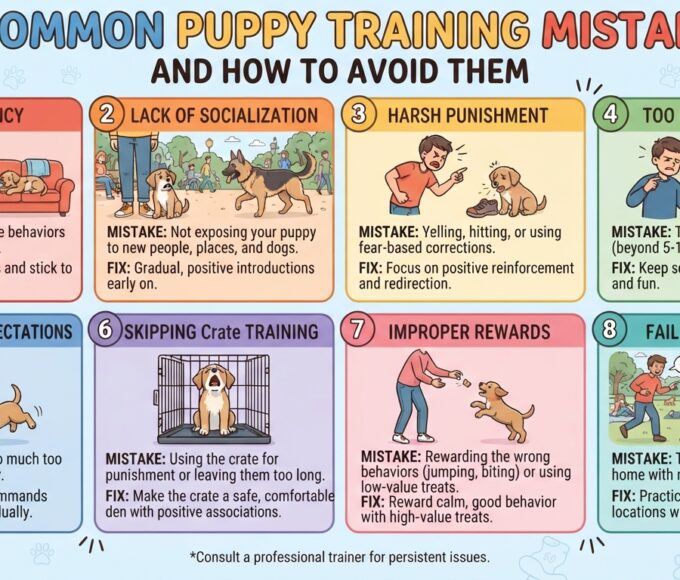
Common Puppy-Parent Mistakes to Avoid
Even well-meaning owners can make puppy care harder than necessary.
Try to avoid:
Doing Too Much Too Quickly
Puppies need time to adjust. Don’t overwhelm them with visitors, outings, training, and new experiences all at once.
Expecting Adult-Level Behavior
Puppies are still learning. Accidents, chewing, jumping, and short attention spans are normal parts of development.
Using Fear or Physical Punishment
Harsh training methods can create fear and damage trust. Focus on teaching and rewarding desirable behavior instead.
Skipping Rest
A puppy that never gets enough sleep can struggle to regulate their behavior.
Comparing Your Puppy to Other Dogs
Puppies develop at different rates. Focus on steady progress rather than expecting your puppy to behave exactly like another dog.
Frequently Asked Questions
How often should I feed my puppy?
Young puppies commonly need multiple meals throughout the day, with the exact schedule depending on their age, size, diet, and individual needs. Your veterinarian can help determine an appropriate feeding routine.
When should I start training my puppy?
Training can begin as soon as your puppy comes home. Start with simple skills, house training, handling, and positive household manners, then gradually increase the difficulty.
How do I socialize my puppy safely?
Introduce your puppy gradually to people, sounds, environments, handling, and appropriately selected animals while keeping experiences positive. Ask your veterinarian about local disease risks and safe socialization options before your puppy has completed their vaccination series.
How much sleep does a puppy need?
Puppies sleep frequently throughout the day because they are growing and developing. Individual needs vary, but regular naps and uninterrupted rest periods are an important part of a healthy routine.
How much exercise does a puppy need?
There is no single exercise amount that works for every puppy. Age, breed, size, health, fitness, and development all matter. Favor age-appropriate play and activity rather than strenuous endurance exercise.
Should I leave my puppy alone during the day?
Puppies need frequent bathroom opportunities, supervision, interaction, and rest. They should gradually learn to spend appropriate periods alone rather than being expected to tolerate long absences immediately.
How can I make my puppy happier?
Focus on the basics: nutritious food, veterinary care, safe socialization, appropriate exercise, mental enrichment, positive training, adequate sleep, a predictable routine, and a secure relationship with their family.
Final Thoughts
Raising a happy and healthy puppy isn’t about creating a perfect routine or preventing every mistake.
It’s about consistently meeting your puppy’s physical, emotional, social, and developmental needs.
Feed an appropriate diet, keep up with veterinary care, provide age-appropriate activity, introduce new experiences gradually, use positive training, puppy-proof your home, encourage plenty of rest, and give your puppy time to build confidence.
Most importantly, remember that your puppy is learning everything for the first time.
Be patient when they make mistakes. Celebrate small improvements. Give them opportunities to explore safely and plenty of chances to rest.
With the right foundation during puppyhood, you’re not just raising a healthier puppy—you’re helping your new companion develop the skills and confidence they need for a happy life with you.
This Article Was Generated By AI.






Leave a comment