




Dogs scratch themselves from time to time, just like people occasionally scratch an itch. But if your dog is scratching constantly, licking certain areas, chewing at their skin, or rubbing against furniture, there may be an underlying reason.
Occasional scratching is usually nothing to worry about. However, frequent scratching can sometimes be linked to parasites, allergies, dry skin, environmental irritants, or other skin problems.
Understanding the possible causes can help you notice changes early and decide when professional veterinary advice may be appropriate.
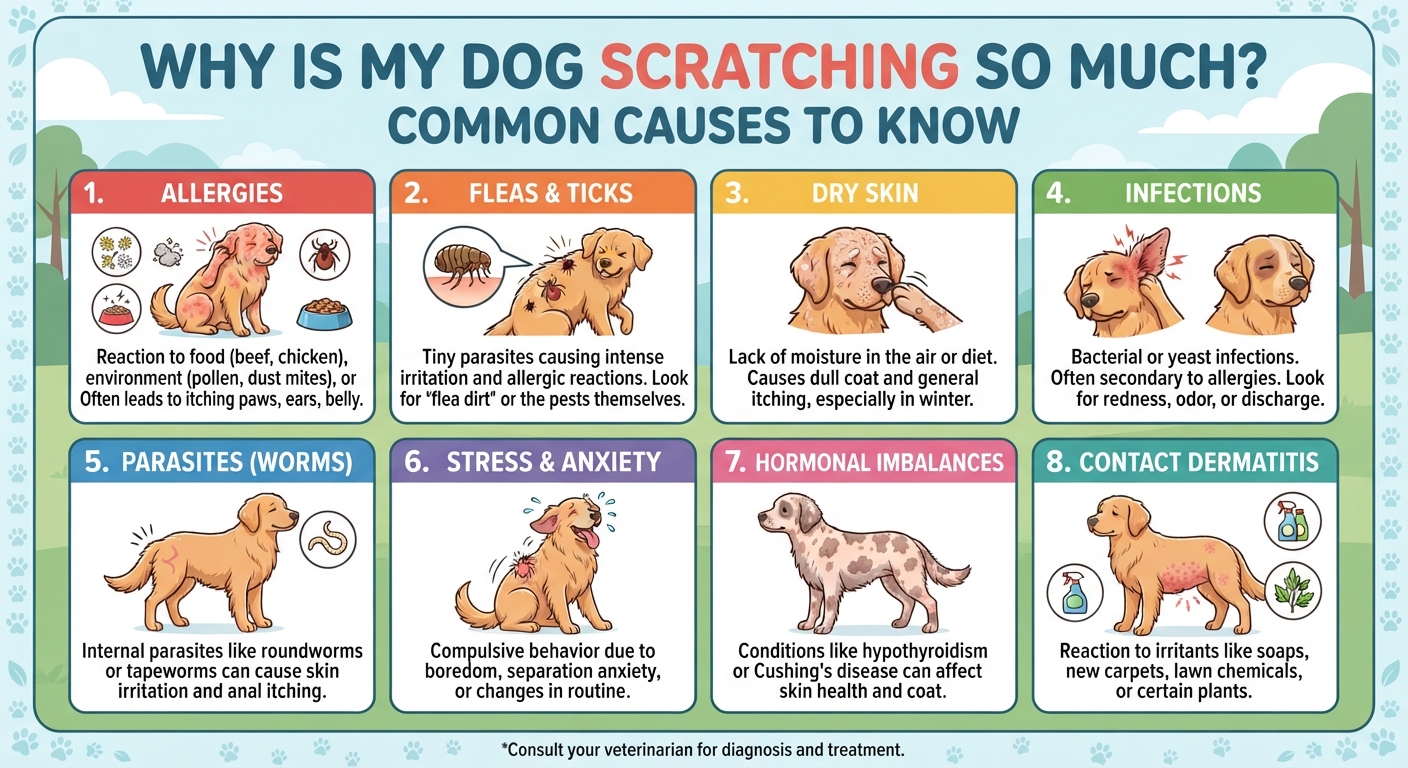
1. Fleas and Other Parasites
One of the first things to consider when your dog starts scratching more than usual is parasites.
Fleas can cause intense itching, and some dogs are particularly sensitive to flea bites. You may notice your dog scratching around the:
- Tail base
- Lower back
- Belly
- Inner thighs
- Neck
Fleas can be difficult to spot because they are small and move quickly. You may sometimes notice tiny dark particles in your dog’s coat, although their absence does not necessarily mean fleas are not present.
Other external parasites can also cause itching and skin irritation.
If you suspect parasites, speak with your veterinarian about an appropriate treatment and prevention plan.
2. Allergies
Allergies are another possible reason your dog may be scratching frequently.
Dogs can react to different things, including environmental substances and certain ingredients in their diet. Environmental triggers may include:
- Pollen
- Grass
- Dust
- Mold
- Household substances
- Certain plants
Allergy-related irritation can affect different parts of the body, including the paws, ears, face, belly, and legs.
If your dog’s itching keeps returning or happens during particular times of the year, discuss the pattern with your veterinarian.
3. Dry Skin
Dry skin can make your dog uncomfortable and itchy.
Dryness may be associated with weather conditions, indoor heating or cooling, frequent bathing, or unsuitable grooming products.
You may notice:
- Flaky skin
- Mild dandruff
- Increased scratching
- Rough-looking skin
- More licking than normal
Avoid assuming that human moisturizers or skin products are safe for dogs. Products designed for people may contain ingredients that are unsuitable if your dog licks them.
If dry skin continues, ask your veterinarian for advice.
4. Skin Irritation
Your dog may scratch after coming into contact with something that irritates the skin.
Possible irritants include certain cleaning products, plants, shampoos, or materials your dog encounters outdoors.
Think about whether the scratching started after:
- A new grooming product
- Cleaning the house
- A walk in a different area
- Playing in grass
- Using a new bedding material
If you can identify a possible trigger, preventing further exposure may help, but persistent symptoms should still be discussed with a veterinarian.
5. Ear Problems
Sometimes what looks like general scratching is actually related to discomfort in the ears.
A dog with an irritated ear may:
- Scratch around the ear
- Shake their head
- Rub their head against furniture
- Hold their head differently
- Have an unusual odor from the ear
Ear problems can have different causes, so avoid putting random products into your dog’s ears without veterinary guidance.
If your dog is repeatedly scratching their ears or shaking their head, arrange a veterinary examination.
6. Boredom or Stress
Not every scratching behavior is caused by a skin problem.
Some dogs may lick, chew, or scratch themselves more when they are bored, anxious, or stressed.
Changes in routine can sometimes affect behavior. For example, your dog may become unsettled after:
- Moving to a new home
- Changes in the household
- Spending more time alone
- Reduced exercise
- Changes to their daily schedule
Behavioral causes should be considered alongside physical causes rather than assuming the problem is simply behavioral.
7. Hot Spots and Irritated Areas
A small irritated area can sometimes become a bigger problem when a dog repeatedly scratches, licks, or chews it.
The more your dog bothers the area, the more irritated it may become. This can create a cycle where discomfort leads to scratching, and scratching causes further irritation.
Check your dog’s skin regularly for unusual:
- Redness
- Swelling
- Moist areas
- Hair loss
- Crusting
- Sores
Do not attempt to diagnose the cause yourself if the skin appears significantly irritated.
8. Grooming Products May Be the Problem
A new shampoo or grooming product can occasionally irritate a dog’s skin.
If your dog’s scratching started shortly after a bath or grooming appointment, consider whether a new product was introduced.
For future baths, use products specifically formulated for dogs and follow the product instructions carefully.
If your dog develops significant irritation after grooming, contact your veterinarian.
How to Check Your Dog’s Skin at Home
A simple coat and skin check can help you notice changes.
Choose a calm time and gently examine areas such as:
- Behind the ears
- Neck
- Belly
- Legs
- Between the toes
- Tail base
- Back
Look for changes in the skin or coat rather than trying to diagnose the problem.
You can also pay attention to how often your dog scratches and which areas they target.
Keep Track of When the Scratching Happens
A simple record can be surprisingly useful.
Write down:
- When the scratching started
- How often it happens
- Which body areas are affected
- Recent grooming
- Recent outdoor activities
- New foods or treats
- New household products
- Any other noticeable changes
This information can help your veterinarian understand the situation more clearly.
When Should You Contact a Veterinarian?
Occasional scratching is generally different from persistent or intense itching.
Contact a veterinarian if your dog:
- Scratches constantly
- Develops open wounds
- Has significant redness or swelling
- Loses noticeable amounts of hair
- Develops sores or crusting
- Seems painful
- Has repeated ear discomfort
- Becomes unusually restless
- Has symptoms that continue or worsen
Seek professional advice sooner if your dog appears seriously unwell or has a rapidly worsening skin reaction.
Avoid Treating the Cause Based on Guesswork
It can be tempting to search for a quick solution when your dog is uncomfortable. However, scratching can have many different causes.
Using the wrong product may irritate the skin further or hide important symptoms.
Instead, focus on observing the problem, removing obvious irritants when appropriate, maintaining sensible grooming, and getting veterinary advice when the scratching is persistent.
Final Thoughts
So, why is your dog scratching so much?
There isn’t always one simple answer. Fleas, allergies, dry skin, irritation, ear problems, environmental triggers, and behavioral factors can all potentially contribute to increased scratching.
The most important thing is to notice changes in your dog’s normal behavior. Occasional scratching is common, but persistent itching deserves attention.
By regularly checking your dog’s coat and skin and seeking veterinary advice when necessary, you can help keep your pet comfortable and healthy.
FAQs
Is it normal for dogs to scratch every day?
Occasional scratching can be normal. Frequent or intense scratching may indicate an underlying issue and should be monitored.
Can fleas cause a dog to scratch constantly?
Yes. Flea bites can cause significant itching, particularly in dogs that are sensitive to them.
Should I use human anti-itch cream on my dog?
Do not use human medications or creams on your dog unless your veterinarian specifically recommends them.
When should scratching be considered serious?
Persistent scratching accompanied by wounds, hair loss, redness, swelling, pain, or other changes warrants veterinary attention.










Leave a comment