




A good walk can be one of the best parts of your dog’s day.
Whether you’re taking a short neighborhood stroll, spending an afternoon at a park, or heading out on a longer adventure, having the right equipment can make the experience more comfortable and organized.
The best dog accessories for walking aren’t necessarily the most expensive products. They should be safe, appropriate for your dog, comfortable to use, and suited to the type of activity you’re planning.
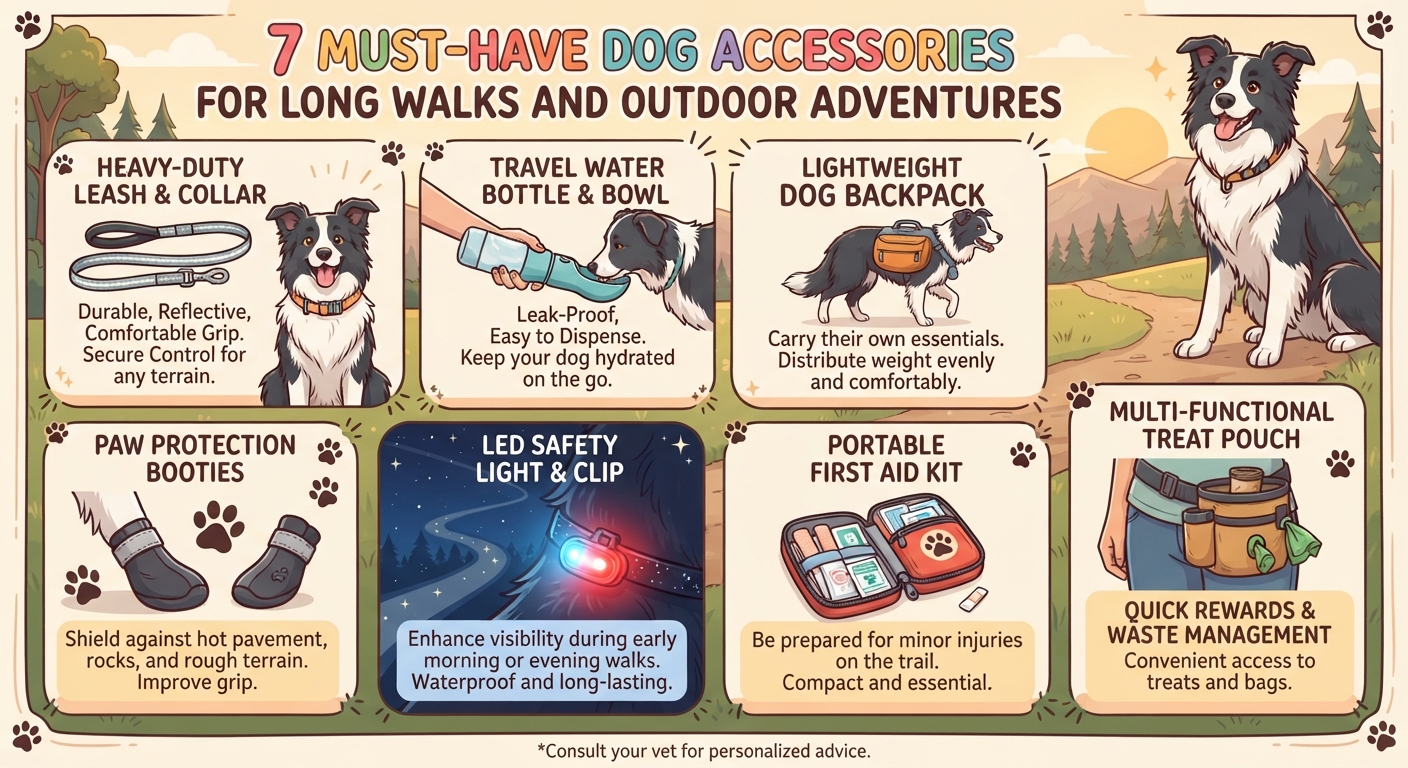
Here are seven useful accessories to consider.
1. A Properly Fitted Harness
A well-fitted harness can provide a comfortable way to manage many dogs during walks.
Harnesses come in different designs, so fit is important.
A harness shouldn’t be so tight that it restricts movement or causes rubbing, but it also shouldn’t be loose enough for the dog to escape.
Check the manufacturer’s fitting instructions and regularly inspect the harness as your dog grows or changes weight.
2. A Suitable Collar
Even if your dog primarily walks on a harness, a properly fitted collar can still be useful for identification.
Make sure the collar fits comfortably and doesn’t create excessive pressure around the neck.
An identification tag can provide useful contact information if your dog becomes separated from you.
Check the collar regularly, particularly if your dog is still growing.
3. A Strong, Comfortable Lead
The right lead depends on the type of walk you’re taking.
A standard lead may be suitable for everyday walks.
Longer leads can provide additional freedom in appropriate open areas, but they should be used carefully to avoid tangling or tripping hazards.
Choose a lead that is appropriate for your dog’s size and strength.
Inspect clips and stitching regularly for signs of wear.
4. Portable Water and a Travel Bowl
Water is especially important during long walks and warm weather.
A portable bottle or collapsible travel bowl makes it easier to offer your dog water away from home.
Don’t assume that your dog will always find a safe water source outdoors.
Streams, ponds, and puddles may contain contaminants or other hazards.
Bring your own clean water whenever possible.
5. Waste Bags
Waste bags are a basic but essential part of responsible dog ownership.
Carry enough bags for the entire outing, including a few extras in case the walk lasts longer than expected.
A small dispenser attached to your walking bag or lead can make them easy to access.
Always dispose of used bags according to local waste rules.
6. Identification Information
Even dogs that normally stay close can become frightened or distracted.
Identification can help someone contact you if your dog gets lost.
Make sure the information on your dog’s identification tag is current.
Microchipping can provide another form of identification, subject to local requirements and registration procedures.
Keep your contact details updated if your phone number or address changes.
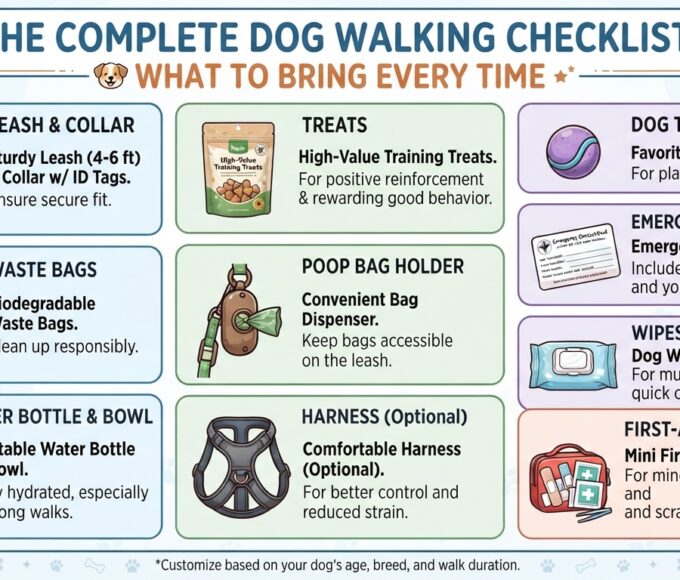
7. A Small Walking or Adventure Bag
A dedicated dog-walking bag can keep all your essentials together.
Depending on the length of your outing, you might carry:
- Water
- A travel bowl
- Waste bags
- Treats
- Identification information
- A small towel
- Basic first-aid supplies
- Your phone
- Any veterinarian-recommended medication
For longer trips, pack according to the environment and expected weather.
Choosing Accessories for Different Walks
A short neighborhood walk may only require a collar or harness, lead, waste bags, and identification.
A longer outdoor adventure may require significantly more preparation.
For example, hiking with your dog may require additional water, food, a towel, and equipment suited to the terrain.
Always consider the environment before deciding what to bring.
Check the Fit Before Every Walk
Even good-quality accessories can become unsafe if they don’t fit properly.
Before leaving, quickly check:
- Harness fit
- Collar fit
- Lead attachment
- Buckles
- Clips
- Identification tag
Look for frayed stitching, cracked plastic, damaged metal, or other signs of wear.
Replacing damaged equipment is usually better than discovering the problem during a walk.
Don’t Choose Accessories Based Only on Appearance
A stylish accessory isn’t necessarily a suitable accessory.
Prioritize:
- Safety
- Correct fit
- Comfort
- Durability
- Appropriate design
A product should match your dog’s size, strength, activity level, and the environment where you’ll use it.
What Should You Take on a Long Dog Walk?
For a longer outing, a practical checklist might include:
- Harness or collar
- Lead
- Fresh water
- Travel bowl
- Waste bags
- Identification
- Treats
- Phone
- Towel
- Appropriate weather gear if needed
The exact list depends on the length and location of the walk.
Final Thoughts
The right dog accessories for walking can make outdoor time safer and more convenient.
You don’t need to purchase every accessory available. Start with the basics: appropriate walking equipment, identification, water, and waste bags.
As you take longer walks and explore new places, you can add other equipment according to your dog’s individual needs.
Always prioritize fit, safety, comfort, and durability over appearance.
Frequently Asked Questions
What is the most important dog walking accessory?
A properly fitted collar or harness and a suitable lead are among the most important basic items.
Should my dog wear a collar or harness?
It depends on the dog and the type of equipment. A properly fitted harness can be useful for many dogs, while collars are commonly used for identification.
Should I bring water on every walk?
For longer walks, warm weather, or active dogs, carrying water is a sensible precaution.
How often should dog walking equipment be replaced?
There isn’t a fixed schedule. Inspect equipment regularly and replace it when it becomes damaged, excessively worn, or no longer fits correctly.






Leave a comment