




Regular walks are an important part of many dogs’ daily routines.
Walking gives dogs an opportunity to exercise, explore their environment, experience new smells, and spend time with their owners. However, the ideal walking schedule isn’t exactly the same for every dog.
So, how often should you walk your dog?
The answer depends on several factors, including age, breed, energy level, health, fitness, weather, and individual personality.
Instead of following a one-size-fits-all rule, create a routine that matches your dog’s needs.
Why Are Regular Walks Important?
A walk provides much more than physical exercise.
Dogs experience the world largely through their sense of smell. Allowing your dog time to sniff and explore can provide mental stimulation.
Regular walks can also help dogs maintain a healthy body weight and provide an opportunity to practice everyday behaviors such as walking calmly on a leash.
For many dogs, a predictable walking routine can become an enjoyable part of their day.
How Often Should an Adult Dog Be Walked?
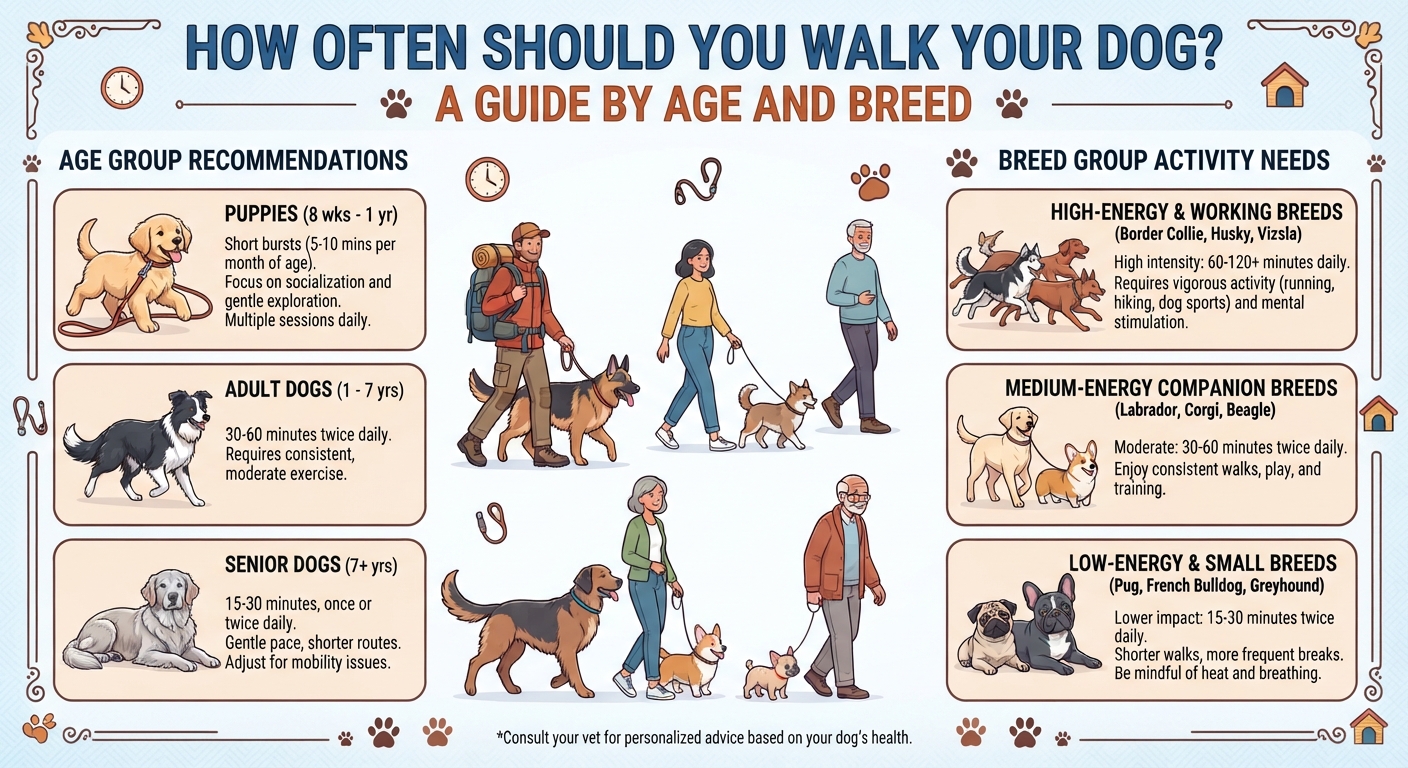
Many healthy adult dogs benefit from being walked at least once or twice a day.
However, the appropriate duration and intensity can vary significantly.
An energetic working or sporting breed may need substantially more physical activity than a lower-energy companion dog.
A relaxed 20–30 minute walk may be appropriate for one dog, while another may need longer or more active sessions.
Pay attention to your dog’s response.
A dog that finishes a walk comfortably and settles down afterward may be getting an appropriate amount of activity. A dog that is consistently exhausted, sore, or reluctant to continue may be doing too much.
Walking Puppies
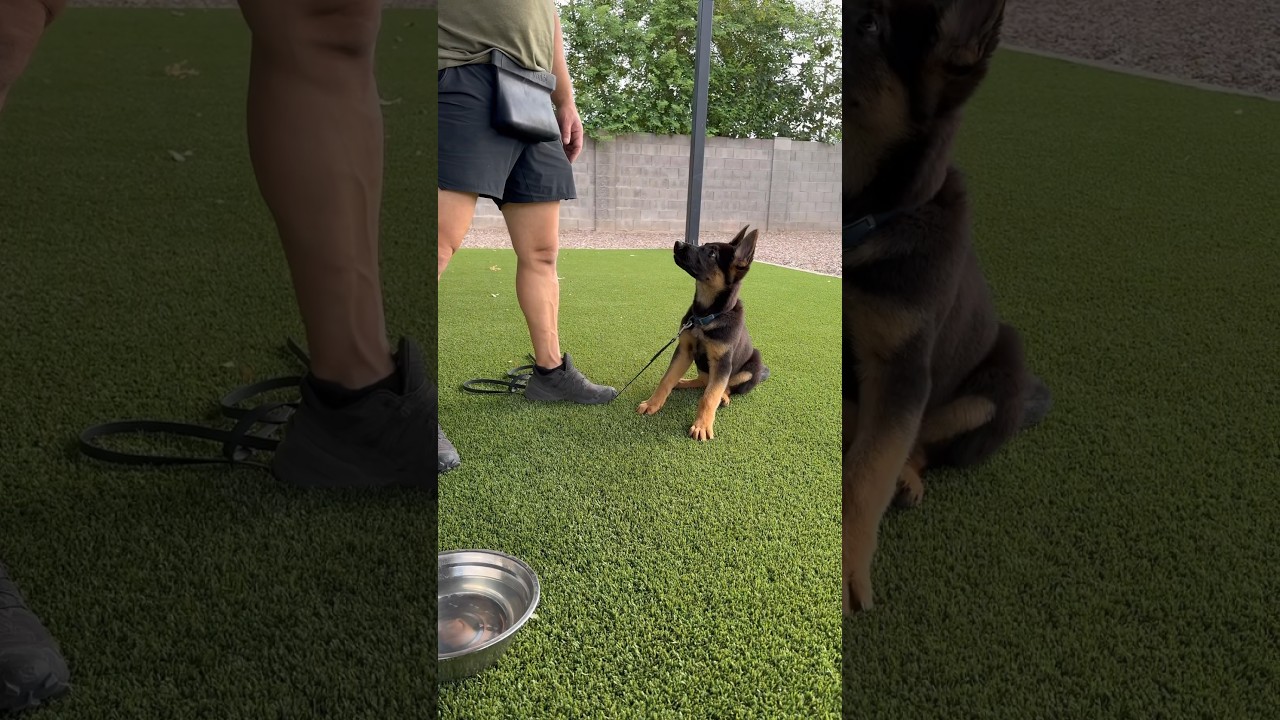
Puppies need exercise, but their growing bodies require special consideration.
Young puppies typically have short bursts of energy followed by plenty of rest.
Instead of expecting a puppy to complete long walks, provide age-appropriate short outings and plenty of opportunities for safe play.
Vaccination status is also important. Puppies may need to avoid certain public areas until their veterinarian confirms they are adequately protected from infectious diseases.
Ask your veterinarian when it is appropriate for your puppy to start visiting public walking areas.
Walking Senior Dogs
Older dogs may still enjoy daily walks, but their needs can change with age.
A senior dog may benefit from shorter, slower walks with more frequent breaks.
Joint stiffness, reduced vision, hearing changes, and other age-related issues can affect how comfortably they move.
Don’t assume that an older dog needs to stop walking altogether.
Gentle, regular movement can remain valuable, provided the activity is appropriate for the dog’s health and fitness.
If your senior dog suddenly becomes reluctant to walk or shows signs of pain, discuss the change with your veterinarian.
How Breed Affects Exercise Needs
Breed can provide clues about a dog’s energy level and historical purpose, but it isn’t the only factor.
Breeds developed for activities such as herding, hunting, or sport may have greater exercise and mental-stimulation needs.
Other breeds may be perfectly happy with shorter walks and additional relaxed activities at home.
Even within the same breed, individual dogs can have very different personalities and fitness levels.
Think of breed as a starting point rather than a strict walking prescription.
High-Energy Dogs
High-energy dogs may require more than a short neighborhood walk.
Dogs with significant exercise needs may benefit from a combination of:
- Longer walks
- Safe running
- Fetch
- Training sessions
- Puzzle toys
- Scent activities
- Off-leash exercise in appropriate secure areas
Mental stimulation is particularly useful because physical exercise alone may not satisfy every active dog.
Low-Energy Dogs
Lower-energy dogs still benefit from regular movement.
Their walks don’t necessarily need to be long or intense.
A gentle walk that allows plenty of sniffing can provide physical activity and mental stimulation without excessive exertion.
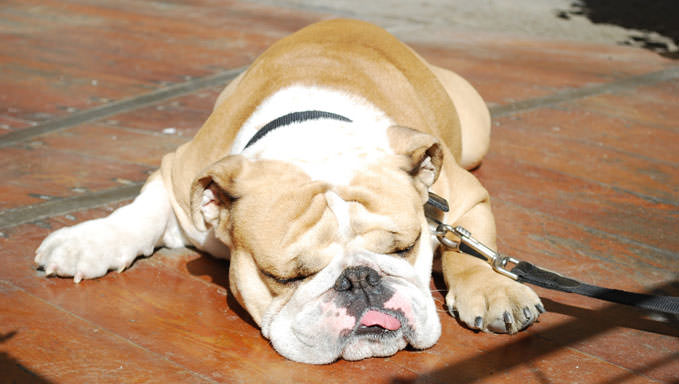
Remember that small size doesn’t automatically mean low energy, and large size doesn’t automatically mean high energy.
Individual needs matter.
How Weather Should Change Your Walking Routine
Weather can significantly affect your dog’s exercise routine.
During hot weather, consider walking early in the morning or later in the evening.
Check pavement temperatures before walking on roads or sidewalks.
During extreme heat, replace long outdoor walks with indoor games and training.
Cold, rain, snow, or strong winds may also require adjustments depending on your dog’s coat, health, and tolerance.
What If My Dog Doesn’t Want to Walk?
A sudden reluctance to walk can have many possible causes.
Your dog may be frightened by something in the environment, uncomfortable in their harness, tired, overheated, or experiencing pain.
Don’t simply drag a reluctant dog along the pavement.
Check their paws, equipment, environment, and general behavior.
If the change is sudden or continues, contact your veterinarian to rule out an underlying health problem.
Should Dogs Walk Every Day?
For many healthy dogs, daily walks are beneficial.
However, daily activity doesn’t always have to mean a long walk.
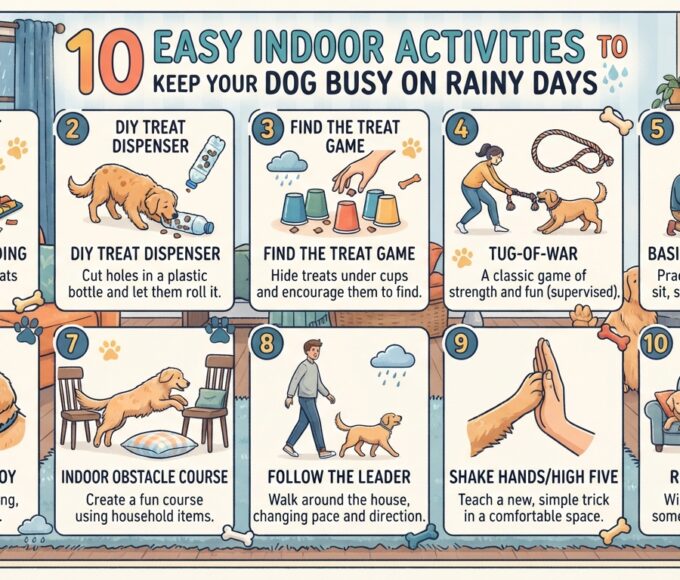
On particularly busy or hot days, you can provide alternative enrichment through:
- Indoor training
- Hide-and-seek games
- Food puzzles
- Scent games
- Short play sessions
- Basic obedience practice
The important thing is to provide appropriate physical and mental activity rather than focusing exclusively on the number of walks.
How Can You Tell If Your Dog Is Getting Enough Exercise?
Your dog can provide useful clues.
Signs that their routine may be working well include:
- Healthy body condition
- Normal energy levels
- Good interest in activities
- Ability to settle and relax at home
- No consistent signs of excessive fatigue
Behavioral changes can also provide clues.
A dog that seems constantly restless may need more activity or mental stimulation. On the other hand, frequent exhaustion or soreness may suggest that the routine is too demanding.
Final Thoughts
There is no universal answer to how often you should walk your dog.
A healthy adult dog may benefit from one or two daily walks, while puppies, senior dogs, high-energy breeds, and dogs with health limitations may require different schedules.
Start with your dog’s age, breed, fitness, health, and personality. Then adjust the routine according to their response.
The best walking routine is one that gives your dog appropriate exercise and enrichment without pushing them beyond their physical limits.








Leave a comment