



A road trip can be an exciting way to explore new places with your dog. Whether you’re heading to the countryside for a weekend, visiting family, or planning a longer vacation, having your four-legged companion along can make the journey even more memorable.
However, dogs don’t automatically find car travel enjoyable. Some become anxious, others experience motion sickness, and some simply don’t know how to settle down during a long drive. There’s also the responsibility of keeping your dog safely restrained, hydrated, comfortable, and protected from unfamiliar environments.
The good news is that a little preparation can make a major difference.
From preparing your dog before departure to choosing safe rest stops and finding suitable accommodation, these five road-trip tips will help you plan a smoother journey for both you and your canine companion.
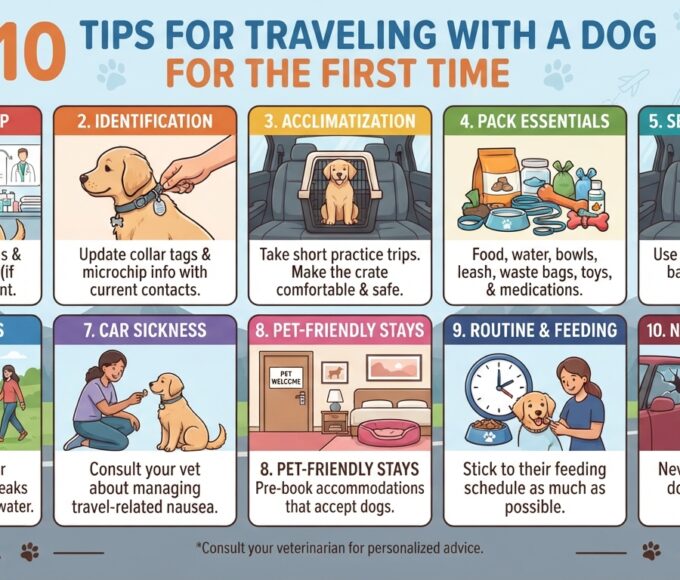
1. Prepare Before You Leave
A successful dog-friendly road trip starts before you turn the ignition key.
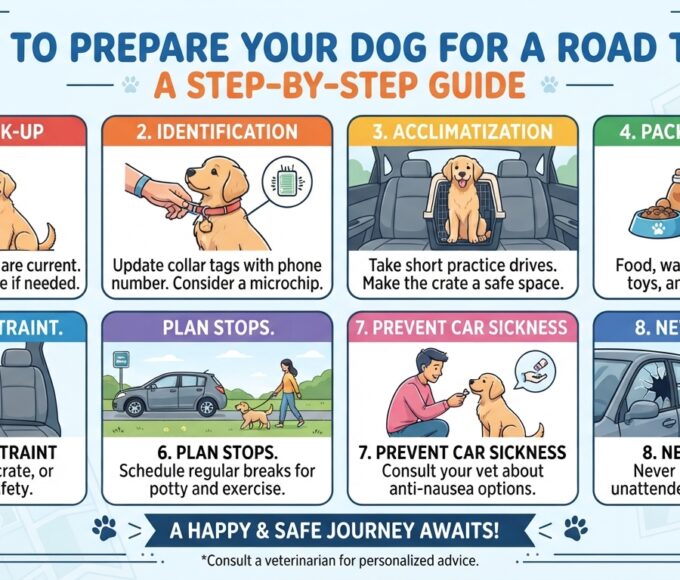
Instead of packing at the last minute, create a checklist of everything your dog may need during the journey. Having familiar supplies with you can also help your dog feel more comfortable in an unfamiliar environment.
Essential items to pack
Consider bringing:
- Your dog’s regular food
- Plenty of fresh drinking water
- Food and water bowls
- Leash and collar or harness
- Identification tags
- A secure travel restraint or crate
- Waste bags
- Medications, if prescribed
- Your dog’s vaccination and veterinary records
- Familiar bedding or a blanket
- Favorite toys
- Treats
- Grooming supplies
- Towels
- Cleaning supplies
- A basic pet first-aid kit
If your dog has a medical condition or takes prescription medication, bring enough medication for the entire trip plus some extra in case your return is delayed.
It’s also wise to save the contact information for a veterinarian or emergency animal hospital near your destination.
Check your dog’s identification
Before leaving, make sure your dog’s identification information is current.
If your dog wears an ID tag, check that the phone number is still correct. If your dog is microchipped, make sure the registration details are up to date.
A lost dog in an unfamiliar area can be much harder to reunite with their family.
Practice shorter car rides
If your dog isn’t accustomed to traveling, don’t make their first experience a six-hour drive.
Start with short trips and gradually increase the duration. Keep these practice journeys positive and observe how your dog responds.
If your dog becomes extremely anxious, nauseated, or distressed, speak with your veterinarian before attempting a longer trip.
2. Plan Regular Rest Stops
Dogs need opportunities to stretch, sniff, drink water, and relieve themselves during long journeys.
Rather than waiting until your dog becomes restless, plan regular breaks throughout the drive.
During a rest stop, give your dog an opportunity to:
- Walk around for a few minutes
- Use the bathroom
- Drink water
- Stretch their legs
- Calm down before getting back into the vehicle
The exact frequency of breaks depends on your dog’s age, health, size, temperament, and the length of the journey.
Always use a leash
Even if your dog normally has excellent recall, unfamiliar locations can create unexpected distractions.
A dog that normally comes when called may suddenly chase another animal, become frightened by traffic, or run toward an unfamiliar environment.
Keep your dog securely leashed whenever you stop unless you’re inside a properly enclosed, designated off-leash area.
Check the collar or harness before opening the car door. A frightened dog can escape surprisingly quickly.
Be careful with hot weather
Temperature is one of the biggest road-trip safety concerns for dogs.
Never leave your dog alone inside a parked vehicle. A car can become dangerously hot even when the outside temperature doesn’t initially seem extreme, and cracking the windows isn’t a reliable solution.
If you need to stop somewhere that doesn’t allow dogs inside, make arrangements for someone to stay with your dog rather than leaving them unattended.
3. Make Car Safety a Priority
Letting your dog roam freely around the vehicle may look harmless, but it can create serious safety problems.
An unrestrained dog can distract the driver, interfere with controls, or be thrown around during sudden braking or a collision.
Use an appropriate restraint
Depending on your dog’s size and temperament, options may include:
- A properly secured travel crate
- A crash-tested dog harness
- A vehicle-specific pet restraint
- Another appropriately designed travel system
The goal is to keep your dog contained without restricting them in an unsafe way.
Avoid allowing your dog to sit on the driver’s lap or move freely between the front seats.
Keep heads inside the vehicle
Many dogs love sticking their heads out of car windows, but this isn’t a safe travel habit.
Flying debris can injure the eyes, ears, or face. A sudden movement or emergency stop can also result in serious injury.
Keep windows controlled so your dog cannot accidentally jump or fall out.
Don’t let your dog ride in the cargo area of a pickup truck
An open truck bed presents serious risks, including falls, traffic accidents, and exposure to extreme weather.
Dogs should travel inside the vehicle in a properly secured travel setup whenever possible.
Build a simple dog travel safety kit
A small emergency kit can be extremely useful.
You might include:
- Gauze
- Bandages
- Pet-safe cleaning supplies
- Tweezers
- Disposable gloves
- Extra leash
- Extra collar or harness
- Towels
- Waste bags
- Emergency contact information
- Copies of important veterinary records
A first-aid kit doesn’t replace veterinary treatment, but it can be useful for dealing with minor issues until professional help is available.
4. Keep Food and Water Consistent
Travel can disrupt your dog’s normal routine, so keeping feeding habits as consistent as possible can help minimize digestive upset.
Bring the same food your dog normally eats rather than changing their diet during the trip.
Avoid large meals immediately before departure
Some dogs are more prone to motion sickness than others. A large meal shortly before traveling may make nausea worse.
If your dog regularly experiences motion sickness, ask your veterinarian about appropriate feeding schedules and treatment options before the journey.
Never give your dog human motion-sickness medication unless your veterinarian specifically recommends it and provides appropriate dosing guidance.
Offer water regularly
Bring enough drinking water for the entire journey, especially if you’re traveling somewhere where clean water may not be readily available.
Portable bowls can make roadside stops easier.
On hot days, monitor your dog closely for signs of overheating or dehydration, including:
- Excessive or abnormal panting
- Weakness
- Confusion
- Excessive drooling
- Vomiting
- Collapse
If you suspect heat-related illness, treat it as an emergency and seek veterinary assistance immediately.
Be careful with treats
Treats can be useful for rewarding calm behavior, but too many unfamiliar snacks can cause stomach problems.
Stick mostly to foods your dog already tolerates well.
5. Choose Dog-Friendly Accommodations Carefully
Your dog’s needs don’t disappear when you reach your destination.
Before booking a hotel, rental, campsite, or other accommodation, confirm its pet policy instead of assuming that “pet-friendly” means every dog is automatically accepted.
Ask about:
- Pet fees
- Breed or size restrictions
- Number of pets allowed
- Areas where dogs are permitted
- Whether dogs can be left unattended
- Available outdoor areas
- Nearby walking routes
- Rules regarding barking
- Cleaning requirements
- Check-in and check-out policies
Inspect the room when you arrive
Before letting your dog explore freely, quickly check the room or rental for hazards.
Look for:
- Small objects on the floor
- Exposed wires
- Toxic plants
- Open doors or windows
- Gaps your dog could escape through
- Unsafe balconies
- Cleaning chemicals
- Accessible trash bins
Bring familiar bedding or a blanket from home. Familiar smells can help some dogs settle in more easily.
Maintain your dog’s routine
A new environment can be exciting or stressful.
Try to maintain familiar routines around:
- Meals
- Walks
- Bathroom breaks
- Sleep
- Playtime
Giving your dog a predictable routine can make a strange environment easier to handle.
How to Make a Long Car Ride More Comfortable
Safety is the first priority, but comfort matters too.
Before starting the trip, make sure your dog has had an appropriate opportunity to exercise and relieve themselves.
During the drive:
- Keep the vehicle comfortably ventilated
- Avoid excessively loud music
- Keep your dog’s travel area secure
- Provide familiar bedding where appropriate
- Take regular breaks
- Monitor your dog for signs of anxiety or illness
- Never allow your dog to interfere with the driver
If your dog becomes restless, don’t immediately assume they need more exercise. They may need a bathroom break, water, a calmer environment, or simply reassurance.
What If Your Dog Gets Carsick?
Motion sickness is relatively common in dogs, particularly puppies and dogs that aren’t accustomed to traveling.
Signs can include:
- Excessive drooling
- Lip licking
- Whining
- Restlessness
- Yawning
- Vomiting
- Refusing food
Keep the vehicle cool and well ventilated, take breaks, and discuss the problem with your veterinarian if it happens repeatedly.
Your veterinarian may be able to recommend appropriate medication or other strategies depending on the cause.
What If Your Dog Is Afraid of the Car?
Some dogs become anxious as soon as they see a vehicle.
Don’t force a fearful dog into increasingly long journeys without addressing the underlying anxiety.
Instead, gradual desensitization can help some dogs become more comfortable. This might involve calmly approaching the parked vehicle, spending time inside it without driving, and eventually taking very short trips.
Reward relaxed behavior and increase the duration gradually.
For severe anxiety, ask your veterinarian or a qualified positive-reinforcement trainer for guidance.
Road Trip Mistakes Dog Owners Should Avoid
Even well-prepared travelers can make mistakes. Try to avoid these common problems:
Feeding a completely new diet
Travel isn’t the ideal time to experiment with unfamiliar foods.
Skipping breaks
Your dog may become uncomfortable, restless, or stressed if they spend too long without an opportunity to stretch or relieve themselves.
Allowing unrestricted movement
An unrestrained dog can become a serious distraction and may be injured during sudden braking.
Leaving a dog alone in a parked car
This can become dangerous extremely quickly, especially during warm weather.
Forgetting identification
A dog that escapes at an unfamiliar location may be difficult to recover without reliable identification.
Overpacking the schedule
Trying to visit too many places in one day can leave both you and your dog exhausted.
Give your dog time to rest and adjust.
Dog Road Trip Checklist
Before leaving home, run through this quick checklist:
Travel essentials
- ☐ Food
- ☐ Water
- ☐ Bowls
- ☐ Leash
- ☐ Collar or harness
- ☐ ID tag
- ☐ Travel crate or restraint
- ☐ Waste bags
- ☐ Medications
- ☐ Veterinary records
- ☐ Bedding
- ☐ Toys
- ☐ Treats
- ☐ Towels
- ☐ Pet first-aid supplies
Before departure
- ☐ Check accommodation rules
- ☐ Plan rest stops
- ☐ Check the weather
- ☐ Confirm your dog’s identification
- ☐ Practice car rides if necessary
- ☐ Save nearby veterinary contacts
- ☐ Check your vehicle’s travel setup
Frequently Asked Questions
Can I leave my dog alone in the car while I make a quick stop?
No. A parked vehicle can become dangerously hot or cold, and opening the windows slightly does not make it reliably safe. If you need to stop somewhere dogs aren’t permitted, make alternative arrangements for your dog.
How often should I stop during a road trip with my dog?
There isn’t one schedule that works for every dog. Consider your dog’s age, health, bathroom needs, comfort, and behavior. Plan regular breaks rather than waiting until your dog becomes distressed.
What is the safest way for my dog to travel in a car?
A properly secured travel crate or an appropriate crash-tested harness/restraint can help prevent your dog from moving around the vehicle and reduce injury and distraction risks. Choose equipment appropriate for your dog’s size and vehicle.
Should I feed my dog before a long car ride?
Some dogs tolerate food before travel without problems, while others are prone to motion sickness. If your dog gets carsick, ask your veterinarian about an appropriate feeding schedule before the trip.
What should I do if my dog vomits in the car?
Stop safely when possible, clean the area, offer your dog an opportunity to rest and get some fresh air, and monitor them. If vomiting is repeated or accompanied by weakness, severe distress, diarrhea, or other concerning symptoms, contact a veterinarian.
Can I give my dog medication for motion sickness?
Some medications can be used for dogs, but the appropriate medication and dose depend on the individual animal. Talk to your veterinarian before giving your dog any medication.
How can I help my dog relax during a road trip?
Practice short car rides before the trip, use familiar bedding, maintain a calm environment, take regular breaks, and reward relaxed behavior. Dogs with significant travel anxiety may benefit from professional guidance.
Final Thoughts
A road trip with your dog can become a wonderful shared adventure when you plan around their needs rather than treating them as an ordinary passenger.
Start by preparing the essentials, make sure your dog is safely restrained, schedule appropriate breaks, maintain familiar food and routines, and confirm that your accommodation genuinely welcomes pets.
Most importantly, pay attention to your dog’s behavior throughout the journey. A relaxed dog may settle comfortably for much of the drive, while another may need more frequent breaks or additional support.
With thoughtful preparation and a strong focus on safety, you can spend less time worrying about the journey and more time enjoying the places you discover together.





Leave a comment