



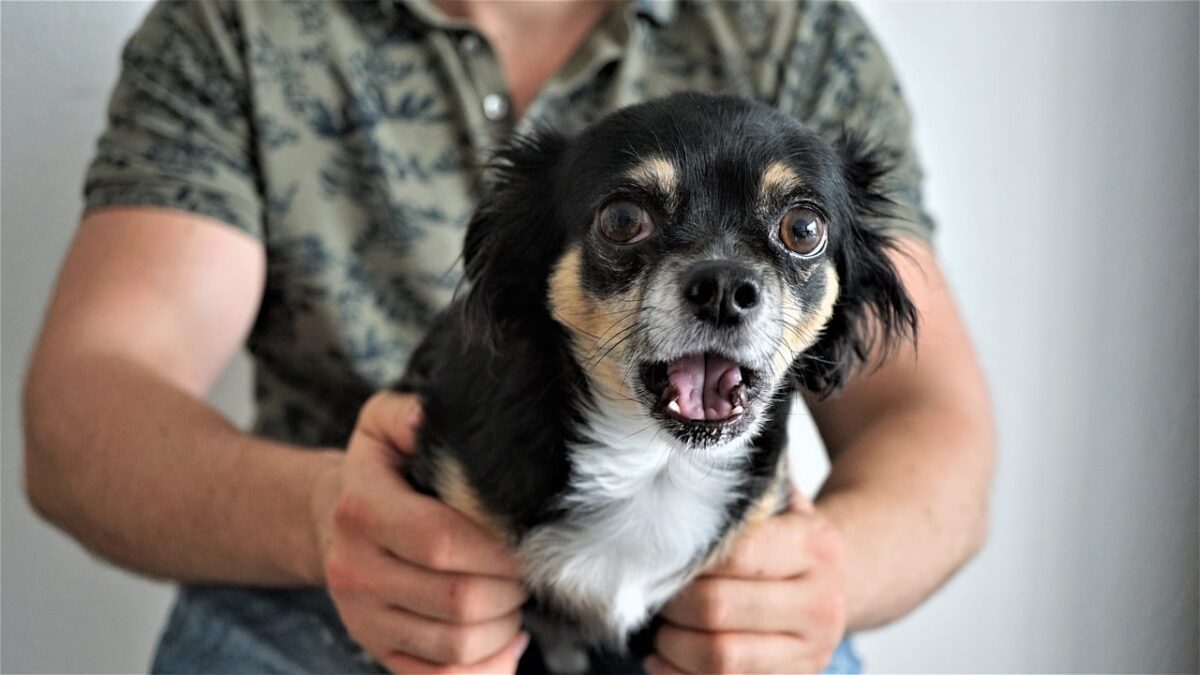
Dogs can be confident, playful, and adventurous, but they can also become frightened by things that seem completely ordinary to us.
A sudden noise, an unfamiliar person, a household appliance, or even a trip in the car can cause a dog to freeze, hide, bark, tremble, or try to escape. Fear can develop because of limited early exposure, a frightening experience, genetics, pain, or simply an individual dog’s sensitivity.
Understanding what scares your dog is the first step toward helping them feel safer.
Instead of forcing a frightened dog to “face” something scary, the goal should be to manage the environment and gradually create positive associations at a pace the dog can handle.
Here are 11 common things dogs may find frightening.
1. Thunderstorms
Thunderstorms can be extremely stressful for some dogs.
Thunder, lightning, wind, changes in the environment, and other storm-related sounds can create a combination of unpredictable stimuli. Some dogs become anxious before the storm becomes loud, while others react primarily to thunder or flashes.
You might notice:
- Panting
- Pacing
- Hiding
- Trembling
- Clinging to family members
- Barking
- Trying to escape
- Difficulty settling
How to Help
Create a comfortable indoor retreat before the storm arrives.
Close windows and curtains, use background sound to reduce outside noise, and allow your dog to choose a place where they feel secure.
If your dog’s storm fear is severe, speak with your veterinarian. A veterinarian can discuss behavior strategies and, when appropriate, additional treatment options.
2. Fireworks
Fireworks combine loud explosions, unpredictable timing, vibrations, and bright flashes.
Unlike household noises that occur on a predictable schedule, fireworks can start and stop without warning. Some dogs become so frightened that they attempt to escape.
How to Help
Prepare before fireworks are expected.
- Keep your dog indoors.
- Close doors, windows, and curtains.
- Create a quiet retreat.
- Use television, music, or white noise if it helps mask outside sounds.
- Make sure identification and microchip information are current.
- Avoid taking your dog to fireworks displays.
For dogs with significant noise fear, gradual desensitization and counterconditioning can be useful when practiced correctly.
3. The Vacuum Cleaner
The vacuum cleaner can look and sound strange from a dog’s perspective.
It produces a loud motor noise, moves unpredictably around the floor, and may suddenly approach an animal’s resting area.
Some dogs bark at it, while others run away or hide.
How to Help
Don’t chase your dog around with the vacuum or force them to remain nearby.
Instead, introduce the appliance gradually.
Start with the vacuum turned off and positioned far enough away that your dog remains comfortable. Reward calm behavior.
Over multiple sessions, you can gradually introduce movement and eventually the sound, provided your dog remains relaxed.
If your dog becomes frightened, increase the distance and slow down.
4. Car Rides
Some dogs jump eagerly into the car. Others become nervous before the engine even starts.
Fear of car travel can be related to motion sickness, unfamiliar movement, noise, confinement, or previous experiences. A dog that only rides in the car to visit the veterinarian may also develop a negative association with the vehicle.
Signs can include:
- Whining
- Drooling
- Panting
- Trembling
- Refusing to enter
- Restlessness
- Vomiting
How to Help
Start with very small steps.
Let your dog investigate the parked car without immediately going anywhere. Reward calm behavior.
Once they’re comfortable, practice sitting in the stationary vehicle. Then try very short trips that end somewhere pleasant.
Don’t rush from “afraid of the car” to a long road trip.
If motion sickness appears to be part of the problem, ask your veterinarian for advice.
5. Unfamiliar People
Some dogs are cautious around strangers.
A dog may have had limited socialization, a negative past experience, or simply a naturally reserved temperament.
Fearful dogs may bark, retreat, hide, freeze, growl, or attempt to move away when an unfamiliar person approaches.
How to Help
Never force a fearful dog to greet someone.
Instead, allow your dog to maintain a comfortable distance.
Visitors can ignore the dog initially and avoid reaching toward them. If your dog is comfortable enough to take food, treats can be used to create positive associations with the presence of unfamiliar people.
Over time, the dog can learn that strangers don’t automatically mean something unpleasant.
6. Loud Household Appliances
Vacuum cleaners aren’t the only appliances that can frighten dogs.
Some dogs react to:
- Hair dryers
- Blenders
- Food processors
- Washing machines
- Coffee grinders
- Loud fans
- Other unexpected mechanical noises
The combination of sound, vibration, and unpredictable movement can be overwhelming.
How to Help
Give your dog access to a quiet area away from the appliance.
If you’re working on desensitization, begin at a distance and at a low level of intensity whenever possible. Pair the sound with something your dog enjoys, such as treats, while keeping the exposure short.
The dog should remain below the point where fear takes over.
7. Veterinary Visits
Even dogs that are comfortable around people can become nervous at the veterinary clinic.
The unfamiliar smells, other animals, slippery floors, restraint, examination, and previous medical procedures can make the environment stressful.
Some dogs begin showing anxiety as soon as they recognize that they’re approaching the clinic.
How to Help
Ask your veterinary clinic whether they offer brief positive “happy visits” where appropriate.
You can also practice handling your dog’s ears, paws, mouth, and body at home using gentle, reward-based methods.
During actual appointments, tell the veterinary team if your dog is fearful. They may be able to adjust the environment or handling approach to reduce stress.
8. Unfamiliar Objects
A new object can look completely harmless to us but strange to a dog.
An umbrella suddenly opening, a large box appearing in the hallway, a plastic bag blowing in the wind, or someone wearing an unusual hat can cause a cautious dog to back away.
Dogs often investigate unfamiliar objects using their senses before deciding whether they’re safe.
How to Help
Don’t push the object toward your dog.
Instead, place it at a comfortable distance and allow your dog to investigate voluntarily.
You can reward calm curiosity with treats or praise.
If your dog retreats, give them more distance rather than following them with the object.
9. Being Left Alone
Some dogs struggle when their owners leave the house.
However, it’s important to distinguish ordinary frustration or boredom from separation-related distress.
A dog experiencing significant separation distress may bark continuously, destroy doors or windows, pace, drool, eliminate indoors, attempt to escape, or become extremely distressed shortly after being left alone.
How to Help
Avoid suddenly increasing the amount of time your dog spends alone.
Gradual behavior modification can help some dogs become more comfortable with departures. Enrichment, predictable routines, and appropriate exercise can also support overall well-being.
For severe separation-related problems, professional guidance is often helpful. Your veterinarian can also determine whether additional treatment should be considered.
10. Certain Sounds
Dogs can develop fear responses to very specific sounds.
These might include:
- Smoke alarms
- Sirens
- Construction noises
- Doorbells
- High-pitched sounds
- Car horns
- Electronic beeps
- Musical instruments
A dog’s response may depend on both the characteristics of the sound and their previous experiences with it.
How to Help
If you know which sound triggers your dog’s fear, avoid unnecessary exposure when possible.
For longer-term improvement, controlled desensitization and counterconditioning can gradually change the dog’s association with the sound.
The sound should initially be presented at a level low enough that the dog remains comfortable.
11. Stairs and Elevators
Some dogs are uncertain about stairs, particularly if they’ve never encountered them before.
Elevators can be even stranger. The doors move, the floor may vibrate, unfamiliar people may enter, and the entire space suddenly begins moving.
Older dogs may also struggle with stairs because of mobility problems, pain, weakness, or reduced vision.
How to Help
Don’t drag or force your dog up a staircase.
Start with a small number of steps and reward calm exploration. Make sure the surface provides adequate traction.
For elevators, practice entering and exiting without immediately expecting a long ride when possible.
If an older dog suddenly becomes afraid of stairs they previously used comfortably, speak with your veterinarian because pain or a physical problem could be contributing.
Why Is My Dog Suddenly Afraid of Something?
A dog that has always been comfortable around a particular situation but suddenly develops fear deserves extra attention.
Possible explanations include:
- A frightening experience
- A change in the environment
- A learned association
- Aging
- Pain
- Changes in hearing or vision
- Another medical problem
Sudden or severe behavior changes shouldn’t automatically be labeled as a training issue.
A veterinary examination can help rule out physical causes, particularly when fear appears alongside other changes in behavior.
Signs That Your Dog Is Afraid
Dogs don’t all express fear in the same way.
Possible signs include:
- Hiding
- Trembling
- Cowering
- Trying to escape
- Pacing
- Panting
- Whining
- Barking
- Freezing
- Avoiding eye contact
- Tucking the tail
- Flattening the ears
- Lip licking
- Refusing treats
Look at the entire body and situation rather than relying on one signal.
What Not to Do When Your Dog Is Scared
Avoid forcing your dog toward something frightening.
Don’t punish barking, growling, hiding, or attempts to move away. These behaviors can be important signals that your dog is uncomfortable.
Instead:
- Increase distance from the trigger.
- Give your dog a safe place to retreat.
- Remove unnecessary stimulation.
- Stay calm.
- Reward relaxed behavior when appropriate.
- Introduce difficult situations gradually.
The goal is to help your dog feel safe, not to overwhelm them until they stop reacting.
Helping Your Dog Become More Confident
Confidence grows through successful experiences.
Give your dog opportunities to explore new situations gradually, reward calm behavior, provide predictable routines, and allow them to retreat when they are uncomfortable.
For persistent fears, a veterinarian or qualified reward-based behavior professional can help create a structured plan.
Final Thoughts
Thunderstorms, fireworks, vacuum cleaners, strangers, car rides, unusual objects, and unfamiliar sounds can all frighten dogs.
Your dog’s fear doesn’t mean they’re weak or badly behaved. Fear is a normal response, and individual dogs can have very different triggers.
The most helpful response is patience, distance, positive associations, and gradual exposure rather than punishment or forced interaction.
When you learn to recognize your dog’s signals and respect their boundaries, you can help turn frightening experiences into manageable ones—and build a stronger sense of trust along the way.






Leave a comment