





Bringing a puppy home means preparing for plenty of exciting firsts: the first walk, the first favorite toy, the first training session, and countless unforgettable moments together.
But one of the most important parts of raising a healthy puppy happens at the veterinary clinic.
Regular veterinary check-ups give your puppy a strong start by allowing your veterinarian to monitor growth, provide preventive care, discuss vaccinations, identify potential health concerns, and answer questions about nutrition, behavior, exercise, and everyday care.
Puppies grow rapidly, and their health needs can change quickly during their first months of life. That’s why veterinary care during this stage is more frequent than it is for most healthy adult dogs.
Why Do Puppies Need Regular Vet Visits?
Puppies aren’t simply smaller versions of adult dogs.
Their bodies are developing rapidly, their immune systems are still maturing, and they are learning how to interact with the world around them. Early veterinary visits allow your veterinarian to establish a health baseline and create a preventive-care plan suited to your puppy.
Regular appointments can help with:
- Monitoring growth and body condition
- Vaccination planning
- Parasite prevention
- Nutrition and feeding guidance
- Dental development
- Behavioral concerns
- Identification and treatment of health problems
- Microchipping and identification
- Exercise and socialization advice
- Reproductive health discussions
Preventive care is especially valuable because dogs may not always show obvious signs when something is wrong. Routine examinations can sometimes identify problems before they become more advanced.
1. Your Vet Can Monitor Your Puppy’s Growth
Puppies can change dramatically in just a few weeks.
During regular appointments, your veterinarian can monitor your puppy’s weight, body condition, physical development, and overall health.
This is particularly useful for puppies expected to become large adults because appropriate nutrition and growth management can be important parts of their long-term health.
Your veterinarian can also help you determine whether your puppy is receiving an appropriate amount of food rather than relying solely on the feeding instructions printed on a package.
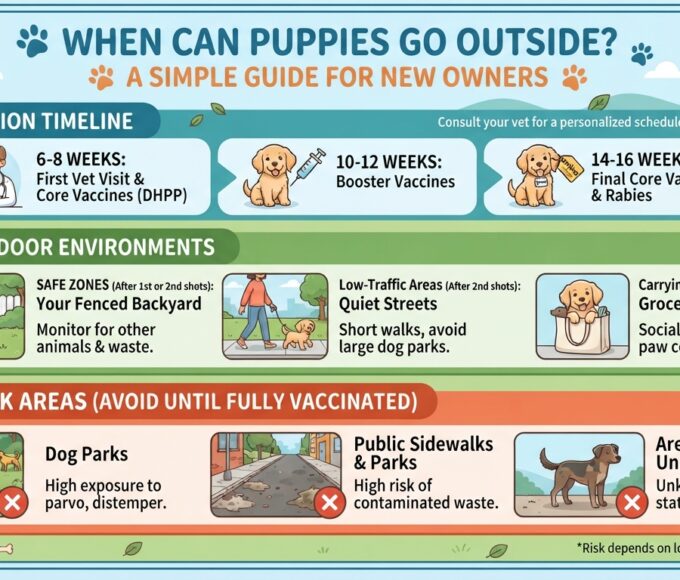
2. Vaccinations Help Protect Your Puppy
Vaccination is one of the most important parts of preventive veterinary care.
Puppies receive a series of vaccines because protection from their mother’s antibodies changes as they grow, and young dogs are particularly vulnerable to several infectious diseases.
Depending on the dog’s age, location, lifestyle, and individual risk, your veterinarian may recommend vaccines against diseases such as:
- Canine distemper
- Adenovirus
- Parvovirus
- Leptospirosis
- Rabies
- Other diseases based on lifestyle and exposure risk
Current AAHA guidance emphasizes that vaccination plans should be individualized rather than treating every dog exactly the same. Lifestyle, geographic location, and disease exposure can influence which additional vaccines are appropriate.
Your veterinarian will tell you when each vaccine is due and when your puppy can safely participate in different activities.
3. Parasite Prevention Is an Important Part of Puppy Care
Puppies can be affected by intestinal parasites as well as external parasites such as fleas and ticks.
Some parasites can cause significant health problems, particularly in young animals.
During veterinary visits, you can discuss appropriate prevention and testing for parasites based on your puppy’s age, environment, lifestyle, and local risks.
Your veterinarian may also recommend examining a stool sample for intestinal parasites.
Don’t give your puppy an over-the-counter parasite medication without checking that it is appropriate for their age, weight, species, and health status.
4. Your Vet Can Check Your Puppy’s Teeth and Mouth
Puppies go through important dental development as their baby teeth appear and their adult teeth eventually replace them.
A veterinary examination gives your veterinarian an opportunity to check the mouth, teeth, and gums and identify potential problems.
It’s also a good time to learn how to introduce your puppy to tooth brushing and other appropriate dental-care habits.
Starting these routines while your dog is young can make future dental care much easier.
AAHA’s puppy-care checklist specifically recommends discussing dental health, safe chew products, and at-home dental care during puppy veterinary visits.
5. Nutrition Advice Can Prevent Common Problems
Choosing the right food is only part of puppy nutrition.
You also need to know how much to feed, how frequently to feed, how to monitor growth, and when your puppy should eventually transition to an adult diet.
Your veterinarian can consider your puppy’s breed or expected adult size, age, body condition, activity level, and health when discussing nutrition.
Avoid making major dietary changes or adding supplements simply because someone online recommends them.
Puppies have specific nutritional requirements, and unnecessary supplements can sometimes cause problems.
6. Your Veterinarian Can Help With Behavior Questions
Veterinary visits aren’t only about physical health.
Your puppy’s behavior is also an important part of their overall well-being.
You can use appointments to ask about:
- House training
- Puppy biting
- Chewing
- Jumping
- Barking
- Fearful behavior
- Crate training
- Separation-related concerns
- Socialization
- Safe exercise
- Interactions with children or other pets
Early guidance can help you address small problems before they become more difficult habits.
Veterinary teams can also help determine whether a sudden behavior change might have an underlying medical cause.
7. Your Puppy Can Get Used to Veterinary Care
Regular visits can also help your puppy become familiar with the veterinary environment.
A puppy that experiences calm, positive handling from an early age may have an easier time with future examinations.
You can help by teaching your puppy that being touched around the ears, paws, mouth, and body is normal.
Short, positive handling sessions at home can prepare them for things they may experience during examinations.
For puppies that are especially fearful, ask your veterinary team about ways to make appointments less stressful. AAHA recommends strategies such as reducing waiting-room encounters and using calmer handling approaches for anxious dogs.
8. Microchipping and Identification Can Be Discussed
A puppy’s identification is another important topic to discuss during veterinary care.
Your veterinarian can explain microchipping and other identification options and help ensure that your contact information is kept current.
A microchip is not a substitute for a collar and identification tag, but having permanent identification can provide another way to reunite a lost dog with their family.
AAHA’s puppy-care checklist includes permanent identification and microchipping among the topics to discuss during puppy visits.
9. Your Vet Can Discuss Spaying or Neutering
If you don’t plan to breed your dog, it’s worth discussing reproductive health with your veterinarian.
There isn’t one universal age that is appropriate for every puppy.
Your veterinarian can consider factors such as breed, expected adult size, sex, health, lifestyle, and reproductive goals when discussing whether and when sterilization may be appropriate.
Use the appointment as an opportunity to ask about the potential benefits, risks, timing, and recovery.
10. Regular Exams Help Establish a Health Baseline
One benefit of starting veterinary care early is that your veterinarian becomes familiar with what is normal for your individual puppy.
Their weight, physical examination findings, behavior, vaccination history, and other relevant information can become useful reference points for future appointments.
If something changes later, having previous records can help your veterinary team recognize that change.
AAHA notes that routine visits help establish a baseline and can make it easier to identify early signs of disease.
How Often Should a Puppy Go to the Vet?
Puppies generally need veterinary visits more frequently than healthy adult dogs.
AAHA’s canine life-stage guidance recommends puppy examinations approximately every 3–4 weeks during the early puppy period, although your veterinarian may adjust the schedule according to your puppy’s specific needs.
These appointments may be used to:
- Monitor growth
- Continue the vaccination series
- Review parasite prevention
- Assess nutrition
- Discuss behavior and socialization
- Check dental development
- Review identification
- Discuss exercise
- Address any new concerns
Once a dog reaches adulthood, routine visits are generally less frequent, although the appropriate schedule depends on age, health, breed, lifestyle, and individual risk.
What Happens During a Puppy Check-Up?
A wellness appointment can cover much more than vaccinations.
Depending on your puppy’s circumstances, the veterinarian may:
Perform a Physical Examination
Your puppy may receive a nose-to-tail examination that includes checking the eyes, ears, mouth, skin, heart, lungs, abdomen, joints, and overall body condition.
Check Weight and Growth
Your vet can monitor whether your puppy is growing appropriately and maintaining a healthy body condition.
Review Vaccinations
The veterinarian will check which vaccines have already been given and determine what is due next.
Discuss Parasite Control
You can review flea, tick, intestinal parasite, and other preventive measures appropriate for your area and puppy.
Discuss Diet
Your veterinarian can help you determine an appropriate feeding plan and monitor your puppy’s growth.
Discuss Behavior
Bring up any training or behavioral concerns rather than waiting until they become serious.
Review Preventive Care
Topics may include dental care, identification, exercise, socialization, reproductive health, and future veterinary appointments.
AAHA’s puppy-care checklist specifically recommends discussing health, vaccines, dental care, reproductive health, nutrition, exercise, grooming, boarding/daycare, and veterinary-care costs during puppy visits.
What Should You Bring to Your Puppy’s Vet Appointment?
A little preparation can make the appointment more useful.
Consider bringing:
- Your puppy’s previous medical or vaccination records
- Information about their current food
- A list of medications or supplements
- Any parasite-prevention products you’re using
- A fresh stool sample if your clinic requests one
- A list of questions
- Notes about unusual behavior or symptoms
- Videos or photographs of concerning behaviors when appropriate
If you’re unsure whether something your puppy is doing is normal, write it down.
It’s much easier to remember your questions when you’ve prepared them before arriving.
Questions to Ask Your Veterinarian
Don’t be afraid to ask questions during your puppy’s appointment.
You might ask:
- Is my puppy growing at an appropriate rate?
- Which vaccines does my puppy need?
- When are the next vaccines due?
- What parasite prevention is appropriate?
- How much should I feed my puppy?
- How many meals should my puppy receive each day?
- What treats are appropriate?
- When should I begin brushing my puppy’s teeth?
- What exercise is appropriate for my puppy’s age and size?
- How should I safely socialize my puppy?
- When should we discuss spaying or neutering?
- What signs of illness should I watch for at home?
- How often should my puppy return for check-ups?
Your veterinarian can tailor the answers to your individual puppy rather than relying on a one-size-fits-all schedule.
Don’t Wait for Your Next Appointment if Your Puppy Is Sick
Routine check-ups are important, but they don’t replace medical care when your puppy becomes ill or injured.
Contact your veterinarian promptly if your puppy develops concerning symptoms such as:
- Repeated vomiting
- Significant or persistent diarrhea
- Difficulty breathing
- Severe weakness or collapse
- Seizures
- Serious injury
- Severe pain
- Sudden inability to walk
- Major changes in behavior
- Refusal to eat accompanied by other concerning symptoms
Very young puppies can become seriously ill quickly, so when you’re unsure, contacting your veterinary clinic for advice is safer than simply waiting for the next scheduled appointment.
How to Make Vet Visits Easier for Your Puppy
Veterinary appointments don’t have to be frightening experiences.
You can help your puppy by:
Practice Gentle Handling
Briefly touch their paws, ears, mouth, and body while rewarding calm behavior.
Make the Carrier or Car Familiar
If your puppy travels in a carrier or vehicle, introduce these experiences gradually rather than making the first trip the day of the appointment.
Use Positive Reinforcement
Reward calm behavior with treats, praise, or another reward your puppy enjoys.
Bring a Favorite Comfort Item
A familiar blanket or toy may help some puppies feel more comfortable.
Tell the Clinic if Your Puppy Is Nervous
Your veterinary team may be able to arrange a quieter waiting area or recommend ways to reduce stress.
Final Thoughts
Regular veterinary check-ups are one of the most important investments you can make in your puppy’s early life.
These visits aren’t simply about getting vaccinations. They provide an opportunity to monitor growth, discuss nutrition and exercise, prevent parasites, assess dental health, address behavior, review identification, and identify potential problems early.
Puppies have rapidly changing needs, which is why they generally require more frequent veterinary care during their first months than healthy adult dogs. The exact schedule should be determined with your veterinarian based on your puppy’s age, health, lifestyle, location, and individual risks.
By making veterinary care part of your puppy’s routine from the beginning, you’re helping establish a foundation for a healthier life—and giving yourself a trusted professional to turn to as your puppy grows into an adult dog.








Leave a comment